


Dynamic adjustment technology
Multi-mode drive system
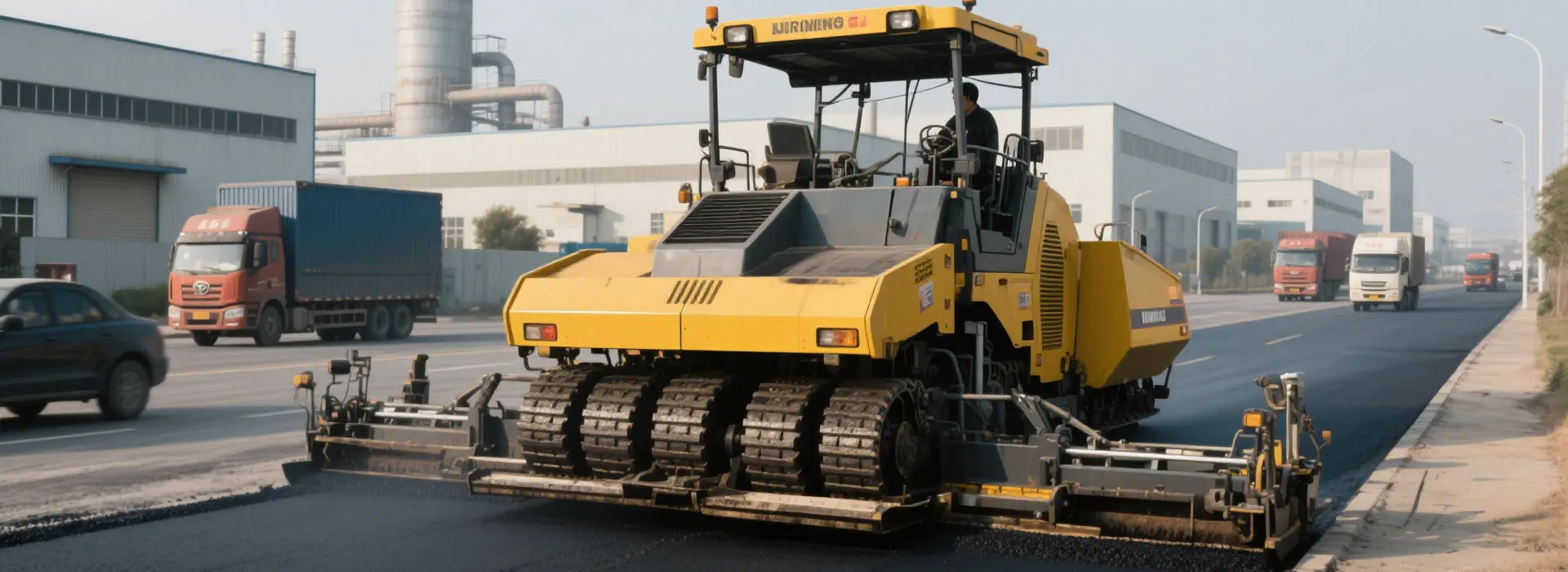
Paving a smooth, durable road is never an easy task. Manual paving is not only time-consuming, but it’s also difficult to guarantee the smoothness and density of each layer of asphalt. To make road construction faster and more precise, asphalt pavers were developed.
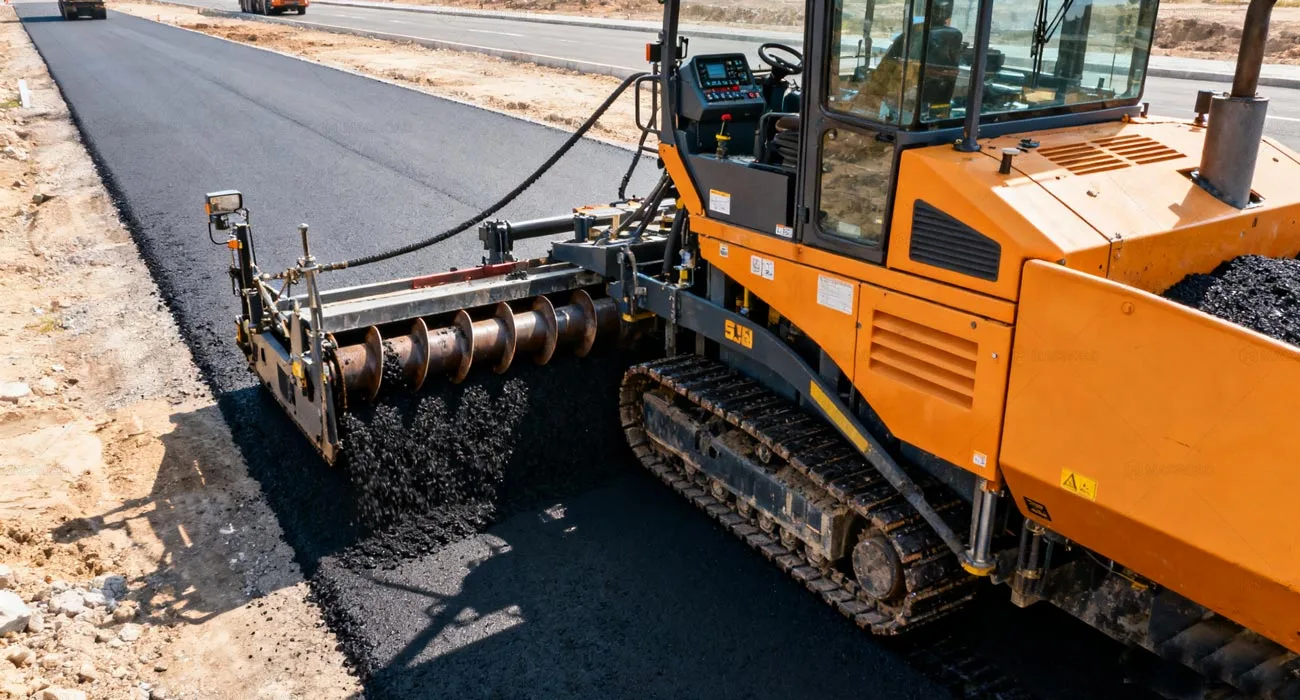
They can spread asphalt evenly and, in conjunction with a screed system, ensure a smooth surface, efficiently completing projects on city roads, rural roads, and airport roads. Different types of asphalt paver machines—wheeled, tracked, and small asphalt paver—adapt to different construction scales and site conditions, ensuring the smooth progress of every project.
Powering Modern Road Construction: Asphalt Paver Market Trends
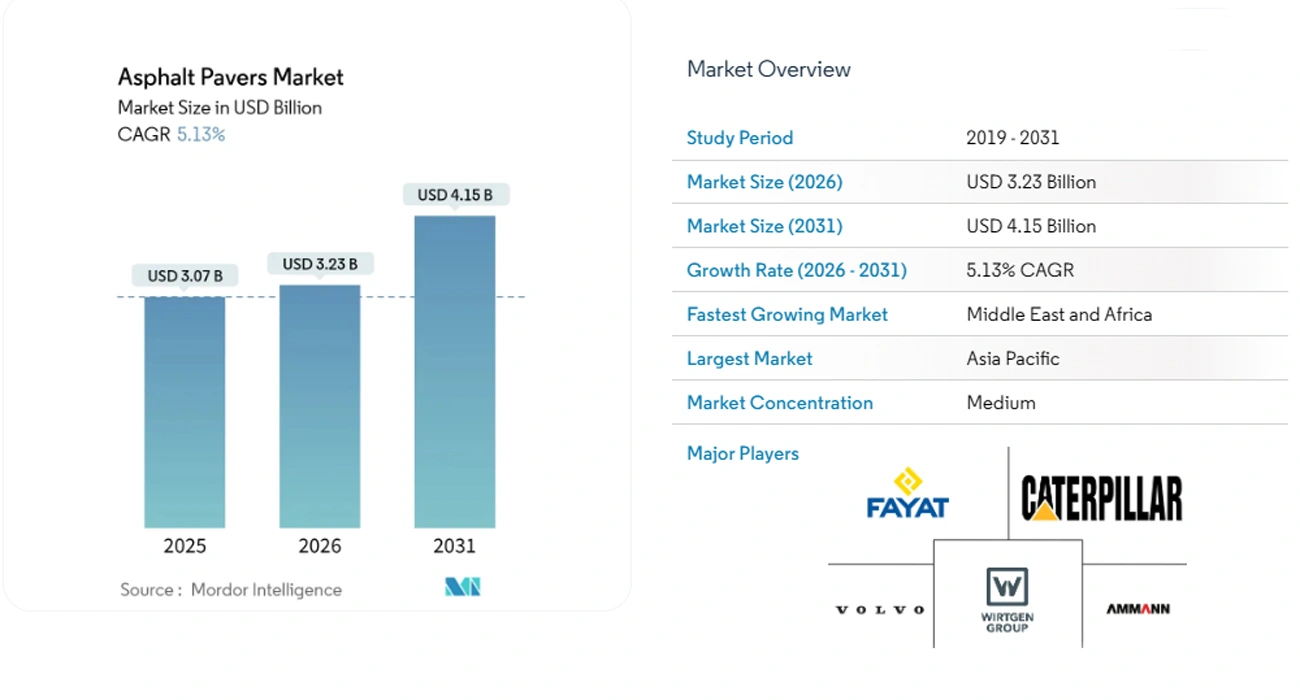
Modern road construction demands increasingly higher efficiency and better road surface quality, making asphalt paver for sale a key driver behind every road project. Industry forecasts predict that the global asphalt paver market will continue to expand at a CAGR of 5.13% from 2026 to 2031. This not only indicates strong industry demand but also presents new opportunities and challenges for construction companies and asphalt paver company.
Infrastructure Construction Demand Continues to Grow
- Urbanization and Road Network Expansion: With accelerated urbanization, the demand for urban roads, expressways, and roads surrounding commercial facilities is constantly increasing. Traffic congestion and travel demands drive up road construction frequency, directly boosting demand for asphalt finisher.
- Large-Scale Transportation Projects Drive High-Performance Equipment: Large-scale projects such as highways, airport runways, and logistics parks require high-capacity, high-precision asphalt paving equipment to ensure construction progress and road surface quality. These projects typically involve a one-time investment in advanced pavers, thus promoting growth in the high-end market.
- Increased Demand for Road Renovation and Maintenance: As roads age, the frequency of maintenance and renovation of urban and rural roads increases, driving sustained demand for small and mini asphalt paver for sale and forming a foundation for long-term stable market growth.
Technological Advancements and Equipment Upgrades Lead Market Evolution
- Application of Automation and Intelligent Technologies: Modern asphalt pavers are generally equipped with automatic leveling, screed heating, and hydraulic control systems, reducing human error and improving construction accuracy. Technological upgrades have become a crucial factor for companies selecting new asphalt paver finisher.
- Optimized Efficiency and Energy Saving: The new generation of pavers reduces fuel consumption while increasing paving capacity per unit time through optimized engine and hydraulic system design, improving construction speed and energy consumption.
- Enhanced Equipment Durability and Ease of Maintenance: Manufacturers continuously improve the lifespan of key components and ease of maintenance, ensuring stable operation even under high-load construction environments. This increased reliability fuels market demand for high-end asphalt paver machine for sale.
Market Diversification and Expanded Product Adaptability
- Diverse Product Types to Meet Different Construction Scenarios: The market offers a full range of pavers, from large tracked and wheeled to mini-pavers, covering highways, large commercial roads, rural roads, and even small-scale paving needs in narrow construction sites.
- Differences in Construction Scale Drive Equipment Customization: Different construction scales and site conditions prompt manufacturers to offer a variety of models and configurations of asphalt paving equipment for sale to meet refined construction needs.
- Significant Regional Differences in Global Market Demand: Rapid development of urban infrastructure in emerging economies creates strong demand for types of asphalt paver; while developed regions focus more on high-precision, high-efficiency, and intelligent equipment, driving a differentiation in the global market structure.
After reviewing these data and trends, you’ll find that the asphalt paver market is not only growing but also evolving rapidly—with more efficient equipment, smarter technology, and a wider variety of asphalt paver types. Whether it’s large-scale highway construction or partial paving of city streets, the market is driving continuous equipment upgrades, making construction faster, more stable, and more reliable.
Asphalt Pavers at Work: Key Usage Scenarios
Walk into any road construction site, and you’ll almost always see it—that machine steadily advancing, smoothing out the asphalt. What is asphalt paver? Asphalt pavers are more than just machinery; they are the unsung heroes of road construction. Every movement and paving operation determines the road’s smoothness, durability, and user experience. Whether on busy city streets or long-distance highway construction, pavers make work faster and more precise, saving engineers a significant amount of time and effort.
Next, let’s look at a few typical scenarios to see how these asphalt pavers play a role in actual construction.

Highway Construction
- Construction Characteristics: Large-scale projects with long construction sections, requiring continuous paving and high road surface smoothness.
- Role of Asphalt Pavers: Large tracked asphalt paver machine can operate continuously, evenly distributing and quickly compacting asphalt. Combined with screeds and leveling sensors, high-precision paving is achieved.
- Key Advantages: Continuous asphalt paver designs reduces construction joints, improves overall highway quality, and shortens the construction cycle.

Urban Road Construction and Repair
- Construction Characteristics: Narrow roads and complex traffic require flexible operation while maintaining construction efficiency.
- Role of Asphalt Pavers: Wheel asphalt paver can quickly enter and exit the construction area, precisely laying asphalt and minimizing impact on surrounding traffic.
- Key Advantages: Flexible and precise construction ensures urban roads are completed quickly and are smooth and aesthetically pleasing.

Commercial and Industrial Park Paving
- Construction Characteristics: Moderate road area, but requiring wear resistance and aesthetics; paving quality directly affects the user experience.
- The Role of Asphalt Pavers: By selecting the appropriate asphalt paver model based on the road surface area, asphalt pavers ensure road smoothness and load-bearing capacity through uniform paving and compaction.
- Key Advantages: A balance between high-efficiency paving and meticulous finishing, ensuring the durability of park roads.

Airport Roads and Special Projects
- Construction Characteristics: Extremely high requirements for smoothness, thickness, and asphalt paver capacity, with low tolerance for errors.
- The Role of Asphalt Pavers: Large, high-precision asphalt paver specifications, combined with an automatic control system, can precisely control paving thickness and width, ensuring airport road standards meet or exceed specifications.
- Key Advantages: Precise construction ensures safety while shortening the construction cycle and minimizing impact on airport operations.
Versatile Options, Perfect Fit
Different engineering environments place different demands on pavers. Some require flexibility and maneuverability, while others prioritize stability and efficiency. Macroad offers two main types of asphalt pavers—wheeled and tracked—to meet diverse construction needs. Each type has been optimized in terms of performance and details to ensure ideal paving results for municipal roads or highways.
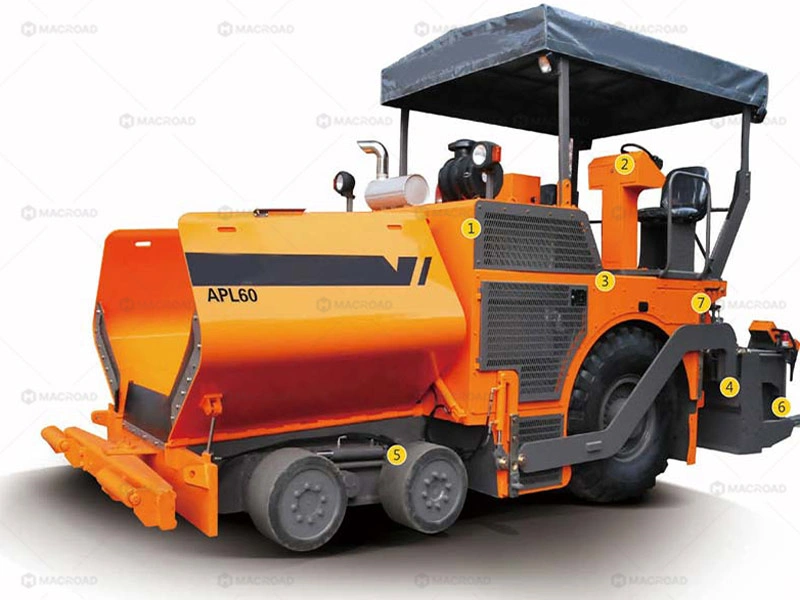
Wheeled Asphalt Pavers
In urban road construction, space is often limited, roads are winding, and traffic disruptions are frequent, requiring equipment with high flexibility and mobility. Wheeled asphalt paver parts and functions, with their smaller turning radius and higher relocation efficiency, can quickly adapt to narrow roads and complex working conditions. Furthermore, they offer significant advantages in short-distance, frequent relocation operations, maintaining construction efficiency while reducing time wastage caused by equipment scheduling.
- Applicable Scenarios: Urban roads, small to medium-sized projects, short-distance relocation projects.
- Representative Models: APZ45E / APZ60E / APL45E / APL60E
Flexible and Maneuverable, Achieving Effortless Navigation
- Real Experience: The equipment turns easily in narrow streets and complex intersections, requiring no frequent rescheduling or work stoppages.
- Technical Support: Hydraulic-driven steering system reduces turning radius by 30%.
Reduced Downtime, Increased Construction Efficiency
- Real Experience: Simplified daily maintenance; workers can quickly complete inspections and servicing, with construction virtually unaffected by equipment downtime.
- Technical Support: Modular design simplifies maintenance of key asphalt paver machine parts, reducing daily maintenance time by 50%.
Adjustable Speed to Adapt to Different Paving Needs
- Real Experience: Paving speed can be flexibly adjusted on municipal roads, residential roads, or complex road sections, ensuring uniform paving and stable project duration.
- Technical Support: Stepless speed adjustment from 0–16 m/min.
| Description | APZ45E | APZ60E |
|---|---|---|
| Paving Width(mm) | 2500-4500 | 2800-6000 |
| Max paving thickness(mm) | 250 | 250 |
| Theoretical productivity(t/h) | 220 | 300 |
| Paving speed(m/min) | 3.01-8.97 | 3.07-9.16 |
| Running speed(Km/h) | 2.29-16.74 | 2.30-16.84 |
| Drive system | Mechanical | Mechanica |
| Engine Power(kw) | 55 | 86 |
| Hopper Capacity(t) | 10 | 12 |
| Pavement Evenness(mm/3m) | 3mm/3m | 3mm/3m |
| Centre Crown Ratio(%) | -1~+3 | -1~+3 |
| Screed extension mode | hydraulic extension | hydraulic extension , mechanical joint |
| Screed vibration frequency(Hz) | 0-50 | 0-50 |
| Screed heating mode | fuel heating,autoomatic ignition | fuel heating,autoomatic ignition |
| Fuel tank volume(L) | 143 | 200 |
| Overall Dimensions(mm) | 5850*2500*3100 | 6394*2800*3695 |
| Machine Weigh(t) | 11 | 12 |
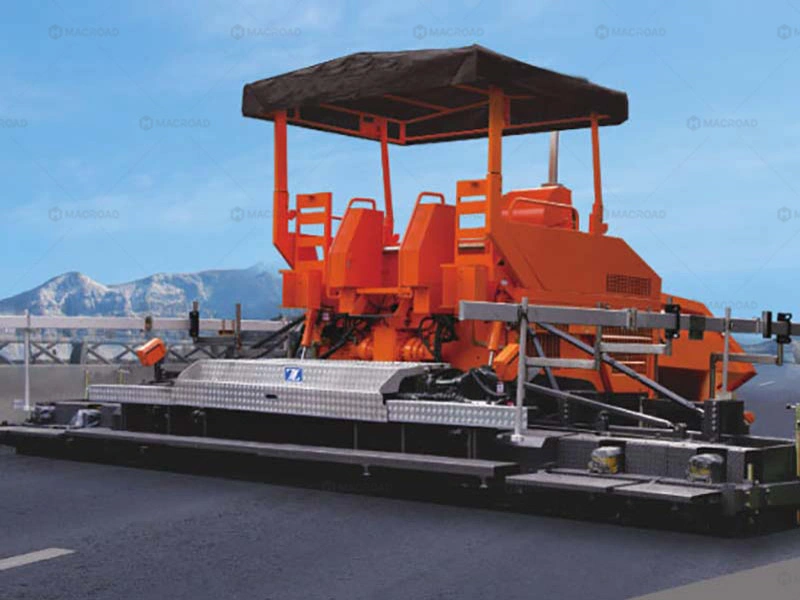
Tracked Asphalt Pavers
Highways, airport runways, and mountain roads often require large-area continuous construction, placing extremely high demands on equipment stability and load-bearing capacity. Tracked asphalt pavers, with their large ground contact area and low pressure, can maintain stable operation on complex terrains such as soft soil or slopes. Simultaneously, their expandable paving width and powerful thrust ensure construction quality and efficiency in heavy-duty projects.
- Suitable Scenarios: Wide-width continuous paving, soft soil or sloping terrain, heavy-duty projects.
- Representative Models: APE75 / APE90
Stable Operation, More Even Road Surface Paving
- Real Experience: Even on soft foundations or slopes, the asphalt paver paving remains rock-solid, producing a high degree of asphalt smoothness, facilitating smooth operation of subsequent rollers.
- Technical Support: Rubber track ground pressure ≤0.08 MPa, effectively protecting the compacted base layer.
Stable Temperature, Controllable Paving Quality
- Real Experience: During paving, there are no instances of excessively high or low temperatures leading to poor adhesion, ensuring consistent road surface quality.
- Technical Support: Intelligent constant temperature system control in asphalt paver parts, with mixture temperature fluctuations ≤±5°C.
Larger Width, Higher Efficiency, Faster Project Completion
- Real Experience: One-time paving covers a wider section of road, significantly increasing daily work volume, shortening the construction period, and reducing labor costs.
- Technical Support: Paving width can be extended to 15 meters, increasing daily work volume by 40%.
| Description | APE90 |
|---|---|
| Paving Width(mm) | 3000-9000 |
| Max paving thickness(mm) | 320 |
| Theoretical productivity(t/h) | 700 |
| Paving speed(m/min) | 0-16 |
| Running speed(Km/h) | 0-2.39 |
| Drive system | Full hydraulic |
| Engine Power(kw) | 140 |
| Hopper Capacity(t) | 16 |
| Engine Speed | 2300 |
| Centre Crown Ratio(%) | -1~+3 |
| Screed extension mode | Hydraulic extension,mechanical joint |
| Screed vibration frequency(Hz) | 0-50 |
| Screed heating mode | Far infrared-radiation heating |
| Pavement Evenness(mm/3m) | 0-3σ ≤1.2mm |
| Overall Dimensions(mm) | 7084*3000*4030 |
| Machine Weigh(t) | 25-29.5 |
Seamless Coordination: From Asphalt Mixing to Road Formation
In road construction, pavers are often considered the core equipment determining the smoothness and initial shaping of the road surface, responsible for evenly spreading the asphalt mixture onto the road base. However, a high-quality road surface is not the result of a paver alone.
Asphalt mixing plants provide a stable and uniform mixture, ensuring consistent quality in each batch; asphalt distributors precisely apply binder, providing a strong bond to the base layer; rollers follow closely, compacting the newly laid asphalt to make the road surface dense and smooth; and the asphalt paver effectively connects the results of each stage in this process, achieving the final high-quality road surface.
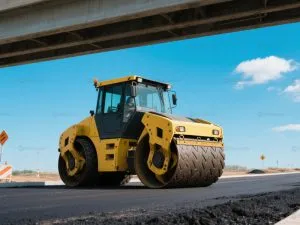
Road Roller
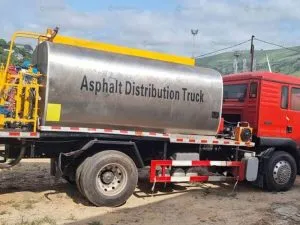
Asphalt Distributor
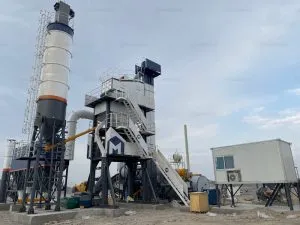
Asphalt Plant
These four pieces of equipment work together to form an efficient chain for road construction, and optimization at each stage directly affects the durability and smoothness of the final road surface.
Inside the Asphalt Paver: How It Operates
Asphalt paver is not simply a machine; it’s a magician that precisely lays and compacts the asphalt mixture from the hopper to the road surface. Every movement, every step, determines the smoothness and lifespan of the road. Let’s follow its steps and see how does an asphalt paver work.
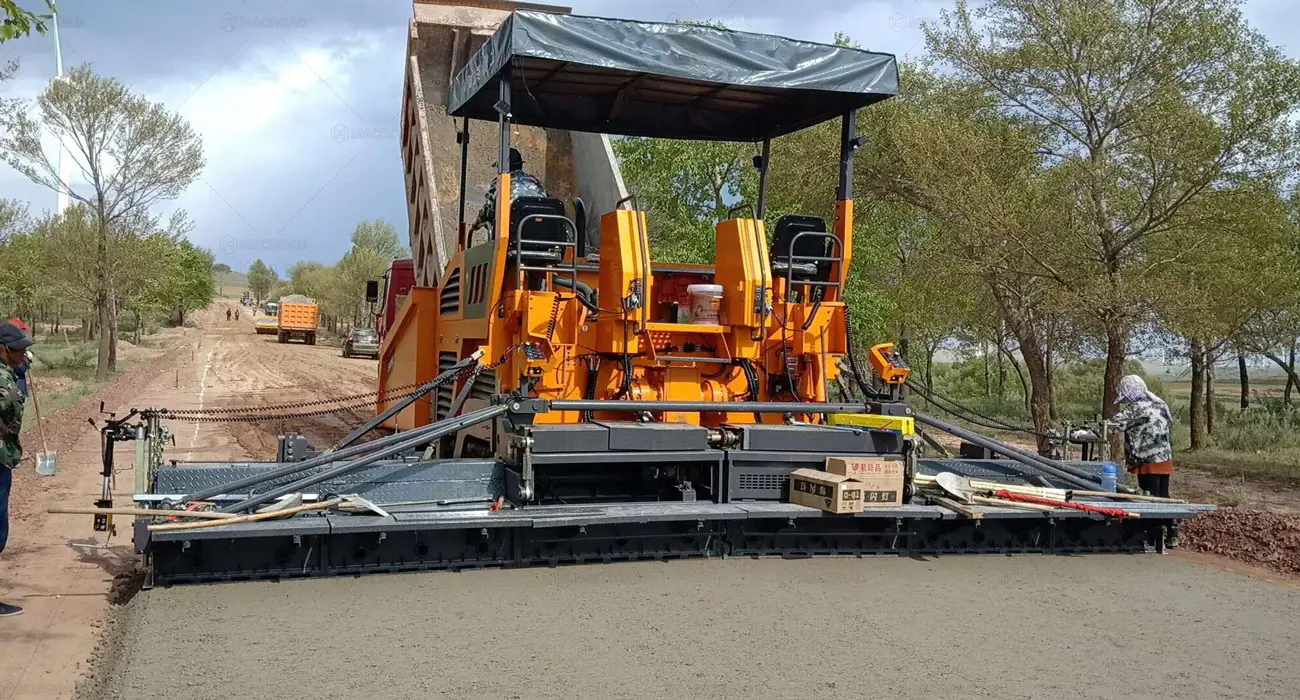
Hopper Loading: The First Step Towards Uniformity
Asphalt is delivered from the mixing plant to the asphalt paver’s hopper. The hopper serves not only as a temporary storage bin but also, through buffer plates and anti-stick linings, ensures the uniform and continuous delivery of the mixture, preventing blockages or segregation.
Conveying and Distribution: Uniform Distribution to Every Inch of Road Surface
The mixture is evenly delivered from the hopper to the screed via a auger distributor or conveyor chain. This asphalt paver working principle determines the uniformity of the pavement thickness and is the foundation for subsequent smoothness.
Paving Formation: The Paver Begins Operation
As the paver advances, the mixture is evenly spread. The operator can control the advance speed using a continuously variable transmission (CVT) to ensure a smooth finish across different road sections and widths.
Screeding and Compacting: The Final Step in Road Smoothing
The screed flattens the spread asphalt and maintains the surface temperature through a heating system, resulting in a dense and well-bonded pavement. Sensors and leveling beams ensure precise smoothness, reducing construction joints and unevenness.
Subsequent roller support: from leveling to compaction
Although the paver has completed the paving and initial compaction, the roller then follows up with fine compaction to make the road surface more compact and durable, ensuring that every section of the road can withstand the test of time and traffic.
How to Pick the Best Asphalt Paver for Your Needs
Choosing an asphalt paver is like selecting a reliable partner for a construction site. It needs to adapt to your environment, complete your tasks, cooperate with your team, and withstand the test of daily use. The following steps will help you systematically select the most suitable paver from multiple perspectives, including site conditions, workload, operating team, and budget.
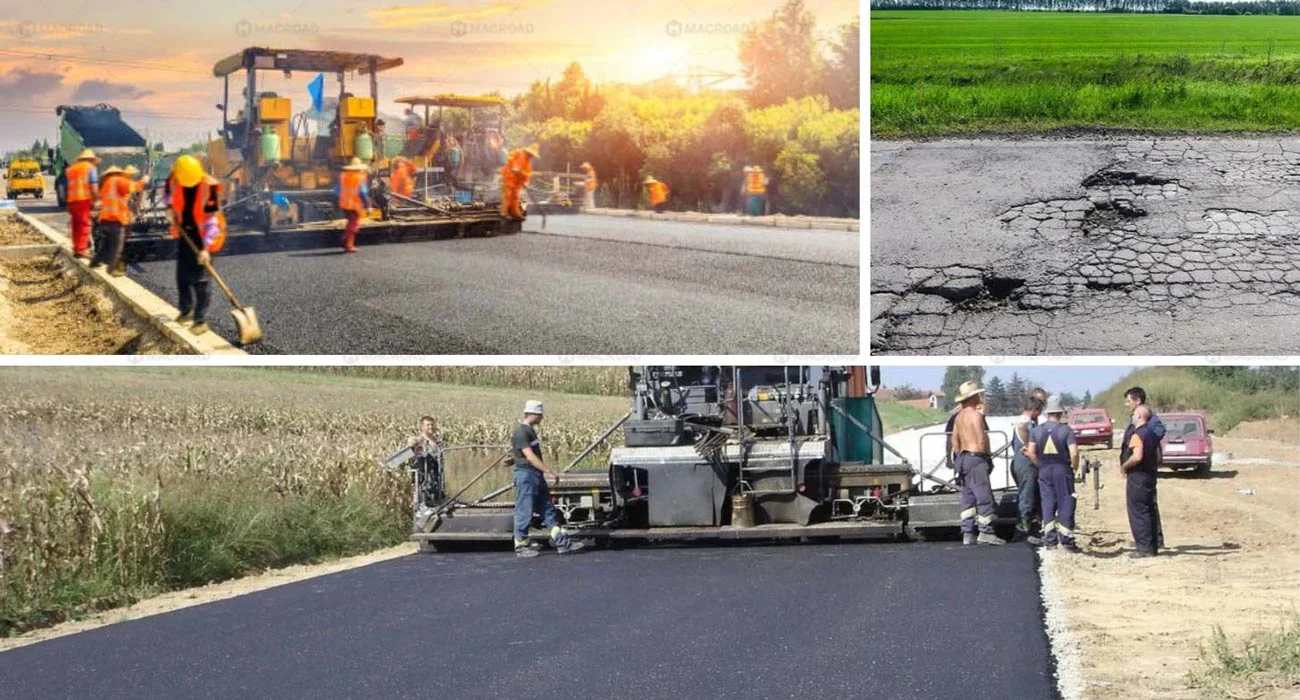
Analyze the Construction Environment
- Confirm road width and site space to determine whether a wheeled or tracked asphalt paver is suitable.
- Assess terrain conditions, such as slope, soft soil, or complex topography, and select a model with high stability.
- Examine traffic disruptions to determine the equipment’s relocation flexibility requirements.
Determine Paving Scale and Workload
- Calculate the daily paving area and select an asphalt paver with matching capacity.
- Consider paving length and construction cycle to determine daily progress efficiency requirements.
- Determine the construction density and select equipment with large coverage area, continuous operation, or high mobility.
Consider the Operating Team and Ease of Use
- Assess the team’s skill level and select a model that is easy to operate or has intelligent controls.
- Confirm whether the operating interface is intuitive and easy to train new operators.
- Check remote monitoring or automation functions to reduce the risk of human error.
Assess Maintenance and After-Sales Support
- Check whether daily maintenance procedures are simple and tools are readily available.
- Assess the availability of spare parts to reduce downtime.
- Consider modular asphalt paver designs or quick-assembly/disassembly capabilities to improve maintenance efficiency.
Balancing Cost and Efficiency
- Compare asphalt paver machine price with project cycle benefits to determine return on investment.
- Consider long-term operating costs, including fuel, consumables, asphalt paver laying speed and maintenance.
- Assess the paving area and project timeline requirements for each use of the equipment to select the most efficient solution.
Comprehensive Decision-Making
- Summarize site conditions, workload, team capabilities, maintenance, and budget to develop a selection plan.
- Discuss with operators and project managers to ensure the plan is feasible and efficient.
- Based on project priorities, ultimately determine the most suitable asphalt paver brands and configuration.
Wheeled vs. Tracked Asphalt Pavers: Which Fits Your Project?
Choosing the right paver is not as simple as looking at just one parameter. Road type, construction environment, job size, and team operational capabilities all influence the decision. A comprehensive understanding of the advantages and applicable scenarios of the two main types of asphalt paver is crucial for making an efficient and reliable choice. The comparison table below helps you quickly grasp the key differences and make a more informed decision.
| Wheeled Asphalt Paver | Feature | Tracked Asphalt Paver |
| Urban roads, small to medium projects, short-distance transfers | Suitable Applications | Highways, large continuous paving, soft or sloped terrain |
| High, small turning radius, flexible on narrow roads | Mobility | Medium, suited for wide, continuous paving; slower for transfers |
| Medium, ideal for flat surfaces | Stability | High, large ground contact area, stable on slopes and soft ground |
| Moderate, efficient for short distances and frequent moves | Operational Efficiency | High, large-width paving in one pass, efficient for continuous work |
| High, modular design allows quick routine maintenance | Maintenance Convenience | Medium, complex structure requires skilled maintenance |
| Low, intuitive controls, short training period | Ease of Operation | Medium, high-capacity and multiple functions require skilled operators |
| Standard, suitable for city streets and residential areas | Paving Width | Expandable to wide widths, suitable for highways and large-scale projects |
| Lower, suitable for small projects or limited budgets | Cost and Investment | Higher, suitable for large-scale, high-efficiency projects |
| Flexible, agile, ideal for short-distance work | User Experience | Stable, efficient, covers large areas in one pass |
Choosing an asphalt paver involves more than just considering whether it’s wheeled or tracked; it’s about comprehensively assessing your overall construction needs. By understanding mobility, stability, construction efficiency, operational difficulty, and cost, you can clearly see the advantages and limitations of each type. Remember, the right choice not only improves construction efficiency but also makes construction smoother, safer, and more worry-free.
Choosing a Trusted Asphalt Paver Manufacturers Partner
The smooth progress of construction depends not only on the machinery itself, but also on the partners behind it—your asphalt paver supplier. An excellent supplier doesn’t just sell equipment; they provide comprehensive support from selection and installation to maintenance, maximizing the value of your investment. Understanding a supplier’s overall capabilities is like paving the way for your project in advance, ensuring every step is successfully completed.
Comprehensive Product and Technical Support
- Full Range of Models: Suppliers should provide wheeled, tracked, and different capacity asphalt pavers to meet the needs of various project sizes and terrains.
- Integrated Solutions: Beyond selling individual machines, suppliers can provide integrated solutions combining asphalt pavers, asphalt mixing plants, and construction techniques tailored to project characteristics.
- Extensive Application Experience: Mature case studies in diverse conditions such as highways, airport runways, and municipal roads ensure high equipment adaptability.
Reliable Case Studies and Customer Testimonials
- Number and Diversity of Case Studies: Real-world projects covering urban roads, mountain roads, soft soil foundations, and wide-width paving directly demonstrate the supplier’s capabilities.
- Environmental Adaptability: Demonstrating the stability and efficiency of equipment under complex construction conditions.
- Credible Customer Reviews: Providing genuine customer recommendations or usage feedback, not just promotional materials.
Comprehensive After-Sales and Spare Parts Guarantee
- Rapid Spare Parts Supply: Efficient logistics and spare parts management ensure the rapid delivery of critical components to the construction site, minimizing downtime risks and avoiding construction delays due to parts shortages.
- Efficient Service Response: A professional maintenance team can quickly troubleshoot problems on-site or remotely, ensuring construction continuity.
- Systematic Support Process: Clear processes and service commitments cover everything from regular maintenance to emergency repairs, ensuring smooth project progress.
Continuous Innovation and Technological Upgrades
- Outstanding R&D Capabilities: Possesses an independent R&D team and factory, continuously optimizing product performance.
- Advanced Technology Applications: Equipment incorporates automatic leveling, intelligent sensing, and energy-saving drive functions, improving construction quality and efficiency.
- Remote Upgrades and Expansions: Supports functional upgrades and expansions, ensuring the equipment maintains its technological advancement over the long term.
Systematic Training and Operation Guidance
- Complete Training System: Provides operation courses and practical guidance, not just machine demonstrations.
- Comprehensive Support: Detailed operation manuals and video tutorials are readily available, helping the team quickly master skills.
- On-Site Guidance: Technical personnel can be dispatched to the site during construction to reduce operational risks and improve team efficiency.
The choice of choosing an asphalt paver supplier is not just a one-time transaction, but the beginning of a long-term partnership. Choosing a supplier with a complete product line, real-world case studies, reliable after-sales service, continuous innovation, and training support ensures your equipment investment truly translates into efficient construction, stable returns, and project success.
Reading the Numbers: Key Factors Affecting Asphalt Paver Prices
When choosing a paver, how much is an asphalt paving machine is often the most immediate concern for customers. However, simply looking at the numbers on the quote can mislead decisions: a cheap machine may have high maintenance costs and low efficiency, while an expensive machine may be a waste of investment if the configuration is not suitable. The truly wise approach is to understand the key factors behind the price to make an economical and efficient choice.
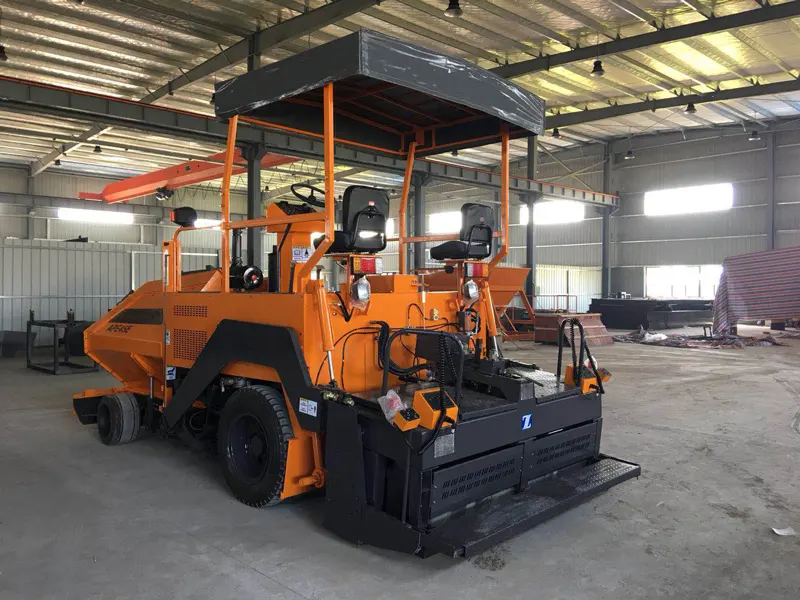
Equipment Type and Capacity Level
- Capacity and Efficiency: The paving width and operating speed of the equipment directly affect construction efficiency. High-capacity equipment covers a large area per day, suitable for long-distance and large-area projects.
- Project Matching: Small or mini pavers are suitable for urban roads or short-distance projects, offering high mobility, low investment costs, and are more suitable for decentralized or flexible operations.
- Return on Investment: Higher capacity requires higher initial investment, but can reduce construction asphalt paver cost and maximize long-term returns.
Technical Configuration and Additional Functions
- Automation Systems: Intelligent leveling, temperature-controlled screeds, and other functions can improve construction quality and reduce rework risks, but increase initial equipment costs.
- Remote Monitoring and Ease of Operation: Remote monitoring and data analysis functions can reduce operational errors and improve efficiency, especially important for large-scale projects.
- Upgradeability: Modular design or expandable functions result in slightly higher initial investment, but can reduce maintenance difficulty and upgrade costs in the long run.
Manufacturing Quality and Durability
- Durability of Key Components: The wear resistance and lifespan of core components such as the auger distributor, hydraulic system, and screed determine the asphalt paver prices.
- Materials and Processes: High-quality materials and precision manufacturing processes reduce failure rates and ensure stable construction under complex conditions.
- Long-Term Maintenance Costs: While durable equipment has a higher initial price, it requires less maintenance, resulting in lower long-term operating costs and a stable return on investment.
After-Sales Service and Supplier Capabilities
- Spare Parts Supply: A fast and sufficient supply of spare parts ensures uninterrupted construction and reduces potential downtime costs.
- Service Response: A professional team can quickly troubleshoot problems remotely or on-site, ensuring construction efficiency.
- Training and Operation Guidance: Systematic training and operation guidance reduce operational errors, improve team efficiency, and demonstrate the asphalt paver supplier’s implicit value.
Market Factors and Procurement Channels
- Raw Material and Logistics Costs: Market factors such as steel prices, transportation costs, and tariffs directly affect the final price.
- Regional Supply Differences: Different regional procurement channels and transportation conditions lead to price differences; choosing localized suppliers can reduce costs.
- Procurement Strategy: Bulk purchasing or centralized project procurement can obtain more favorable prices and optimize return on investment.
Price is more than just a number; it reflects construction efficiency, project scale, ease of operation, and long-term returns. Understanding these factors is like seeing the foundation beneath the surface—you’re no longer misled by superficial pricing, but can make choices that truly suit your construction site and project. Investing in a paver is not just a transaction, but paving the way for smooth, efficient, and worry-free future construction.
Macroad: Your Partner for End-to-End Asphalt Paving Solutions
Perhaps you’ve already started considering getting an asphalt paver, but hold on—before making your final decision, let me show you the real value Macroad, as a professional asphalt production solutions expert, can bring to your project. Our strengths lie not only in the equipment itself, but also in end-to-end support, reliable guarantees, and long-term partnership capabilities.
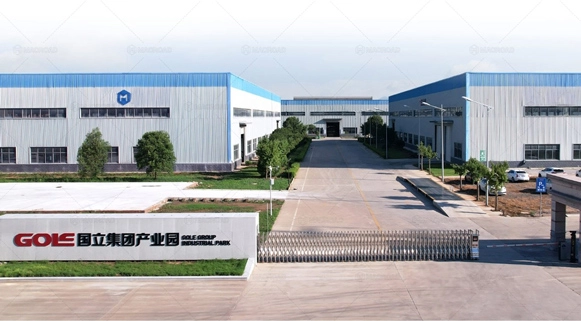
Independent Factory & Professional R&D
- Independent Manufacturing: Owning our own production plant ensures controllable equipment quality and timely delivery.
- R&D Team: Professional engineers continuously optimize paver performance and construction efficiency, addressing customer pain points on-site.
- Technological Innovation: Continuously introducing advanced functions such as automatic leveling, intelligent sensing, and energy-saving drives to ensure long-term technological leadership.

Complete Solutions
- Integrated Solutions: Providing a complete combination of pavers, asphalt mixing plants, road rollers, and construction processes to ensure efficient collaboration across all stages.
- Project Customization: Providing personalized configuration solutions based on project scale, terrain conditions, and construction cycle to ensure perfect equipment matching for the project.
- Construction Optimization Guidance: Providing full-process guidance from installation to operation to help customers reduce learning costs and improve construction efficiency.

Global Cases & Experience
- Extensive Project Experience: Covering diverse working conditions including highways, municipal roads, airport runways, and mountain roads.
- Reliable Results Demonstration: Real-world case studies show the equipment’s stability and construction quality in complex environments.
- Customer Trust: Long-term cooperation with numerous international customers and positive feedback demonstrates the reliability and service level of Macroad equipment.
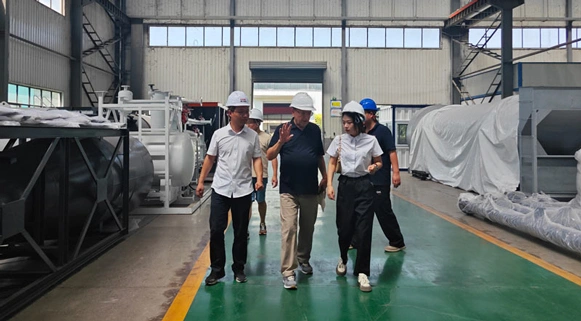
Stable Parts Supply and After-Sales Support
- Rapid Parts Response: Efficient logistics and spare parts management ensure timely delivery of critical parts, preventing construction stoppages.
- Professional After-Sales Team: Provides remote or on-site support at any time to resolve unexpected issues.
- Maintenance and Training: Systematic training, operation manuals, and on-site guidance ensure the team can quickly get started, reducing operational risks.
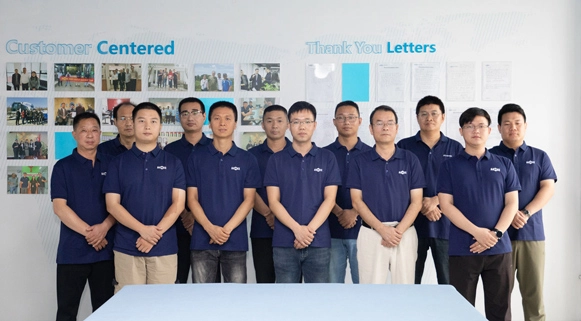
Long-Term Cooperation and Continuous Support
- Upgrades and Expansions: Equipment supports remote upgrades and functional expansions, ensuring long-term technological advancement.
- Project-Following Services: From selection to construction to post-construction maintenance, Macroad accompanies customers throughout the entire process, enhancing investment value.
- Sustainable Investment: Ensuring that every purchase is not just about equipment, but also a guarantee of efficient construction and long-term benefits.
Choosing Macroad is not just about choosing a high-performance paver; it’s about choosing a reliable engineering partner. From independent factories to professional engineers, from complete solutions to global case studies, to rapid parts supply and ongoing support, we ensure that every step safeguards your project, translating your investment into efficient construction, stable returns, and long-term value.