


High-Efficiency Vibration Compaction
Easy Operation Reliable Results

Imagine what would happen if road construction were done without road rollers? Freshly laid asphalt might appear smooth, but due to insufficient compaction, cracks and ruts quickly develop. Earthwork surfaces are loose and lack sufficient bearing capacity, leaving deep marks from heavy vehicles. Even with the extensive manpower and materials involved, such roads are unlikely to withstand the rigors of daily traffic.

This is the significance of road rollers. They are not only indispensable equipment in road construction but also crucial for ensuring the density, smoothness, and durability of the road surface. Whether it’s city streets and highways, airport roads, or dam projects, road rollers are the silent guardians of quality.
The Road Roller: The Power Behind Road Strength
Behind every seemingly smooth and sleek road lies an essential process: compaction. It determines whether the road surface can withstand traffic, weather, and even its lifespan. And the machine responsible for this crucial task is the road roller.
A road roller is a type of construction machinery that uses its own weight or vibration to compact materials like soil and asphalt. By eliminating voids and increasing density, it makes the foundation and road surface more stable and durable. For this reason, road rollers are used in nearly every compaction-related application:

| Road construction: | Compacting the base and surface layers of urban roads, rural roads, and highways. |
| Airport projects: | High-intensity compaction of airport roads and taxiways to ensure safe operation. |
| Water conservancy and dam projects: | Reinforcing earth-rock dams and embankments to improve stability. |
| Industrial and municipal projects: | Compacting the foundations of factory sites, parking lots, sports fields, and more. |
| Large-scale infrastructure projects: | Comprehensive projects such as ports, railways, and highway interchanges. |
Whether it is building a new road or renovating an old road, road rollers play a core role in determining the quality and life of the project.
Types of Road Rollers: Designed for Diverse Project Needs
There’s no single, universal answer for road and foundation engineering. Some projects require deep compaction to ensure the foundation can withstand long-term heavy traffic, while others prioritize surface uniformity and aesthetics for enhanced driving comfort. Construction environments are equally diverse: wide highways, busy urban arterials, complex bridge decks, and even airport runways all present distinct requirements for compaction methods.
For this reason, road rollers don’t come in just one form, but rather a variety of types—from static road rollers that rely on their own weight, to highly efficient vibratory road rollers, to tire-based road rollers that prioritize surface finishes, and even multifunctional combination road rollers. Each model has its own operating principles and advantages, supporting construction needs across a wide range of scales and conditions.

Static Road Roller
A static road roller is the most traditional type of compaction equipment. It relies on the weight of the machine to directly impact the road surface or foundation, using static pressure to achieve compaction. While its compaction power is not as strong as that of a vibratory road roller, its advantages lie in its smooth operation, low noise levels, and minimal impact on the surrounding environment. Therefore, it is often used in projects that require a high level of work environment and surface quality.
Applicable Scenarios:
- Urban Roads: Residential or commercial areas to avoid noise and vibration that could disrupt surrounding life and buildings.
- Fine Construction: During the finishing phase of a road, used to ensure smoothness and surface finish.
- Lightly Loaded Roads: Roads with low traffic volume and relatively low load requirements.

Vibratory Road Roller
Vibratory road rollers are the most widely used type of road roller today. They use the high-speed reciprocating motion of their vibrating mechanism to transfer kinetic energy into the soil or asphalt, rearranging and compacting the particles, achieving deep compaction. Compared to static road rollers, they offer higher efficiency and greater compaction depth, making them ideal for heavy-duty foundation projects.
Applicable Scenarios:
- Expressway base courses: Require a solid foundation capable of withstanding long-term heavy traffic.
- Airport roads: Require extremely high foundation uniformity and strength, ensuring safe operation.
- Large-scale earthwork projects: Require extensive, high-intensity compaction, such as water conservancy dams and port reclamation projects.

Tire Road Rollers
Tire road rollers rely on multiple sets of pneumatic tires to simultaneously roll the road surface, leveraging the tires’ elasticity to achieve a kneading and overlapping compaction effect. Compared to vibratory equipment, they produce less intense vibration and impact, making them more suitable for improving surface density and uniformity. During construction, the friction between the tires and the road surface also improves surface adhesion, ensuring more stable compaction.
Applicable Scenarios:
- Asphalt pavement construction: Enhances density and watertightness, reducing the risk of cracks.
- Urban arterial roads: Ensures driving comfort and surface smoothness.
- Bridge decks or roads with special structures: Prevents structural damage caused by strong vibration.

Combination Road Rollers
Combination road rollers combine the advantages of steel-wheel road rollers and tire road rollers, delivering high-intensity static or vibratory compaction while also providing gentle surface treatment through their tires. This multi-purpose unit is particularly well-suited for complex projects requiring multiple layers of construction, minimizing equipment requirements while maintaining both efficiency and quality.
Applicable Scenarios:
- Combined construction projects: For example, combined highway and municipal road construction requires both base and surface layer construction.
- Large-scale infrastructure projects: Airports, ports, and other sites require short construction cycles and high quality standards.
- Varied working conditions: Combination road rollers offer the flexibility to handle projects requiring both thick layer compaction and detailed finishing.
From Loose to Solid: The Operating Logic and Value of Road Rollers
The operation of a road roller is more than a simple back-and-forth rolling motion. In road and foundation construction, it follows a scientific operating logic: a gradual compaction process from shallow to deep, from coarse to fine, and from the overall to the detailed. It is this logic that ensures not only a smooth appearance but also long-term bearing capacity within its internal structure. These seemingly repetitive steps are actually key to ensuring project quality and economic benefits in whole asphalt production.

Initial Static Compaction – Establishing Base Layer Stability
- Operational Logic: Utilizing the equipment’s own weight for the first round of compaction, compacting loose materials and creating a uniform contact surface.
- Customer Value: Reduces subsidence and uneven compaction during subsequent construction, laying a solid foundation for the entire road section and avoiding costly repairs due to structural instability in the future.
Vibratory Compaction – Penetrating Deep into the Core of the Granular Layer
- Operational Logic: High-frequency vibrations realign particles and fill gaps, achieving deeper compaction.
- Customer Value: Significantly improves load-bearing capacity, enabling the road to withstand heavy traffic and environmental changes over the long term, reducing the likelihood of cracks and rutting.
Multiple Passes – Ensuring Overall Uniformity
- Operational Logic: Repeatedly roll across the construction surface, maintaining appropriate overlap to avoid missed areas.
- Customer Value: Ensures consistent pavement performance across the entire section, eliminating the risk of uneven pavement, and reducing rework and maintenance costs associated with localized defects later in the process.
Finishing Static Compaction – Creates Smoothness and Aesthetics
- Operational Logic: When approaching the designed density, vibration is turned off or reduced in amplitude to smooth the surface.
- Customer Value: Achieve improved smoothness and visual quality, providing a comfortable driver experience and helping the construction company successfully pass project acceptance.
Quality Inspection – Verify Construction Results
- Operational Logic: Verify whether compaction meets standards through density, smoothness, and other tests.
- Customer Value: Avoid rework and delays caused by quality issues, ensure on-time project delivery, and enhance the construction company’s credibility with the client and the market.
From the first static compaction pass to the final quality inspection, every step of the road roller’s operation isn’t a mechanical repetition; it forms part of a tightly linked quality assurance chain. This not only determines whether the road can withstand future tests, but also impacts the contractor’s cost control and market competitiveness. Understanding and effectively utilizing this compaction logic means you can achieve greater long-term value in your projects.
The Key Role of road rollers in the Construction Chain
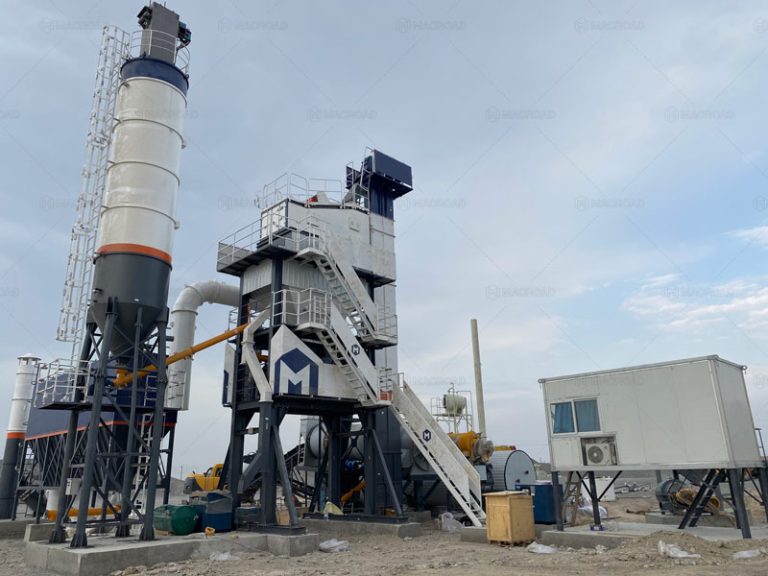
Behind a high-quality road, the road roller isn’t a solitary worker; rather, it’s a team member that works closely with the asphalt mixing plant, paver, and spreader.
The asphalt mixing plant provides a steady supply of raw materials, the asphalt paver evenly spreads the mix, the asphalt distributor completes the tack coat, and the road roller secures everything together in the final stage. Only when these processes are coordinated and seamlessly connected can a road be both strong, durable, smooth, and beautiful.


The Logic Behind Road Roller Pricing
When purchasing a road roller, price is often the most important factor. However, price is influenced by many factors, including the design and configuration of the equipment itself, as well as the external market environment. A thorough understanding of these factors will not only help you make rational purchasing decisions, but also prevent you from neglecting long-term value by chasing low prices.

Equipment Factors
- Model and Tonnage: The tonnage and model of a road roller directly determine its operating capacity. Larger models offer greater compaction power and a wider range of applications, making them particularly suitable for large roads or airport runways, but they are naturally more expensive. Smaller or lighter models, on the other hand, offer greater flexibility and are suitable for urban roads or projects with limited space, offering a more cost-effective investment.
- Compaction Method and Technical Configuration: Different compaction methods (such as static pressure, vibration, and tire-type) significantly affect construction results and efficiency. Adding intelligent control systems and automatic detection and monitoring modules can further increase the price. However, these features can significantly improve construction efficiency and compaction quality, reducing rework and maintenance costs in the long run.
- Brand and Manufacturing Quality: road rollers from reputable brands are often more reliable in terms of design reliability, durability, and after-sales service. While this type of equipment may have a higher initial investment, it is more durable and has a lower failure rate, saving significant maintenance costs over its lifecycle, resulting in a higher overall value.
- Accessories and Customized Configurations: While some extra features, such as a fully enclosed cab, automatic sprinkler system, and remote monitoring capabilities, may increase the machine’s price, they often translate into tangible economic benefits by improving operator comfort, ensuring safety, and reducing construction risks.
External Environmental Factors
- Raw Materials and Manufacturing Costs: Price fluctuations of key components such as steel, hydraulic components, and electronic control systems are directly reflected in the overall machine price. When the raw material market is high, customers also face higher procurement costs.
- Market Supply and Demand: Prices are also affected by market conditions. During periods of strong infrastructure demand or the launch of large-scale projects, demand for road rollers surges, naturally driving up prices. During periods of weak demand, manufacturers may stimulate sales through price cuts or promotions.
- Regional and Transportation Costs: The price of the same equipment can vary significantly in different regions. This is becau