


Convenient, efficient and flexible
PLC automation control
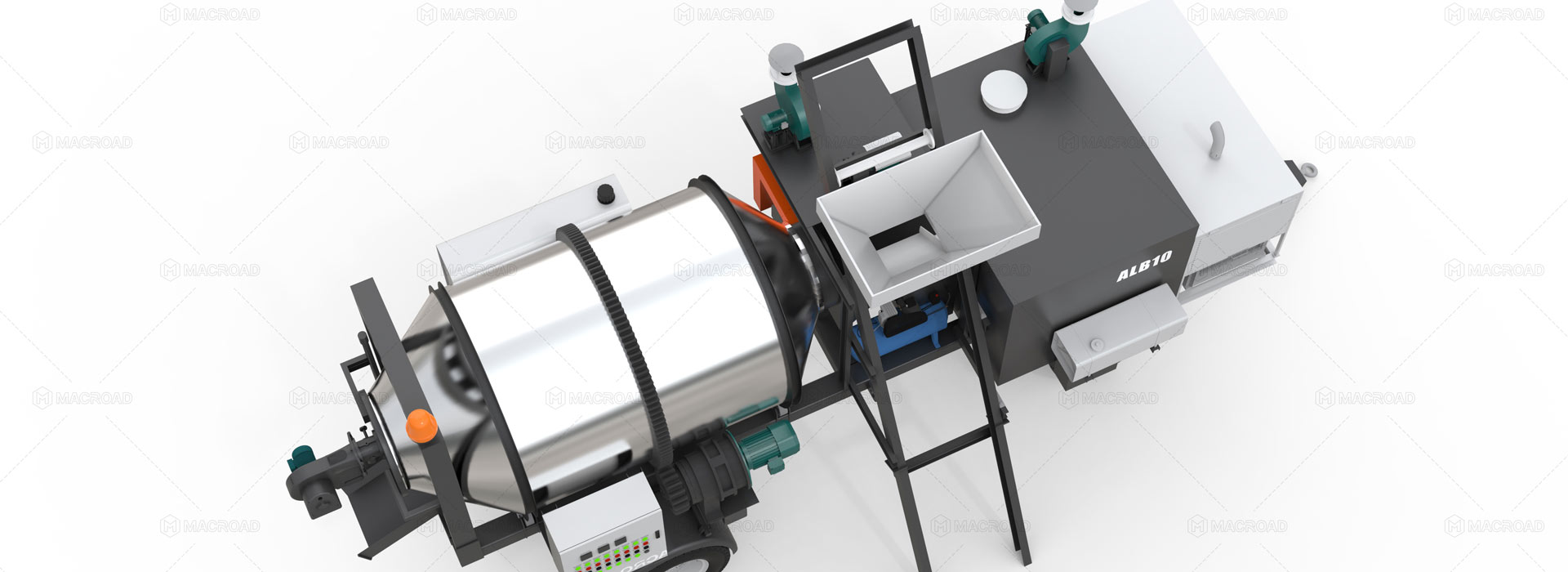
Not every project requires a large-scale asphalt mixing plant. In scenarios such as road maintenance and localized repairs, what is needed is a lightweight, highly efficient solution.
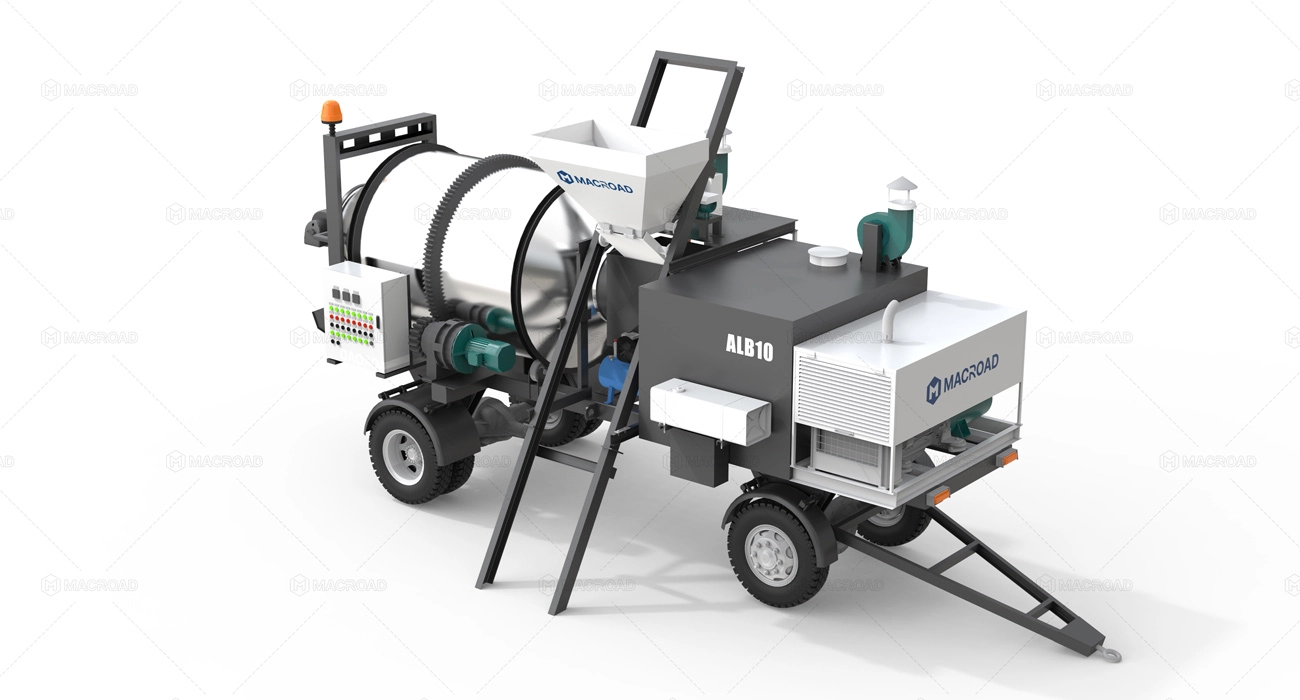
A small-scale asphalt mixer offers precisely this choice—delivering flexible production with a capacity of approximately 10 TPH, while avoiding the high costs and complex processes associated with large-scale equipment.
How Mini Asphalt Mixers Help in Different Construction Scenarios
Whether for rapid repairs on rural roads or small-scale paving projects in remote mountainous regions, a compact asphalt mixing machine for sale offers a flexible and efficient solution. It not only meets the operational needs of small work crews but also enables high-quality asphalt production within confined spaces and under tight time constraints. The two real-world case studies presented below demonstrate the actual performance of this specific equipment across different projects, illustrating how it helps contractors overcome a diverse range of challenges.
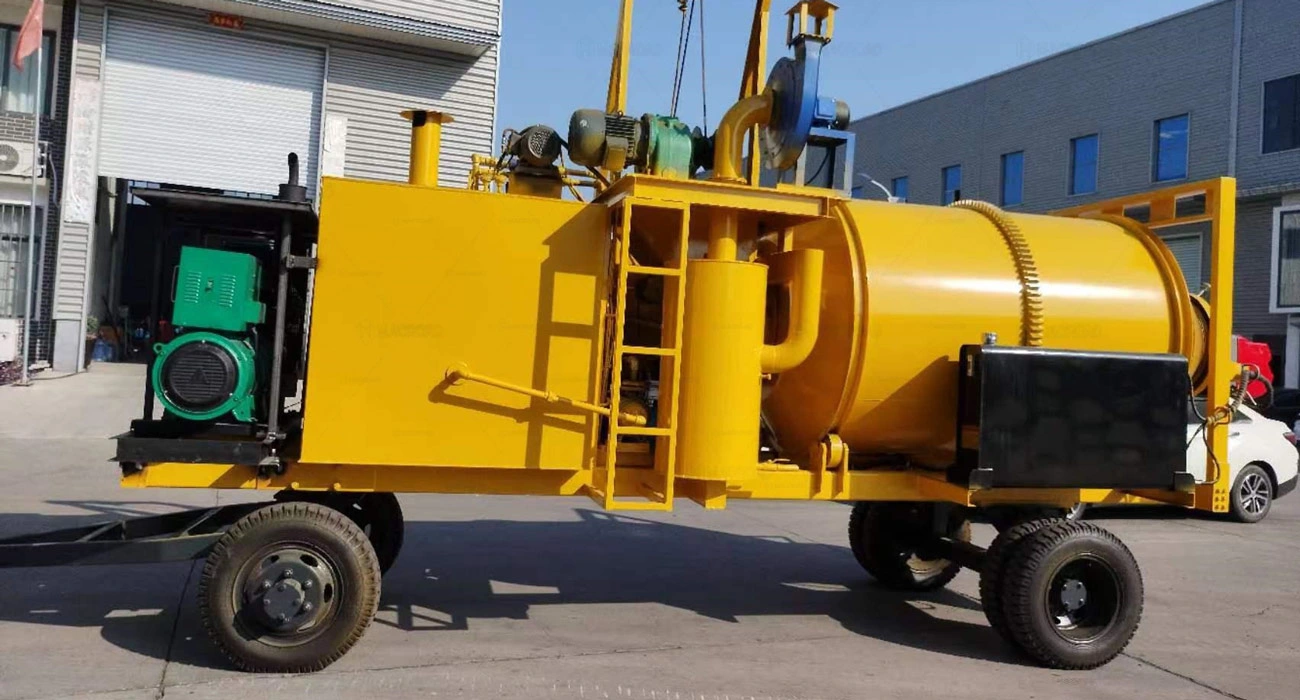
Peru Mini Asphalt Mixer Project – Rapid Rural Road Repairs
- Project Requirement: The rural road in Peru had many potholes and cracks. Authorities needed quick repairs, but the site was remote and the crew small.
- Equipment Fit: The 10 TPH mini asphalt mixer was easy to deploy on-site, producing high-quality asphalt quickly without relying on outside supply.
- Project Outcome: Within two weeks, the crew repaired all potholes, stayed within budget, and improved traffic safety while avoiding delivery delays.
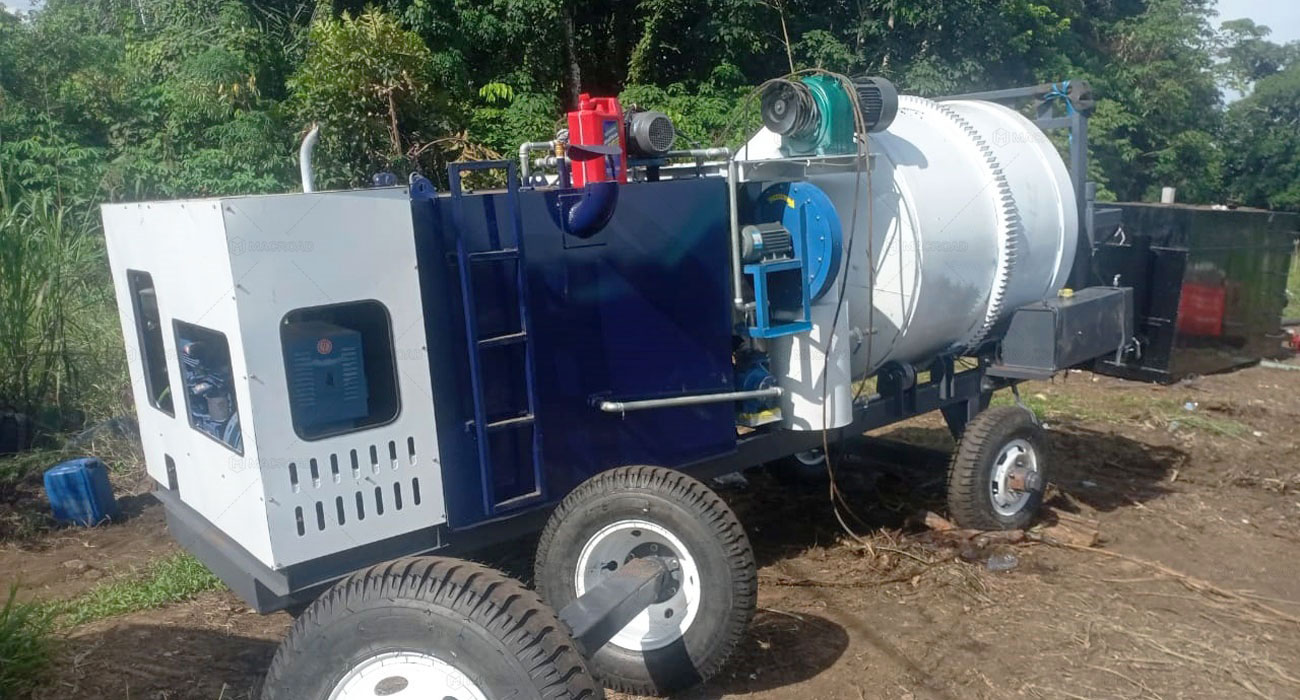
Indonesia Small Asphalt Mixer Project‑‑On‑site Paving for Remote Island Roads
- Project Requirement: Multiple remote island road renovation projects across Indonesia faced poor logistics, high cost for hot‑asphalt transportation, scattered job‑sites, and limited local heavy‑equipment support. The client needed reliable on‑site asphalt production to serve dispersed road‑repair works.
- Equipment Fit: The 10 TPH portable asphalt mixer features compact footprint and container‑friendly transport. It can be quickly relocated between island construction sites, generating fresh hot‑mix asphalt locally without long‑distance material hauling.
- Project Outcome: Road‑repair tasks on multiple islands were finished on schedule. Transport‑related material costs were greatly reduced. Local crews got stable on‑demand asphalt supply, improving overall progress for scattered rural & island infrastructure projects.
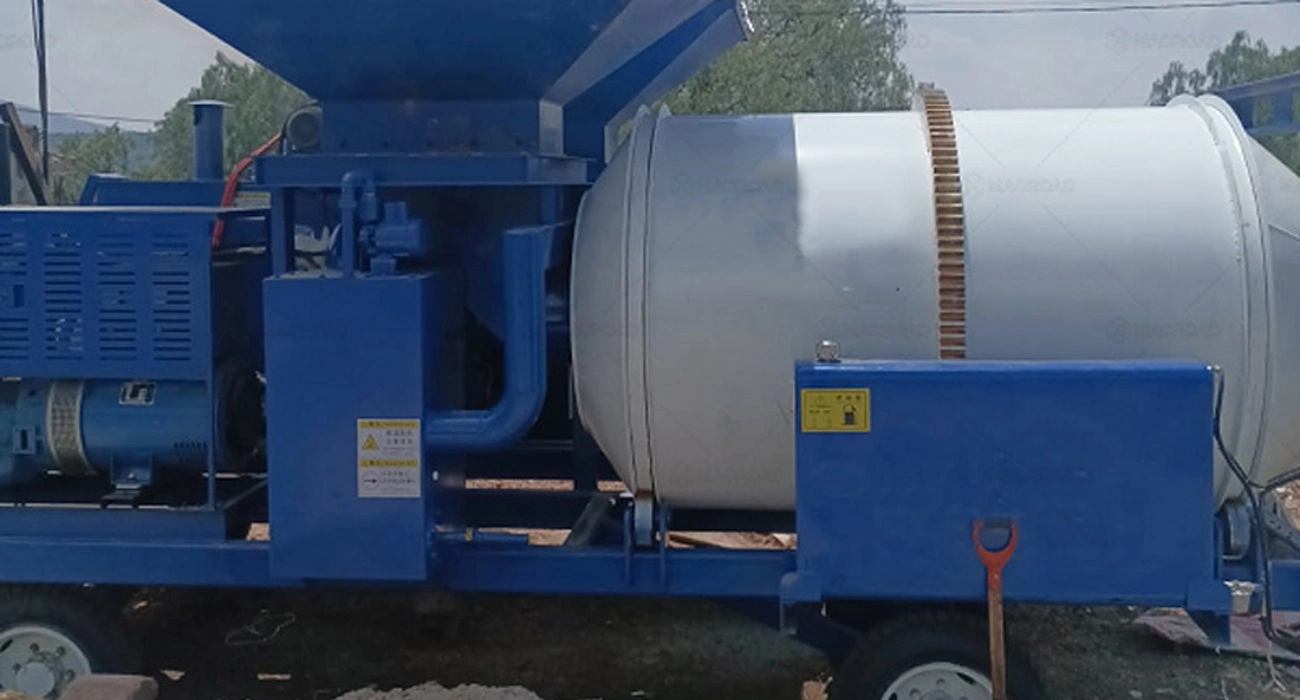
Mexico Small Asphalt Mixer Project – Flexible Construction in Remote Areas
- Project Requirement: A remote village road in Mexico needed paving. Access was difficult, asphalt supply costly and unreliable, and the team required on-demand, flexible production.
- Equipment Fit: The 10 TPH portable asphalt mixer, compact and easy to transport, was quickly deployed across multiple sites, allowing efficient work without large equipment.
- Project Outcome: The crew completed the paving on time, controlled costs, and the road was quickly operational, with the mixer’s flexibility boosting overall efficiency.
Macroad Asphalt Mixer – Compact and Efficient for Road Repairs
As demonstrated in the preceding case studies, we have already witnessed the highly efficient performance of small-scale asphalt mixer mobile in practical road maintenance applications. So, what specific design features does this equipment—so highly trusted by our clients—actually possess that enable it to execute high-quality road repairs in such a short timeframe?
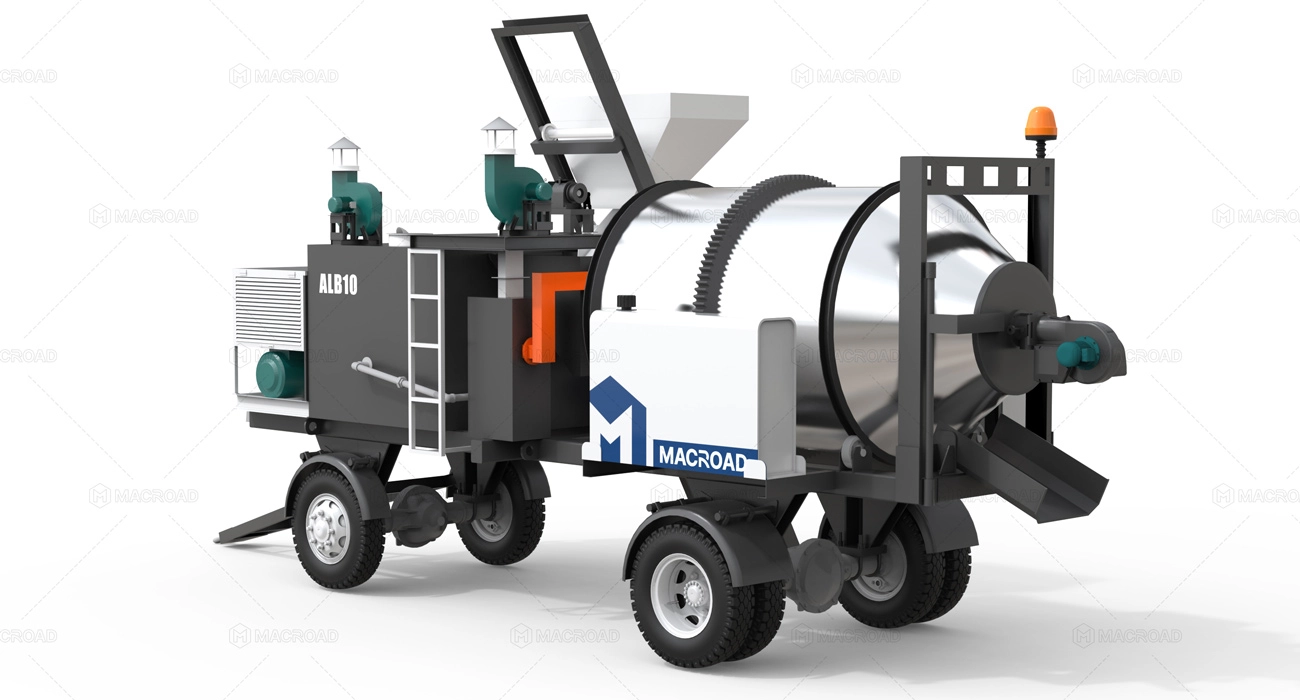
The Macroad 10t/h asphalt mixer is a compact unit specifically engineered for small-to-medium-scale road repair and maintenance projects. It integrates a high-efficiency mixing system, an on-site heating mechanism, and a user-friendly interface, enabling it to produce high-quality hot-mix asphalt in a very short time. This makes it ideally suited for a wide range of asphalt road maintenance scenarios, including municipal roads, rural routes, and parking lots.
- Output Capacity: 10 t/h—sufficient to meet the demands of small to medium-scale road maintenance projects.
- Mixing Capacity: 1 ton per batch, with a mixing cycle requiring only 10–15 minutes.
- Discharge Temperature: 3–4 kg/ton.
- Compact Dimensions: 6 × 2.1 × 2.65 m.
- Efficient Heating: Features a four-layer melting pot design that optimizes both thermal insulation and the mixing process.
10 TPH: Small Capacity, Big Impact
For some clients, a production output of 10 tons per hour may seem modest, potentially raising concerns that it might be insufficient to meet construction requirements. In reality, however, an output of 10 tons is entirely adequate for small-scale road maintenance, localized repairs, and temporary construction projects. More importantly, when combined with the equipment’s inherent flexibility and rapid deployment capabilities, this level of output enables the efficient completion of construction tasks—even within limited timeframes and confined spaces. Below, we will examine from several practical perspectives exactly what value a production rate of 10 tons per hour truly represents.
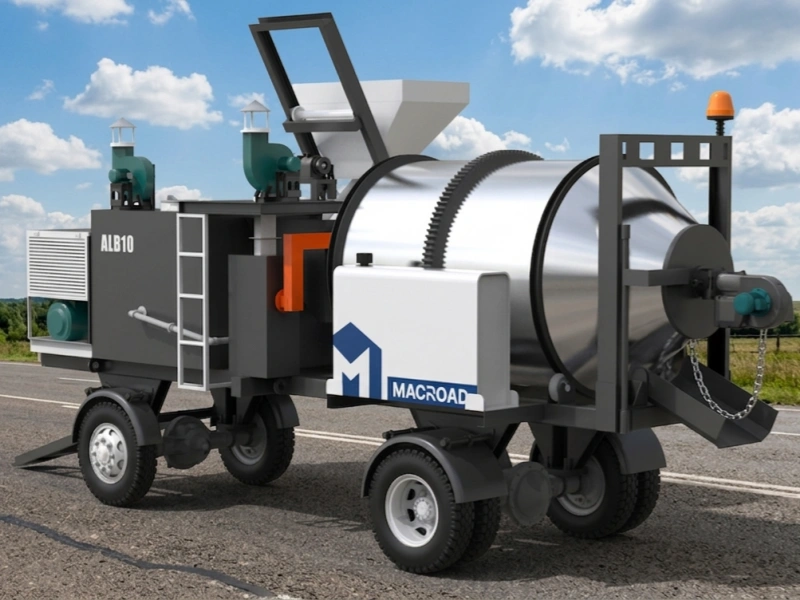
Ideal Output for Small-Scale Road Repairs
- An output rate of 10 tons per hour means that even on rural or municipal roads dense with potholes, on-site paving can be completed within just a few hours, thereby avoiding prolonged road closures.
- This modest output facilitates phased construction, allowing for a precise match with specific road repair requirements and minimizing material waste.
- The output is stable and continuous, providing small construction teams with a reliable supply of hot-mix asphalt to ensure both construction quality and efficiency.
Flexible Response to Dispersed Work Sites
- For small construction teams managing operations across multiple locations, an output of 10 tons per hour is sufficient to support a rotational workflow across various repair sites.
- Coupled with the asphalt mixer’s inherent portability, the unit can be rapidly relocated to different repair points, significantly reducing the downtime between construction tasks.
- Even at remote job sites situated far from major asphalt mixing plants, construction continuity can be maintained without reliance on external supply sources.
Controlling Construction Costs and Material Loss
- Precise output control enables on-demand production, preventing material waste caused by overproduction.
- Small-scale asphalt mixer entails lower operating costs—specifically saving on fuel and labor expenses—compared to large-scale asphalt mixing plants.
- Even within a limited budget, high-quality road repairs or small-scale paving projects can be successfully executed, thereby enhancing overall cost-effectiveness.
Suitable for Small Projects with Tight Deadlines
- The 10-ton-per-hour output rate ensures that short-cycle projects are completed within their stipulated deadlines, minimizing construction delays.
- For temporary road paving or routine municipal maintenance tasks, the equipment can be rapidly deployed, significantly accelerating construction response times.
- Even under tight time constraints, the system guarantees that every batch of asphalt is thoroughly mixed, ensuring consistent and reliable construction quality.
Balancing Efficiency with Equipment Flexibility
- While ensuring construction efficiency, this modest output capacity avoids occupying excessive on-site space, making the equipment suitable for a wide variety of construction environments.
- The asphalt mixer is compact and portable, allowing for simple transportation and deployment; on-site operations can be completed without the need for assistance from heavy machinery.
- Capable of operating stably under diverse environmental conditions, the system strikes an optimal balance between flexibility and efficiency, empowering small construction teams to tackle a wide range of scenarios with greater ease.
Although a production capacity of 10 tons per hour may seem modest, it is more than sufficient to efficiently support small-scale road repairs, dispersed construction sites, and projects with tight schedules—striking a perfect balance between operational flexibility and construction quality to truly deliver big performance from small equipment.
This is precisely why numerous municipal maintenance agencies and small-scale construction teams have chosen the Macroad 10t/h asphalt mixer for sale as the ideal equipment for their daily construction and repair operations.
Who This Equipment Is Best For
Have you ever found yourself in a situation where, despite a project’s modest scale, you were forced to shoulder exorbitant costs for asphalt procurement or equipment investment? In reality, for specific types of construction tasks, small-scale asphalt mixers can offer you more flexible and controllable solution.
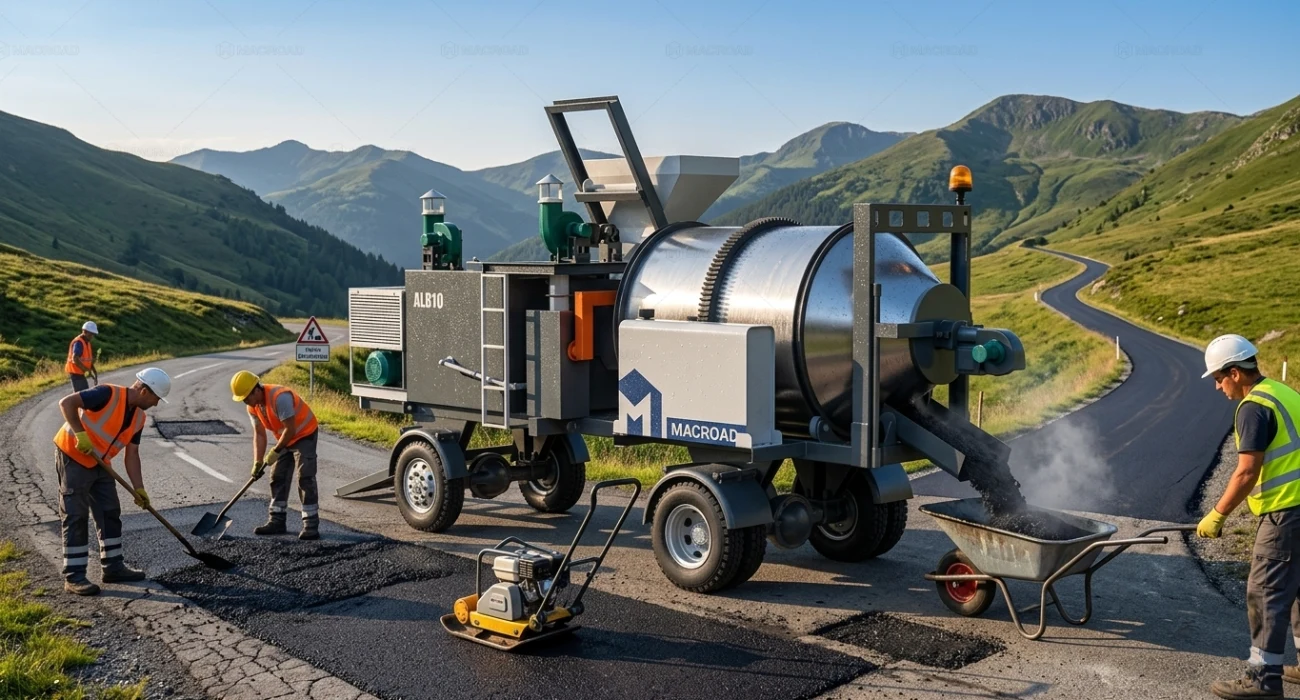
This is particularly true for the following user groups, who stand to gain significant benefits from such a solution.
- Small-scale Road Construction Contractors: When undertaking rural roads, branch roads, or small-scale paving projects, the project scope is limited, yet demands for construction efficiency remain high. Utilizing a small-scale asphalt mixer machine eliminates the reliance on external asphalt suppliers, enabling on-site production and enhancing operational flexibility.
- Municipal Road Maintenance Agencies: Engaged in routine maintenance tasks—such as road patching and pothole repairs—these agencies face work sites that are geographically dispersed and require frequent attention. Equipment must be capable of rapid deployment and immediate use; small-scale mixing plants are ideally suited to meet the demands of such high-frequency, small-scale operations.
- Remote Area Construction Teams: In regions with poor transportation infrastructure or those situated far from established asphalt supply depots, transport costs are prohibitively high and subject to significant instability. By owning and operating a small-scale asphalt mixing machine, teams can achieve on-site production, thereby drastically reducing both logistics costs and the uncertainties associated with material delivery timelines.
- Contractors for Temporary or Dispersed Projects: For projects such as temporary road paving or minor infrastructure construction—characterized by short durations and shifting locations—small-scale mobile asphalt mixer offer distinct advantages. Compared to large-scale machinery, these compact units are far easier to transport and deploy, making them the superior choice for projects requiring rapid mobilization and demobilization.
If your project falls into any of the above categories, rather than investing in large-scale equipment or relying long-term on purchased asphalt, you should opt for a more flexible and cost-effective small-scale mini asphalt mixer machine solution.
Precision Design, Reliable Performance
What dose an asphalt mixer machine do? A compact asphalt mixer machine capable of efficiently executing road maintenance tasks—even within limited spaces and with a small crew—owes its success to the meticulous design and high degree of coordination among its core components. It not only ensures the consistent quality of every batch of asphalt but also significantly boosts construction efficiency and operational ease. Join us now as we break down the core systems of the Macroad 10t/h asphalt mixer machine, revealing how it transforms its flexible, compact form factor into a highly efficient and reliable tool for construction.
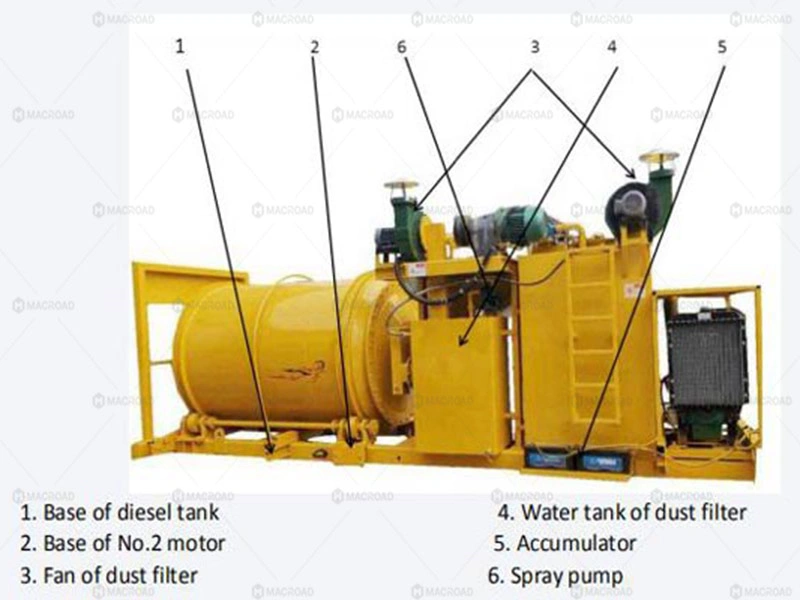
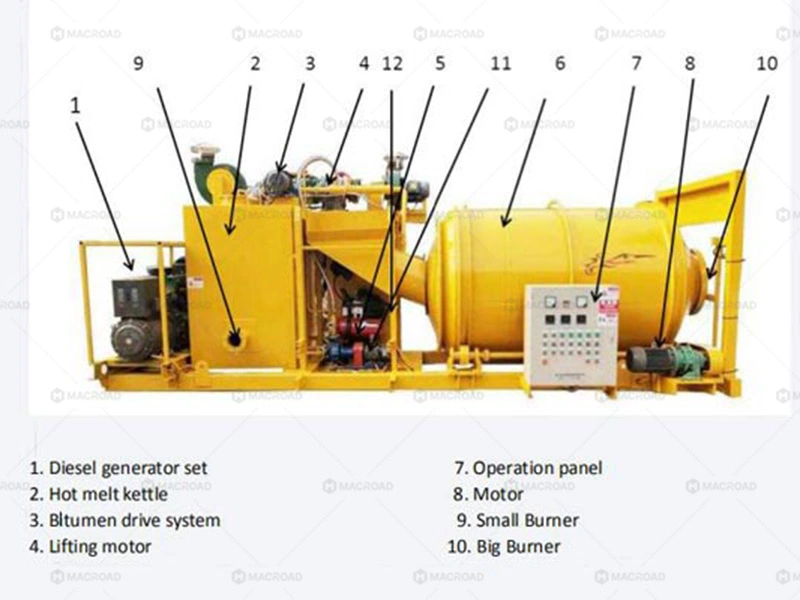
High-Efficiency Mixing System — Uniform Blending, Rapid Discharge
- Helical Blade Arrangement: Optimizes the mixing path, ensuring aggregates, asphalt, and mineral fillers blend rapidly and uniformly within the drum. Each batch requires only 10–15 minutes of mixing time, significantly boosting operational efficiency.
- Bottom Discharge Design: Facilitates smooth material discharge while minimizing residue, enabling rapid, continuous construction operations and eliminating time wasted on cleanup.
- Automatic Lifting Mechanism: Mechanically conveys the mixed material directly to the discharge port, reducing manual labor intensity and ensuring the construction team can operate efficiently and continuously.
Drum Heating System — Rapid Warm-up, Stable Discharge
- High-Efficiency Burner: Heats cold aggregates directly, boosting heating efficiency by approximately 30%. This shortens preparation time and allows construction work to commence rapidly.
- Balanced Temperature Control: Ensures uniform heat distribution within the drum, resulting in a stable discharge temperature that guarantees consistent asphalt mix quality throughout the entire batch.
- Energy-Saving & Safety Design: The combustion system is optimized to conserve fuel while simultaneously mitigating the risk of overheating, thereby extending the equipment’s service life.
Hot-Melt System — Dual Assurance: Heat Retention & Mixing
- Multi-Layer Hot-Melt Tank Structure: Designed to simultaneously prioritize both heat retention and mixing. This prevents the asphalt temperature from dropping too low—which would compromise construction quality—while ensuring the material is thoroughly blended.
- Rapid Material Heating: Capable of heating each batch of material in a short timeframe, supporting continuous construction operations and minimizing waiting times.
- Precise Temperature Control: Equipped with an intelligent temperature control system that maintains minimal temperature deviation, preventing quality fluctuations caused by overheating or undercooling of materials.
Power & Transmission — Independent, Stable, and Field-Operation Ready
- Diesel Generator Set: Provides an independent power supply of 15–30 kW, meeting the power demands for mixing, heating, and other construction tools without relying on external power sources.
- Dual-Circuit Power Distribution: The mixing and heating systems are powered independently, ensuring stable operation even when electrical loads fluctuate, thereby preventing uneven discharge or construction interruptions.
- Multi-Functional Power Output: A single power source drives multiple modules—including the mixing, heating, and conveying mechanisms—enhancing overall construction efficiency and reducing the need for additional equipment investment.
Intelligent Control Unit — Simple Operation, Precise Data
- Central Control Panel and PLC System: Real-time monitoring of temperature, rotational speed, and material levels; minimizes errors associated with manual judgment and ensures a fully controllable construction process.
- Intuitive User Interface: Enables even small teams or non-s