


High-precision weighing system
Computer + touch screen + button three flexible operation modes
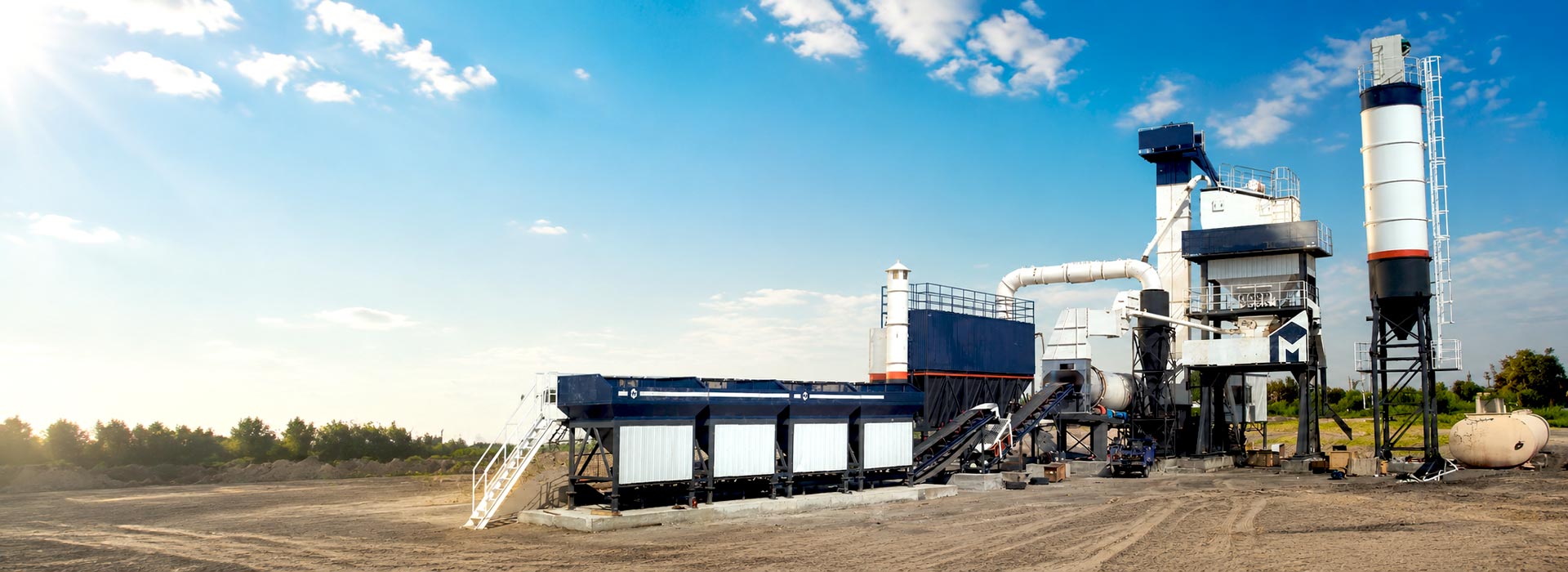
Each kilometer of highway requires approximately 10,000 tons of asphalt mixture. A port’s distribution channel requires a continuous supply of materials for 14 months from commencement to completion. Trunk highways spanning three provinces, with stations along the route and phased construction, require a stable source of materials every day.
A stable supply of materials is the most basic requirement for large-scale road projects, and this is precisely the significance of stationary asphalt mixing plants. Located next to your project, they continuously output 40 to 320 tons per hour, providing a stable and planned source of asphalt mixture for construction, allowing you to control the construction schedule and ensuring that every batch of asphalt arrives on time.
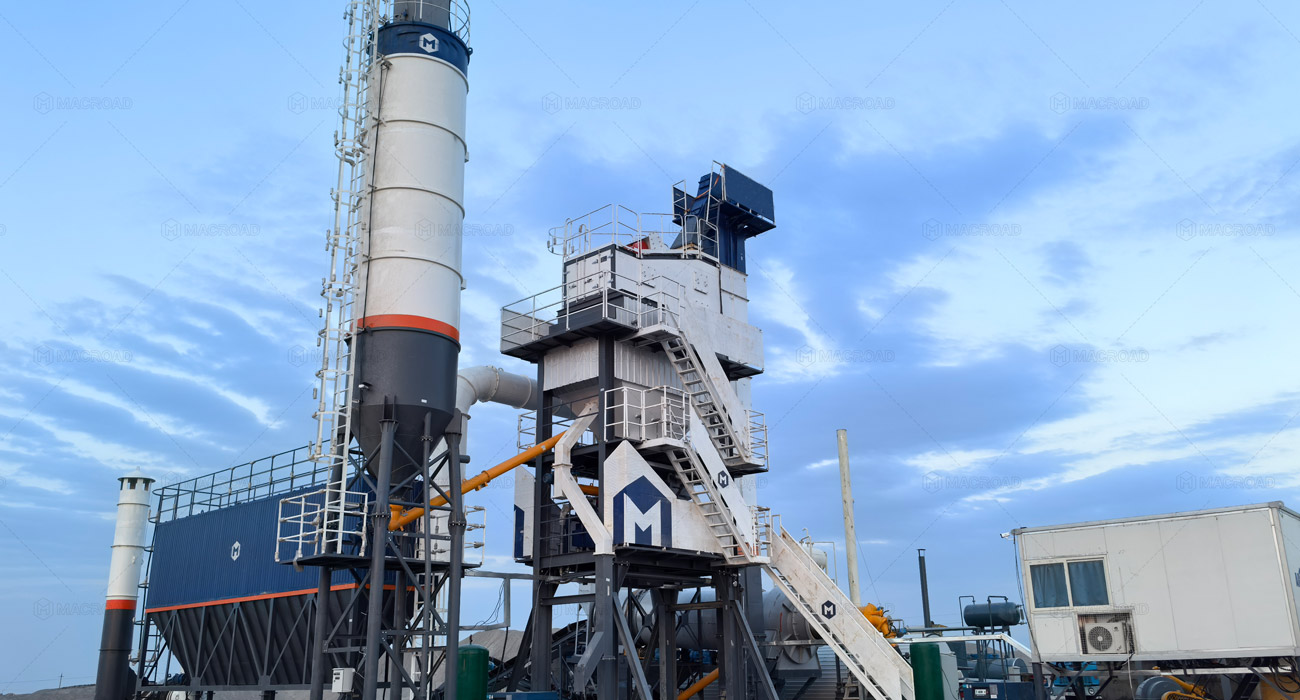
What Types of Projects Choose Stationary Asphalt Mix Plants?
Many of our clients’ projects ultimately chose stationary asphalt batch plant as long-term production centers precisely because of these characteristics. The following scenarios represent the most common application areas of stationary asphalt mixing plants. We have accumulated rich project experience and typical cases in these project types, hoping to help you more intuitively understand how our equipment is applied in practical engineering.
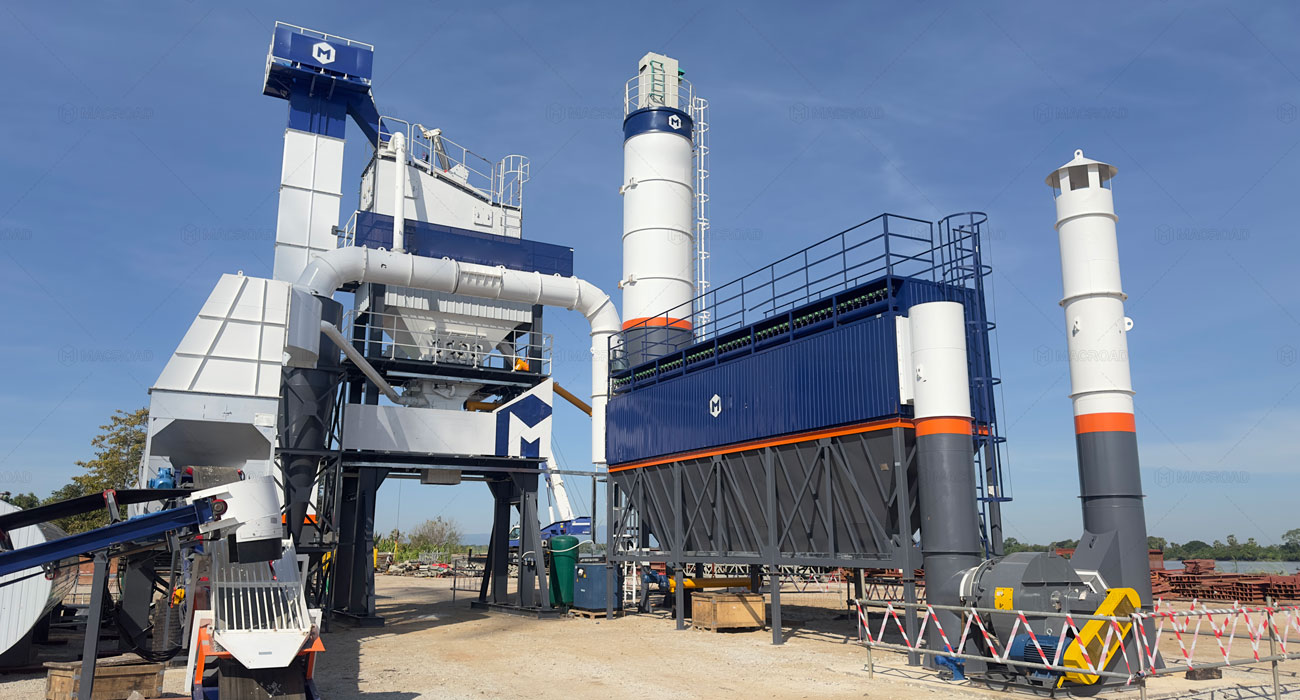
Myanmar Highway Project: Continuous Asphalt Supply with ALQ80 Stationary Plant
- Project Requirement: The highway project required a reliable asphalt supply source throughout a long construction period while supporting multiple construction sections simultaneously.
- Project Progress: The client selected an ALQ80 asphalt batching plant stationary and completed installation and commissioning in Myanmar. The plant served as a centralized production base for continuous material supply.
- Project Results: After commissioning, the plant continuously supplied asphalt mix for the highway project, supporting planned construction progress throughout the project lifecycle.
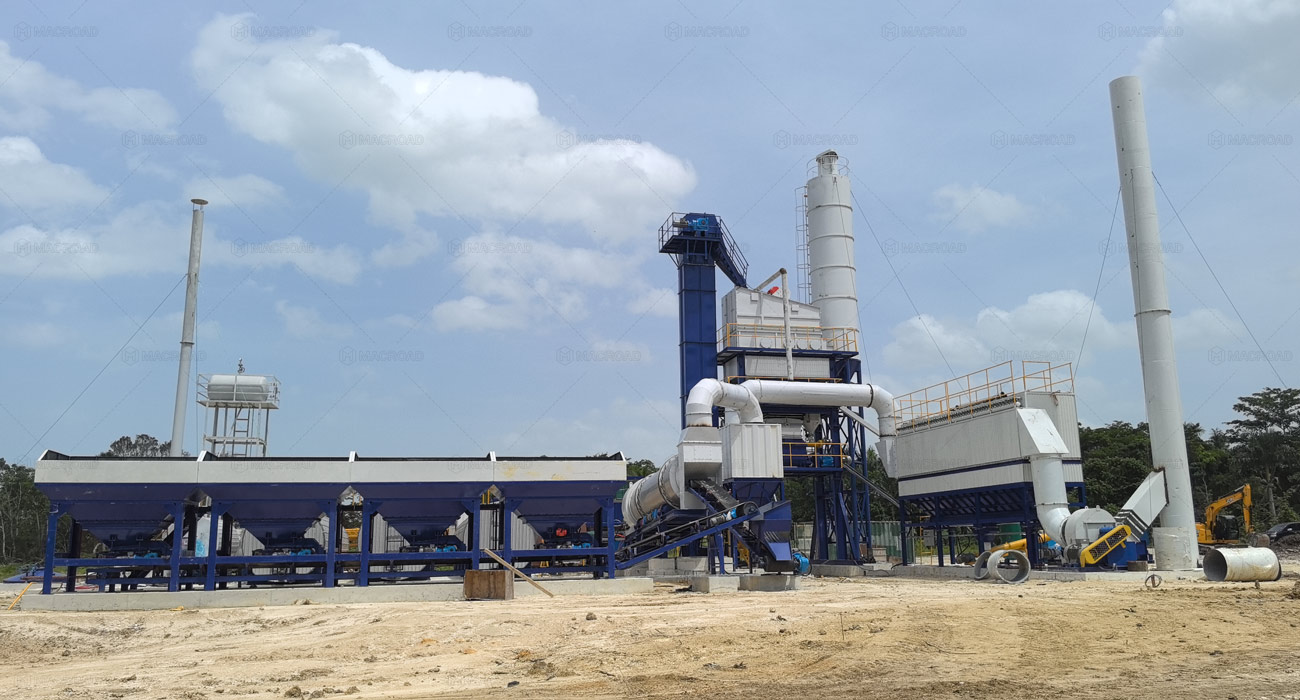
Jamaica Urban Road Project: ALQ120 Supporting Municipal Road Development
- Project Requirement: As urban infrastructure development accelerated, the client needed a reliable asphalt production solution to support ongoing road construction activities.
- Project Progress: The client installed an ALQ120 stationary asphalt batching plant in Jamaica and established a long-term production base to support municipal road projects.
- Project Results: Following commissioning, the plant provided continuous asphalt supply for local road construction projects, supporting a steady construction schedule.
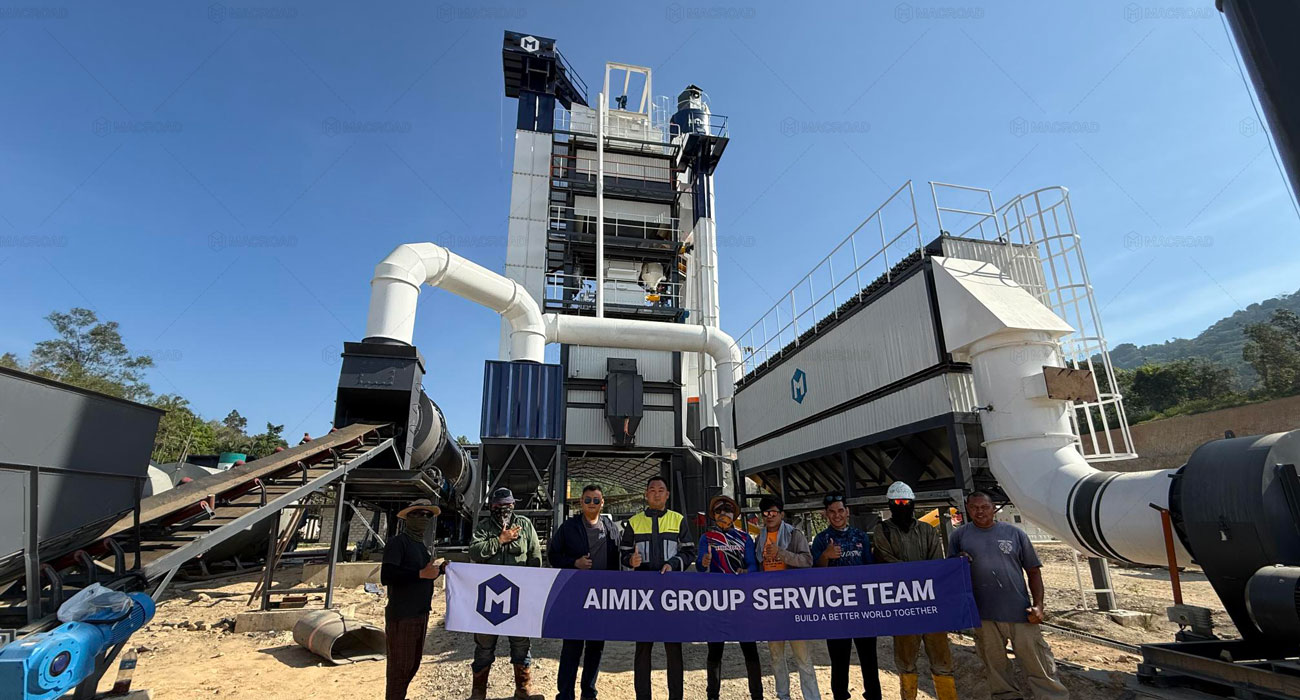
Malaysia Port Road Project: ALQ120 Supporting Heavy-Duty Transportation Corridors
- Project Requirement: The project required a dependable asphalt supply source to support the construction of roads designed for frequent heavy-duty vehicle traffic.
- Project Progress: The client deployed an ALQ120 stationary asphalt mixing plant in Malaysia to serve as the primary asphalt supply hub for port-related road construction.
- Project Results: After entering operation, the plant continuously supplied asphalt mix to multiple construction zones, supporting long-term infrastructure development.
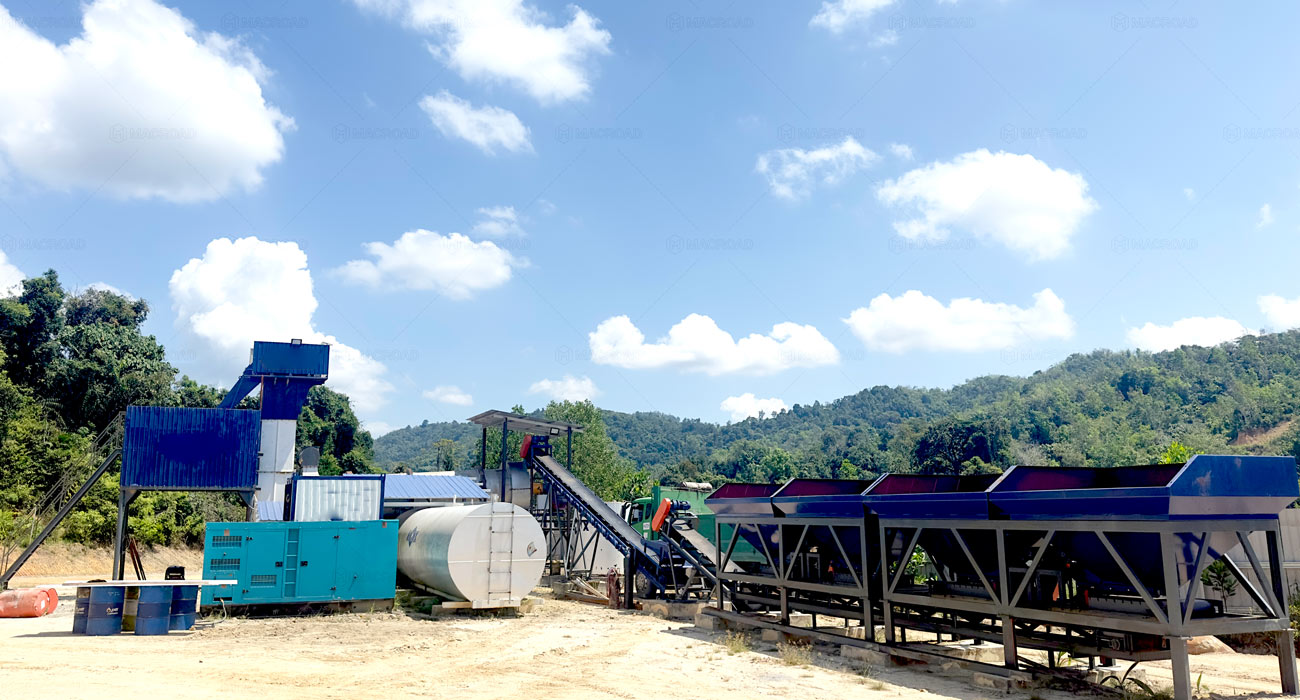
Malaysia Rural Road Project: ALT60 Supporting Regional Road Connectivity
- Project Background: As regional transportation networks continue to improve, rural road upgrade projects are progressing steadily. The project required a stable asphalt supply over a long construction period to support segmented road construction and continuous on-site operations.
- Project Progress: The client selected the ALT60 stationary drum asphalt mixing plant and completed installation in Malaysia. It was set up as a centralized production base to continuously supply multiple road construction sections.
- Project Results: After commissioning, the plant provided continuous and stable asphalt supply for rural road construction, effectively supporting the gradual development of the regional road network.
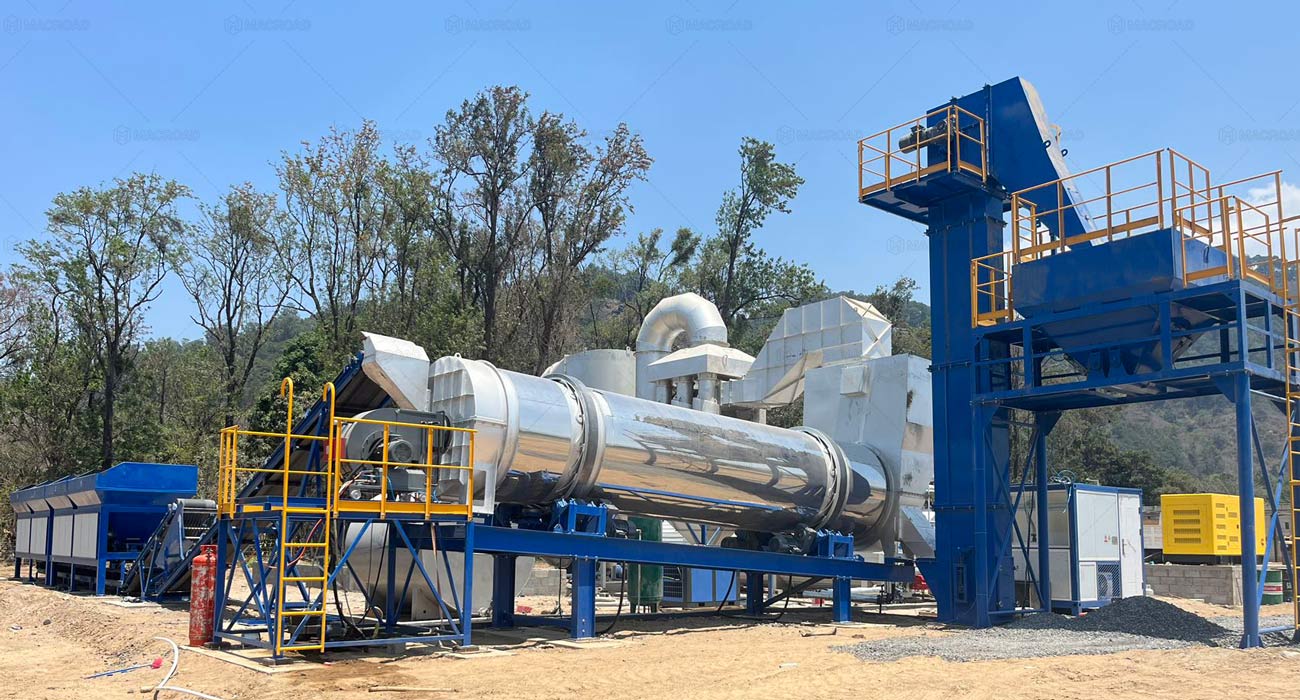
Guatemala Industrial Park Road Project: ALT120 Supporting Infrastructure Development
- Project Background: As the industrial park continued to expand, the demand for internal roads and supporting infrastructure also increased. The project required a stable and reliable asphalt production capacity to support long-term construction activities.
- Project Progress: The client deployed the ALT120 stationary drum asphalt mixing plant in Guatemala as a key production facility, supplying multiple construction areas within the industrial park.
- Project Results: After operation, the plant continuously supplied asphalt mix for road and infrastructure construction within the industrial park, ensuring construction continuity during expansion.
Although these projects differ in location and type, they share a common thread in their construction organization: they all require a stable, fixed production site to continuously supply asphalt mixtures for multiple construction sections. It is precisely because of this stable supply requirement that these projects ultimately chose stationary asphalt plants for sale as their long-term production solution.
If your project also has a similar construction schedule and supply method, then stationary equipment would be a worthwhile area to consider.
Two Options of Stationary Asphalt Mixing Plants
In practical applications of stationary asphalt mixing plants, although different projects all adopt a fixed production center model, the configuration paths for mixture production still vary depending on the project requirements.
Some projects prioritize precise control and proportioning accuracy of the mixture, requiring higher consistency of the finished product while maintaining stable production; others focus on continuous output capacity and unit cost control, hoping to maintain a stable supply rhythm during long-term operation.
Based on these different construction logics, Macroad primarily offers two system configurations for asphalt mixing plants: the ALQ stationary batch asphalt plants and the ALT stationary drum mixing plant.
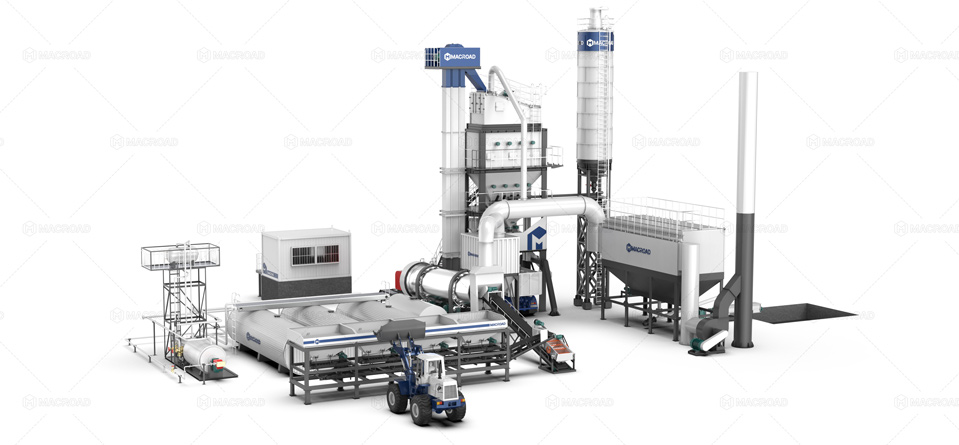
ALQ Stationary Batch Mix Asphalt Plant – High-Quality Finished Product
- More stable mix proportioning control ensures greater consistency in each batch: During each batch production process, aggregates, powders, and asphalt are precisely proportioned using an independent weighing system, ensuring a more stable structural consistency in the output mixture over long-term operation.
- Clearer production rhythm facilitates easier on-site construction planning: The batch production method allows construction teams to schedule paving and transportation according to the output rhythm of each batch, making construction organization more planned.
- Better suited to the material requirements of high-grade road projects: In highways, airport roads, and other projects, this asphalt batching plant better meets the requirements for pavement structure uniformity and material stability.
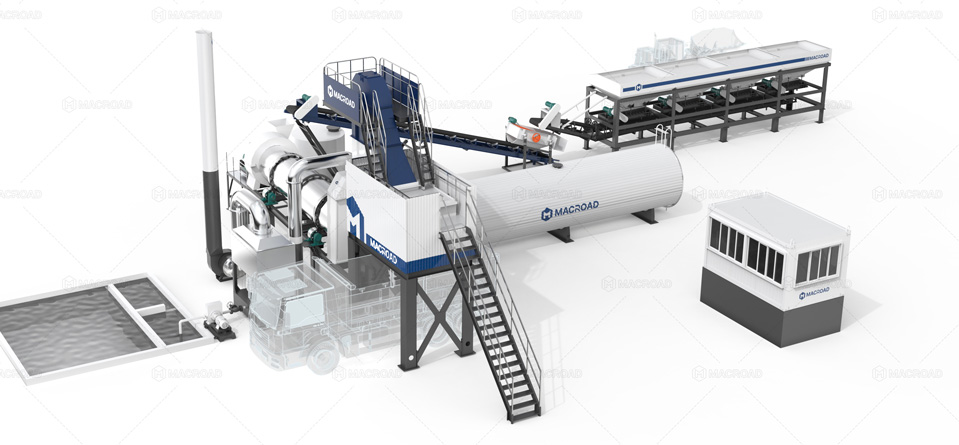
ALT Stationary Drum Mixing Asphalt Plant – Long-Term Stable Supply
- More continuous production ensures smoother supply: Utilizing continuous drum heating and mixing, asphalt mixtures can be continuously output, making it more suitable for construction environments requiring long-term stable supply.
- Simplified operating procedures make daily operations more direct: The asphalt drum mix plant overall production process is more continuous, reducing batch changeover processes and making it easier for equipment to maintain stable operating conditions over long periods.
- More suitable for regional and long-term supply projects: In rural roads, regional maintenance, or industrial park infrastructure construction, this model can better support long-term, decentralized, but continuous construction needs.
In real-world projects, a more precise match between equipment and construction methods leads to clearer on-site scheduling and easier, more planned material supply, resulting in smoother overall construction organization.
If you are planning a specific project, we can work together to find a more suitable stationary asphalt mixer for sale solution by further considering your production capacity needs and construction schedule.
Macroad Stationary Asphalt Mixing Plant Specification
| Model | ALQ40 | ALQ60 | ALQ80 | ALQ100 | ALQ120 | ALQ160 | ALQ200 | ALQ240 | ALQ320 |
|---|---|---|---|---|---|---|---|---|---|
| Output(t/h) | 40 | 60 | 80 | 100 | 120 | 160 | 200 | 240 | 320 |
| Cold Aggregate Feeding System | 4×4.5m³ | 4×6.5m³ | 4×8m³ | 4×8m³ | 5×9m³ | 5×12m³ | 5×12m³ | 5×12m³ | 6×15m³ |
| Hopper Capacity(m³) | 4*4.5 | 4*6.5 | 4*8 | 4*8 | 5*9 | 5*12 | 5*12 | 5*12 | 6*15 |
| Collect Belt Capacity(t/h) | 60 | 80 | 100 | 120 | 140 | 200 | 220 | 280 | 360 |
| Dryer Size(m) | φ1.2*5.2 | φ1.5*6 | φ1.5*6.7 | φ1.65*7 | φ1.8*8 | φ2.2*9 | φ2.6*9 | φ2.6*9.5 | φ2.8*10.2 |
| Dryer Capacity (t/h) | 60 | 80 | 100 | 120 | 140 | 180 | 240 | 260 | 360 |
| Fuel Max Consumption(kg/h) | 300 | 450 | 550 | 700 | 950 | 1200 | 1400 | 1700 | 2250 |
| Vibrating Screen(Layer) | 4 | 4 | 4 | 4 | 4 | 5 | 5 | 5 | 6 |
| Aggregate Metering hopper(kg) | 500 | 800 | 1000 | 1250 | 1500 | 2000 | 2500 | 3000 | 4000 |
| Mineral Flour Metering hopper (kg) | 120 | 150 | 200 | 200 | 300 | 300 | 320 | 600 | 700 |
| Bitumen Metering hopper (kg) | 100 | 120 | 150 | 150 | 250 | 250 | 250 | 480 | 500 |
| Weighing accuracy | aggregate:±0.5% Mineral Flour:±0.25% Bitumen:±0.25% | aggregate:±0.5% Mineral Flour:±0.25% Bitumen:±0.25% | aggregate:±0.5% Mineral Flour:±0.25% Bitumen:±0.25% | aggregate:±0.5% Mineral Flour:±0.25% Bitumen:±0.25% | aggregate:±0.5% Mineral Flour:±0.25% Bitumen:±0.25% | aggregate:±0.5% Mineral Flour:±0.25% Bitumen:±0.25% | aggregate:±0.5% Mineral Flour:±0.25% Bitumen:±0.25% | aggregate:±0.5% Mineral Flour:±0.25% Bitumen:±0.25% | aggregate:±0.5% Mineral Flour:±0.25% Bitumen:±0.25% |
| Mixer Capacity(kg) | 500 | 800 | 1000 | 1250 | 1500 | 2000 | 2500 | 3000 | 4000 |
| Cycle Time(s) | 45 | 45 | 45 | 45 | 45 | 45 | 45 | 45 | 45 |
| Dust filter (Bag dust filter) | |||||||||
| Filter Area(m2) | 230 | 300 | 420 | 480 | 550 | 650 | 700 | 1050 | 1350 |
| Draught Fan(kw) | 22 | 30 | 45 | 55 | 90 | 110 | 2*75 | 2*90 | 2*110 |
| Asphalt Temperature (⊥) | 140-180 | 140-180 | 140-180 | 140-180 | 140-180 | 140-180 | 140-180 | 140-180 | 140-180 |
| Model | ALT20 | ALT40 | ALT60 | ALT80 | ALT100 | ALT120 | ALT160 |
|---|---|---|---|---|---|---|---|
| Output (t/h) | 20 | 40 | 60 | 80 | 100 | 120 | 160 |
| Power Fuel Oil(kw) | 34 | 65 | 105 | 135 | 170 | 200 | 300 |
| Cold Aggregate Feeding System | 3.5m3*1 | 4m3*4 | 4m3*4 | 6.5m3*4 | 6.5m3*4 | 6.5m3*4 | 6.5m3*4 |
| Finished Asphalt Storage Bin (m³) | 2 | 2.5 | 4.5 | 5 | 7 | 7 | 10 |
| Asphalt Temperature (℃) | 120-180 | ||||||
| Fuel Consumption Fuel Oil (kg/t) | 5-7.5 | ||||||
| Fuel Consumption Burning Coal(kg/t) | 13-15 | ||||||
| Asphalt Tank (m³) | 10 | 20 | 30 | 30 | 35 | 35 | 35 |
| Option | Bag dust collector/water dust collector | ||||||
ALQ80: A Top Choice in the Stationary Asphalt Plant Series
Among the various configurations of stationary asphalt mixing plants, our ALQ80 is a model repeatedly used in many long-term road projects.
Its design philosophy leans towards the user experience in actual construction scenarios, helping to maintain a stable supply of asphalt mixture during long-term operation, while making the operation process clearer, thus facilitating daily on-site management.
If your project is in the long-term construction planning stage, or has certain requirements for continuous and consistent material supply, then this asphalt hot mix plant is an option worth considering.
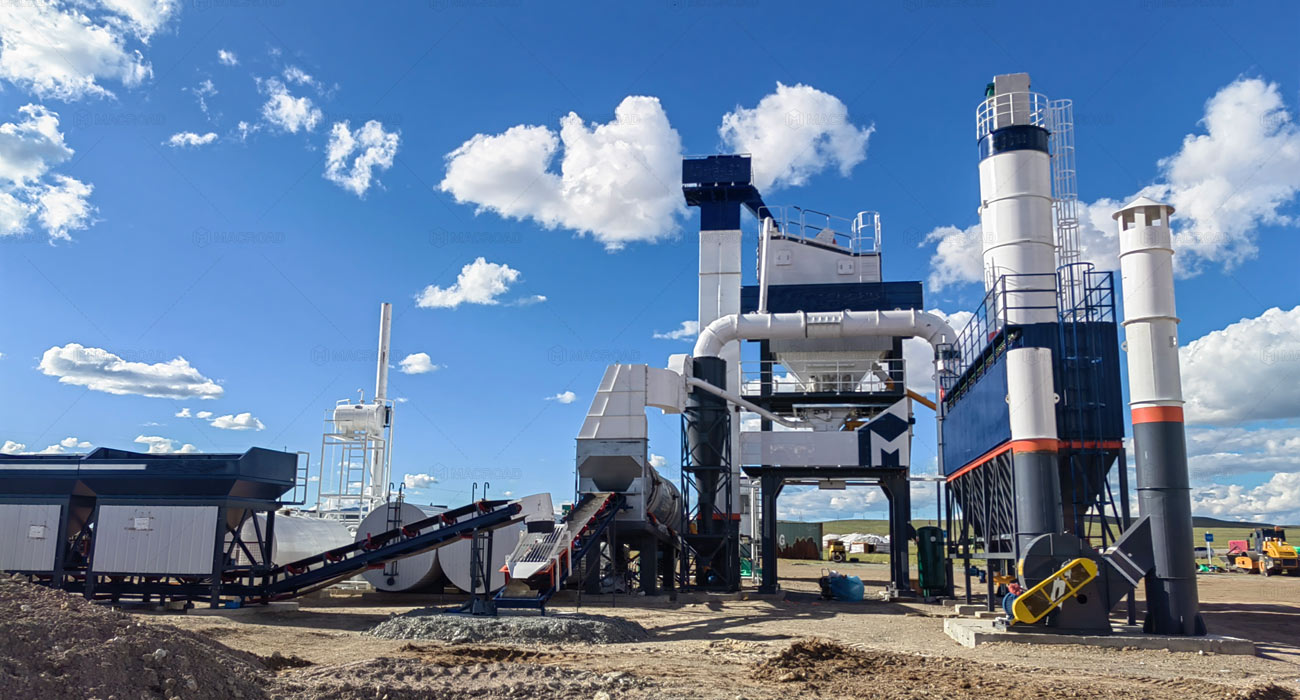
Fewer operational steps simplify on-site management.
Through an integrated intelligent control system, the equipment can be started and stopped with a single button, simplifying approximately 50 traditional operational steps into a single control command.On-site operators no longer need to frequently adjust multiple system parameters; the entire production line can be started and managed from the control room.
Flexible operation allows for quick learning by different personnel
The equipment supports three modes: computer control, touchscreen operation, and physical buttons, which can be switched according to the operator’s habits.During continuous production, even with changes in the operating environment, a stable control method is maintained, reducing switching costs due to different operating habits.
Precise proportioning control ensures more consistent mixture quality
Clear equipment status makes operation visible at all times
Continuous production process ensures more stable material supply
Durable core structure ensures more stable long-term operation
Production capacity suitable for high-grade road projects
Complete engineering compliance and technical support
During the design process of the ALQ80, we focused more on its presence in long-term construction sites. We hoped that it would not be a piece of equipment that requires constant adaptation, but rather one that could be integrated more naturally into your construction rhythm, reducing unnecessary management burdens during continuous operation and making your overall production schedule smoother.
Mobile vs Stationary Asphalt Plant: Key Differences Explained
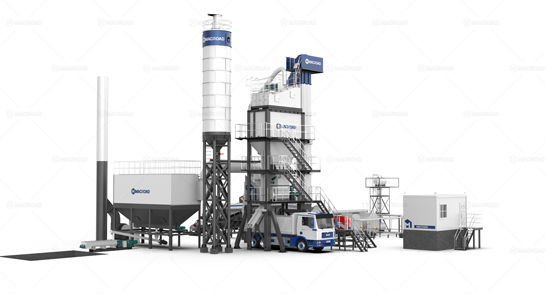
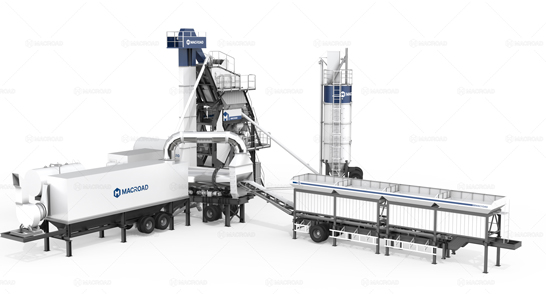
The ALQ80 exemplifies the typical performance of a stationary asphalt mixing plant during long-term, centralized construction operations. In practical engineering, beyond the specific model, it is essential to understand the fundamental differences in construction methodology between the various types of equipment.
Next, we will provide a more intuitive comparison between stationary and mobile asphalt mixing plants, focusing on aspects such as construction organization and material supply logistics.
 |
 |
 |
|---|---|---|
| Stationary Asphalt Mixing Plants | Comparison Dimension | Mobile Asphalt Mixing Plant |
| Typically used as a central production hub, supplying asphalt mix to surrounding construction sections via transport vehicles. Suitable for projects with concentrated routes and stable logistics distances. | Construction coverage | The plant moves along with the construction sections, staying close to paving points to reduce long-distance transportation. More suitable for fragmented or segmental construction projects. |
| Requires a stable production site and foundation construction. Once installed, it operates as a long-term fixed production center. | Deployment method & site requirements | Modular design allows fast relocation between construction nodes with lower dependence on a permanent site. |
| Initial investment is moderate, focusing on site preparation and full-line installation. While main equipment costs are lower, foundations, land, and auxiliary facilities increase total upfront expenses. | Initial investment structure | Initial investment is high, focused on equipment rather than infrastructure. Modular mobile units reduce civil works, lowering site setup costs and allowing flexible deployment. |
| More dependent on stable continuous production. Unit production cost becomes more efficient under long-term high-load operation. | Long-term operating cost structure | Operating costs are more influenced by relocation frequency, transportation distance, and dismantling efficiency. More flexible in multi-site projects. |
| Forms a centralized production system where construction activities are organized around a fixed supply point with standardized logistics and dispatching. | Construction organization mode | Operates in a follow-the-road-construction mode, where production location moves along with the construction progress, reducing long-distance coordination. |
| Commonly used in long-term continuous projects such as highways, airport roads, and large-scale mainline roads. | Suitable project rhythm | More suitable for segmented construction, multi-point projects, or projects with frequently changing construction locations. |
A comparison clearly highlights the differences in construction applications between stationary and mobile asphalt mixing plants. Stationary plants are ideal for long-term, continuous projects, offering a stable supply of materials and ensuring a controllable construction pace. In contrast, mobile plants offer greater flexibility, making them suitable for scenarios involving dispersed work sites or the need for frequent relocation.
Each type offers unique advantages and practical value. We provide a comprehensive range of equipment solutions, enabling you to leverage equipment performance based on specific project requirements and achieve the optimal balance between construction efficiency and mix quality.
Price Reference for Different Stationary Asphalt Plants
When considering a stationary asphalt mixing plant, budget is also usually a natural concern. However, in actual projects, different production capacity requirements, configuration combinations, and construction schedules will all lead to varying final investment ranges.
Therefore, this compilation is not a standard stationary asphalt plant price quote, but rather a reference range that more closely resembles real-world project conditions, helping you to make a clearer and easier judgment about your overall asphalt plant cost during the initial planning stages.
Step-by-Step Guide to Selecting a Stationary Asphalt Plant
The stationary asphalt plant cost range provides a reference point, but the selection process truly determines whether a piece of equipment is suitable. Every project has different conditions: capacity requirements, site conditions, fuel supply, budget structure—all these details combined constitute the complete answer to whether a piece of equipment is right for you.
The following six steps don’t necessarily need to be completed in a fixed order, but rather to help you clarify the factors that will truly affect the user experience before making a decision. Spending a little more time considering these issues upfront often makes the later selection process much easier.
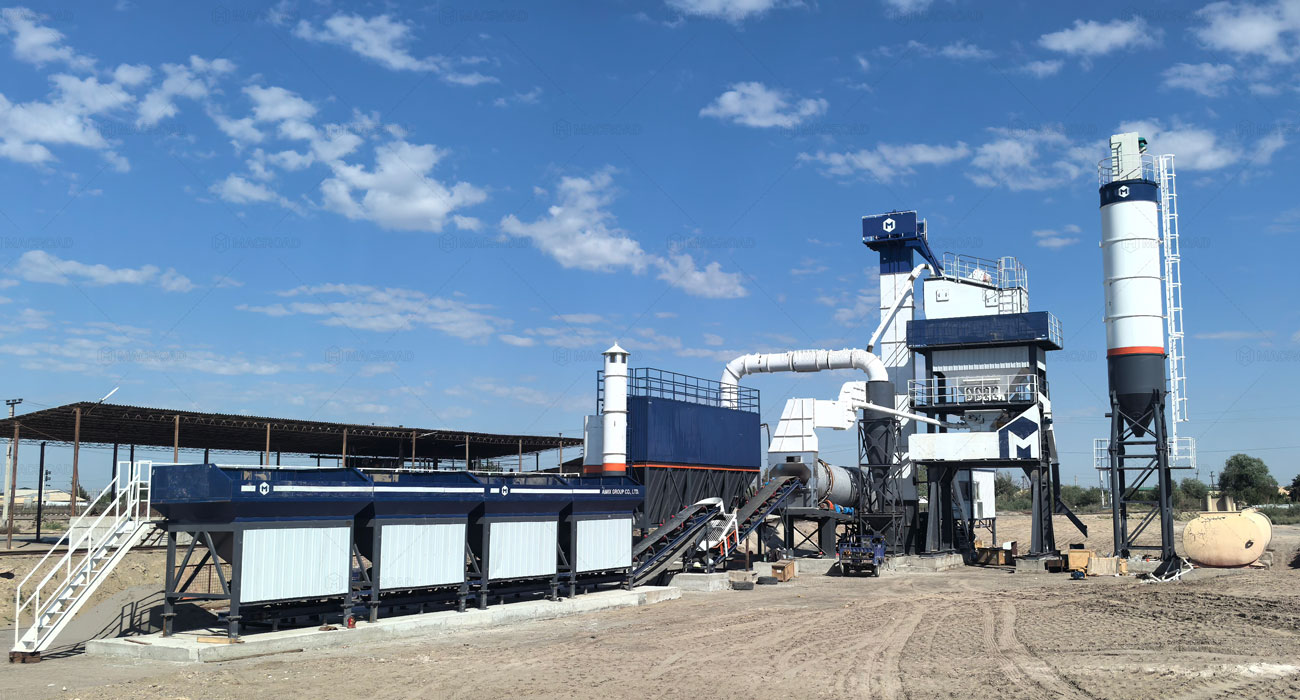
Step 1: Calculate Your True Production Capacity Needs
Many projects tend to go to two extremes at this step: either selecting the maximum capacity based on peak demand, resulting in equipment operating at low load for most of the time; or selecting based on average demand, leading to insufficient material supply to keep up with paving speed during peak construction periods. The core logic for selecting production capacity is: calculate your average daily paving volume, combine this with your daily effective working hours, and then deduce your actual required hourly production capacity, reserving a margin within this figure.
- Calculate basic production capacity: Average daily paving volume ÷ Daily effective working hours = Basic hourly production capacity requirement. Example: Average daily paving volume ÷ 10 effective working hours per day, basic production capacity requirement is 80t/h, a 100t/h model is recommended.
- Consider peak demand during peak construction seasons: If your project has a concentrated rush phase, such as needing to accelerate progress before the rainy season, the capacity margin should be increased to 25%, rather than estimating based on the annual average.
- Understand the cost logic of upgrading production capacity: Choosing a higher capacity level typically increases equipment costs by 15%-20%. When making budget decisions, this figure is worth comparing with your construction plan.
Step 2: Confirm Site Conditions
Once a stationary asphalt mixing plant is installed, its foundation will not be moved. This step involves thoroughly understanding the site constraints and comparing this data with the equipment specifications.
- Verify available area and surrounding space: Compare the equipment’s footprint with the space required for aggregate storage, finished product silos, and transport vehicle turning areas. These three areas combined are typically 2-3 times larger than the equipment itself.
- Confirm foundation bearing capacity: Stationary asphalt mixing plants have high foundation requirements. Soft soil foundations need to be treated in advance. This cost and timeframe should be included in the overall project plan, and the earlier it is confirmed, the better.
- Measure the distance between the site and the construction surface: The effective supply radius of a stationary asphalt mixing plant is typically within 20-30 kilometers. Beyond this range, temperature loss of the asphalt during transportation will directly affect the paving quality.
Step 3: Determine Fuel Type and Match Local Supply Conditions
Asphalt mixing plant burners support various fuels such as heavy oil and natural gas. Different fuels vary significantly in calorific value, price, and supply stability. Choosing the right fuel type will greatly facilitate daily operations and make costs more controllable.
- Prioritize locally available fuels: First, confirm which fuel is most readily available and has the most stable supply in your project location, and then select the burner configuration based on this, rather than the other way around.
- Compare the actual usage costs of different fuels: Based on the production of 1 ton of asphalt mixture, the fuel cost difference between heavy oil, natural gas, and pulverized coal can reach 30%-50%. The longer the project cycle, the more significant this difference becomes.
- Understand the feasibility of fuel switching: Some models support multi-fuel configurations. If your project spans multiple regions, or if local fuel supply fluctuates seasonally, this option should be confirmed with the supplier in advance.
Step 4: Intermittent or Continuous Operation
Intermittent and continuous operation represent two completely different production logics, suitable for different types of projects. When production capacity figures are similar, clearly matching the type with project requirements is key to maximizing the value of the equipment.
- Prioritize road quality standards: Intermittent mixing involves individual metering and mixing for each batch, ensuring high mixing accuracy and traceability, making it suitable for projects with strict requirements for mixture consistency. Continuous mixing offers high production efficiency and low unit production cost, making it suitable for large-scale base course paving projects with lower requirements for mixing flexibility.
- Consider the complexity of the mixture formula: If your project requires frequent changes to the mixture formula, intermittent mixing offers greater flexibility in formula adjustments, requiring only modifications to control system parameters, while continuous mixing requires a longer adjustment period.
- Compare the actual production capacity of the two types at your project scale: Continuous mixing typically has a higher nominal capacity than intermittent mixing, but intermittent mixing has more stable effective production capacity in actual use. It is recommended to request actual production data from suppliers for similar projects.
Step 5: Confirm Equipment Configuration Level
After selecting the production capacity, the equipment configuration level is a key variable affecting long-term user experience. The configuration levels of the dust removal system, control system, and mixing system not only differ in functionality but also directly affect the equipment’s operational compliance and the adaptability of the operating team.
- Confirm Dust Control Configuration Based on Local Environmental Regulations: Different countries and regions have significantly different requirements for dust emissions and noise from asphalt mixing plants. Confirming local compliance standards before procurement avoids the need for rectification after equipment delivery.
- Select Control System Based on Operator Skill Level: Fully automatic control systems have lower technical requirements for operators and offer high mixing accuracy, making them suitable for large-scale projects with long-term stable operation. Semi-automatic systems offer greater flexibility and are suitable for medium-sized projects with experienced operating teams.
- Pay Attention to Wear Parts Configuration Standards: Stationary asphalt mixing plants will have normal replacement needs for wear parts during long-term operation. Confirming the supplier’s wear parts supply capacity and response time during the procurement phase will ensure smoother operation later on.
Step 6: Assess the Supplier’s Localized Service Capabilities
Stationary asphalt mixing plants typically have a service life of over 10 years. During this period, spare parts supply, technical support, and system upgrades will occur. The stationary asphalt mixing plant supplier’s service capabilities, like the equipment’s technical parameters, are factors that need to be considered during the selection phase.
- Confirm spare parts supply capacity: Focus on inquiring about the delivery cycle and stocking method for easily damaged parts. It is recommended to stipulate priority supply clauses for critical easily damaged parts in the purchase contract to ensure timely delivery when replacements are needed.
- Understand installation and commissioning support methods: Confirm whether the stationary asphalt mix plant supplier will send engineers to the site to guide installation, and whether the technical team is familiar with the construction specifications in your area. These details will have a practical impact during the project progress phase.
- Request actual use cases of similar projects: Ask the stationary asphalt mixer manufacturer to provide reference cases with similar conditions to your project, including project scale, equipment model, operating time, and customer contact information. This is the most direct way to assess the supplier’s service capabilities.
There’s no single right answer when choosing a machine; there’s only the one best suited to your project. Thinking through these six dimensions will give you more confidence in your equipment selection and make communication with stationary asphalt mixer suppliers more efficient. If you already have preliminary project plans but are unsure where to begin, feel free to tell us about your project. Many problems become clearer after being broken down into their components.
Beyond Equipment Selection: Evaluating Supplier Capability
In the preceding steps, you have gradually completed the overall consideration from capacity assessment to configuration selection. However, in actual projects, stationary asphalt mixing plants often have a long service life, from installation and commissioning to formal production and subsequent operation and maintenance. The entire process involves continuous interaction with the asphalt plant suppliers‘ technical support and service capabilities.
Therefore, beyond the equipment itself, the supplier’s ability to provide continuous and stable support throughout the entire lifecycle will be reflected in the equipment’s long-term operational performance and on-site management.
Next, we will use Macroad’s support system in actual projects to help you more intuitively understand how a complete supply chain and service capabilities are implemented from several key dimensions.
| Evaluation Criteria | Why It Matters | How Macroad Supports You |
|---|---|---|
| Project Matching Capability | Once equipment is selected, later adjustments can be costly | Provides tailored configuration recommendations based on project duration, production capacity, and material supply mode rather than fixed-model suggestions |
| Long-Term Operational Stability | Stationary asphalt plants are typically required to run continuously for many years | Designed with upgraded wear-resistant structures, with key components supporting up to million-ton output capacity for long-term stable operation |
| Maintenance Management | Many issues develop gradually during long-term operation rather than occurring suddenly | Equipped with IoT remote monitoring and predictive maintenance system to detect abnormalities early and remind maintenance schedules |
| Operator Adaptability | Operator turnover and experience differences are common in long-term projects | Offers three operation modes: computer control, touchscreen, and manual buttons to suit different skill levels |
| Spare Parts Supply | Longer lifecycle requires consistent and timely spare parts availability | Established standardized spare parts supply system to ensure quick availability of commonly used wear parts |
| Technical Support Response | Response time directly affects construction schedules | Provides 24/7 remote technical support and fault diagnosis services to reduce downtime |
| Intelligent Management Capability | Large-scale projects require higher operational management efficiency | Integrated intelligent control system and remote monitoring platform for real-time equipment status tracking |
| International Project Experience | Different countries have varying construction environments and standards | Experience serving road construction projects across multiple countries with adaptable engineering solutions |
| Compliance & Certifications | Engineering projects often require strict procurement and compliance standards | CE certification and multiple patented technologies to meet international tender requirements |
| Full Lifecycle Service | Equipment procurement is only the beginning of long-term operation | Provides full lifecycle support including installation guidance, commissioning, operator training, and after-sales service |
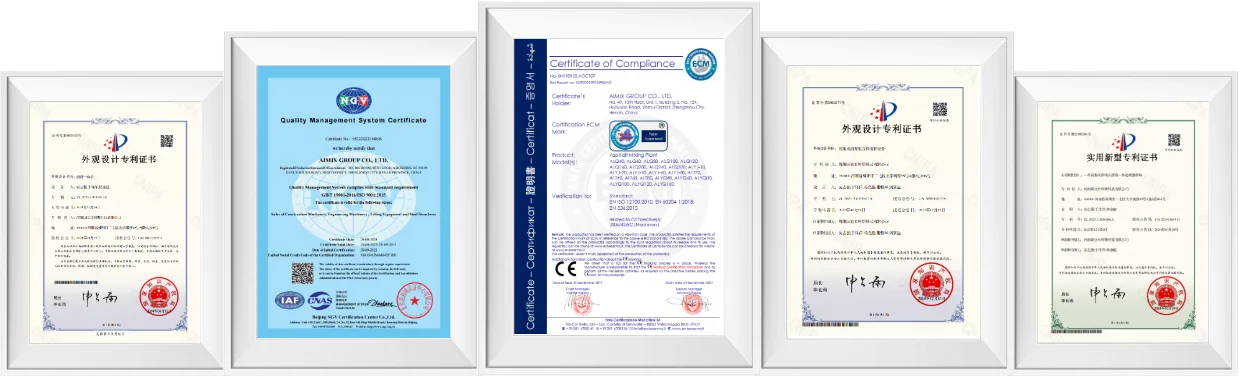
Macroad has long served road construction projects in multiple countries and regions. We have developed a complete project support system for the configuration, installation guidance, and post-construction operation support of stationary asphalt mixing plants, providing corresponding technical and service support based on different construction conditions.
If you are comparing options or planning your project configuration, please contact us directly. We can provide more specific selection and configuration suggestions based on your project requirements.
FAQs
Q1: How much space is typically needed to install a stationary asphalt mixing plant?
Q2: Can the equipment be upgraded if project capacity increases later?
Q3: Can one piece of equipment adapt to different types of road projects simultaneously?
Q4: What is the typical processing time if equipment problems occur later?
Q5: Does the equipment require a high level of operator experience?
Q6: Can the equipment operate stably under high temperature, rainy season, or complex climate conditions?
From Plan to Execution: Let’s Move Forward Together
The planning for a stationary asphalt mixing plant typically becomes clearer as the project progresses. From initial conception to implementation, each step clarifies the overall direction.
If you have already made a preliminary assessment or are comparing different options, Macroad can work with you to gradually align equipment configuration, construction conditions, and actual needs, ensuring the overall solution closely reflects the realities of the project site. If you require further information, please feel free to contact us!