

Dynamic adjustment technology
Multi-mode drive system
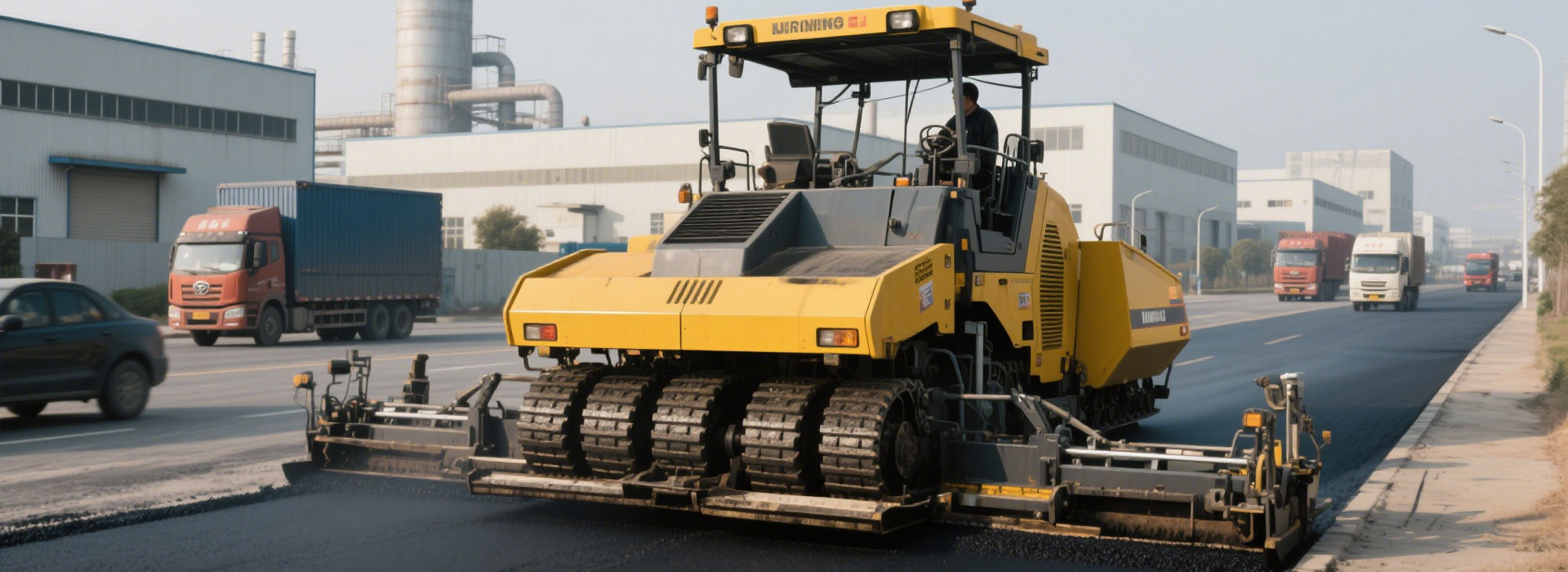
Paving a smooth, durable road is never an easy task. Manual paving is not only time-consuming, but it’s also difficult to guarantee the smoothness and density of each layer of asphalt. To make road construction faster and more precise, asphalt pavers were developed.
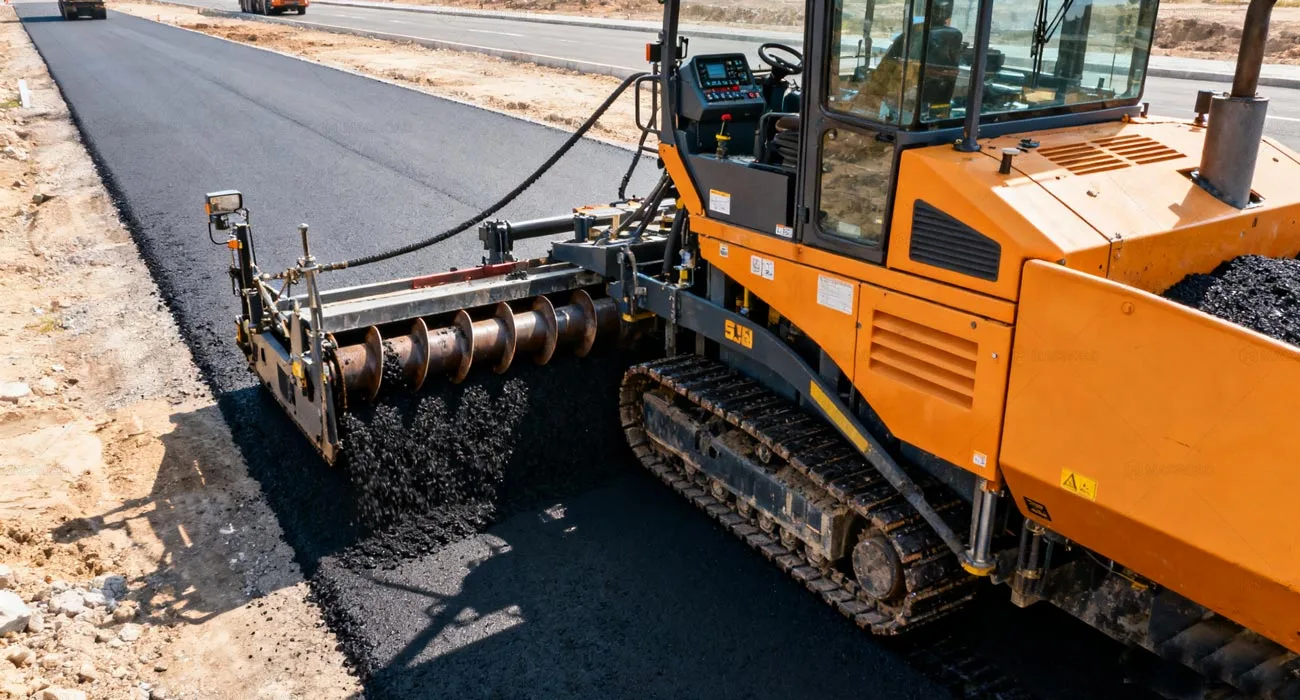
They can spread asphalt evenly and, in conjunction with a screed system, ensure a smooth surface, efficiently completing projects on city roads, rural roads, and airport roads. Different types of asphalt paver machines—wheeled, tracked, and small asphalt paver—adapt to different construction scales and site conditions, ensuring the smooth progress of every project.
Latest Case – Asphalt Paver For Road Construction In Guatemala
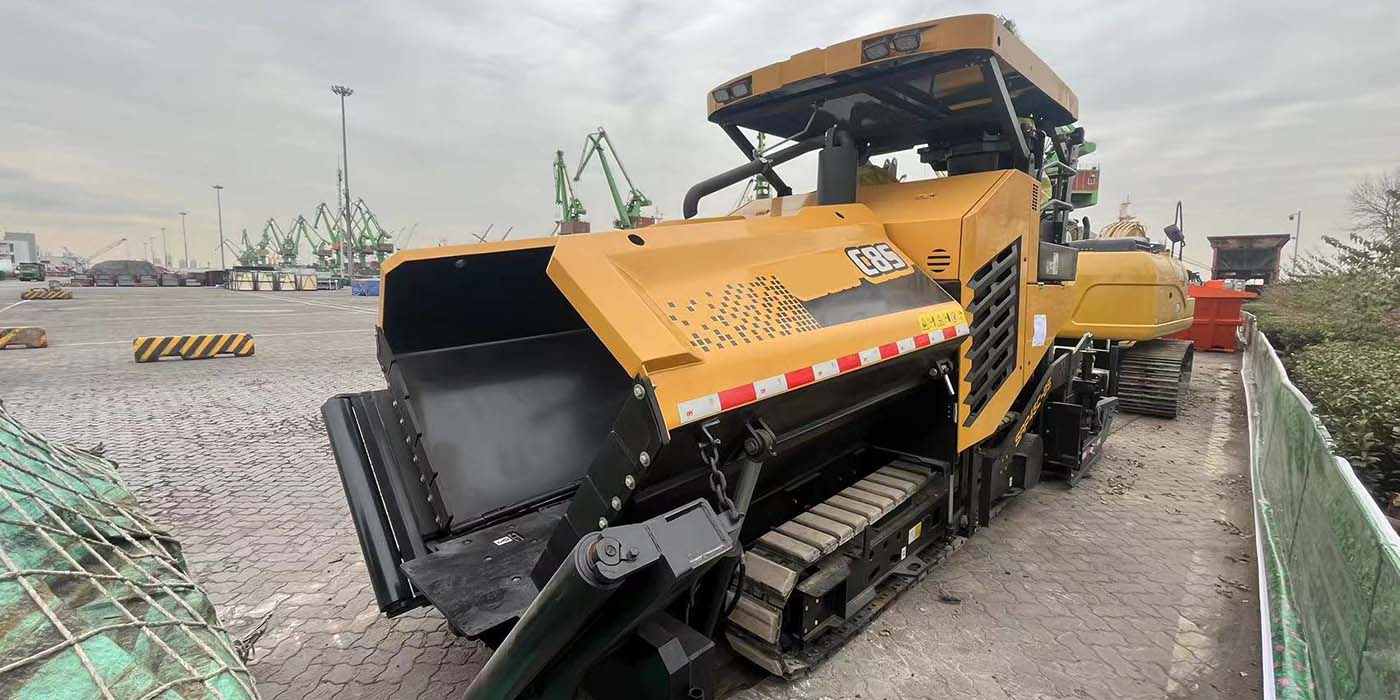
Specifications
- Paving Width: 2500-4500mm
- Paving Thickness: 10-250mm
- Productivity: 320t/h
- Paving Speed: 1.5~20 m/min
- Pavement Evenness: 3mm/3m
- Engine Power & Model: 97KW/QSB4.5
Powering Modern Road Construction: Asphalt Paver Market Trends
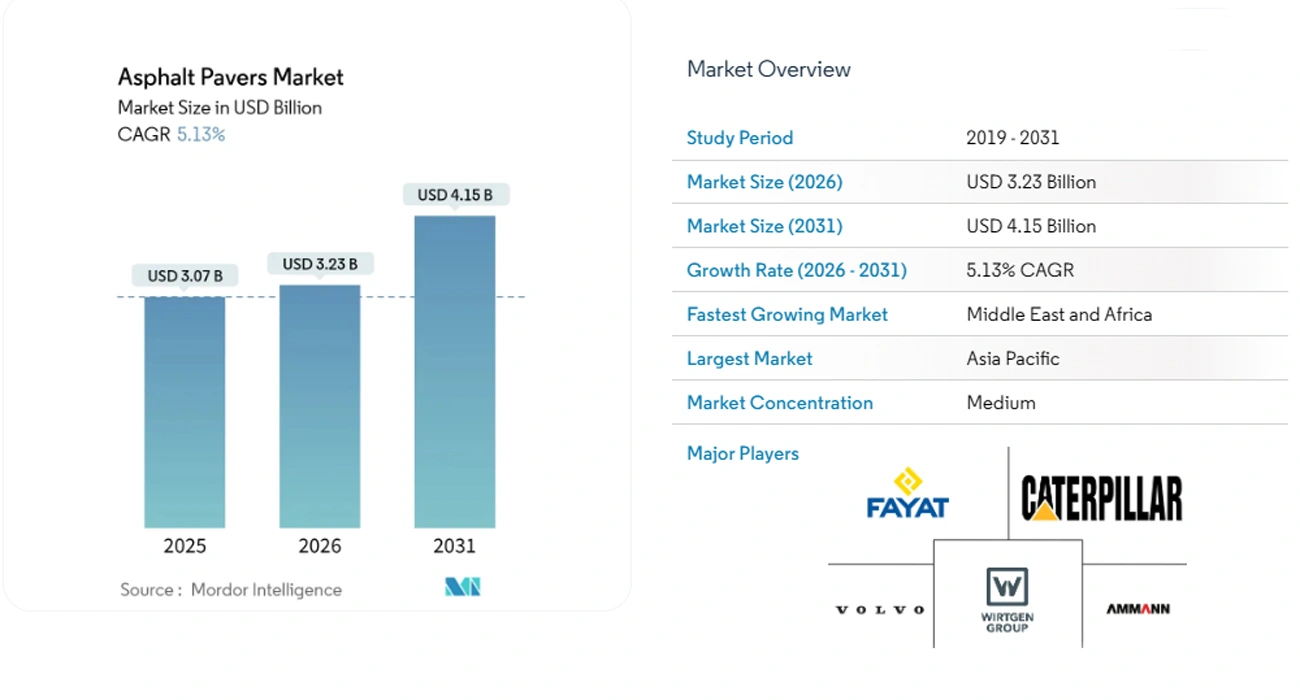
Modern road construction demands increasingly higher efficiency and better road surface quality, making asphalt paver for sale a key driver behind every road project. Industry forecasts predict that the global asphalt paver market will continue to expand at a CAGR of 5.13% from 2026 to 2031. This not only indicates strong industry demand but also presents new opportunities and challenges for construction companies and asphalt paver company.
Infrastructure Construction Demand Continues to Grow
- Urbanization and Road Network Expansion: With accelerated urbanization, the demand for urban roads, expressways, and roads surrounding commercial facilities is constantly increasing. Traffic congestion and travel demands drive up road construction frequency, directly boosting demand for asphalt finisher.
- Large-Scale Transportation Projects Drive High-Performance Equipment: Large-scale projects such as highways, airport runways, and logistics parks require high-capacity, high-precision asphalt paving equipment to ensure construction progress and road surface quality. These projects typically involve a one-time investment in advanced pavers, thus promoting growth in the high-end market.
- Increased Demand for Road Renovation and Maintenance: As roads age, the frequency of maintenance and renovation of urban and rural roads increases, driving sustained demand for small and mini asphalt paver for sale and forming a foundation for long-term stable market growth.
Technological Advancements and Equipment Upgrades Lead Market Evolution
- Application of Automation and Intelligent Technologies: Modern asphalt pavers are generally equipped with automatic leveling, screed heating, and hydraulic control systems, reducing human error and improving construction accuracy. Technological upgrades have become a crucial factor for companies selecting new asphalt paver finisher.
- Optimized Efficiency and Energy Saving: The new generation of pavers reduces fuel consumption while increasing paving capacity per unit time through optimized engine and hydraulic system design, improving construction speed and energy consumption.
- Enhanced Equipment Durability and Ease of Maintenance: Manufacturers continuously improve the lifespan of key components and ease of maintenance, ensuring stable operation even under high-load construction environments. This increased reliability fuels market demand for high-end asphalt paver machine for sale.
Market Diversification and Expanded Product Adaptability
- Diverse Product Types to Meet Different Construction Scenarios: The market offers a full range of pavers, from large tracked and wheeled to mini-pavers, covering highways, large commercial roads, rural roads, and even small-scale paving needs in narrow construction sites.
- Differences in Construction Scale Drive Equipment Customization: Different construction scales and site conditions prompt manufacturers to offer a variety of models and configurations of asphalt paving equipment for sale to meet refined construction needs.
- Significant Regional Differences in Global Market Demand: Rapid development of urban infrastructure in emerging economies creates strong demand for types of asphalt paver; while developed regions focus more on high-precision, high-efficiency, and intelligent equipment, driving a differentiation in the global market structure.
After reviewing these data and trends, you’ll find that the asphalt paver market is not only growing but also evolving rapidly—with more efficient equipment, smarter technology, and a wider variety of asphalt paver types. Whether it’s large-scale highway construction or partial paving of city streets, the market is driving continuous equipment upgrades, making construction faster, more stable, and more reliable.
Asphalt Pavers at Work: Key Usage Scenarios
Walk into any road construction site, and you’ll almost always see it—that machine steadily advancing, smoothing out the asphalt. What is asphalt paver? Asphalt pavers are more than just machinery; they are the unsung heroes of road construction. Every movement and paving operation determines the road’s smoothness, durability, and user experience. Whether on busy city streets or long-distance highway construction, pavers make work faster and more precise, saving engineers a significant amount of time and effort.
Next, let’s look at a few typical scenarios to see how these asphalt pavers play a role in actual construction.
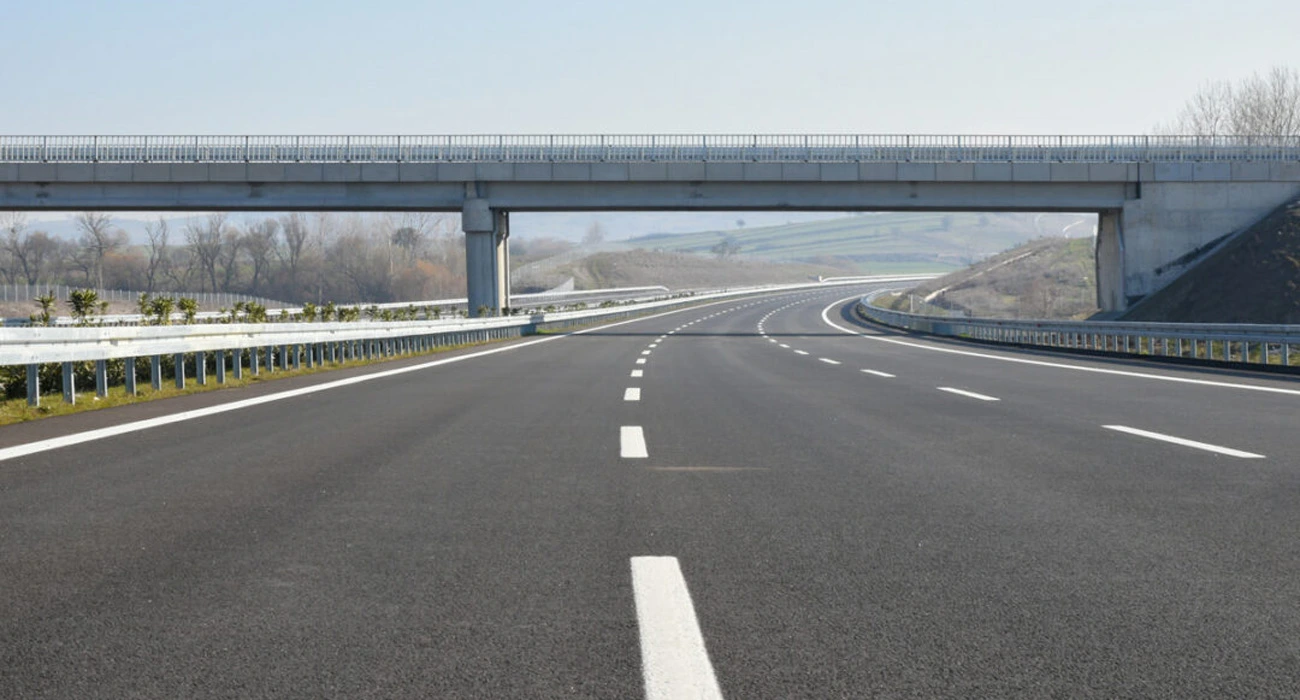
Highway Construction
- Construction Characteristics: Large-scale projects with long construction sections, requiring continuous paving and high road surface smoothness.
- Role of Asphalt Pavers: Large tracked asphalt paver machine can operate continuously, evenly distributing and quickly compacting asphalt. Combined with screeds and leveling sensors, high-precision paving is achieved.
- Key Advantages: Continuous asphalt paver designs reduces construction joints, improves overall highway quality, and shortens the construction cycle.
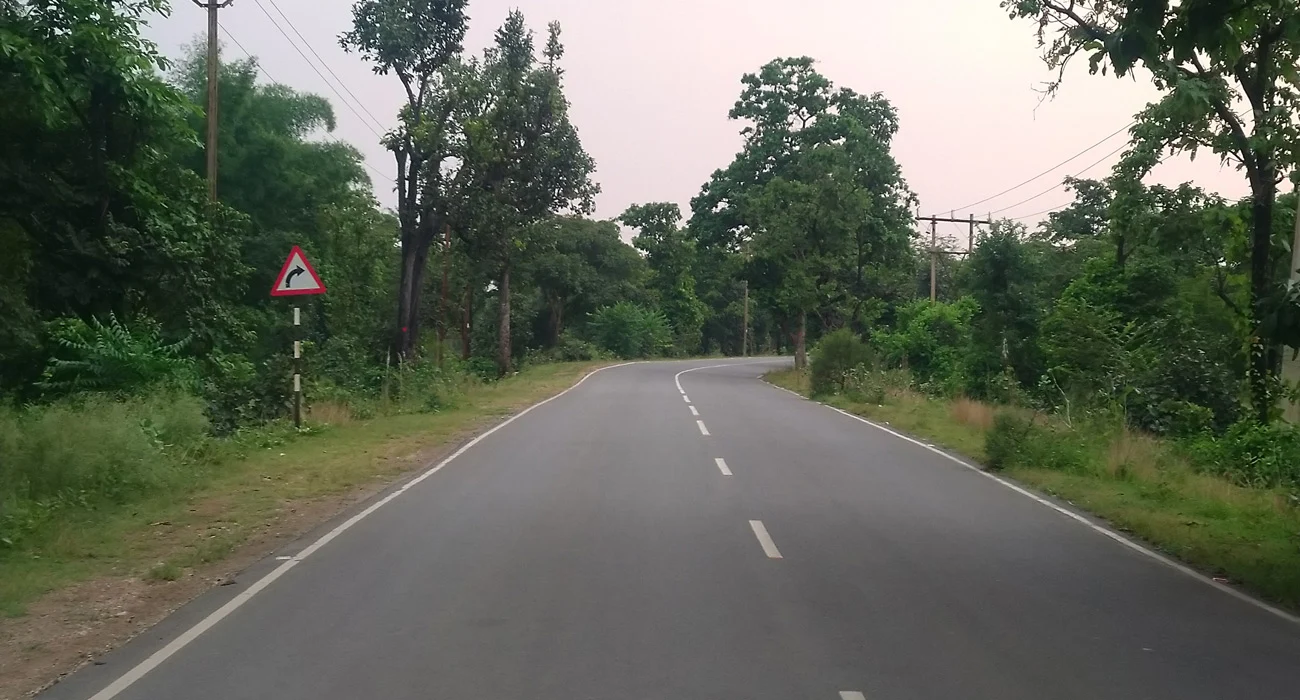
Urban Road Construction and Repair
- Construction Characteristics: Narrow roads and complex traffic require flexible operation while maintaining construction efficiency.
- Role of Asphalt Pavers: Wheel asphalt paver can quickly enter and exit the construction area, precisely laying asphalt and minimizing impact on surrounding traffic.
- Key Advantages: Flexible and precise construction ensures urban roads are completed quickly and are smooth and aesthetically pleasing.

Commercial and Industrial Park Paving
- Construction Characteristics: Moderate road area, but requiring wear resistance and aesthetics; paving quality directly affects the user experience.
- The Role of Asphalt Pavers: By selecting the appropriate asphalt paver model based on the road surface area, asphalt pavers ensure road smoothness and load-bearing capacity through uniform paving and compaction.
- Key Advantages: A balance between high-efficiency paving and meticulous finishing, ensuring the durability of park roads.

Airport Roads and Special Projects
- Construction Characteristics: Extremely high requirements for smoothness, thickness, and asphalt paver capacity, with low tolerance for errors.
- The Role of Asphalt Pavers: Large, high-precision asphalt paver specifications, combined with an automatic control system, can precisely control paving thickness and width, ensuring airport road standards meet or exceed specifications.
- Key Advantages: Precise construction ensures safety while shortening the construction cycle and minimizing impact on airport operations.
Versatile Options, Perfect Fit
Different engineering environments place different demands on pavers. Some require flexibility and maneuverability, while others prioritize stability and efficiency. Macroad offers two main types of asphalt pavers—wheeled and tracked—to meet diverse construction needs. Each type has been optimized in terms of performance and details to ensure ideal paving results for municipal roads or highways.
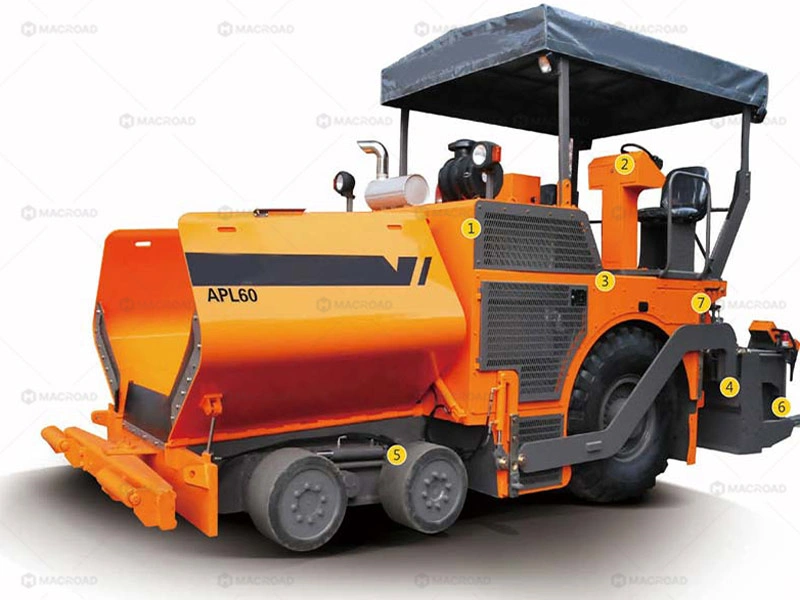
Wheeled Asphalt Pavers
In urban road construction, space is often limited, roads are winding, and traffic disruptions are frequent, requiring equipment with high flexibility and mobility. Wheeled asphalt paver parts and functions, with their smaller turning radius and higher relocation efficiency, can quickly adapt to narrow roads and complex working conditions. Furthermore, they offer significant advantages in short-distance, frequent relocation operations, maintaining construction efficiency while reducing time wastage caused by equipment scheduling.
- Applicable Scenarios: Urban roads, small to medium-sized projects, short-distance relocation projects.
- Representative Models: APZ45E / APZ60E / APL45E / APL60E
Flexible and Maneuverable, Achieving Effortless Navigation
- Real Experience: The equipment turns easily in narrow streets and complex intersections, requiring no frequent rescheduling or work stoppages.
- Technical Support: Hydraulic-driven steering system reduces turning radius by 30%.
Reduced Downtime, Increased Construction Efficiency
- Real Experience: Simplified daily maintenance; workers can quickly complete inspections and servicing, with construction virtually unaffected by equipment downtime.
- Technical Support: Modular design simplifies maintenance of key asphalt paver machine parts, reducing daily maintenance time by 50%.
Adjustable Speed to Adapt to Different Paving Needs
- Real Experience: Paving speed can be flexibly adjusted on municipal roads, residential roads, or complex road sections, ensuring uniform paving and stable project duration.
- Technical Support: Stepless speed adjustment from 0–16 m/min.
[table “22” not found /]
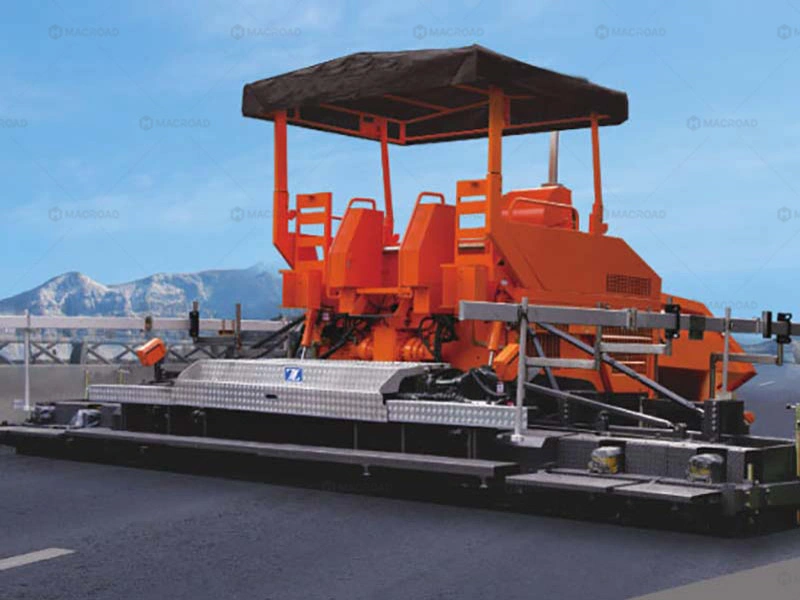
Tracked Asphalt Pavers
Highways, airport runways, and mountain roads often require large-area continuous construction, placing extremely high demands on equipment stability and load-bearing capacity. Tracked asphalt pavers, with their large ground contact area and low pressure, can maintain stable operation on complex terrains such as soft soil or slopes. Simultaneously, their expandable paving width and powerful thrust ensure construction quality and efficiency in heavy-duty projects.
- Suitable Scenarios: Wide-width continuous paving, soft soil or sloping terrain, heavy-duty projects.
- Representative Models: APE75 / APE90
Stable Operation, More Even Road Surface Paving
- Real Experience: Even on soft foundations or slopes, the asphalt paver paving remains rock-solid, producing a high degree of asphalt smoothness, facilitating smooth operation of subsequent rollers.
- Technical Support: Rubber track ground pressure ≤0.08 MPa, effectively protecting the compacted base layer.
Stable Temperature, Controllable Paving Quality
- Real Experience: During paving, there are no instances of excessively high or low temperatures leading to poor adhesion, ensuring consistent road surface quality.
- Technical Support: Intelligent constant temperature system control in asphalt paver parts, with mixture temperature fluctuations ≤±5°C.
Larger Width, Higher Efficiency, Faster Project Completion
- Real Experience: One-time paving covers a wider section of road, significantly increasing daily work volume, shortening the construction period, and reducing labor costs.
- Technical Support: Paving width can be extended to 15 meters, increasing daily work volume by 40%.
[table “23” not found /]
Seamless Coordination: From Asphalt Mixing to Road Formation
In road construction, pavers are often considered the core equipment determining the smoothness and initial shaping of the road surface, responsible for evenly spreading the asphalt mixture onto the road base. However, a high-quality road surface is not the result of a paver alone.
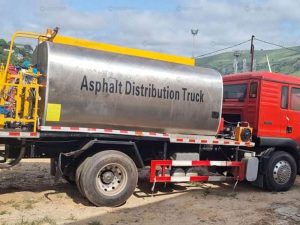
Asphalt mixing plants provide a stable and uniform mixture, ensuring consistent quality in each batch; asphalt distributors precisely apply binder, providing a strong bond to the base layer; rollers follow closely, compacting the newly laid asphalt to make the road surface dense and smooth; and the asphalt paver effectively connects the results of each stage in this process, achieving the final high-quality road surface.
Road Roller