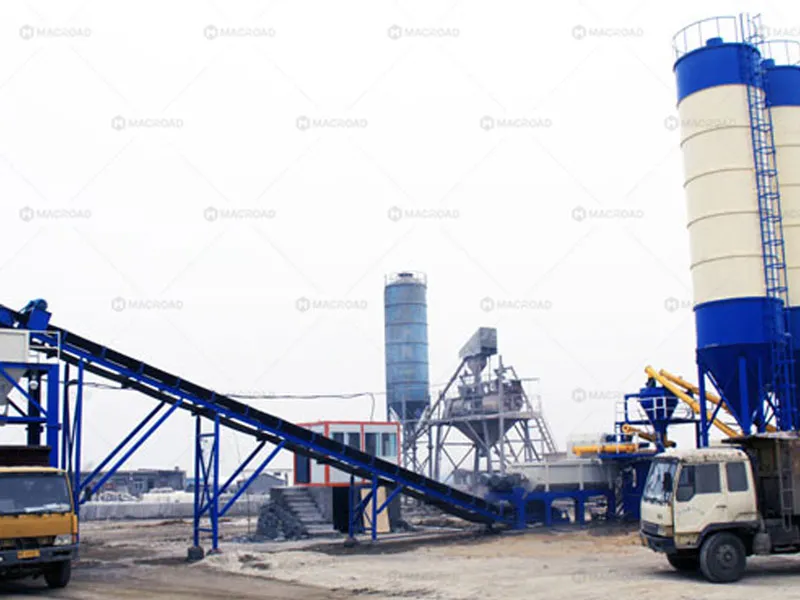
Efficient mixing capabilities
Precise ratio control
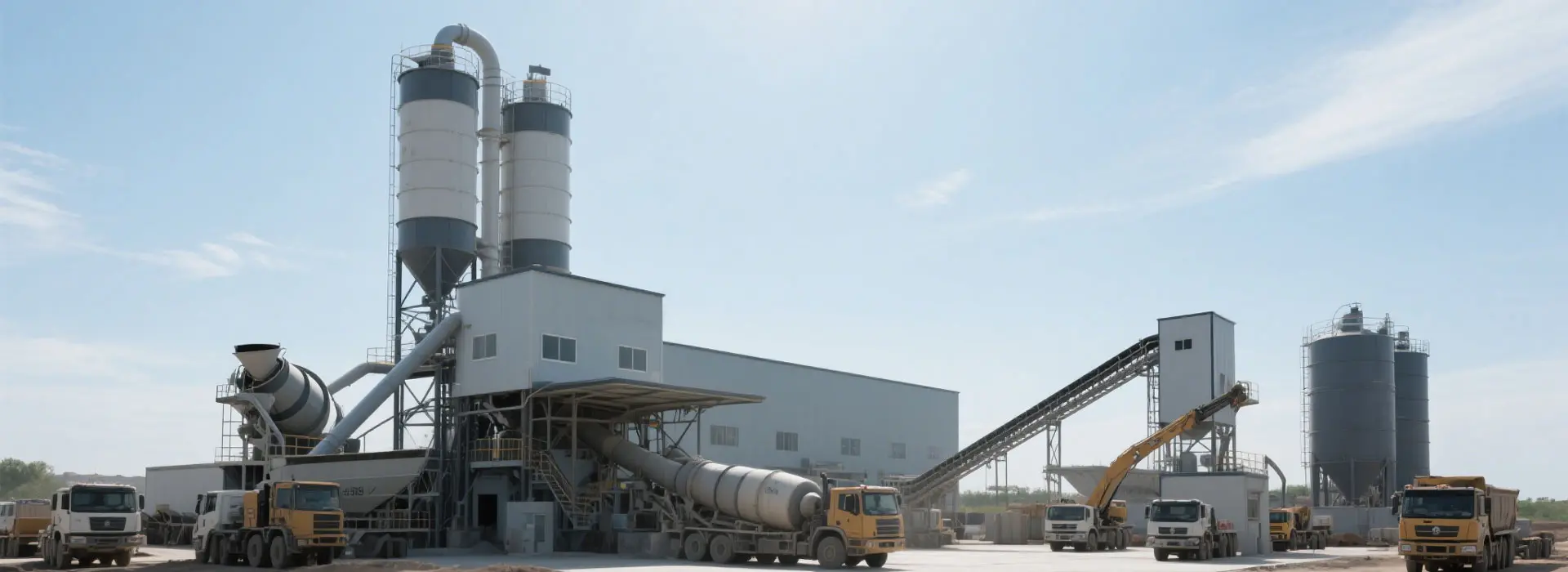
In many road or infrastructure projects, construction teams often encounter similar situations: soil conditions vary significantly across different construction areas, and poor preparation of the base course materials can easily affect subsequent construction progress and project quality. Therefore, in the actual project implementation process, how to stably and continuously produce base course materials of consistent quality has always been a key consideration in the construction phase.
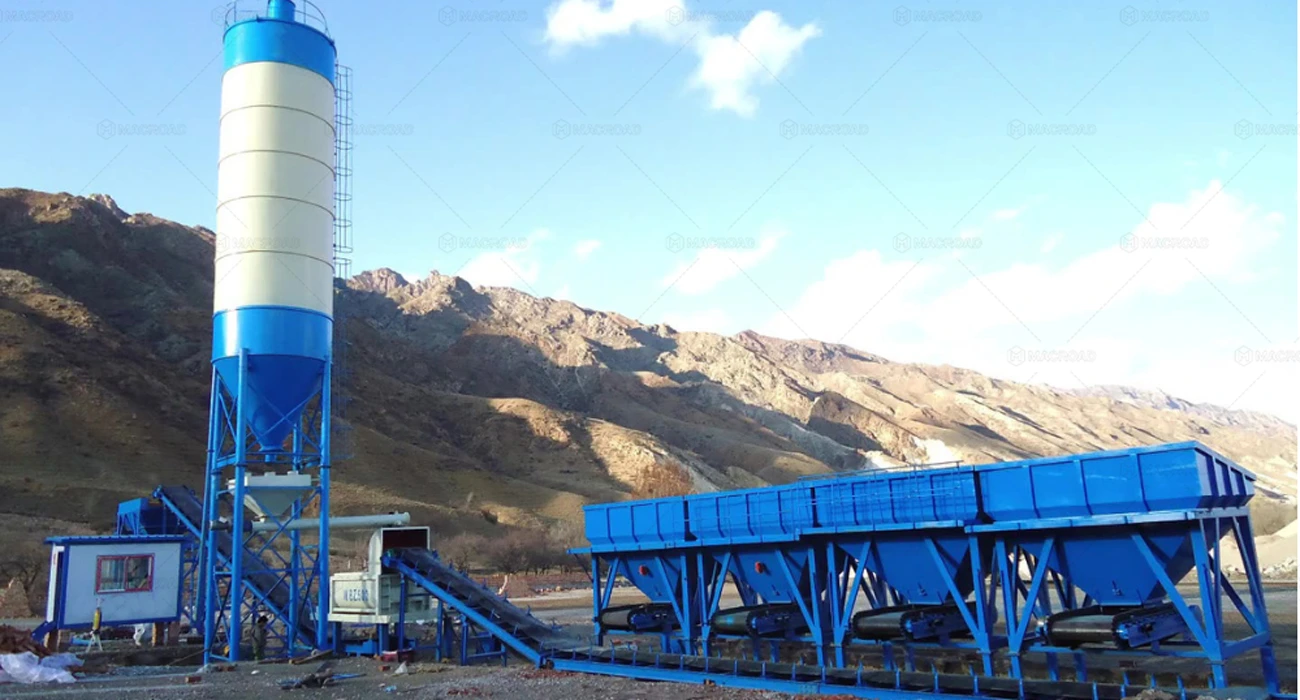
Soil stabilizing plants are equipment designed to solve this problem. By automatically metering and uniformly mixing soil, gravel, and materials such as cement or lime, they make the production process of stabilized soil more controllable and enable construction teams to complete the production tasks of base course materials more efficiently.
Why Every Efficient Project Needs Stabilized Soil Mixing Plant
During construction, some troublesome problems always arise: even with the most meticulous plans, uncertainties always arise regarding soil quality, material mixing, and construction efficiency. These small problems, if accumulated, can affect project progress and quality. Stabilized soil mixing plants are designed to make these problems controllable, allowing construction teams to focus on the project itself rather than worrying about base materials.
Challenge Analysis
In actual projects, construction teams often face several challenges:
- Significant Soil Variation: Soil strength and moisture content vary considerably across different construction sites, making it difficult to ensure material uniformity using traditional manual or simple mixing methods.
- Insufficient Mixing Precision: Stabilized soil requires strict mixing ratios; even slight deviations can affect the bearing capacity of the base course and the lifespan of the project.
- Limited Construction Efficiency: Manual mixing or small equipment is inefficient, easily causing delays when the project volume is large.
- Difficulty in Maintaining Consistent Project Quality: The quality of soil mixed by different work teams at different times may be inconsistent, affecting the overall performance of asphalt production.
Stabilized Soil Mixing Plant: Enhancing Efficiency and Quality
The value of choosing a stabilized soil mixing plant is therefore evident:
- Automated batching and uniform mixing ensure consistent quality in every batch.
- High-capacity continuous operation significantly improves construction efficiency.
- Flexible adaptation to different soil types and project scales reduces material waste.
- Provides a stable and reliable construction foundation, reducing rework and maintenance costs.
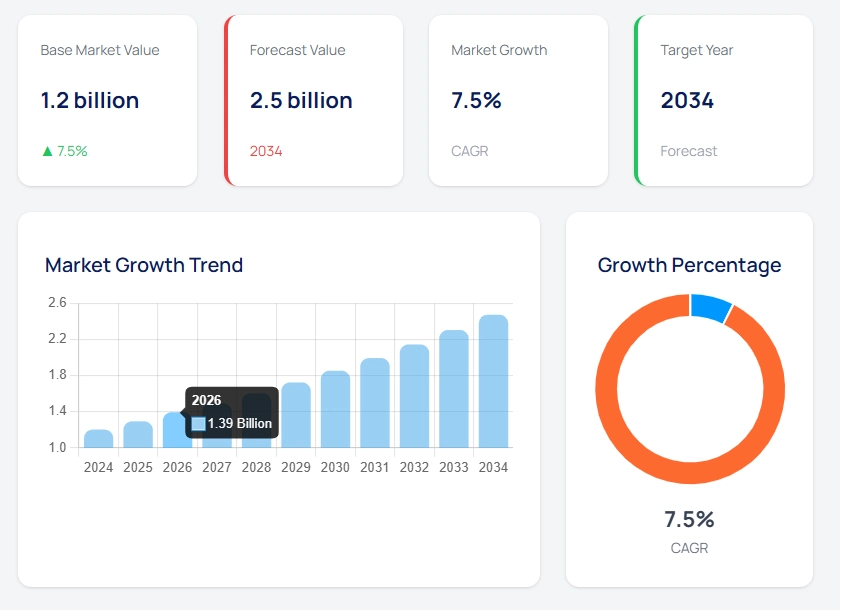
Faced with these challenges, an increasing number of construction teams are relying on plants for soil stabilization. Market forecasts predict that this stabilized soil mixing plant market will maintain an annual growth rate of approximately 7.5%. Behind this market growth lies a very real trend—whether it’s highways, airports, or municipal road projects, construction teams are continuously increasing their demand for high-quality, efficient, and controllable base material production.
Simply put, this is not just an investment in a piece of soil stabilizer plant, but a core decision to improve efficiency, ensure quality, and reduce risk.
The Truth Behind Our Customers’ Choices
Many engineering teams consider the same questions when choosing a stabilized soil mixing plant: Can the equipment produce materials stably and efficiently? Can it meet the construction needs of different projects? In fact, this is not only your question, but also the question of many customers. Among the customers served by Macroad, two cases are particularly typical, and their selection and usage experience may give you some reference.
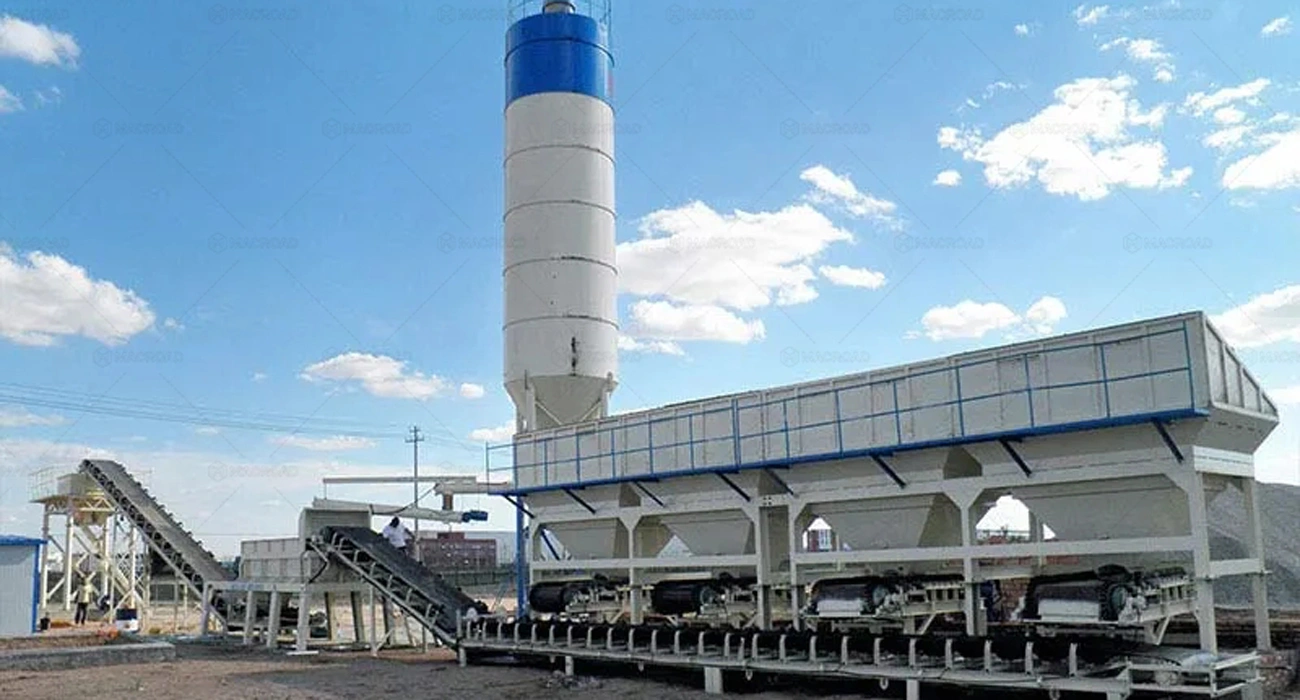
Kazakhstan Stationary Soil Stabilizing Plants: Building a High-Capacity, Consistent Base
- Capacity: 300 t/h
- Type: Stationary type
- Value:
- Supports multiple construction projects
- Matches with asphalt plants to ensure high-quality raw materials
- Provides opportunities for local commercial sales, offering considerable returns
- Improves construction efficiency and material consistency
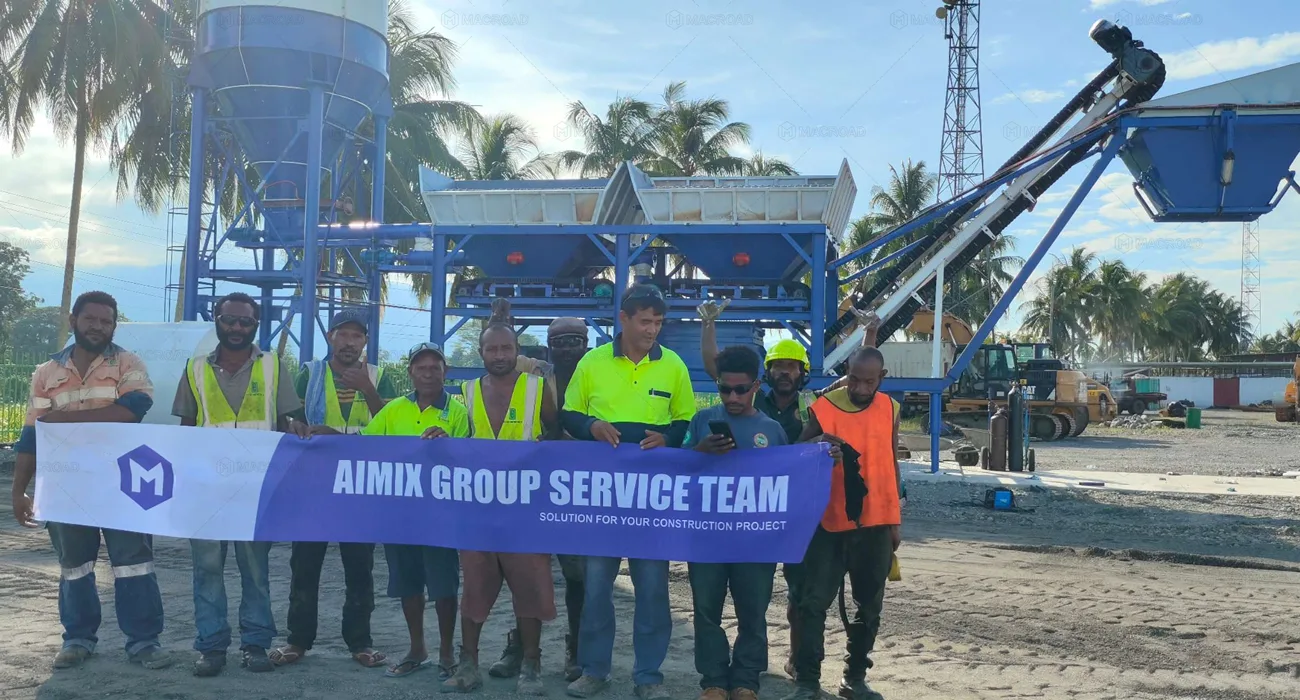
Papua New Guinea Soil Stabilizing Plants: Flexible and Efficient for Multi-Site Projects
- Capacity: 300 t/h
- Type: Mobile type
- Value:
- Quick setup and relocation for multi-site projects
- High-efficiency production ensures consistent material quality
- Reduces labor and management expenses
- Provides dependable base material supply for long-term projects
Two Options, One Goal: For Reliable Road Foundations
Construction conditions vary greatly across different engineering projects. Some projects are large-scale and long-term, requiring equipment to continuously and stably produce materials at a single location; while others are distributed across multiple construction sites, necessitating the relocation of equipment as construction progresses. To address these diverse construction environments, soil stabilizing plants come in two common forms—stationary and mobile—to suit different situations.
Although their structures and deployment methods differ, their underlying task is the same—to stably and efficiently produce base course materials, providing a reliable foundation for road and infrastructure projects. Depending on the project size, construction period, and site conditions, construction teams can choose the equipment solution that best suits their needs.
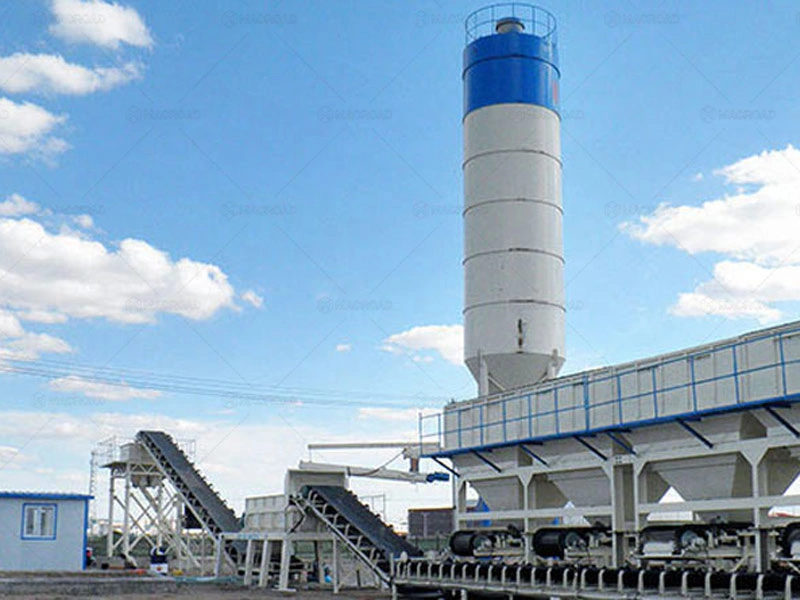
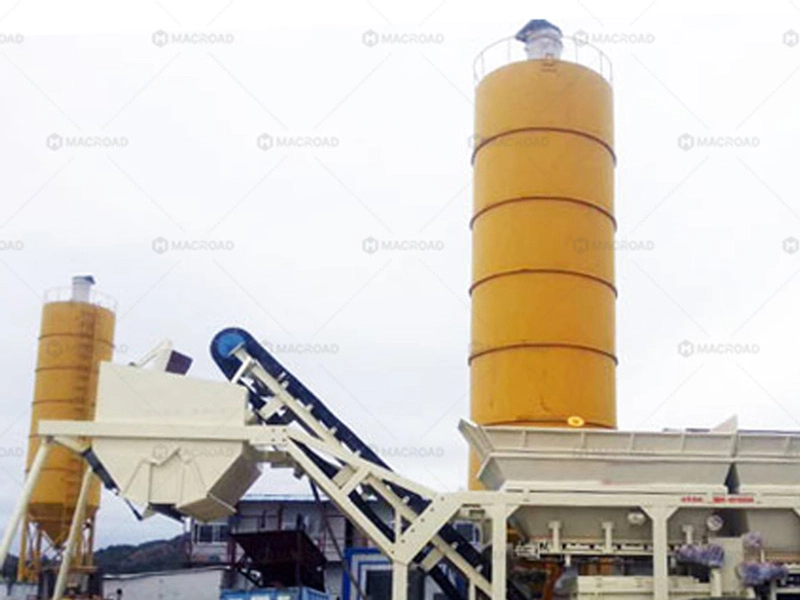
Stationary Stabilized Soil Mixing Plant (WCB Series)
Frequently known for their high production capacity and continuous operation, stationary stabilized soil batching plant is essential equipment for long-term, large-scale construction projects. Their modular design not only facilitates installation and maintenance, but also allows for flexible capacity expansion, ensuring a stable output of high-quality mixed materials. For construction sites requiring long, intensive operations, the WCB Series significantly improves overall efficiency while ensuring construction quality.
Application Scenarios
- Expressways and Freeways:Require continuous, large-scale production. Fixed plants deliver high capacity and stable output, ensuring both quality and quantity in highway construction.
- Port yards and heavy-duty roads:Face extreme loads and demand strong foundations. The WCB Series’ precise, continuous mixing ensures dense, durable base layers
- Industrial parks and large-scale municipal projects: Need long-term, large-volume supply. Fixed plants provide stable output and modular expansion to meet changing demand
| Type | WCB300 | WCB400 | WCB500 | WCB600 |
| Theoretical Productivity | 300T/h | 400T/h | 500T/h | 600T/h |
| Gross Power | 98KW | 118KW | 150KW | 200KW |
| Gross Weight | 30T | 35T | 40T | 50T |
| Max Aggregate Size | 60mm | 60mm | 60mm | 60mm |
| Aggregate Weighing Accuracy | ±2% | ±2% | ±2% | ±2% |
| Cement Weighing Accuracy | ±1% | ±1% | ±1% | ±1% |
| Water Supply Accuracy | ±1.5% | ±1.5% | ±1.5% | ±1.5% |
| Covering Area (L x W) | 44x5m | 50x5m | 50x5m | 52x6m |
| Control Module | Auto/Semi-auto | |||
Mobile Stabilized Soil Mixing Plant (YWCB Series)
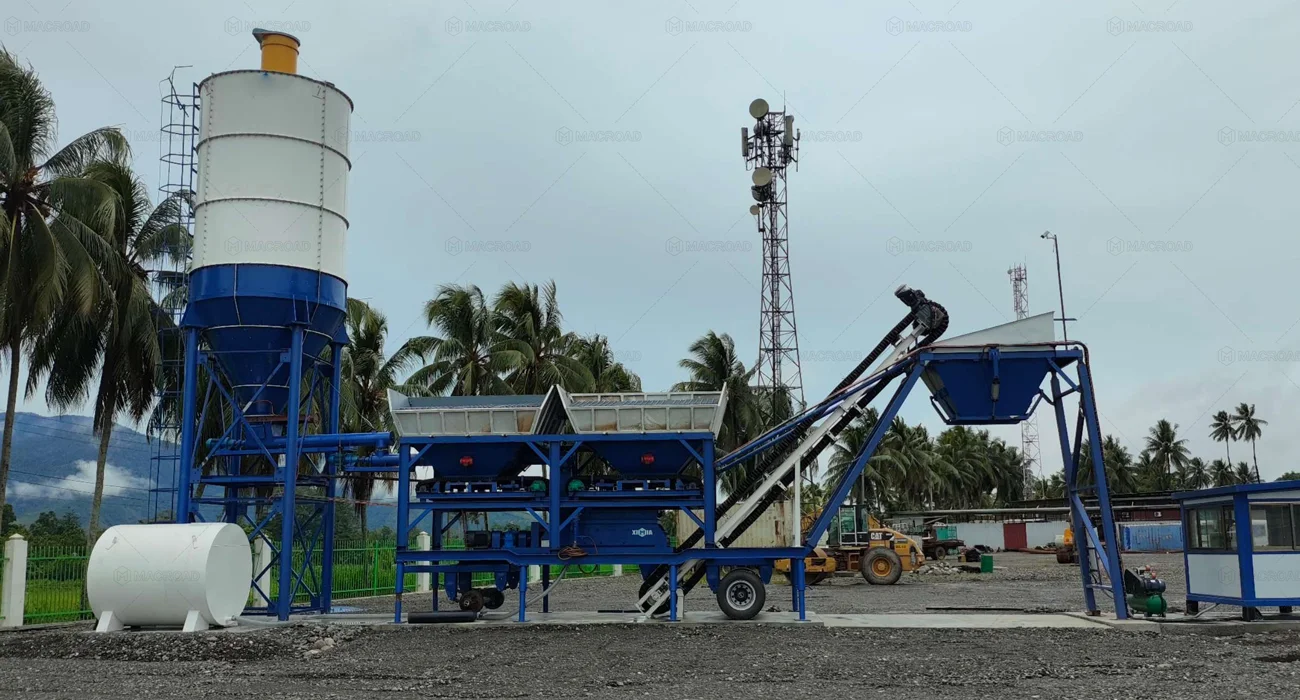
Mobile stabilized soil mixing plant for sale is characterized by flexibility and convenience. The equipment is fully integrated into a trailer chassis, allowing for easy transportation and quick deployment, ensuring immediate installation. The YWCB series is particularly suitable for projects with tight deadlines and dispersed construction sites, enabling construction teams to efficiently move between sites and ensure a continuous and reliable construction schedule.
Application Scenarios
- Rural road repair and reconstruction: Mobile plants suit small, scattered projects with tight deadlines. YWCB enables quick relocation and avoids repeated transport
- Sports stadiums and large venues:Large areas but short timelines. YWCB’s integrated design allows flexible movement and steady supply
- Emergency repair and temporary road reinforcement:Rapid deployment ensures timely stabilized soil for disaster response and temporary reinforcement.
| Model | YWCB120 | YWCB200 | YWCB300 |
| Mixer Type | Dual Horizontal Axes Forced Mixer | ||
| Rated Productivity(t/h) | 120 | 200 | 300 |
| Aggregate Bin Volume(m3) | 3×4 | 3×6 | 3×8 |
| Aggregate Diameter(mm) | ≤60 | ||
| Weighing Accuracy(%) | Aggregates ±2.5, Cement ±1.5, Water ±1 | ||
| Feeding Height(m) | 3.9 | 4.05 | 4.25 |
| Discharging Height(m) | 2.8 | 2.9 | 3.5 |
| Trailing Speed(km/h ) | 15 | ||
| Total Power(KW) | 95 | 105 | 120 |
How Does a Stabilized Soil Mixing Plant Work?
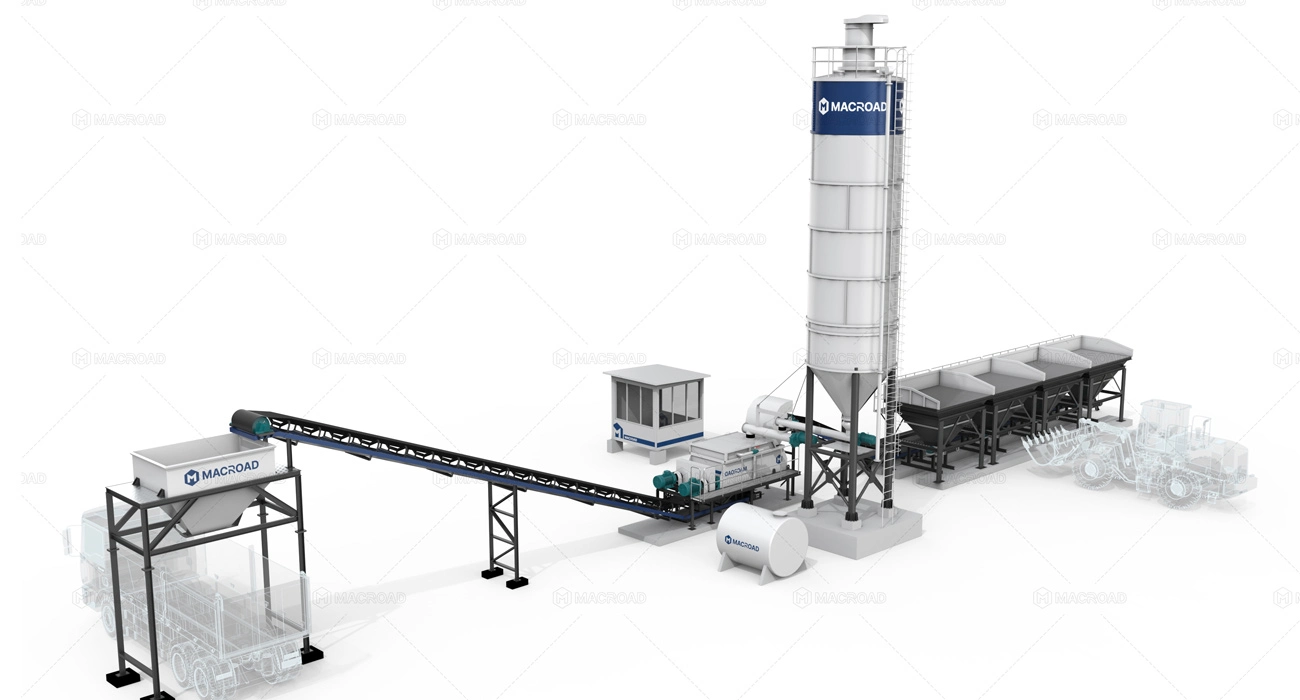
Whether stationary or mobile, the core task of a soil stabilisation plant is to mix various raw materials in a predetermined ratio to produce a stable base course material. To achieve this, the equipment is designed to integrate batching, conveying, and mixing processes into a continuous and efficient production flow.
In actual operation, a stabilized soil mixing plant typically completes material production according to the following steps:
Raw Material Storage and Supply
Aggregates such as sand, gravel, and soil required for construction are first stored in cold storage silos. Different types of raw materials are stored separately so that they can be supplied in predetermined proportions during subsequent production.
Automatic Metering and Batching
Raw materials enter the metering device via a conveyor system. The equipment automatically controls the proportion of each material added according to a preset ratio. A precise metering system ensures consistent batching of stabilized soil for each batch.
Stabilizer Addition
Cement, lime, or other stabilizing materials are added to the production process according to project requirements. These stabilizers improve the strength and stability of the base material.
Batch Mixing
After all materials enter the mixing unit, they are thoroughly mixed by a high-efficiency mixing system. This process ensures uniform material distribution, thereby guaranteeing the overall performance of the stabilized soil.
Finished Product Output and Transportation
The mixed stabilized soil is transported to the construction area or transport equipment and then used for road base construction or other engineering projects.
Three Core Systems: The Key to Equipment Reliability
After understanding the equipment types and production processes of soil stabilisation plants, you might further focus on a more practical question: can the equipment maintain a stable and efficient production state during long-term construction?
In fact, the overall performance of a stabilized soil mixing plant often depends on the design of several key systems. Stable control, accurate metering, and thorough mixing—these seemingly minor details directly affect material quality and construction efficiency.
Taking the Macroad’s WCB series stationary stabilized soil batching plant as an example, we concentrate the core advantages of the equipment on three key modules: the control system, the metering system, and the mixing system. Through optimized design of these core systems, the equipment can maintain stable operation even under high-intensity continuous production environments.
Control and Operating System
The control system of the stabilized soil mixing plant determines the overall operating efficiency and user experience. The WCB series adopts a self-developed intelligent control system, combined with internationally renowned electrical components, giving the equipment significant advantages in automation and operational stability.
- Intelligent Control, Simple and Efficient Operation: The equipment uses an advanced microcomputer control system, allowing for equipment start-up and shutdown, parameter setting, and production management via computer. The user interface is clear and intuitive, with a low learning curve, enabling even new operators to quickly learn and reduce human error, thus improving production efficiency.
- Stable and Reliable Communication and Operating System: The system uses a unified communication mode, ensuring stable and reliable data transmission between devices. All inverter parameters and operating statuses can be uniformly set and monitored on the computer, maintaining stable operation during long-term continuous operation and reducing the risk of downtime due to system failures.
- Remote Diagnosis and Continuous Upgrade Support: The control system has remote diagnostic and maintenance functions. When equipment malfunctions, technicians can quickly troubleshoot remotely, significantly shortening repair time. The system also supports software upgrades, allowing users to receive regular control program updates, ensuring the equipment always maintains a stable and reliable operating state.
Metering and Batching System
The quality of stabilized soil largely depends on the accuracy of batching. The WCB series, through precise metering technology and a rational system design, ensures that various materials are consistently added according to set proportions, guaranteeing consistent quality in each batch.
- High-precision metering ensures stable proportions: The equipment uses high-precision weighing sensors to control the real-time metering of aggregates and cement. This precise batching system ensures consistent proportions in each batch of stabilized soil, thus guaranteeing the strength and stability of the base course material.
- Cement-saving technology reduces construction costs: The equipment employs patented cement reduction technology, optimizing the proportion of powder materials while maintaining base course quality. Precise control of cement dosage effectively reduces material waste, helping construction teams lower long-term construction costs.
- Interlocking batching control improves production stability: The powder metering system and aggregate metering system are linked for control, avoiding quality fluctuations caused by batching errors. This collaborative batching method allows the equipment to maintain stable output throughout continuous production.
Mixing System
The mixing system is the core component of the stabilized soil production process, directly determining whether materials can be fully mixed and the uniformity of the final base course material. The WCB series plant for soil stabilization employs a twin-shaft mixing design, excelling in both efficiency and durability.
- Twin-shaft mixing improves mixing efficiency: The equipment utilizes a twin-shaft forced mixing structure, resulting in a longer mixing distance and more thorough mixing. Materials form cross-flows during mixing, achieving rapid and uniform mixing, thus ensuring consistent stabilized soil quality.
- High wear-resistant structural design extends equipment life: The mixing blades are made of highly wear-resistant materials, maintaining a good service life even under high-intensity production environments. The wear-resistant structural design not only reduces the frequency of replacement of vulnerable parts but also lowers equipment maintenance costs.
- Continuous and stable production, adaptable to large-scale construction: The powerful mixing capacity enables the equipment to adapt to high-volume continuous production demands. Even during extended operation in large-scale projects, the equipment maintains stable production efficiency, providing a continuous supply of materials for construction.
When these three systems operate in synergy, the stabilized soil mixing plant forms a highly efficient and stable production chain. From precise batching to thorough mixing, and then to automated production management, every step revolves around the same goal—to continuously provide high-quality base materials for roads and infrastructure projects.
For construction teams, this not only means higher production efficiency but also that the stabilized soil batching plant can maintain reliable operation in long-term projects, making the entire construction schedule more controllable.
Match Your Soil: Choosing the Right Mixing Plant
After understanding the three core system advantages of the soil stabilizing plants, construction teams often ask: How should I configure my stabilized soil mixing plant to ensure material quality for different soil conditions?
In fact, different soil types have different requirements for the equipment’s mixing capacity, batching accuracy, and the use of stabilizers. The table below summarizes several common soil types and corresponding equipment selection suggestions to help you quickly determine the most suitable configuration for your project.
| Soil Type | Main Challenges | Recommended Plant Type | System Configuration / Parameter Suggestions |
|---|---|---|---|
| Sandy Soil / Gravel | Hard aggregates, need uniform mixing | Stationary or Mobile | Twin-shaft forced mixer, standard measurement system |
| Clay / Sticky Soil | Prone to clumping, difficult to mix evenly | Stationary | Twin horizontal-shaft forced mixer, precise powder and stabilizer dosing, adjustable mixing time |
| High Moisture Soil | Variable water content, affects stability | Stationary or Mobile | High-precision cement/lime dosing, adjustable water addition, linked control system |
| Mixed / Complex Soil | Different soil types mixed, uneven material properties | Stationary | Twin-shaft forced mixer, linked batching system, flexible stabilizer dosing |
| Gravelly Mixed Soil | Large particle size, long mixing time | Stationary | High-wear resistant mixing blades, adjustable mixing time |
| Light / Loose Soil | Low cohesion, prone to dust | Mobile | Adjustable mixing blades, enclosed material transport system |
| High Clay Content Soil | High mixing resistance, more stabilizer needed | Stationary | Increased mixer power, high-precision powder measurement |
As shown in the table above, different soil types directly impact the selection of soil stabilizer plants—from mixing capacity to batching systems, everything needs to be matched to the soil characteristics.
Of course, soil type is only one important factor influencing equipment selection. Project scale, daily output, construction period, and site conditions also determine the final equipment type and configuration. Only by comprehensively considering these factors can an efficient and stable equipment solution be selected, ensuring the smooth progress of the project.
If you wish to find the most suitable stabilized soil mixing plant for your project, feel free to send your project requirements to the Macroad professional team. Our engineering experts will provide you with a customized equipment solution based on your needs, making the selection process easier and more reliable.
Keep Your Stabilized Soil Plant Running Efficiently – Must-Know Tips!
Choosing the right stabilized soil mixing plant is only the first step. For construction teams, the more pressing concern is: can the equipment maintain stable production, guarantee material quality, and minimize downtime during months or even longer of continuous high-intensity operation?
The long-term stability of a stabilized soil mixing plant is not determined by a single component, but rather by the reliable design of the equipment itself, system coordination, and daily operation and maintenance management. Below, we have compiled some practical suggestions to help construction teams ensure efficient equipment operation in long-term projects.

Regular Inspection and Maintenance of Core Systems
Maintaining the normal operation of the control system, metering system, and mixing system is crucial for long-term stability.
- Control System Maintenance: Regularly inspect electrical components, PLC programs, and sensor connections to ensure stable signal transmission and prevent sudden shutdowns.
- Metering System Calibration: Regularly calibrate the weighing system and metering equipment to ensure batching accuracy and prevent material errors from affecting construction quality.
- Mixing System Maintenance: Inspect the wear of the mixing blades, bearing lubrication, and power transmission to ensure uniform mixing and smooth operation.
Strict Control of Raw Material and Batching Quality
Material fluctuations directly affect the quality of stabilized soil and equipment efficiency; therefore, raw material management must be prioritized.
- Material Screening: Ensure that the specifications of aggregates, powders, cement, and stabilizers meet design requirements to avoid impurities.
- Batching Ratio Monitoring: Accurately add materials according to the set ratio, adjusting as necessary through the metering system or automatic control to maintain material uniformity.
- Material Storage Management: Powders and stabilizers should be kept dry and moisture-proof to prevent moisture or clumping from affecting equipment mixing performance.
Optimize Operating Procedures and Train Personnel
Skilled operators are essential for stable equipment operation, and reasonable operating procedures can reduce the risk of malfunctions.
- Standard Operating Procedures: Establish standardized operating procedures for equipment startup, production, and shutdown to ensure consistency across batches.
- Training and Assessment: Provide systematic training to operators, ensuring they are familiar with equipment operation, troubleshooting, and safety precautions.
- Emergency Response Capabilities: Train personnel to master methods for quickly diagnosing common faults, ensuring timely resolution of problems during production.
Utilize Automation and Remote Monitoring Functions
Intelligent equipment can provide early warnings, reducing human error and improving long-term operating efficiency.
- Real-time Monitoring: View equipment operating status, output, and various alarm information in real time through a remote monitoring system.
- Preventative Maintenance: Analyze potential risks based on monitoring data and schedule maintenance in advance to reduce unexpected downtime.
- System Upgrades and Optimization: Regularly update control software and monitoring systems to ensure equipment maintains advanced performance and stable operation.
Regardless of project size or construction period, the high efficiency of a stabilized soil mixing plant always relies on scientific management and proper operation. By precisely controlling raw materials, standardizing operating procedures, and making full use of intelligent monitoring and maintenance tools, your equipment can maintain optimal condition for a long time, providing stable and reliable base materials for every project.
FAQs
We’ve already covered the equipment types, core systems, and usage procedures for stabilized soil mixing plant. However, in actual projects, construction teams often have additional questions. These are very common among Macroad’s clients—and perhaps you’re considering similar situations. Below are some frequently asked questions to help you quickly find answers and give you greater confidence in the equipment and construction process.
Can a stabilized soil mixing plant process multiple soil types simultaneously?
Can mobile and stationary stabilized soil mixing plant be used interchangeably?
How often should the equipment be maintained?
Can the equipment be managed through remote monitoring?
What is the typical payback period for the equipment investment?
How much stabilized soil can be produced per day?
Is equipment installation and commissioning complex?
Make Every Project More Stable and Efficient
Soil stabilizing plants not only provide high-quality base course materials but also significantly improve construction efficiency and project management convenience. Regardless of the size of your project or the complexity of the soil, Macroad’s equipment can be flexibly configured to meet your specific needs, helping your project progress smoothly and efficiently.
If you would like professional equipment selection advice or to experience the performance and production capacity of our equipment firsthand, you can schedule a visit to our factory. Macroad’s engineering experts will tailor the most suitable stabilized soil mixing plant solution for you. Through on-site inspection, you will gain a more intuitive understanding of the equipment’s advantages and make the most informed decisions for your project.