

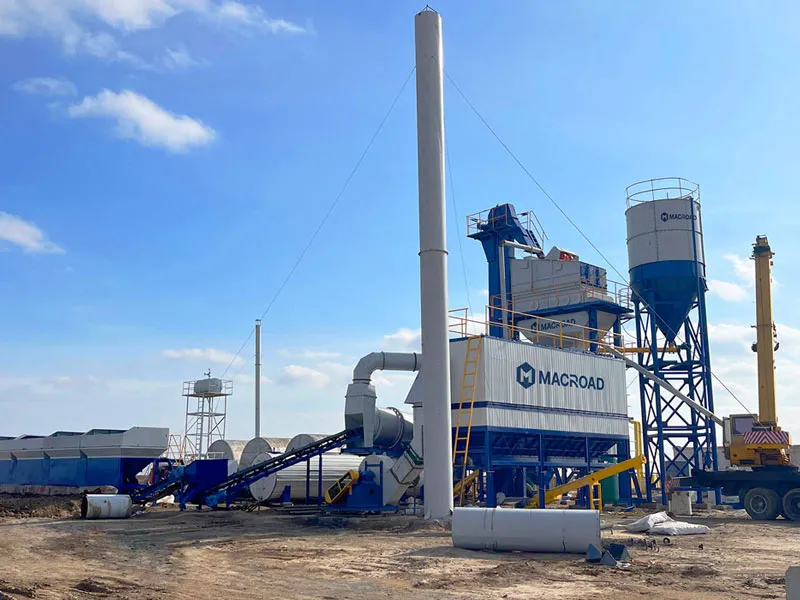
All-Terrain Adaptability Asphalt Plant
Strategic Partner of Fortune Global 500 Companies
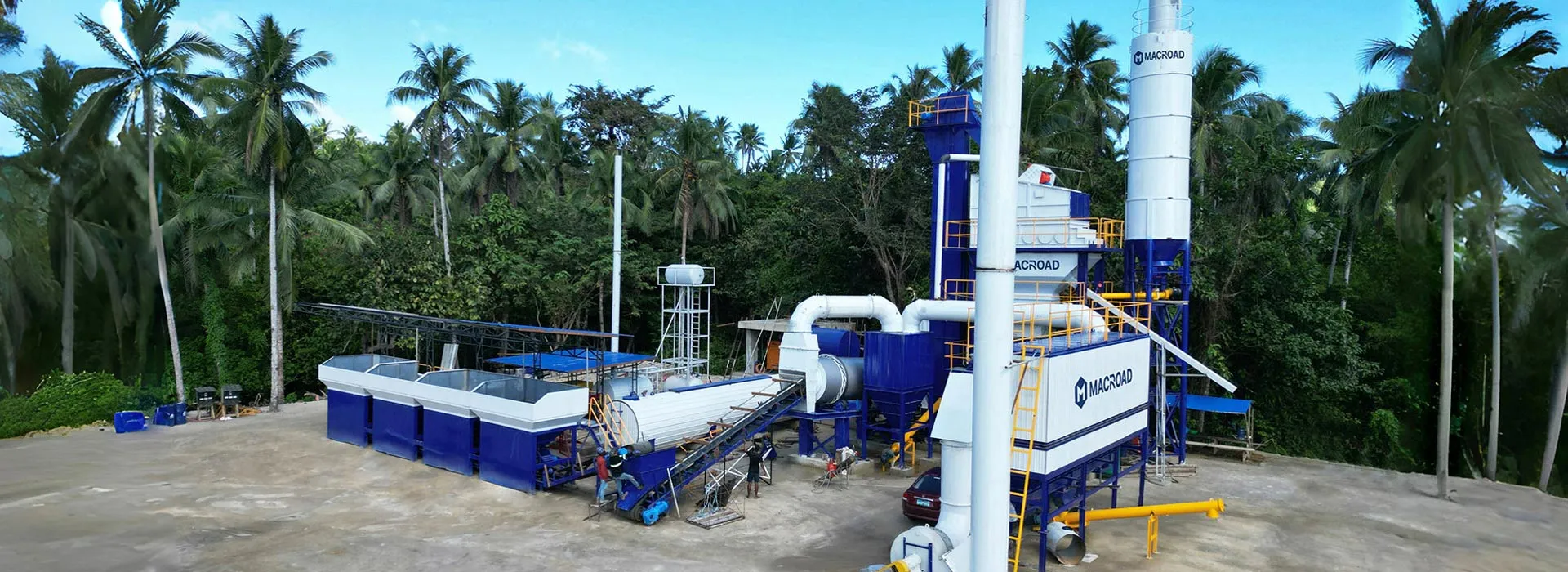
Malaysia’s cities and villages are being connected by a network of newly built roads, with highways extending, bridges rising, and logistics channels in industrial parks becoming increasingly sophisticated. This road network, like the veins of a blood vessel, continues to expand, injecting a constant stream of vitality into urban development. Every new road, every paved patch of asphalt, witnesses the city’s growth and accelerates the construction pace of engineering teams.
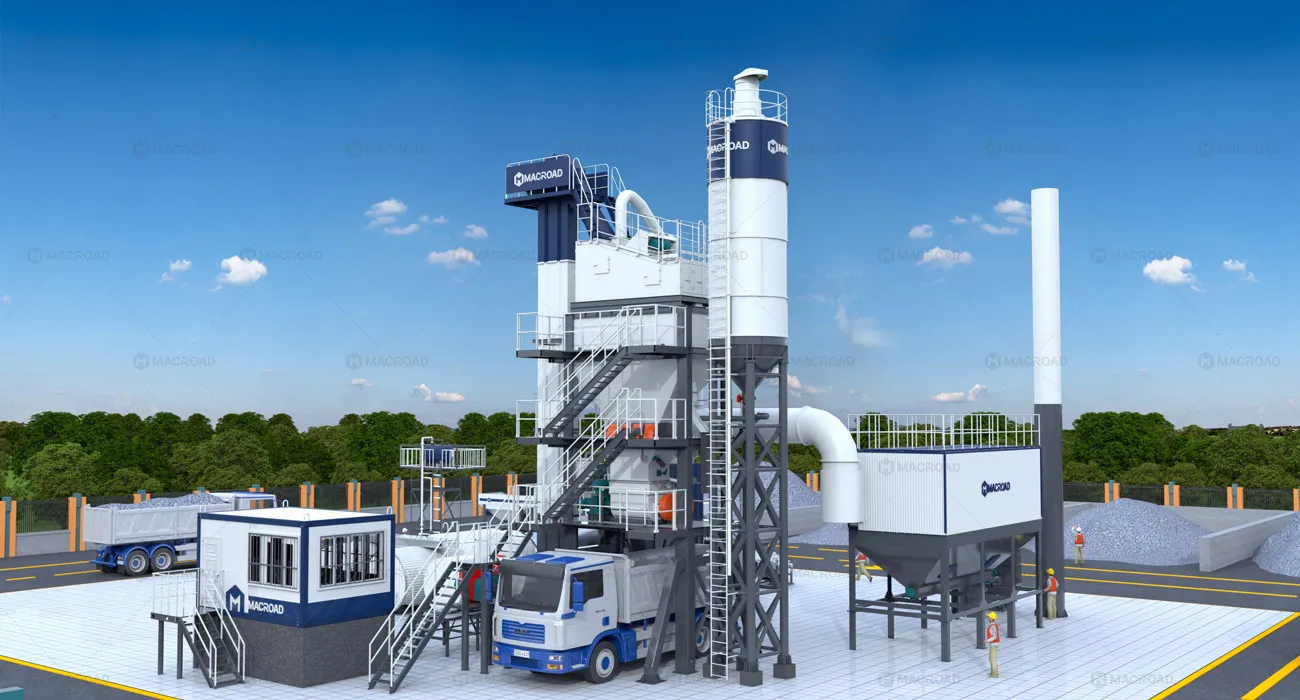
In this fast-paced market, efficient asphalt plant in Malaysia are no longer just optional equipment, but core tools ensuring smooth construction. They accurately weigh, rapidly mix, and stably output every ton of asphalt, allowing engineering teams to maintain efficiency and quality even under high temperatures, high humidity, and heavy workloads. Each asphalt mixing plant embodies speed, reliability, and the hope for future road construction.
Development of the Asphalt Plant in Malaysia Market
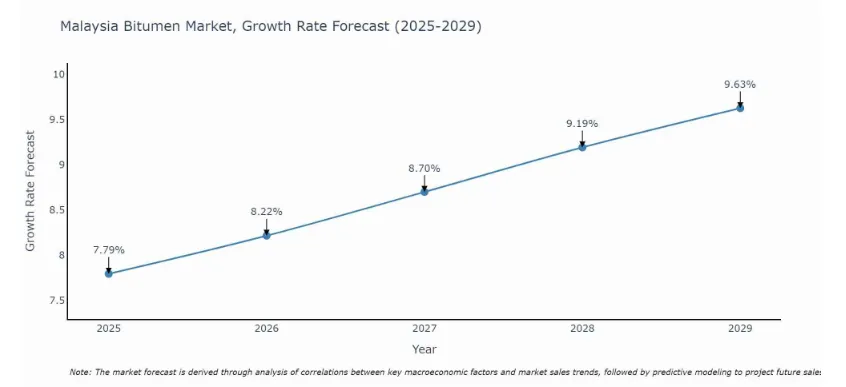
In recent years, road construction in Malaysia has been proceeding at an unprecedented pace. Highway expansion projects, urban arterial road upgrades, airport runway and industrial park road construction projects are being carried out one after another, with each new road driving economic development and urban upgrading. With the continuous increase in infrastructure investment and the expanding scale of construction, the market demand for asphalt plant Malaysia is also steadily rising.
Why More and More asphalt plant Malaysia are needed?
- Continuously Increasing Road Construction Volume: The number of projects such as highways, municipal roads, rural roads, airport runways, and industrial park roads is increasing year by year, each requiring independent asphalt supply capacity.
- Tight Construction Schedules and Multiple Parallel Projects: With multiple roads and projects underway simultaneously, a single asphalt mixing plant cannot meet all demands, requiring more plants to operate concurrently to ensure project deadlines are met.
- Environmental Policy Driven: Malaysia’s Environmental Quality Act stipulates that dust emissions should be ≤70mg/m³ and noise levels ≤85dB. The Green Building Index (GBI) encourages the use of recycled asphalt and biomass fuels. To ensure construction meets environmental standards, projects often require more asphalt mixing plants distributed across different construction sites.
- Regional Differences and Remote Construction Needs: Road construction in remote areas such as Sabah and Sarawak requires the rapid deployment of asphalt mixing plants to meet the needs of large-scale, multi-site construction.
Real-world Projects: Typical Engineering Projects Supporting Market Development
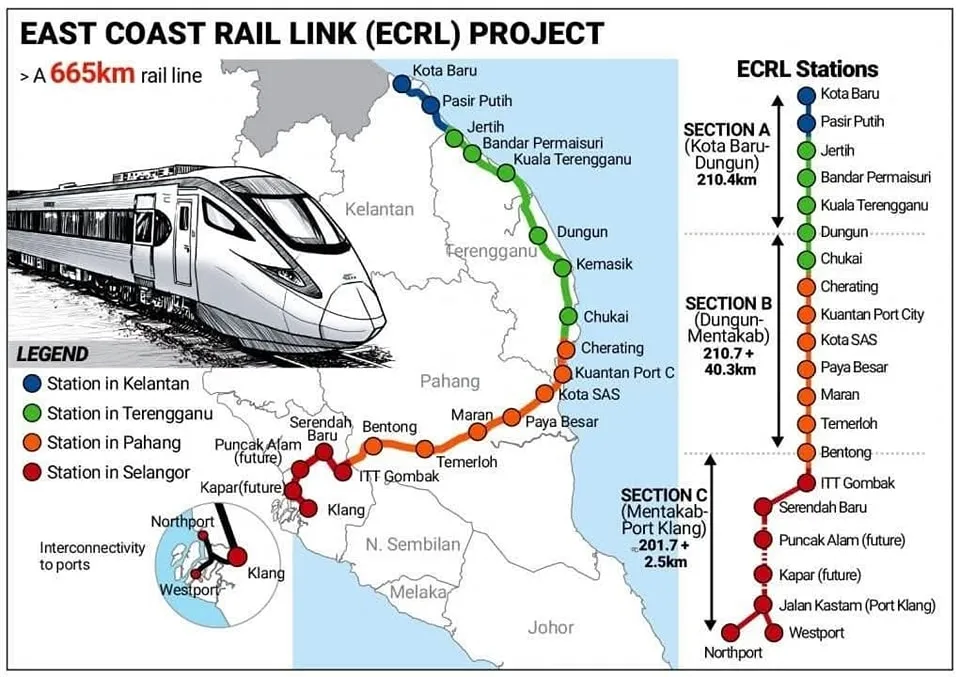
- East Coast Rail Link (ECRL): The construction of a railway exceeding 600 kilometers requires large quantities of high-precision asphalt mixtures to ensure the quality of the roadbed and track construction. The tight project schedule places extremely high demands on the capacity and stability of asphalt plant in Malaysia.
- Penang Second Bridge: A vital transportation artery connecting Penang Island and the peninsula, construction demands strict requirements for the uniformity of asphalt materials and the continuity of construction. High-efficiency asphalt mixing plants are crucial equipment to ensure the project progresses on schedule.
- Kuala Lumpur MRT Light Rail Extension: Urban rail projects have stringent requirements for the construction environment. Low-noise, low-dust environmentally friendly asphalt mixing plants are the preferred choice to ensure that construction does not disrupt urban life.
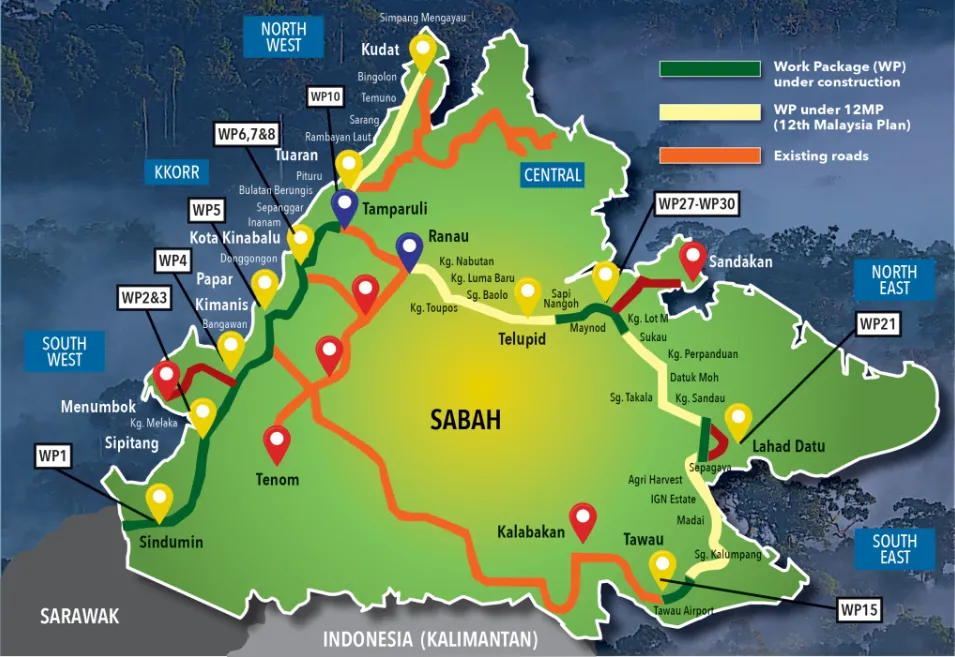
- Sabah Pan-Borneo Highway: The roads along this route mostly pass through remote areas with limited construction sites, requiring rapidly deployable and mobile asphalt mixing plants to meet the needs of distributed construction.
- Sarawak Coastal Economic Corridor: Covering coastal industrial parks and logistics hubs, the construction of new roads and port connections requires equipment adapted to high-humidity and high-temperature environments to ensure continuous construction.
- Malaysia Rural Road Upgrade Project: The construction of numerous small roads scattered in rural and remote areas has also increased the demand for small and medium-sized mobile asphalt mixing plants to enable rapid paving and localized material supply.
With the continuous advancement of national infrastructure, regional development, and urban road renovation projects, the pace of road construction in Malaysia is accelerating. Faced with such a vast and urgent market, efficient and stable asphalt plant in Malaysia have become indispensable support for engineering teams. Teams capable of deploying reliable equipment in a timely manner will undoubtedly gain a competitive edge in construction efficiency and project quality.
Practical Applications of Asphalt Plant Malaysia
In Malaysia, the hot and humid tropical climate year-round, along with diverse construction environments, presents unique challenges for road construction. Asphalt mixing plants play an irreplaceable role in various scenarios, from urban roads to remote highways, from large-scale infrastructure projects to small rural projects; each asphalt mixing plant safeguards construction efficiency and quality.
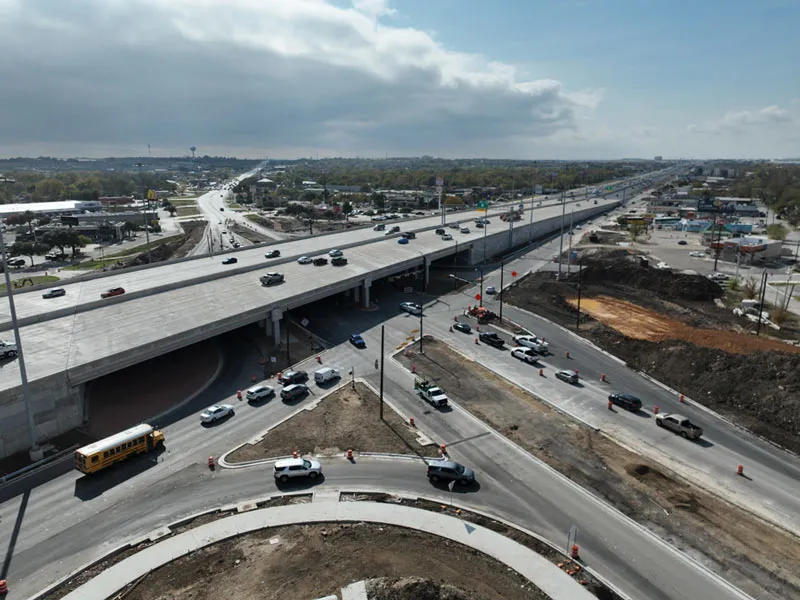
| Highway Construction: | Suitable for large-scale road projects such as the North-South Expressway and the East Coast Expressway expansion, providing large-scale, high-capacity asphalt mixtures for continuous construction. |
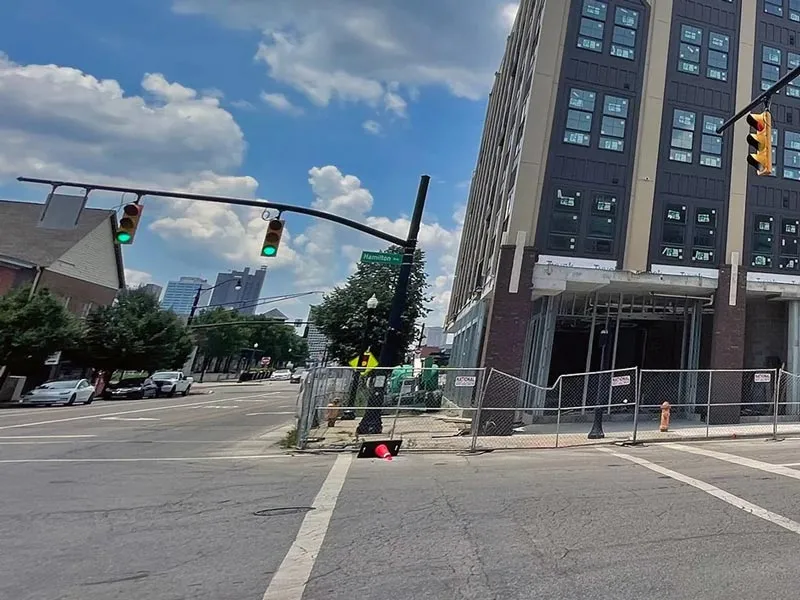
| Urban Road Construction: | Suitable for major municipal road reconstruction projects in cities like Kuala Lumpur and Penang, providing rapid asphalt supply for paving urban roads, bridges, and tunnels. |
| Rail Transit Laying: | Used for roadbed paving and track bed construction in urban light rail (such as the Kuala Lumpur MRT) or subway projects, supporting the rapid progress of urban rail projects. |
| Airport Roads and Industrial Park Roads: | Can be used for airport roads and high-load-bearing industrial park road construction, ensuring road surface smoothness and long-term durability. |
| Remote Area or Rural Road Construction: | Suitable for road paving in coastal and inland areas of Sabah and Sarawak. Mobile asphalt mixing plants can be quickly deployed, adapting to multi-site construction and environments with poor transportation. |
How Our Asphalt Plants Perform on Malaysian Job Sites
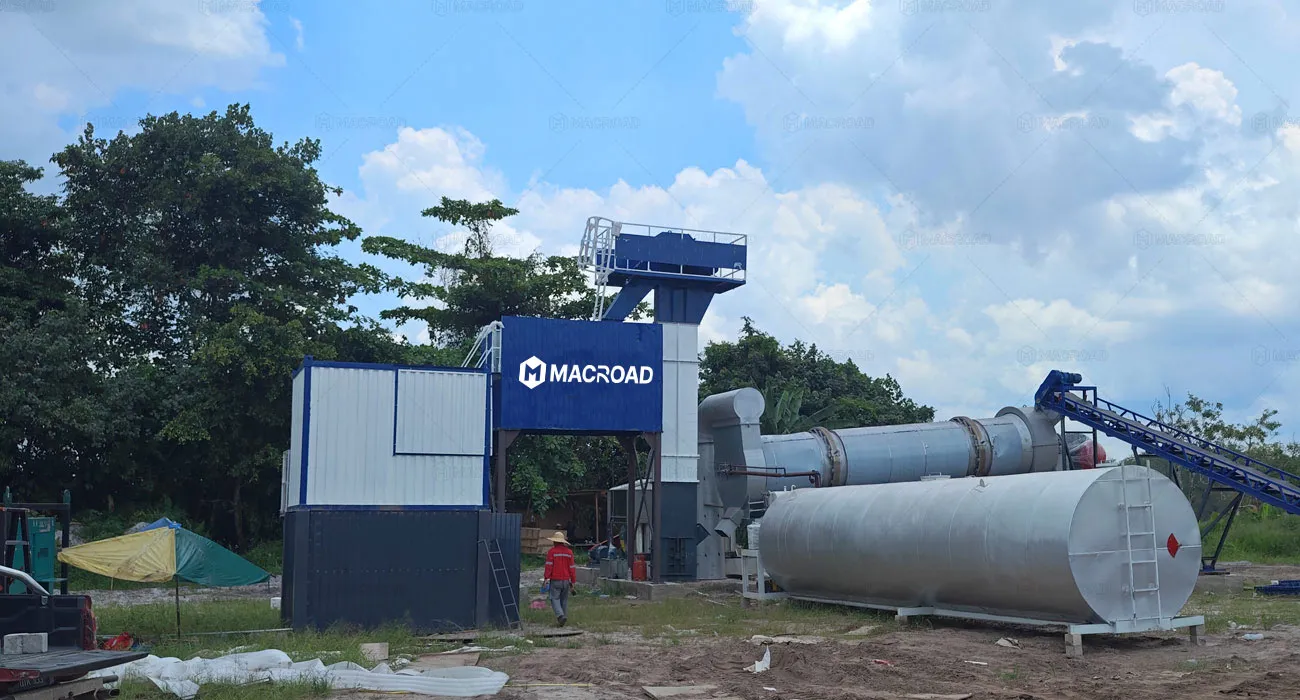
Take Control of Project Flow with Self-Produced Asphalt
- Model and Project Location: ALT80 asphalt drum mix plant in Malaysia Kuching
- Project Engineer: With the ALT80, we can adjust asphalt mix on-site, which makes our schedule more flexible and greatly reduces the waiting time for external materials.
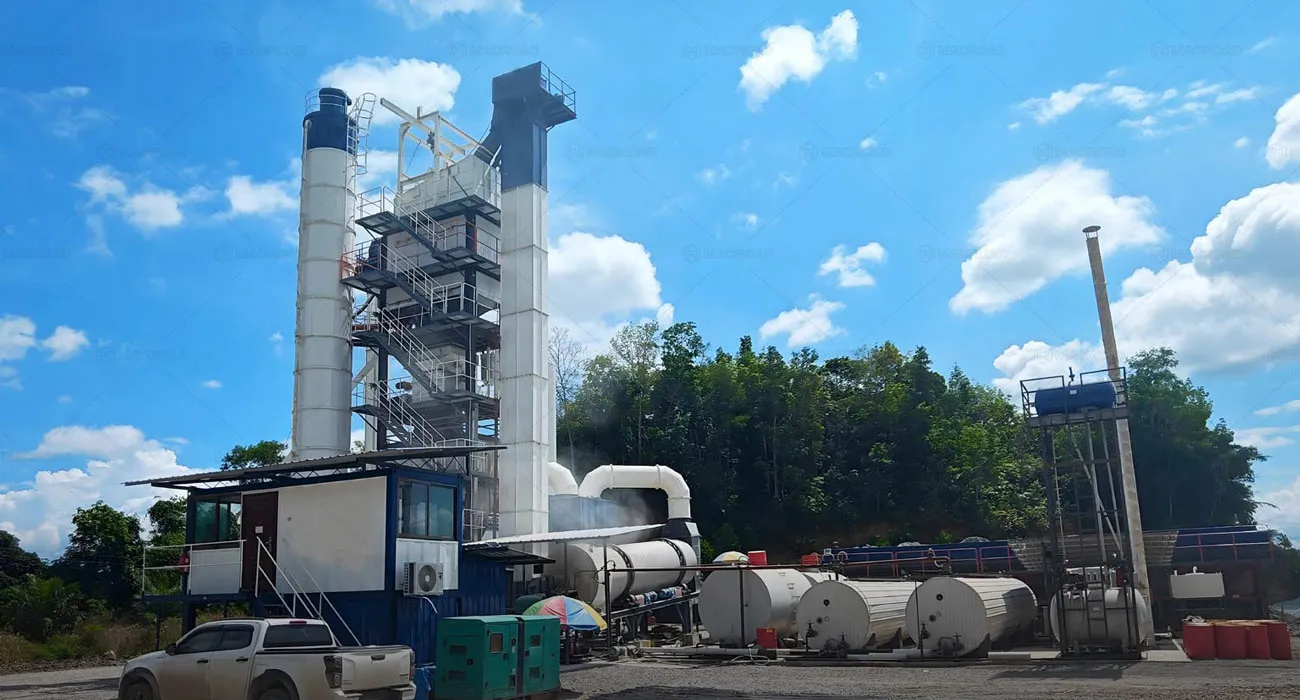
Stable Performance Under High Production Load
- Model and Project Location: ALQ120 asphalt batching plant in Malaysia Sabah
- Site Manager: The ALQ120 performs very steadily under continuous high load, even in hot and humid conditions, without uneven mixing or unexpected downtime.
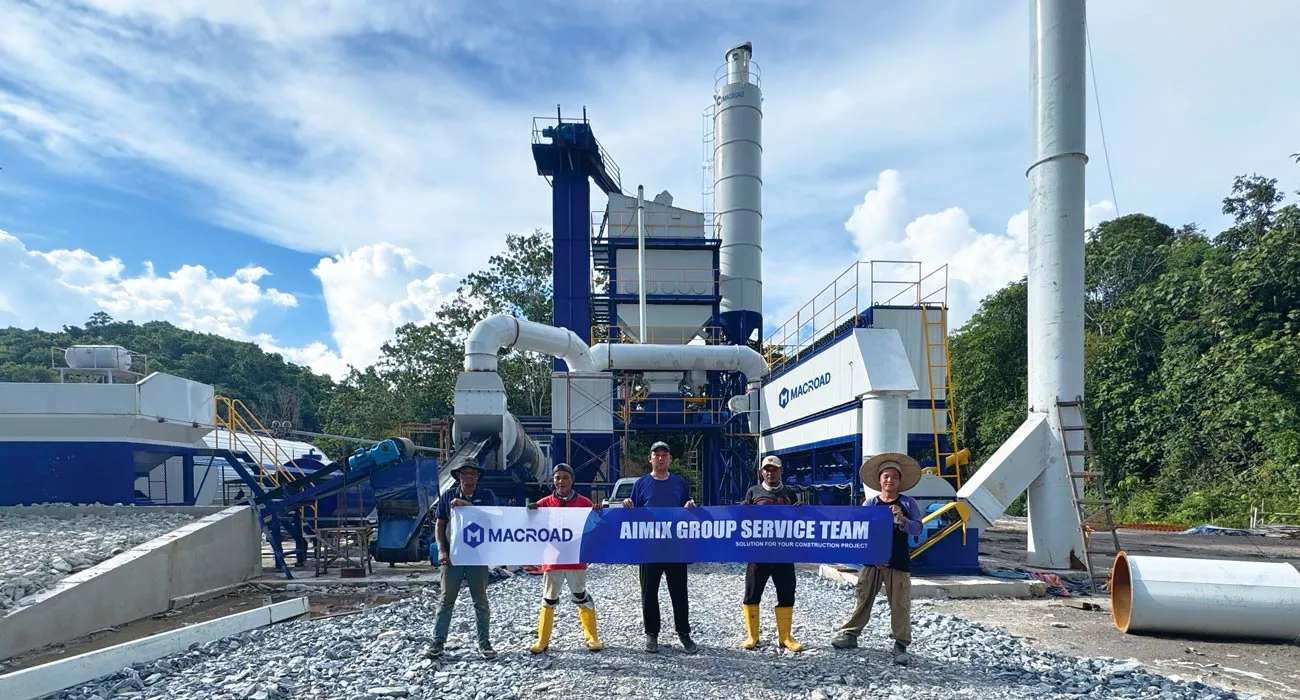
Easy Operation, Full Control Over Every Batch
- Model: ALQ120 asphalt batching plant in Malaysia
- Site Operator: The equipment is simple and intuitive to operate, so even new operators can quickly get up to speed, and every batch of asphalt meets our expected quality.

No More Hassle with Remote Deployment
- Model: ALT80 asphalt drum mix plant in Malaysia
- Project Supervisor: At remote sites, the ALT80 can be quickly assembled and commissioned, allowing our projects outside Kuching to proceed as scheduled.
Not Every Asphalt Plant Fits Malaysia
Road projects in Malaysia are highly diverse: from long-term, high-intensity national highway projects to regional road projects with phased construction and flexible schedules; from stationary asphalt mixing plants operating at high capacity year-round to mobile asphalt mixing plants that need to be relocated as projects progress.
Based on these real market differences, Macroad doesn’t offer a single machine to cover all scenarios. Instead, it has developed four mature asphalt plant in Malaysia models—ALQ, ALYQ, ALT, and ALYT—based on capacity requirements, construction pace, environmental conditions, and project cycles, helping Malaysian customers make more suitable choices at different stages of their projects.
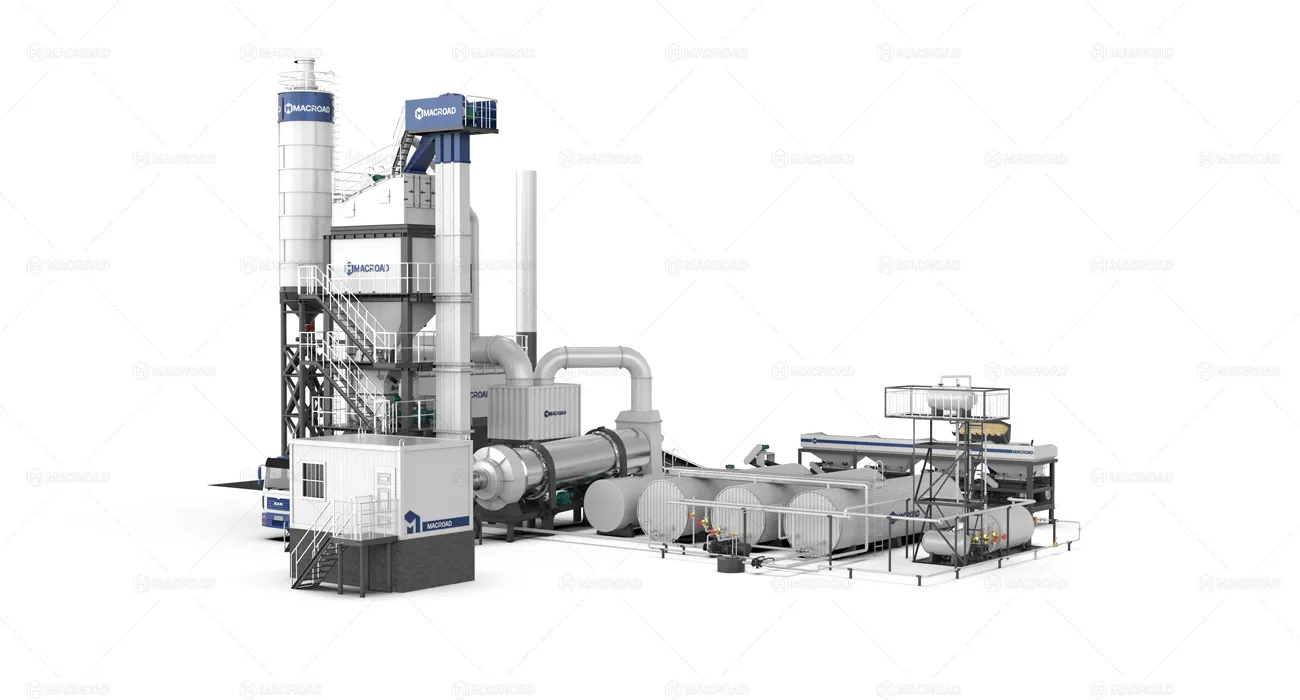
ALQ Stationary Type Asphalt Batching Plant
The ALQ series asphalt batching plantsrepresents core equipment for long-term, stable-output projects. In Malaysia, this type of equipment typically serves main road projects with long construction periods and high material usage. The ALQ120 we delivered in Sabah was specifically configured for continuous high-load construction.
- Designed for long-term, high-load projects: Large-scale highway projects in Malaysia often have long construction cycles and stable daily material usage. The ALQ is designed with high capacity and continuous stable operation as its core principles, reducing downtime and manual intervention, making it suitable for long-term on-site use.
- Structure and control logic adapted to high-temperature and high-humidity environments: In areas like Sabah, the hot and humid environment places higher demands on mixing uniformity and equipment stability. The ALQ ensures stable mixing quality even under high humidity conditions through enhanced mixing systems and weighing control.
| Model | ALQ40 | ALQ60 | ALQ80 | ALQ100 | ALQ120 | ALQ160 | ALQ200 | ALQ240 | ALQ320 |
|---|---|---|---|---|---|---|---|---|---|
| Output(t/h) | 40 | 60 | 80 | 100 | 120 | 160 | 200 | 240 | 320 |
| Cold Aggregate Feeding System | 4×4.5m³ | 4×6.5m³ | 4×8m³ | 4×8m³ | 5×9m³ | 5×12m³ | 5×12m³ | 5×12m³ | 6×15m³ |
| Hopper Capacity(m) | 4*4.5 | 4*6.5 | 4*8 | 4*8 | 5*9 | 5*12 | 5*12 | 5*12 | 6*15 |
| Collect Belt Capacity(t/h) | 60 | 80 | 100 | 120 | 140 | 200 | 220 | 280 | 360 |
| Dryer Size(m) | φ1.2*5.2 | φ1.5*6 | φ1.5*6.7 | φ1.65*7 | φ1.8*8 | φ2.2*9 | φ2.6*9 | φ2.6*9.5 | φ2.8*10.2 |
| Dryer Capacity (t/h) | 60 | 80 | 100 | 120 | 140 | 180 | 240 | 260 | 360 |
| Fuel Max Consumption(kg/h) | 300 | 450 | 550 | 700 | 950 | 1200 | 1400 | 1700 | 2250 |
| Vibrating Screen(Layer) | 4 | 4 | 4 | 4 | 4 | 5 | 5 | 5 | 6 |
| Aggregate Metering hopper(kg) | 500 | 800 | 1000 | 1250 | 1500 | 2000 | 2500 | 3000 | 4000 |
| Mineral Flour Metering hopper (kg) | 120 | 150 | 200 | 200 | 300 | 300 | 320 | 600 | 700 |
| Bitumen Metering hopper (kg) | 100 | 120 | 150 | 150 | 250 | 250 | 250 | 480 | 500 |
| Weighing accuracy | aggregate:±0.5% Mineral Flour:±0.25% Bitumen:±0.25% | aggregate:±0.5% Mineral Flour:±0.25% Bitumen:±0.25% | aggregate:±0.5% Mineral Flour:±0.25% Bitumen:±0.25% | aggregate:±0.5% Mineral Flour:±0.25% Bitumen:±0.25% | aggregate:±0.5% Mineral Flour:±0.25% Bitumen:±0.25% | aggregate:±0.5% Mineral Flour:±0.25% Bitumen:±0.25% | aggregate:±0.5% Mineral Flour:±0.25% Bitumen:±0.25% | aggregate:±0.5% Mineral Flour:±0.25% Bitumen:±0.25% | aggregate:±0.5% Mineral Flour:±0.25% Bitumen:±0.25% |
| Mixer Capacity(kg) | 500 | 800 | 1000 | 1250 | 1500 | 2000 | 2500 | 3000 | 4000 |
| Cycle Time(s) | 45 | 45 | 45 | 45 | 45 | 45 | 45 | 45 | 45 |
| Dust filter (Bag dust filter) | |||||||||
| Filter Area(m2) | 230 | 300 | 420 | 480 | 550 | 650 | 700 | 1050 | 1350 |
| Draught Fan(kw) | 22 | 30 | 45 | 55 | 90 | 110 | 2*75 | 2*90 | 2*110 |
| Asphalt Temperature (⊥) | 140-180 | 140-180 | 140-180 | 140-180 | 140-180 | 140-180 | 140-180 | 140-180 | 140-180 |
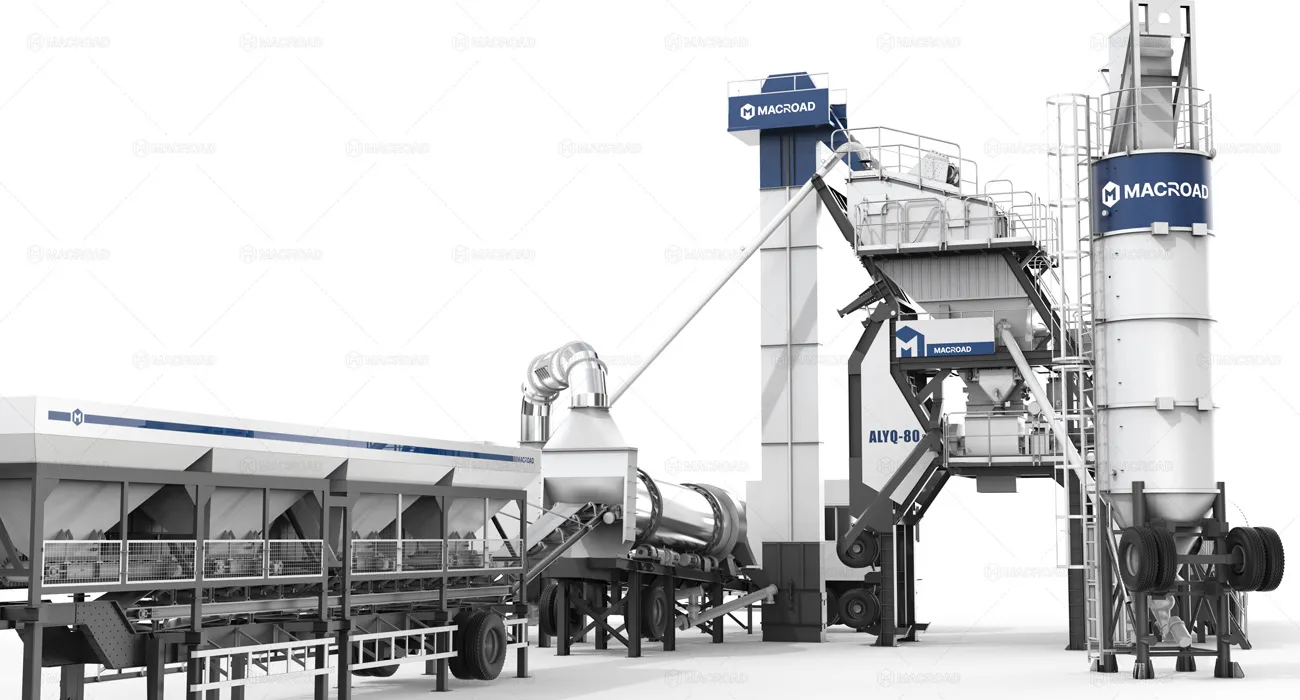
ALYQ Mobile Asphalt Batching Plant
The ALYQ series mobile asphalt batching plant is designed for projects with rapidly changing schedules and non-fixed construction sites. In Malaysia, many road projects are not concentrated in one fixed location but rather move to different construction sites as the project progresses.
- Adaptable to segmented construction modes: Many road projects in Malaysia adopt segmented and regional construction methods. ALYQ’s modular and mobile design allows for rapid relocation as the project progresses, reducing the cost of repeatedly constructing fixed stations.
- Maintains strong-mix quality under unstable construction conditions: Even in temporary sites, with limited power or foundation conditions, ALYQ maintains a strong-mix structure and high mixing uniformity, ensuring that project quality is not compromised by changes in the construction environment.
| Model | ALYQ60 | ALYQ80 | ALYQ100 | ALYQ120 |
|---|---|---|---|---|
| Output (t/h) | 60 | 80 | 100 | 120 |
| Hopper Capacity(m) | 4*6.5 | 4*7.5 | 4*7.5 | 4*7.5 |
| Collect Belt Capacity (t/h) | 80 | 100 | 120 | 140 |
| Dryer Size(m) | φ1.5*6 | φ1.5*6.7 | φ1.65*7 | φ1.8*8 |
| Dryer Capacity(t/h) | 80 | 100 | 120 | 140 |
| Fuel Max Consumption(kg/h) | 450 | 550 | 700 | 950 |
| Mixing Tower(kW) | 54 | 63.5 | 104.5 | 125 |
| Vibrating Screen (Layer) | 4 | 4 | 4 | 4 |
| Aggregate Metering hopper(kg) | 800 | 1000 | 1300 | 1500 |
| Mineral Flour Metering hopper(kg) | 150 | 200 | 200 | 300 |
| Bitumen Metering hopper(kg) | 120 | 150 | 150 | 250 |
| Weighing accuracy | aggregate:±0.5% Mineral Flour:±0.25% Bitumen:±0.25% | aggregate:±0.5% Mineral Flour:±0.25% Bitumen:±0.25% | aggregate:±0.5% Mineral Flour:±0.25% Bitumen:±0.25% | aggregate:±0.5% Mineral Flour:±0.25% Bitumen:±0.25% |
| Mixer Capacity(kg) | 800 | 1200 | 1300 | 1700 |
| Cycle Time(s) | 45 | 45 | 45 | 45 |
| Filter Area(m2) | 370 | 420 | 480 | 510 |
| Draught Fan (kw) | 30 | 45 | 55 | 90 |
| Asphalt Temperature (⊥) | 140-180 | 140-180 | 140-180 | 140-180 |
| Total power(kw) | 200 | 300 | 350 | 380 |
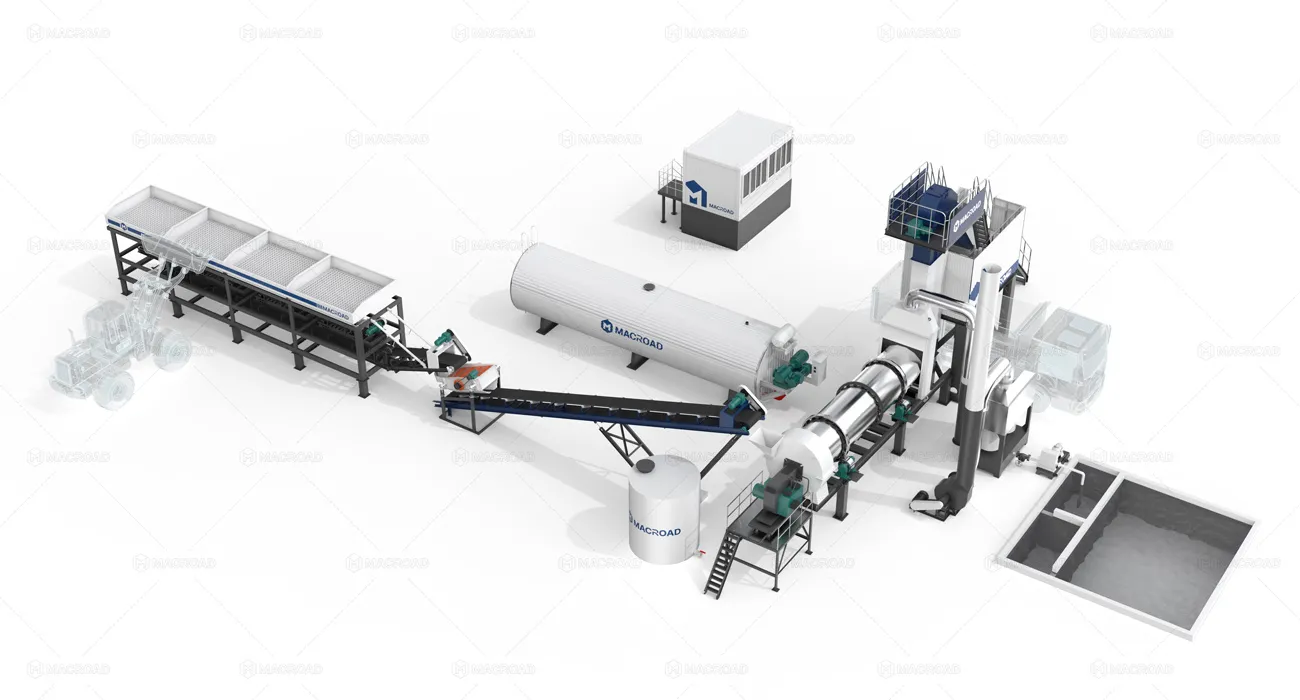
ALT Stationary Drum Mixing Asphalt Plant
The ALT series drum type stationary asphalt mix plant is more geared towards projects with continuous material supply and stable rhythms, especially suitable for urban roads and industrial parks in Malaysia where construction efficiency and operating costs are more sensitive. The Kuching ALT80 project is a typical example.
- Continuous production to match the pace of urban road construction: In urban and industrial park road construction, construction windows are limited and the pace is tight. ALYQ’s continuous production method can provide stable material supply, reduce downtime, and improve overall construction efficiency.
- More energy-efficient and operational cost-effective: For medium- to long-term projects with moderate capacity requirements, ALT offers advantages in energy consumption control and maintenance costs, helping Malaysian customers control long-term operating expenses while ensuring construction progress.
| Model | ALT20 | ALT40 | ALT60 | ALT80 | ALT100 |
|---|---|---|---|---|---|
| Output (t/h) | 20 | 40 | 60 | 80 | 100 |
| Power Fuel Oil(kw) | 34 | 65 | 105 | 135 | 170 |
| Power Burning Coal (kw) | 40 | 75 | 120 | 165 | 200 |
| Cold Aggregate Feeding System | 3.5m3*1 | 4m3*4 | 4m3*4 | 6.5m3*4 | 6.5m3*4 |
| Finihnsed Asphalt Storage Bin (t) | 3 | 3 | 7 | 7 | 9 |
| Asphalt Temperature (℃) | 120-180 | 120-180 | 120-180 | 120-180 | 120-180 |
| Fuel Consumption Fuel Ol (kg/t) | 5-7.5 | 5-7.5 | 5-7.5 | 5-7.5 | 5-7.5 |
| Fuel Consumption Buning Coal(kg/t) | 13-15 | 13-15 | 13-15 | 13-15 | 13-15 |
| Asphalt Tank (t) | 10 | 20 | 30 | 30 | 35 |
| Control Room(m) | 2.2 | 2.2 | 3 | 3 | 3.5 |
| Option: Bag Dust Filter | Bag Dust Filter | Bag Dust Filter | Bag Dust Filter | Bag Dust Filter | Bag Dust Filter |
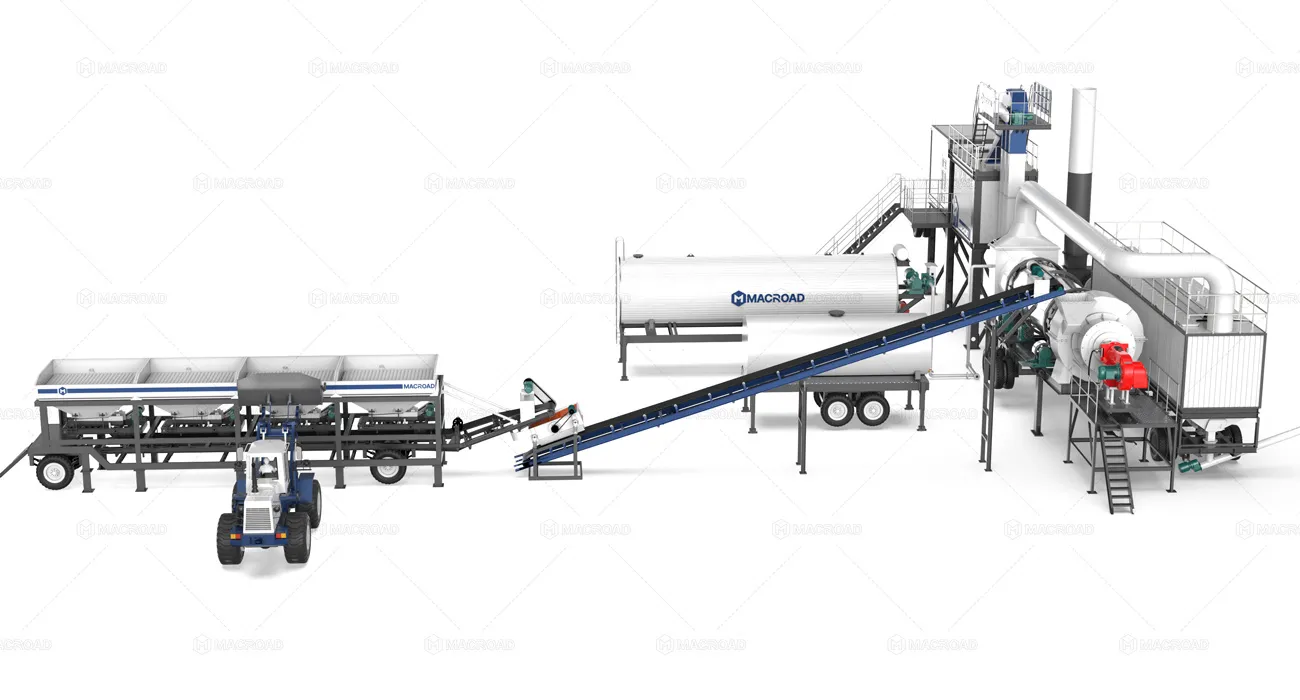
ALYT Mobile Drum Mixing Asphalt Plant
The ALYT series mobile drum mix plant is designed for projects prioritizing flexibility and with clear investment control, commonly found in rural road upgrades and regional infrastructure improvement projects.
- Reduced overall investment risk for dispersed projects: In parts of Sarawak and the Peninsula, road projects are often small in scale but scattered. ALYT, with its mobile and drum mixing structure, helps customers complete multiple projects with more controllable investment.
- Lower requirements for construction conditions and greater adaptability: ALYT has less dependence on infrastructure and site conditions, maintaining stable production even in high-temperature, high-humidity environments and frequent rainy seasons, making it ideal for construction in non-core urban areas.
| Model | ALYT20 | ALYT40 | ALYT60 | ALYT80 | ALYT100 |
|---|---|---|---|---|---|
| Output (t/h) | 20 | 40 | 60 | 80 | 100 |
| Power Fuel Oil(kw) | 34 | 65 | 105 | 135 | 170 |
| Power Burning Coal (kw) | 40 | 75 | 120 | 165 | 200 |
| Cold Aggregate Feeding System | 3.5m3*1 | 4m3*4 | 4m3*4 | 6.5m3*4 | 6.5m3*4 |
| Finihnsed Asphalt Storage Bin (t) | 2 | 2.5 | 4.5 | 5 | 7 |
| Asphalt Temperature (℃) | 120-180 | 120-180 | 120-180 | 120-180 | 120-180 |
| Fuel Consumption Fuel Ol (kg/t) | 5-7.5 | 5-7.5 | 5-7.5 | 5-7.5 | 5-7.5 |
| Fuel Consumption Buning Coal(kg/t) | 13-15 | 13-15 | 13-15 | 13-15 | 13-15 |
| Asphalt Tank (t) | 10 | 20 | 30 | 30 | 35 |
| Control Room(m) | 2.2 | 2.2 | 3 | 3 | 3.5 |
| Option | bag dust collector / water dust collector | bag dust collector / water dust collector | bag dust collector / water dust collector | bag dust collector / water dust collector | bag dust collector / water dust collector |
System-Level Design in Asphalt Plant — Engineered for Malaysian Conditions
In Malaysia, high temperatures, high humidity, and frequent rainy seasons are not isolated incidents, but rather a daily occurrence in construction. This means that the competitiveness of an asphalt mixing plant is no longer just about production capacity, but rather whether each system remains stable, controllable, and reliable over the long term.
Macroad incorporated Malaysia’s climate conditions, construction pace, and project organization methods into its equipment design from the outset. Below, we break down these design features optimized for Malaysia through six core systems.
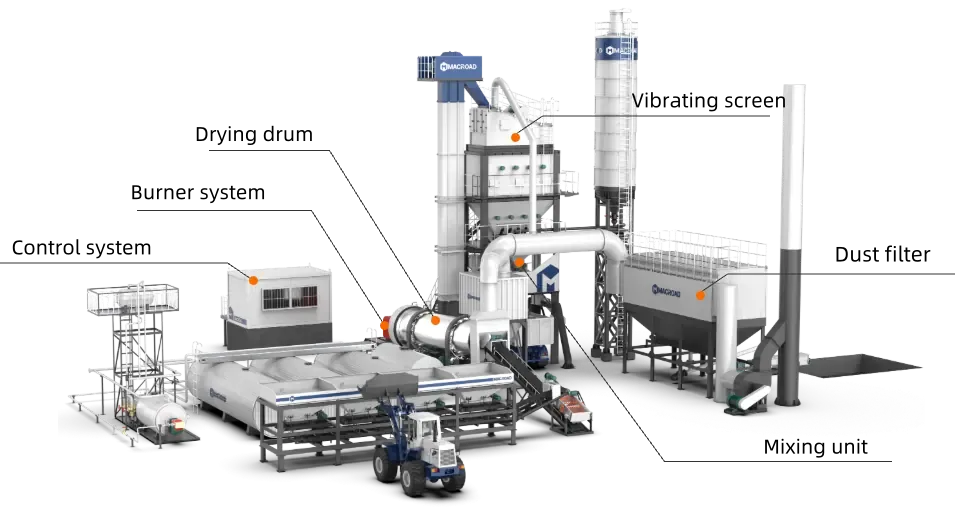
High-Intensity Mixing System—Maintaining Mixing Consistency Even in High Humidity Environments
- Heavy-Duty Transmission Structure and Stable Speed Design: The mixing system employs a transmission structure designed for continuous high-load operation. Through reasonable torque reserves and reduction ratios, the mixing host maintains a constant speed even in high-temperature environments, without fluctuations due to load changes.
- Optimized Material Movement Path Inside the Mixing Chamber: Instead of simply increasing the speed, the system optimizes the blade angle and layout, allowing aggregates to tumble and shear in multiple directions within the mixing chamber. This reduces the residence time of wet materials in the edge areas, structurally ensuring uniform mixing.
High-Precision Weighing System—Maintaining Stable Proportions Despite Aggregate Variations
- High-Response Weighing Sensors and Dynamic Compensation Logic: The weighing system does not provide a single reading. Instead, it uses continuous feedback signals to determine the material’s falling trend and decelerates in advance as it approaches the target weight, achieving dynamic approach rather than a one-step approach.
- Structural Vibration Isolation Design to Reduce Environmental Interference: During high-load operation, structural vibration isolation and stable support reduce the impact of equipment vibration on weighing signals, ensuring the consistency of weighing data over long-term operation.
Drying and Heating System – Stability in Humid and Hot Climates
- Extended Effective Heat Exchange Path Design: Optimized drum internal structure ensures more uniform aggregate residence time during drying, guaranteeing gradual moisture evaporation rather than external drying with internal dampness.
- Stable Heat Output, Not Instantaneous High Temperatures: The heating system prioritizes continuous and uniform heat distribution, maintaining a stable temperature profile over extended periods to prevent thermal shock from affecting asphalt performance.
Adaptive Dust Removal System – Designed for High Humidity Air Conditions
- Optimized Airflow Organization, Reduced Dust Retention: Reasonable airflow speed and direction design reduces dust residence time within the system, lowering the probability of adhesion.
- Filter Structure Designed for Long-Term Operation: The dust removal system emphasizes sustainable operation rather than short-term efficiency, suitable for continuous construction needs in Malaysian cities and industrial areas.
Intelligent Control System – Greater Control for Complex Construction Conditions
- Rapid Switching Capability Ability: Adapting to the common multi-section, multi-formula construction needs in Malaysian projects, the control system pre-programs common construction conditions, reducing the need for repeated manual settings on-site.
- Abnormal Trend Early Warning Mechanism: Provides alerts before temperature, weighing, or rhythm deviates from normal ranges, rather than addressing issues after they occur.
Conveying and Finished Product System—Serving Continuous Laying Rhythm
- Conveying Capacity Design Matching Mixing Rhythm: The conveying system is not simply about speed, but is highly matched to the mixing and unloading rhythm to avoid material accumulation or idling.
- Structural Stability Prioritized over Speed: Maintains stable output during high-temperature operation, minimizing interference with downstream construction.
When equipment truly adapts to the construction environment, the pressure on project progress is often significantly reduced. It is these system-level design details that enable Macroad asphalt mixing plants to not only be usable in Malaysia’s high-temperature, high-humidity, and long-cycle construction environments, but also to be reliable, stable, and controllable in the long run.
Price: A Key Decision Every Investor Must Face
In the procurement decisions for asphalt mixing plants, price remains one of the most practical and sensitive factors. Whether it’s a large contractor or a regional construction team, the initial focus during the project evaluation phase is always on the cost of asphalt plant.
In Malaysia, as road construction expands and construction environments become increasingly complex, more and more clients are finding that price differences between different configurations of asphalt mixing plants often stem from a deeper understanding of local construction conditions.
New Requirements for Asphalt Plant Configuration in the Malaysian Market
Generally, the price of an asphalt mixing plant is determined by factors such as equipment type, designed capacity, core system configuration, automation level, and installation method.
These factors hold true in any market. However, in Malaysia, the hot and humid climate, rainy season construction schedules, project cycle variations, and urban environmental requirements create new practical demands on equipment. These demands further influence configuration choices and naturally change price trends.
- The hot and humid environment amplifies the value of durability and stability configurations: Operating under long-term hot and humid conditions places higher demands on the structure of core systems such as mixing, transmission, and weighing. Corresponding configuration upgrades are directly reflected in the price range.
- Rainy season and construction window limitations highlight the importance of continuous operation: Projects often need to be completed quickly within a limited time frame, making equipment configurations in terms of stability and continuous production capacity a significant factor influencing price.
- Significant differences in project types drive multi-tiered configuration choices: From long-term fixed-site projects to phased, decentralized construction, different projects have different requirements for equipment flexibility and deployment methods. Differences in configuration combinations directly affect the overall investment.
- Urban construction and environmental protection requirements influence system configuration levels: In urban road and industrial park construction, the emphasis on dust and noise control makes dust removal and related system configurations a significant part of the price.
- Ease of operation and maintenance is incorporated into long-term cost considerations: More and more Malaysian customers are not only looking at the initial price when selecting systems, but also focusing on the controllability of later operation and maintenance, which is driving the demand for automation and intelligent configurations.
Reference price range for Asphalt Plant in Malaysia
Local After-Sales Support Truly Matters
In the actual operation of asphalt mixing plants, problems themselves are not terrible—differences in climate, raw materials, and construction schedules can all affect equipment operation. What truly determines the smooth progress of a project is whether problems can be resolved promptly and effectively after they arise.
In Malaysia, high temperatures and humidity, rainy season construction, and tight project schedules make asphalt plant Malaysia operating conditions even more complex. Therefore, more and more clients are focusing on a more practical issue during the selection phase: Is there truly localized after-sales and technical support that can intervene immediately when problems occur?
As an outstanding asphalt plant supplier, based on our long-term experience serving clients in Malaysia, the following are some of the most common and pressing practical issues clients encounter during project operation.
High temperature and humidity environments can lead to uneven mixing or production fluctuations
In Malaysia’s prolonged high temperature and humidity environment, aggregates easily absorb moisture, and the temperature of the mixing chamber fluctuates, resulting in decreased mixing uniformity and potentially unstable output.Localized service advantages: Technicians can directly inspect the mixing blades, speed, and material movement path on-site, adjusting operating parameters according to environmental conditions to ensure continuous and stable production.
Rainy season construction: Fluctuations in aggregate moisture content affect asphalt output quality
Frequent rainy seasons, especially in Sabah and Sarawak, increase the proportion of wet aggregate, easily leading to excessively high moisture content in asphalt mixtures.Localized service advantages: On-site service personnel can guide the operations team to adjust mixing time and temperature settings during peak wet aggregate periods, avoiding rework, and provide operational suggestions to ensure construction progress.
Prolonged continuous operation can easily lead to overheating or mechanical fatigue in equipment
Highways and large-scale municipal projects often require continuous operation, and transmission components or motors may overheat under prolonged loads.Local service advantages: Local teams can conduct advance inspections and monitor the temperature of critical components, identify potential risks, and promptly schedule maintenance to prevent downtime or escalating damage.
Frequent operator turnover and novice operators may cause equipment malfunctions
High staff turnover at construction sites and differences in operating habits can affect equipment stability.Localized service advantages: Providing on-site operation training and remote guidance enables novices to quickly familiarize themselves with equipment logic, reducing the risk of human error.
Frequent alarms from control systems or sensors disrupt construction schedules
Under complex operating conditions, weighing or temperature control systems may generate false alarms, causing construction to halt.Local service advantages: Local service personnel can directly inspect the system status on-site, determine whether the problem lies in parameter settings or the sensor itself, and quickly restore normal equipment operation.
Mobile asphalt mixing plants face complex commissioning challenges at remote construction sites
Rapid deployment and commissioning of equipment are crucial at construction sites in Sabah, Sarawak, or inland areas.Localized service advantages: Local technical teams can complete rapid installation and commissioning on-site, optimizing operating parameters based on site terrain and climate, saving transportation and commissioning time.
Dust removal or heating systems become less efficient in high humidity environments
Humid and hot environments can cause dust to adhere or evaporate unevenly, reducing system efficiency.Localized service advantages: Our on-site team regularly inspects dust collector filters and heat distribution, and provides guidance on optimizing operating procedures to ensure environmental compliance and stable production capacity.
Unexpected mechanical failures can impact construction progress
Any equipment can experience unexpected malfunctions, and without local support, repair time can be prolonged.Advantages of localized service: Technicians can diagnose the problem on-site and address it immediately, while also providing temporary operational suggestions to minimize construction delays.
Macroad Asphalt Plant local service support in Malaysia
AIMIX (Malaysia) SDN. BHD.
No. 93, Jalan BP 5,
Bandar Bukit Puchong,
47100 Puchong, Selangor
In Malaysia, high temperatures and humidity, frequent rainy seasons, and complex construction conditions mean that every asphalt plant in Malaysia failure can potentially impact project progress. With localized after-sales service, problems can be addressed promptly, and because the team is familiar with the local construction environment and project characteristics, they can provide more precise and effective solutions.
Don’t let downtime be a waste of time waiting; turn it into an opportunity for quick resolution, allowing the project to progress smoothly.

Macroad offers more than just high-performance asphalt plant in Malaysia; it provides solutions that understand project timelines and are familiar with local construction environments, ensuring that every operation and every task adds value to the construction process. In a complex and ever-changing market environment, choosing Macroad means choosing a reliable, professional partner who understands the market and projects, making every construction project more secure and efficient.