

Smart Control, Efficient Production
Strategic Partner of Fortune Global 500 Companies
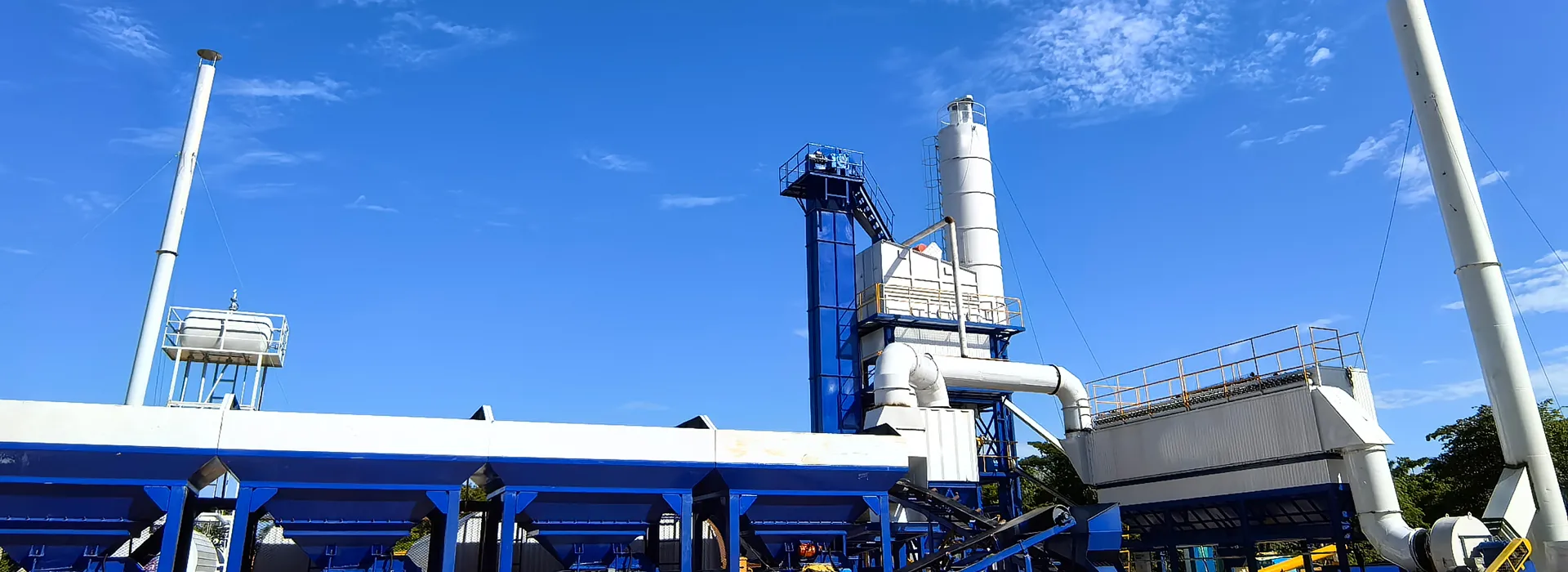
When constructing roads or investing in asphalt plants in South Africa, a crucial question is often overlooked: Is the equipment you choose truly designed for South Africa? Currently, many suppliers in the market still recommend general-purpose asphalt mixing plants to South African clients. While these asphalt plants can be used in different countries, their design did not fully consider the realities of South Africa’s high temperatures, dust levels, dispersed project locations, and complex operating conditions.
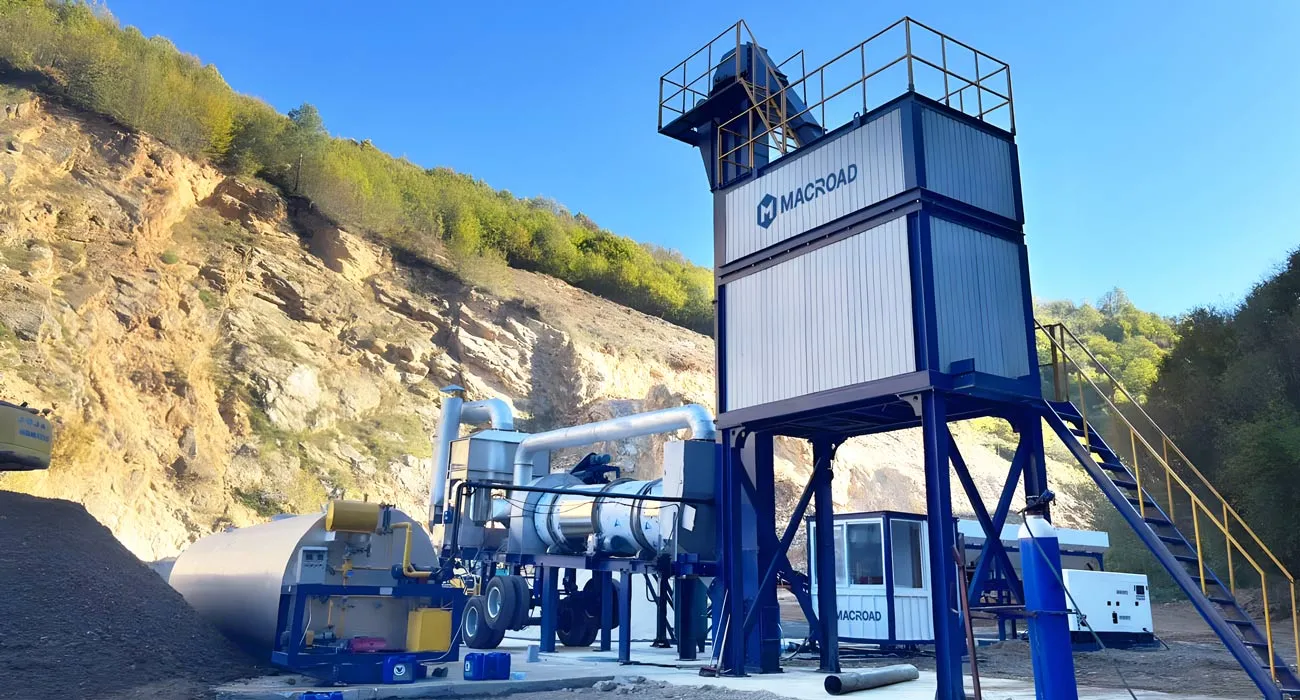
Macroad chose a different approach from the outset. We base our designs on the actual construction environment and project operational needs of South Africa, optimizing equipment structure, operational stability, and adaptability to provide asphalt mixing plant solutions truly suited to South African conditions, ensuring long-term, stable, and successful project operation.
No Two Roads Require the Same Asphalt Plant in South Africa
There is no single standard operating condition for road construction in South Africa. From mountain highways to heavy-duty roads in mining areas, from urban municipal roads to connecting roads in remote areas, different projects vary significantly in construction environment, material conditions, and operating methods. Ignoring these differences and simply applying a general-purpose asphalt plants in South Africa often leads to problems such as insufficient stability, limited construction efficiency, and uncontrolled operating costs later on.
From the perspective of equipment applicability, despite the diversity of road types in South Africa, its road construction projects typically exhibit the following common characteristics:
| Diverse Topography and Dispersed Project Locations: | South African road projects cover diverse terrains including plateaus, mountains, mining areas, and urban peripheries. The dispersed construction sites and long transportation distances place higher demands on the transportation methods, installation efficiency, and on-site adaptability of asphalt plant for sale in South Africa. Equipment needs a modular structure to enable rapid deployment and stable operation at different project locations. |
| High Proportion of Heavy Traffic: | Influenced by the mining and heavy logistics industries, many roads are subjected to long-term heavy vehicle traffic, requiring higher strength and consistency in asphalt mixtures. This means that asphalt plant for sale in South Africa must possess stable mixing performance and precise proportioning control to ensure the durability of the pavement structure. |
| Complex Climate Conditions with High Temperatures and Dust: | Some areas of South Africa experience high temperatures and dry environments year-round, resulting in significant dust levels at construction sites. This places stringent demands on the wear resistance, sealing, and dust control systems of equipment. Equipment not optimized for these conditions will significantly impact long-term operational stability. |
| Tight Project Schedules and High Efficiency Requirements: | Road construction projects typically have clear deadlines. Equipment downtime or frequent maintenance will directly affect the overall construction progress. Therefore, asphalt plant for sale South Africa need to possess a high level of automation and stable continuous production capacity to reduce operational risks. |
In actual projects, the aforementioned road construction characteristics often appear in different combinations in specific projects. Based on differences in terrain conditions, traffic load, and construction organization methods, road construction projects in South Africa can generally be summarized into the following typical scenarios. For different working conditions, Macroad has accumulated mature equipment application experience in similar projects and developed corresponding solutions.
ALQ80 for Mountain & Long-Distance Highway Project in Mongolia
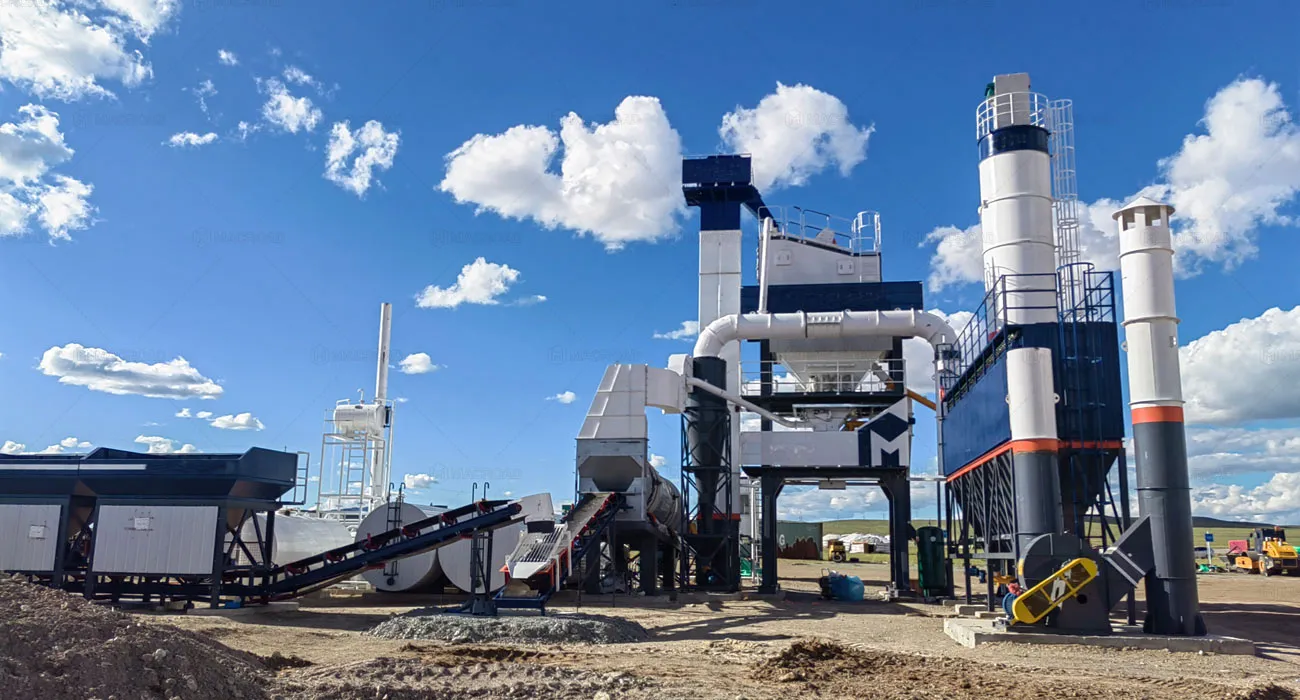
- Project Characteristics: Long highway stretches with dispersed construction sites
- Solution: Stable batch production ensured consistent asphalt quality across long-distance paving under harsh climatic conditions
ALQ80 in Kyrgyzstan for Mining & Heavy-Duty Road Project
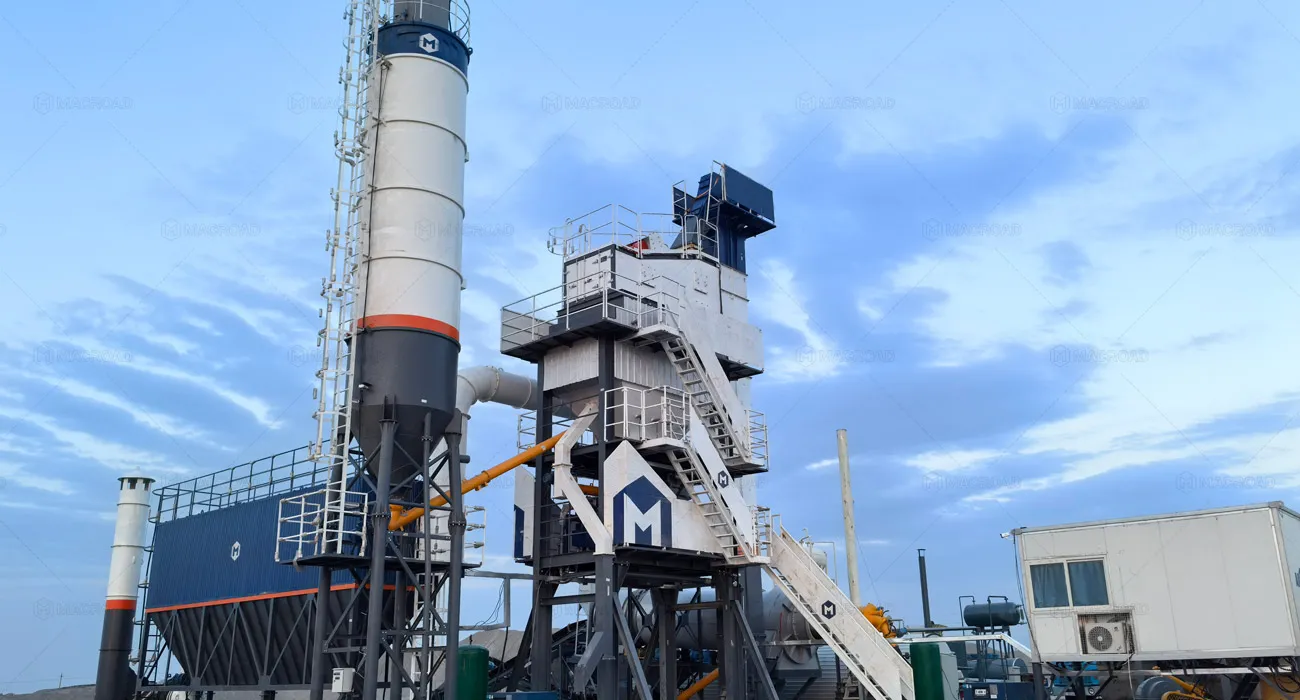
- Project Characteristics: High load-bearing road and intense construction requirements
- Solution: High-strength, wear-resistant components with precise batching ensured road durability under heavy loads
ALQ120 in Jamaica for Urban & Municipal Road Project
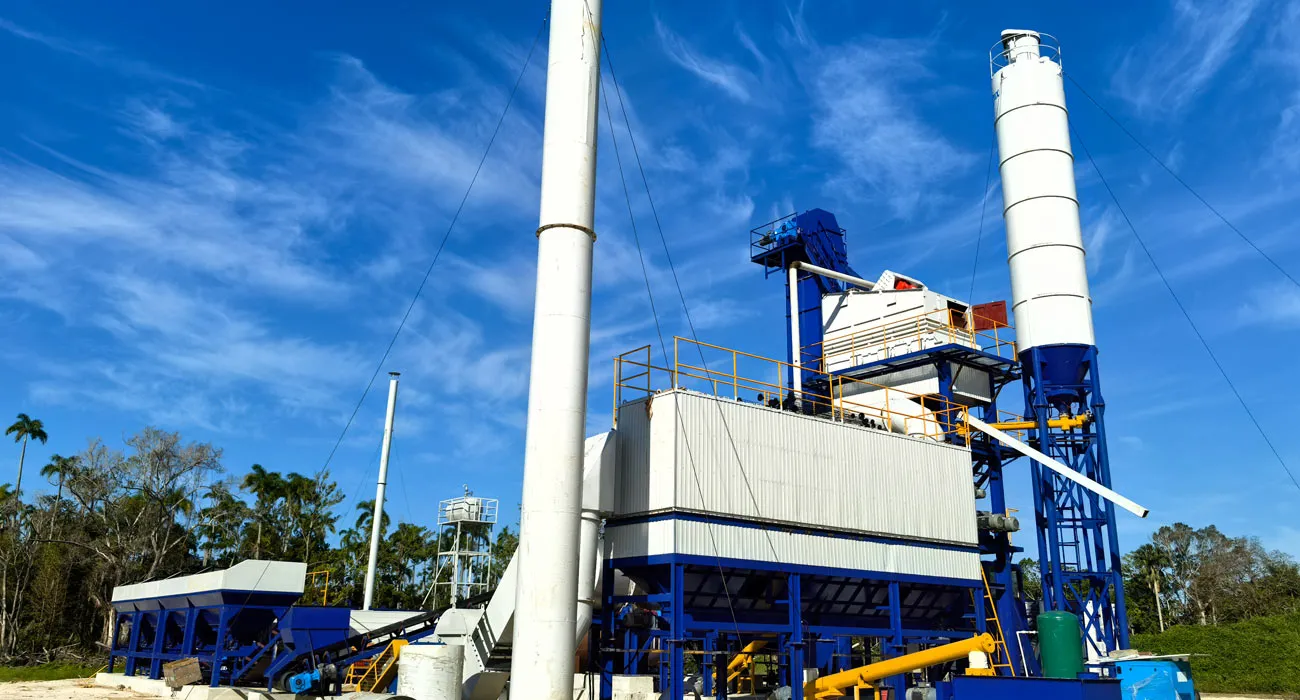
- Project Characteristics: High requirements for construction efficiency and environmental compliance
- Solution: Modular design and multi-stage dust removal enable efficient construction while meeting urban environmental standards.
ALT80 in Malaysia Kuching for Rural Road Project
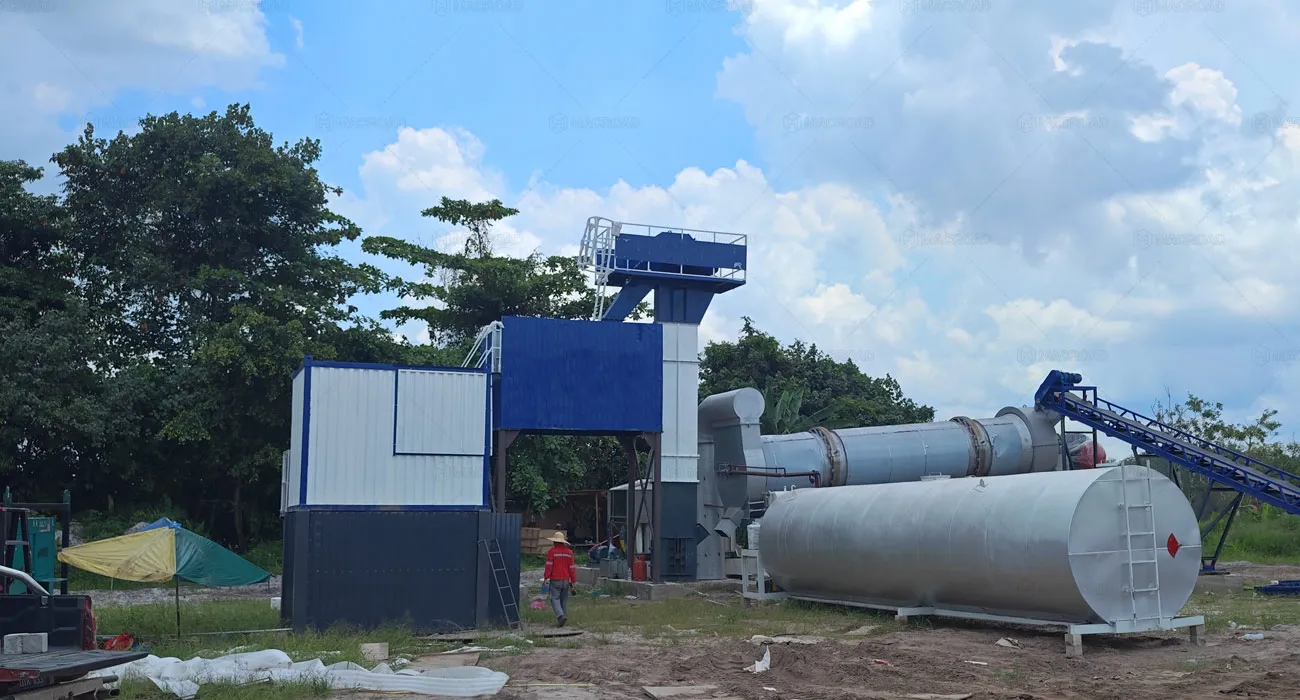
- Project Characteristics: Limited project budget with basic transport conditions
- Solution: Cost-effective drum mix plant and modular transport reduced costs and adapted to scattered sites
ALQ80 in Myanmar for Bridge & Special-Purpose Pavement Project
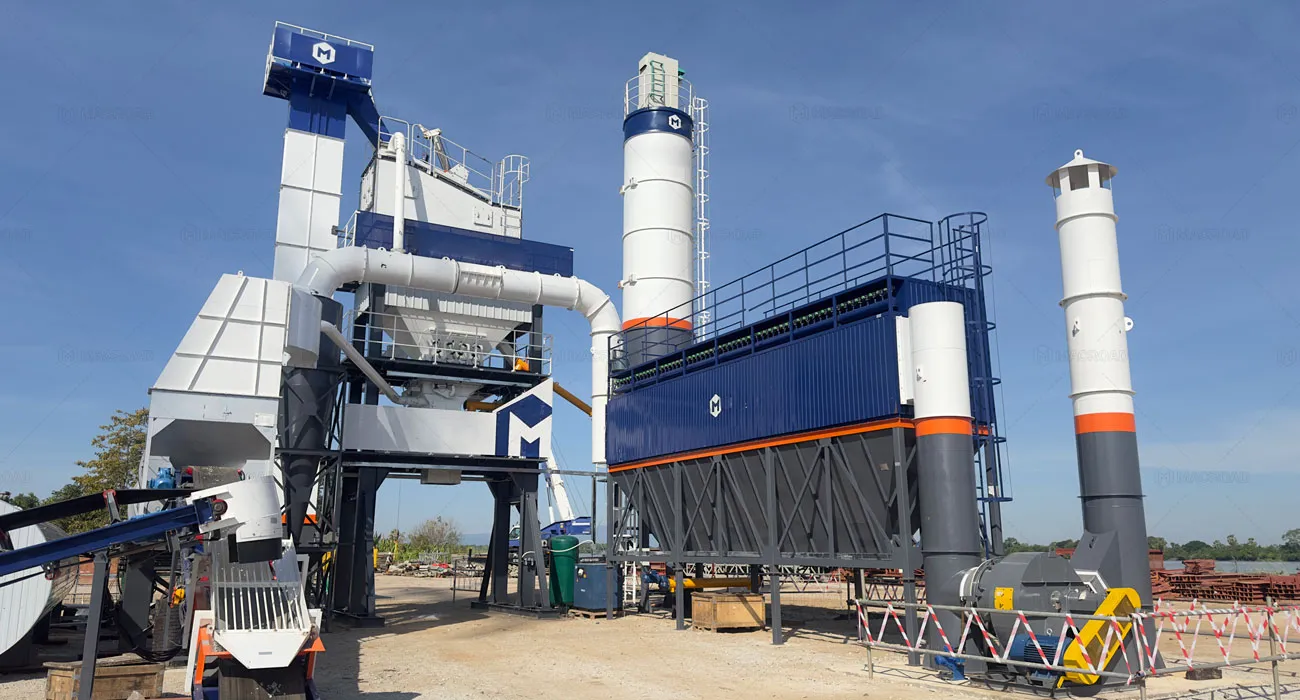
- Project Characteristics: Strict construction standards with low tolerance for error
- Solution: Precise batching with multiple quality checks ensured asphalt consistency for high-standard projects
Three Series of Asphalt Plants — Tailored for the South African Market
In South African road construction projects, different road types, construction environments, and operating conditions place varying demands on asphalt plants in South Africa. Whether it’s mountain highways, heavy-duty roads in mining areas, or urban municipal and rural connecting roads, the stability, efficiency, fuel adaptability, and environmental compatibility of the equipment directly impact project schedule and cost.
Macroad’s three types of asphalt plants cover major road construction scenarios in South Africa: batch mix asphalt plants are suitable for mining areas and heavy-duty roads; drum mix asphalt plant are suitable for small-scale rural and municipal projects; and mobile asphalt plants can handle mountainous, remote, and multi-project continuous construction. Each series is optimized for South African working conditions, ensuring high precision, high efficiency, low energy consumption, and sustainable operation, helping customers achieve project success in diverse road construction projects.
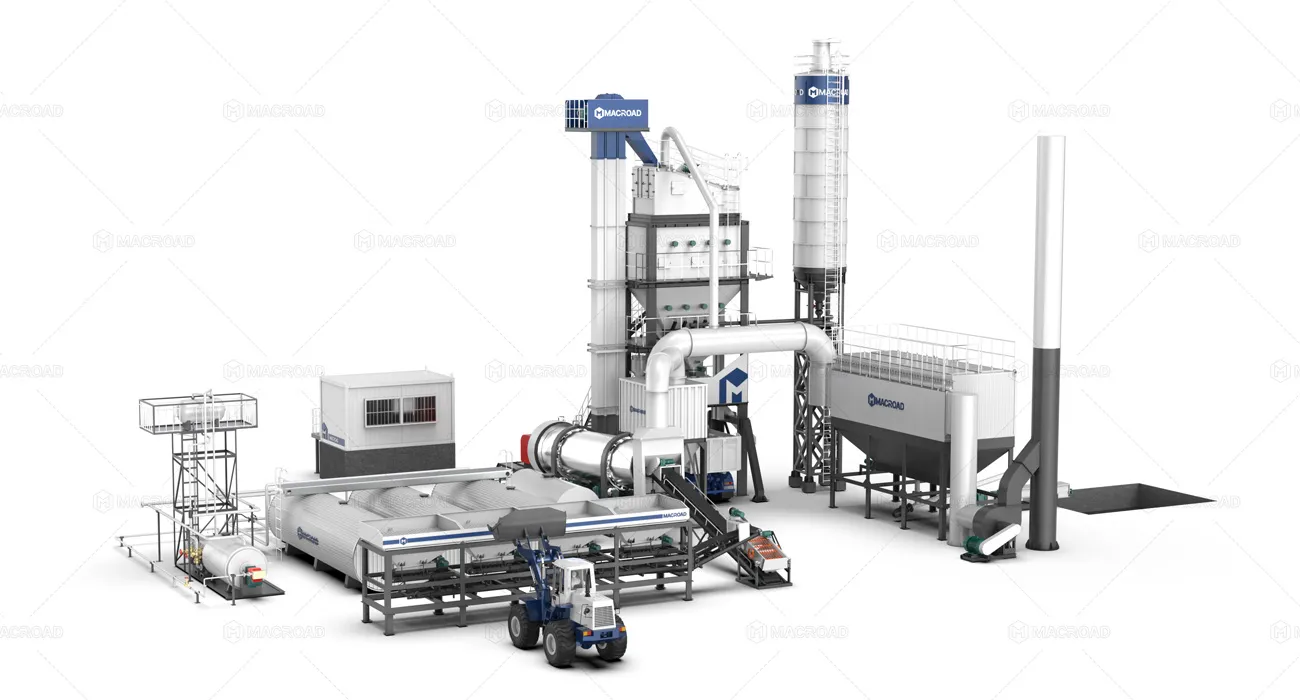
Asphalt Batching Plant
- High-Precision Production: The twin-shaft batch mixing unit achieves 98% mixture uniformity, with gradation deviation controlled within ±2%, far exceeding the South African SANS 1141 standard. Suitable for mining areas and heavy-duty roads, ensuring the long-term durability of high-strength pavements.
- Flexible Fuel Compatibility: Asphalt batching plant compatible with South African low-sulfur heavy oil and local coal resources. When using coal in the Mpumalanga mining project, energy consumption per ton of mixture is reduced by 40% compared to diesel, while meeting South Africa’s AQA environmental regulations for particulate matter emissions of ≤50mg/Nm³, making it both environmentally friendly and economical.
- Intelligent Operation and Maintenance: The IoT system monitors the vibration amplitude of the vibrating screen in real time, allowing for remote adjustment of the formula to cope with changes in aggregate gradation, fully adapting to the diverse aggregate sources in South Africa, reducing manual intervention and material waste.
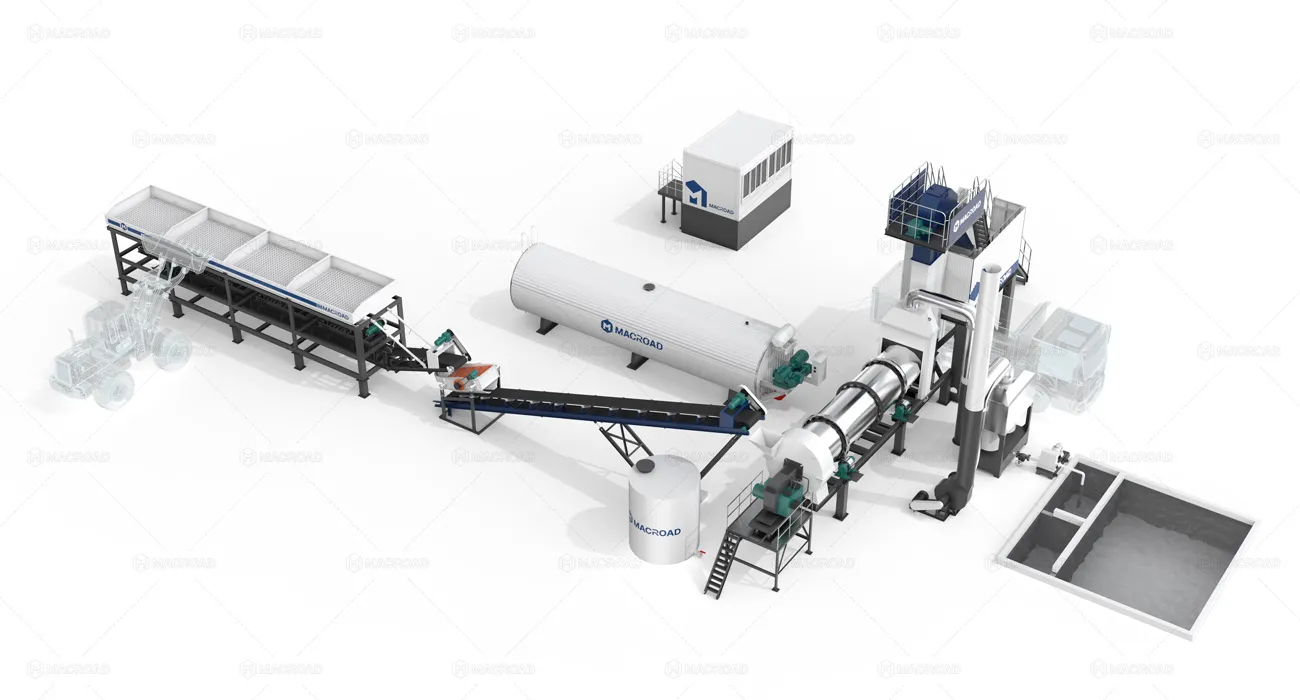
Asphalt Drum Mix Plant
- High Cost-Effectiveness: Asphalt drum mix plant priced between US$60,000 and US$300,000, it meets the budget requirements for rural and connecting road construction. Based on a daily capacity of 200 tons, the investment can be recovered in 3 years, making it suitable for low-grade roads and small-scale government infrastructure projects.
- Low-Skill Operation Adaptability: A simplified control system paired with an Afrikaans illustrated manual allows local technicians to be trained within 24 hours, reducing training costs by 30% and addressing the labor shortage problem in remote areas.
- Intelligent Weighing and Mixing System: Addressing the issue of large fluctuations in aggregate moisture content during South Africa’s rainy season, built-in sensors automatically detect the moisture content of sand and gravel and adjust the asphalt mix ratio in real time. This improves accuracy by 35% compared to manual adjustments, ensuring stable mix quality and avoiding quality fluctuations during rainy season construction.
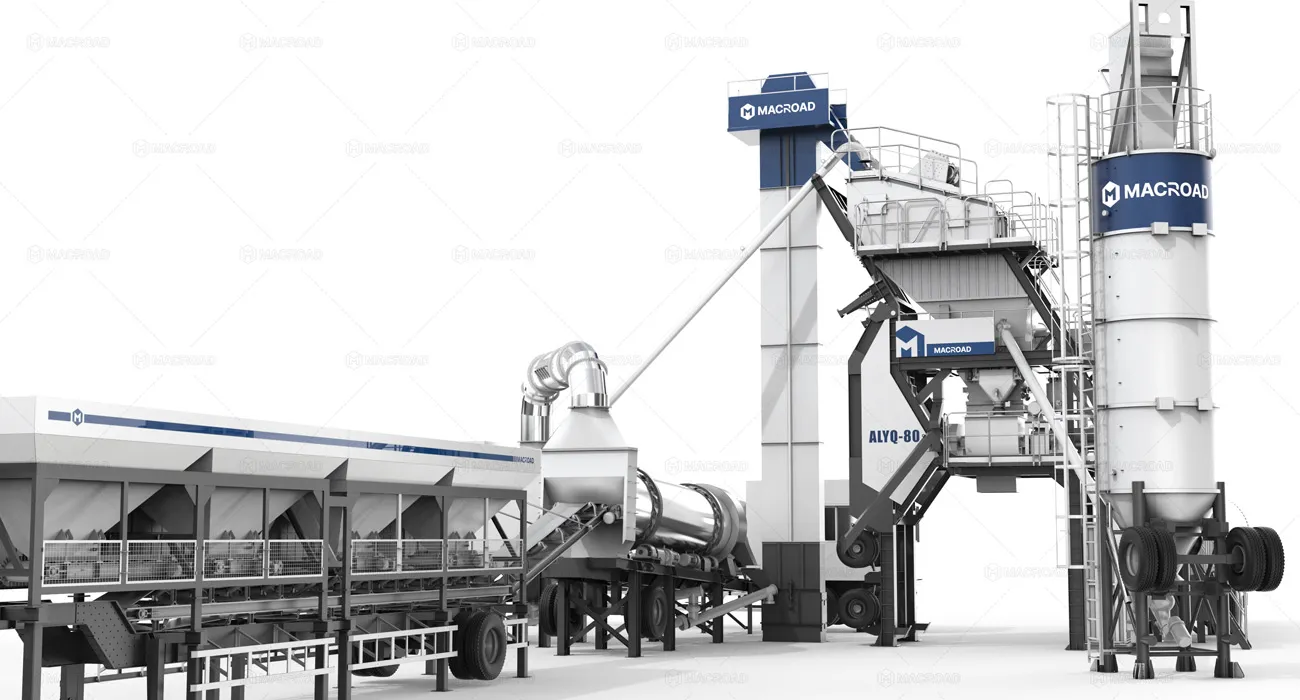
Mobile Asphalt Mixing Plant
- Rapid Deployment Throughout the Entire Process: Site survey, installation, and commissioning can be completed in 10-15 days, shortening the cycle by 20% compared to traditional equipment. It is particularly suitable for mountainous areas, mining areas, and continuous construction projects, avoiding delays caused by long deployment cycles.
- Quick-Connect Interfaces for Rapid Production: Water, electricity, and gas interfaces feature a quick-connect design, enabling mobile asphalt plant rapid site relocation and production within 24 hours, meeting the strict time control requirements of various operating scenarios in mining areas and municipal roads.
- Compact Design Overcomes Site Limitations: The integrated chassis design reduces the footprint by 20%, supporting urban road construction in cities such as Durban and Cape Town. Noise control is ≤70 decibels, allowing for zero-disruption nighttime construction and meeting South Africa’s SANS 10152 urban noise reduction standards.
Asphalt Plant in South Africa Parameter Comparison Table
| Model | ALQ40 | ALQ60 | ALQ80 | ALQ100 | ALQ120 | ALQ160 | ALQ200 | ALQ240 | ALQ320 |
|---|---|---|---|---|---|---|---|---|---|
| Output(t/h) | 40 | 60 | 80 | 100 | 120 | 160 | 200 | 240 | 320 |
| Cold Aggregate Feeding System | 4×4.5m³ | 4×6.5m³ | 4×8m³ | 4×8m³ | 5×9m³ | 5×12m³ | 5×12m³ | 5×12m³ | 6×15m³ |
| Hopper Capacity(m) | 4*4.5 | 4*6.5 | 4*8 | 4*8 | 5*9 | 5*12 | 5*12 | 5*12 | 6*15 |
| Collect Belt Capacity(t/h) | 60 | 80 | 100 | 120 | 140 | 200 | 220 | 280 | 360 |
| Dryer Size(m) | φ1.2*5.2 | φ1.5*6 | φ1.5*6.7 | φ1.65*7 | φ1.8*8 | φ2.2*9 | φ2.6*9 | φ2.6*9.5 | φ2.8*10.2 |
| Dryer Capacity (t/h) | 60 | 80 | 100 | 120 | 140 | 180 | 240 | 260 | 360 |
| Fuel Max Consumption(kg/h) | 300 | 450 | 550 | 700 | 950 | 1200 | 1400 | 1700 | 2250 |
| Vibrating Screen(Layer) | 4 | 4 | 4 | 4 | 4 | 5 | 5 | 5 | 6 |
| Aggregate Metering hopper(kg) | 500 | 800 | 1000 | 1250 | 1500 | 2000 | 2500 | 3000 | 4000 |
| Mineral Flour Metering hopper (kg) | 120 | 150 | 200 | 200 | 300 | 300 | 320 | 600 | 700 |
| Bitumen Metering hopper (kg) | 100 | 120 | 150 | 150 | 250 | 250 | 250 | 480 | 500 |
| Weighing accuracy | aggregate:±0.5% Mineral Flour:±0.25% Bitumen:±0.25% | aggregate:±0.5% Mineral Flour:±0.25% Bitumen:±0.25% | aggregate:±0.5% Mineral Flour:±0.25% Bitumen:±0.25% | aggregate:±0.5% Mineral Flour:±0.25% Bitumen:±0.25% | aggregate:±0.5% Mineral Flour:±0.25% Bitumen:±0.25% | aggregate:±0.5% Mineral Flour:±0.25% Bitumen:±0.25% | aggregate:±0.5% Mineral Flour:±0.25% Bitumen:±0.25% | aggregate:±0.5% Mineral Flour:±0.25% Bitumen:±0.25% | aggregate:±0.5% Mineral Flour:±0.25% Bitumen:±0.25% |
| Mixer Capacity(kg) | 500 | 800 | 1000 | 1250 | 1500 | 2000 | 2500 | 3000 | 4000 |
| Cycle Time(s) | 45 | 45 | 45 | 45 | 45 | 45 | 45 | 45 | 45 |
| Dust filter (Bag dust filter) | |||||||||
| Filter Area(m2) | 230 | 300 | 420 | 480 | 550 | 650 | 700 | 1050 | 1350 |
| Draught Fan(kw) | 22 | 30 | 45 | 55 | 90 | 110 | 2*75 | 2*90 | 2*110 |
| Asphalt Temperature (⊥) | 140-180 | 140-180 | 140-180 | 140-180 | 140-180 | 140-180 | 140-180 | 140-180 | 140-180 |
| Model | ALYQ60 | ALYQ80 | ALYQ100 | ALYQ120 |
|---|---|---|---|---|
| Output (t/h) | 60 | 80 | 100 | 120 |
| Hopper Capacity(m) | 4*6.5 | 4*7.5 | 4*7.5 | 4*7.5 |
| Collect Belt Capacity (t/h) | 80 | 100 | 120 | 140 |
| Dryer Size(m) | φ1.5*6 | φ1.5*6.7 | φ1.65*7 | φ1.8*8 |
| Dryer Capacity(t/h) | 80 | 100 | 120 | 140 |
| Fuel Max Consumption(kg/h) | 450 | 550 | 700 | 950 |
| Mixing Tower(kW) | 54 | 63.5 | 104.5 | 125 |
| Vibrating Screen (Layer) | 4 | 4 | 4 | 4 |
| Aggregate Metering hopper(kg) | 800 | 1000 | 1300 | 1500 |
| Mineral Flour Metering hopper(kg) | 150 | 200 | 200 | 300 |
| Bitumen Metering hopper(kg) | 120 | 150 | 150 | 250 |
| Weighing accuracy | aggregate:±0.5% Mineral Flour:±0.25% Bitumen:±0.25% | aggregate:±0.5% Mineral Flour:±0.25% Bitumen:±0.25% | aggregate:±0.5% Mineral Flour:±0.25% Bitumen:±0.25% | aggregate:±0.5% Mineral Flour:±0.25% Bitumen:±0.25% |
| Mixer Capacity(kg) | 800 | 1200 | 1300 | 1700 |
| Cycle Time(s) | 45 | 45 | 45 | 45 |
| Filter Area(m2) | 370 | 420 | 480 | 510 |
| Draught Fan (kw) | 30 | 45 | 55 | 90 |
| Asphalt Temperature (⊥) | 140-180 | 140-180 | 140-180 | 140-180 |
| Total power(kw) | 200 | 300 | 350 | 380 |
| Model | ALT20 | ALT40 | ALT60 | ALT80 | ALT100 |
|---|---|---|---|---|---|
| Output (t/h) | 20 | 40 | 60 | 80 | 100 |
| Power Fuel Oil(kw) | 34 | 65 | 105 | 135 | 170 |
| Power Burning Coal (kw) | 40 | 75 | 120 | 165 | 200 |
| Cold Aggregate Feeding System | 3.5m3*1 | 4m3*4 | 4m3*4 | 6.5m3*4 | 6.5m3*4 |
| Finihnsed Asphalt Storage Bin (t) | 3 | 3 | 7 | 7 | 9 |
| Asphalt Temperature (℃) | 120-180 | 120-180 | 120-180 | 120-180 | 120-180 |
| Fuel Consumption Fuel Ol (kg/t) | 5-7.5 | 5-7.5 | 5-7.5 | 5-7.5 | 5-7.5 |
| Fuel Consumption Buning Coal(kg/t) | 13-15 | 13-15 | 13-15 | 13-15 | 13-15 |
| Asphalt Tank (t) | 10 | 20 | 30 | 30 | 35 |
| Control Room(m) | 2.2 | 2.2 | 3 | 3 | 3.5 |
| Option: Bag Dust Filter | Bag Dust Filter | Bag Dust Filter | Bag Dust Filter | Bag Dust Filter | Bag Dust Filter |
| Model | ALYT20 | ALYT40 | ALYT60 | ALYT80 | ALYT100 |
|---|---|---|---|---|---|
| Output (t/h) | 20 | 40 | 60 | 80 | 100 |
| Power Fuel Oil(kw) | 34 | 65 | 105 | 135 | 170 |
| Power Burning Coal (kw) | 40 | 75 | 120 | 165 | 200 |
| Cold Aggregate Feeding System | 3.5m3*1 | 4m3*4 | 4m3*4 | 6.5m3*4 | 6.5m3*4 |
| Finihnsed Asphalt Storage Bin (t) | 2 | 2.5 | 4.5 | 5 | 7 |
| Asphalt Temperature (℃) | 120-180 | 120-180 | 120-180 | 120-180 | 120-180 |
| Fuel Consumption Fuel Ol (kg/t) | 5-7.5 | 5-7.5 | 5-7.5 | 5-7.5 | 5-7.5 |
| Fuel Consumption Buning Coal(kg/t) | 13-15 | 13-15 | 13-15 | 13-15 | 13-15 |
| Asphalt Tank (t) | 10 | 20 | 30 | 30 | 35 |
| Control Room(m) | 2.2 | 2.2 | 3 | 3 | 3.5 |
| Option | bag dust collector / water dust collector | bag dust collector / water dust collector | bag dust collector / water dust collector | bag dust collector / water dust collector | bag dust collector / water dust collector |
From Data to Construction: Macroad’s Asphalt Plant South Africa Insights
South African road projects are complex and diverse, ranging from mountain highways to heavy-duty roads in mining areas, each with its own unique construction environment. As a professional asphalt mixing plant supplier, Macroad not only provides equipment but also conducts in-depth research on South African construction conditions and material characteristics to ensure asphalt production stably and efficiently in actual projects.
Aggregate and Mixture Research
South Africa boasts diverse aggregate sources and significant variations in mineral gradation, with marked fluctuations in sand and gravel moisture content during the rainy season. Macroad has conducted long-term research on the material properties of different mining areas in South Africa, developing an intelligent weighing and mixing system capable of automatically adjusting proportions to ensure stable mixture uniformity and strength across various seasons and regions. For heavy-duty road construction in mining areas or mountain highways, this means reliable road surface quality and reduced rework risks, even with aggregate variations or rainy season construction.
High Temperature and Dust Adaptability Analysis
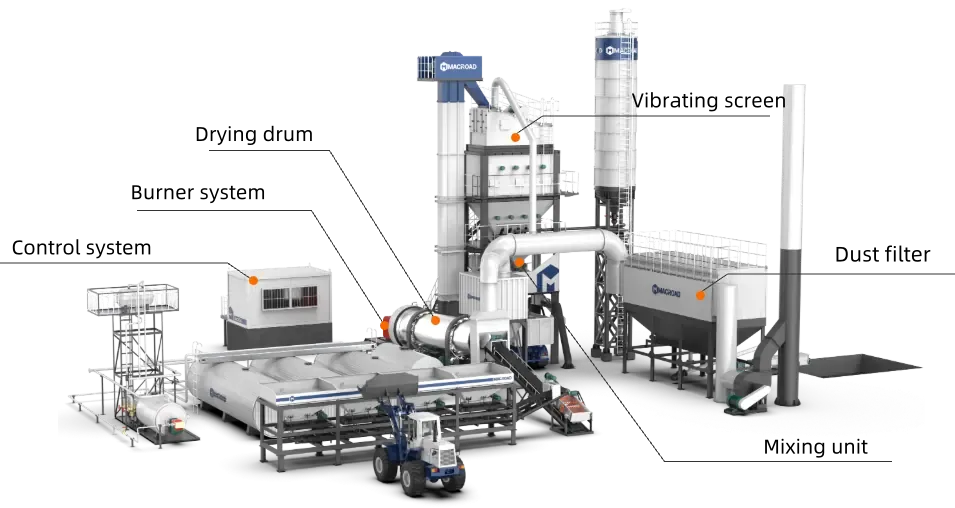
Some parts of South Africa experience consistently high temperatures and dry conditions, coupled with high dust concentrations at construction sites, posing challenges to equipment wear resistance and dust control systems. Macroad optimized the materials of key components and the design of the dust control system for these conditions, enabling the mixing unit, vibrating screen, and conveying system to operate stably in high-dust and high-temperature environments. This not only reduces equipment maintenance frequency but also ensures continuous production capacity, guaranteeing the smooth progress of continuous construction projects in mountainous or mining areas.
Construction Pace and Schedule Optimization
South African road construction projects are diverse, with tight schedules and dispersed locations in mountainous, high-altitude, rural, and urban areas. Macroad improved the modular and mobile design of its equipment by analyzing different project schedules, transportation conditions, and site environments. This allows for rapid deployment and flexible relocation, shortening installation and commissioning time and improving construction efficiency. This means customers can proceed on schedule in multi-site projects with varying terrains, reducing the risk of delays caused by equipment deployment.
Energy and Cost Efficiency Analysis
Energy cost is a crucial consideration for asphalt plants in South Africa. Macroad studied the efficiency and economy of various fuels, including low-sulfur heavy oil and coal, in the local context and optimized combustion systems and heat recovery schemes to achieve optimal energy allocation. This not only reduces the production cost per ton of mixed feedstock (saving 30%-40% energy consumption in mining projects) but also meets AQA environmental regulations regarding particulate matter emissions, providing customers with a construction solution that balances economy and environmental protection.
Environmental and Urban Construction Compatibility Analysis
In urban road projects in Durban, Cape Town, and other cities, asphalt plants in South Africa is constrained by land area, noise, and the surrounding environment. Macroad optimized equipment compactness, integrated chassis, and noise control, reducing the equipment footprint by 20% and reducing noise levels to below 70 decibels, allowing for nighttime construction without disturbing residents. This research not only meets the environmental protection requirements of urban construction but also enables clients to construct efficiently in urban projects, avoiding delays or additional costs due to environmental restrictions.
Intelligent Remote Operation and Maintenance & Data Analysis
Macroad uses an IoT system to monitor key parameters such as equipment operating status, mix formulation, and vibrating screen amplitude in real time. Combined with data analysis, this allows for remote optimization and early warning. For projects with dispersed construction sites or remote mining areas, this means clients can monitor production status at any time, adjust construction plans promptly, reduce human error and unexpected failures, and improve overall project efficiency and reliability.
Insights into South Africa’s Road Market — Why Now Is the Best Time to Invest
South Africa’s road construction projects are widespread, diverse in working conditions, and subject to heavy traffic pressure. As a professional asphalt mixing plant supplier, Macroad has conducted a systematic analysis of the South African market, developing comprehensive industry insights encompassing road types, infrastructure needs, policy planning, construction environment, and energy costs. Based on asphalt plant market trend in South Africa analysis, we believe now is a crucial window of opportunity to enter the South African road construction sector and invest in asphalt plant for sale in South Africa.
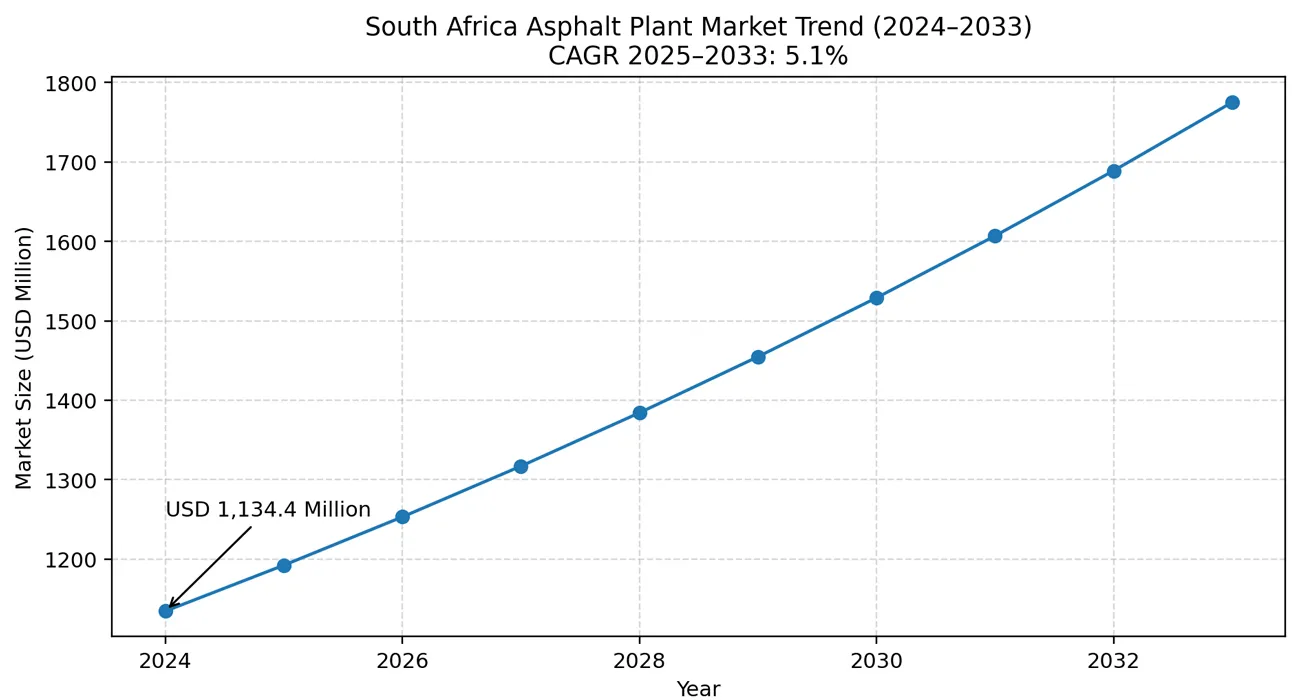
- Sustained Growth in Infrastructure Investment: The South African government invests billions of rand annually in road infrastructure construction, covering highway expansion, improvement of logistics routes in mining areas, and upgrading of urban and rural roads. With urbanization and mining development, the market demand for road construction services maintains steady growth, providing long-term investment opportunities.
- Increasing Traffic Pressure and Demand for Heavy-Duty Roads: Roads in mining areas and densely populated logistics regions bear heavy traffic loads, making existing road surfaces prone to damage. The demand for reconstructing and constructing high-durability roads is rising, meaning the road construction market is placing higher demands on construction efficiency, quality, and material reliability, further driving investment growth.
- Policy and Standards Guiding the Market: South African road construction is significantly influenced by government policies and environmental regulations, such as the SANS mix standard and AQA environmental regulations. Compliance requirements not only raise the bar for construction quality but also drive the market towards standardization and regulation, providing institutional guarantees for professional construction and investment.
- Diverse Market Distribution and Construction Environments: South African road projects are geographically widespread, ranging from mountainous and high-altitude areas to urban and rural road regions, resulting in significant differences in construction environments. This fragmentation and diversity signifies a large market size, but also necessitates that investors consider project flexibility, schedule management, and logistical coordination.
- Investment Returns and Long-Term Development Trends: Considering road construction demand, schedules, and infrastructure budgets, the South African road construction market exhibits a steady growth trend. With the continued expansion of highways and mining area logistics networks over the next 5-10 years, the long-term returns on investments in road construction-related equipment and services are expected to be substantial.
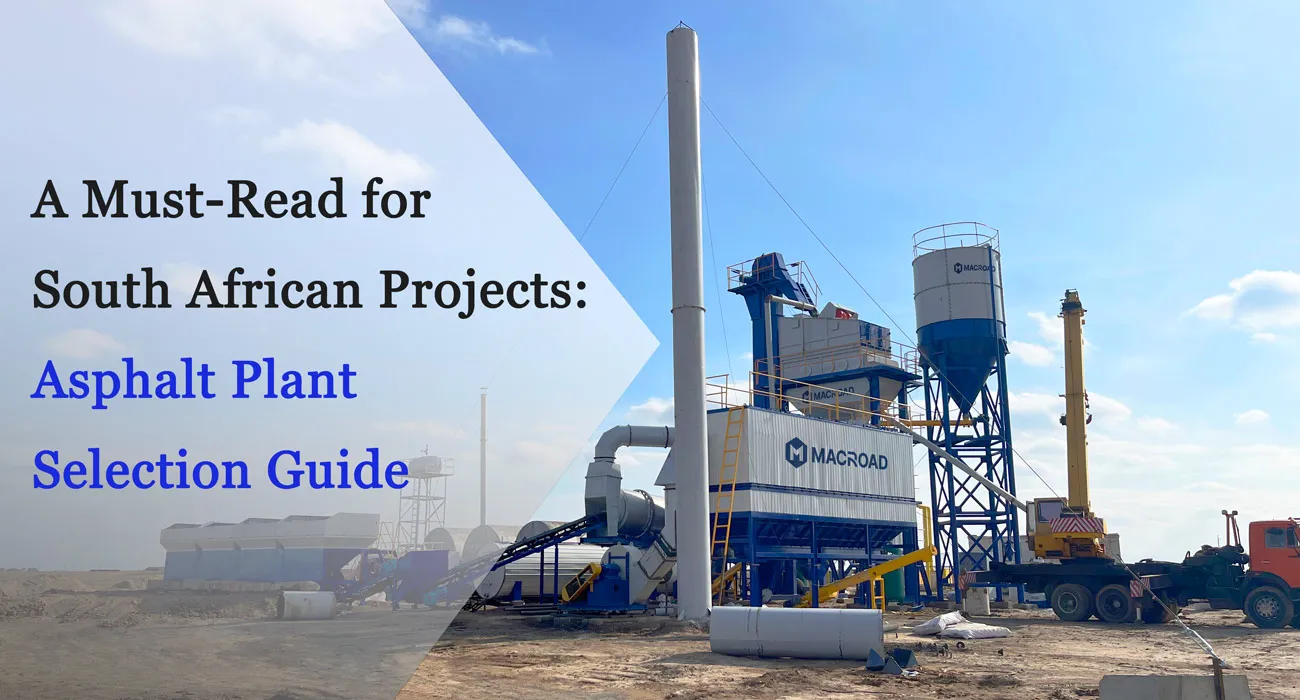
A Must-Read for South African Projects: Asphalt Plant Selection Guide
Choosing the most suitable equipment is crucial for successfully operating an asphalt plants in South Africa. South African road projects are widespread and complex, each with different requirements for equipment adaptability and construction efficiency. How can you select the most suitable asphalt mixing plant for South African conditions? The following analysis outlines five key steps.
Step 1: Define Asphalt Plant in South Africa Conditions
Before selecting asphalt plant for sale South Africa, a comprehensive understanding of the project’s basic conditions is essential, including the construction site, terrain features, traffic load, and schedule. South African projects are often scattered across mountainous areas, plateaus, mining areas, or cities, resulting in significant variations in construction environments.
- Key Questions: Is the project a city municipal road, a rural connecting road, or a heavy-duty road in a mining area? Is the project timeline tight or long-term? Does the road handle heavy traffic or general traffic?
- Analysis Points: Assess the complexity of the terrain, the distribution of construction sites, and traffic pressure to provide a basis for asphalt plant South Africa flexibility and capacity requirements.
- Purpose: To clarify the basic requirements of different projects for equipment performance, deployment capabilities, and production efficiency, laying the foundation for subsequent equipment selection.
Step 2: Assess Material Conditions
Aggregate sources vary greatly across different regions of South Africa, and humidity fluctuations are significant during the rainy season. Material characteristics directly affect the quality of the mixture and construction efficiency.
- Key Questions: Is the distribution of construction aggregates widespread? How much does the moisture content of sand and gravel fluctuate during rainy season construction? Is the aggregate particle size and gradation uniform?
- Analysis Points: Understand raw material moisture content, particle size distribution, and powder ratio to assess the need for intelligent weighing or automatic adjustment systems.
- Purpose: Ensure the selected equipment maintains stable mixture quality under different material conditions, reducing rework risk.
Step 3: Analyze Construction Environment and Deployment Conditions
South African road projects are geographically dispersed, with significant differences in site size, relocation frequency, and water and power supply conditions. The construction environment directly impacts equipment selection.
- Key Questions: Is the construction site limited? Is frequent relocation required? Are water, power, and road transportation convenient?
- Analysis Points: Consider whether the equipment is modular, mobile, and capable of rapid installation and commissioning to ensure adaptability to diverse working conditions.
- Purpose: Select asphalt plant South Africa that can be quickly deployed and adaptable to complex environments to ensure construction progress and on-site safety.
Step 4: Budget and Return on Investment Analysis
Equipment costs include not only the asphalt plant price but also transportation, installation, operation, and maintenance costs. These additional costs should be considered from the initial asphalt plants in South Africa procurement stage.
- Key Questions: What is the investment budget? What are the equipment operating costs and energy consumption? Can maintenance and labor costs be controlled?
- Key Analysis Points: Comprehensively consider equipment price, capacity efficiency, energy costs, maintenance cycle, and construction cycle to assess the investment payback period.
- Purpose: Ensure the selected equipment is economically reasonable, with low long-term operating costs, and achieves a return on investment within the expected project timeline.
Step 5: Comprehensive Evaluation and Decision-Making
Integrate the analysis results from the first four steps, compare different equipment solutions offered by different asphalt plant suppliers, and form a scientific decision.
- Key Questions: Which equipment best matches the project’s operating conditions, raw material conditions, construction environment, and budget?
- Key Analysis Points: Establish a selection matrix or scoring table to quantitatively evaluate capacity, flexibility, stability, cost, and construction efficiency.
- Purpose: Through systematic evaluation, select the most suitable asphalt mixing plant solution for the South African project, reduce risks, and improve the project success rate.
Key Steps to Faster ROI in Your South Africa Project
Investing in asphalt mixing plants in South Africa, the speed of return on investment depends not only on asphalt plants in South Africa prices or production capacity. The true determinant of success lies in making the right choices in key areas such as project acquisition, operational organization, and cost control. Based on the specific circumstances of the South African road construction market, the following strategies can often significantly shorten the payback period.

Project Level: Prioritize Securing Continuous Demand, Not One-off Projects
In the South African market, the key to payback period isn’t the number of projects won, but rather the ability of asphalt plants in South Africa to consistently and stably produce output. Project interruptions amplify equipment downtime, significantly extending the investment recovery cycle. Therefore, selecting projects with long-term supply capacity from the outset is the first step in shortening payback time.
- Focus on Government and Semi-Government Projects: Provincial roads, municipal roads, and mining logistics corridors are typically long-term projects with stable demand, ensuring continuous supply.
- Prioritize Recurring Construction Scenarios: For example, mining road maintenance and industrial park road upgrades allow the mixing plant to serve the same area long-term.
- Avoid Over-reliance on Single Projects: Serving multiple small to medium-sized projects spreads risk and improves equipment utilization.
Operational Level: Improving Equipment Uptime is More Important Than Pursuing Larger Capacity
For asphalt mixing plants, the true determinant of how much is an asphalt plant worth is not the listed capacity, but the actual effective operating time.
In the South African construction environment, frequent downtime, maintenance, or waiting for project instructions is often more fatal than insufficient capacity. Improving uptime essentially means maximizing asphalt plant South Africa profitability without increasing investment.
- Optimize construction schedule: Match daily output to project timelines and road types to avoid frequent downtime.
- Reduce maintenance and downtime frequency: Select equipment with mature structures and simple maintenance to minimize production interruptions due to malfunctions.
- Multi-shift or flexible production arrangements: Increase output per unit time in urban areas or projects with tight schedules.
Labor level: Reduce reliance on highly skilled operators
Labor instability is a hidden reason for slow return on investment in many South African projects. When production heavily relies on individual operators, training, turnover, and operational errors all become sources of cost. Reducing reliance on highly skilled workers effectively mitigates project risk and makes profitability more controllable.
- Simplify operating procedures: Reduce complex manual intervention and lower the operational threshold.
- Shorten training cycles: Enable local technicians to quickly learn the skills, avoiding long-term reliance on foreign or highly paid technical personnel.
- Reduce human error costs: Reduce rework and waste caused by operational errors through standardized operations and automated control.
Cost Perspective: Finding Hidden Profit Margins in Energy and Materials
In South Africa, the return on investment is often not slowed down by equipment prices, but by long-term operating costs. Energy consumption, material waste, and transportation and relocation costs all subtly lengthen the payback period. Controlling these hidden costs directly determines the true profit margin per ton of mixture.
- Optimize fuel selection: Optimize the fuel structure based on local resource conditions to reduce energy costs per ton.
- Reduce material waste: Stable proportions and mixing quality significantly reduce rework and material loss.
- Control transportation and relocation costs: Reduce long-distance transportation expenses through reasonable station placement or relocation plans.
Long-Term Perspective: Treat Equipment as an Asset, Not a One-Time Purchase
Projects with fast payback periods often don’t just consider a single project, but rather a three to five-year, or even longer time frame. When equipment can continuously create value across multiple projects, the financial pressure on individual projects is diluted, naturally accelerating the overall investment recovery.
- Reuse equipment across multiple projects: Equipment can be transferred with projects, continuously creating value.
- Plan ahead for future markets: Secure the next construction scenario before the current project concludes.
- Focus on equipment durability and stability: Reduce the frequency of major repairs and replacements, extending the profit cycle.
Investing in asphalt mixing plants in South Africa and achieving a quick return on investment isn’t about luck, but rather about systematic management of the project, operations, labor, and costs. Understanding the market structure, maximizing asphalt plant for sale in South Africa utilization, and reducing operating costs are key to generating sustainable returns. If you wish to develop a clearer path to profitability based on your specific project, we can assist you with investment calculations and project planning.
Delivery Concerns You Might Be Worrying About Asphalt Plant in South Africa
How long does it typically take from order placement to on-site production in South Africa?
The delivery cycle depends on the asphalt plant for sale in South Africa type, configuration, and project complexity. Generally, the overall cycle from contract confirmation to on-site installation and commissioning is controllable and clear, taking approximately 3-6 months.
In the early stages of the project, we plan production, transportation, and installation milestones in advance to avoid delays in production due to insufficient preparation upon equipment arrival.
If the project site is remote, will transportation and on-site installation be difficult?
South African road projects are often located in mining areas, mountainous regions, or rural areas. We conduct advance assessments of transportation routes, site conditions, and hoisting environments during the delivery phase.
The asphalt plant South Africa features a modular design, enabling phased transportation and rapid on-site assembly, reducing reliance on large infrastructure and complex construction conditions. Of course, our engineers will also be on-site during installation to ensure a smooth process.
What if the site conditions don’t exactly match expectations during installation and commissioning?
Before shipping the equipment, we will design a preliminary solution based on the project information provided by the customer. Upon arrival at the site, adjustments will be made according to the actual situation.
The delivery process is not the end once the equipment is delivered; it’s a complete process including on-site coordination, parameter adjustments, and trial operation to ensure the equipment is truly adapted to local working conditions.
Can local operators, lacking experience, successfully use the equipment?
What support is available if operational problems arise after the equipment is put into production?
Even after equipment is put into production, it remains part of the delivery support program. We assist customers in resolving common problems and minimizing downtime through remote communication, operational data support, or operational guidance.
In most cases, problems can be identified and addressed early, preventing escalation. Of course, we will also dispatch engineers to the site as needed.
Are spare parts and consumable parts of Asphalt Plant South Africa readily available?
If subsequent projects change, can the asphalt plant South Africa still be used?
For us, delivery is not just about sending equipment to the site, but about ensuring that the equipment can truly participate in construction, operate stably, and continuously create value in actual projects. From transportation and installation to commissioning and production, every step revolves around the project itself, rather than remaining on paper.
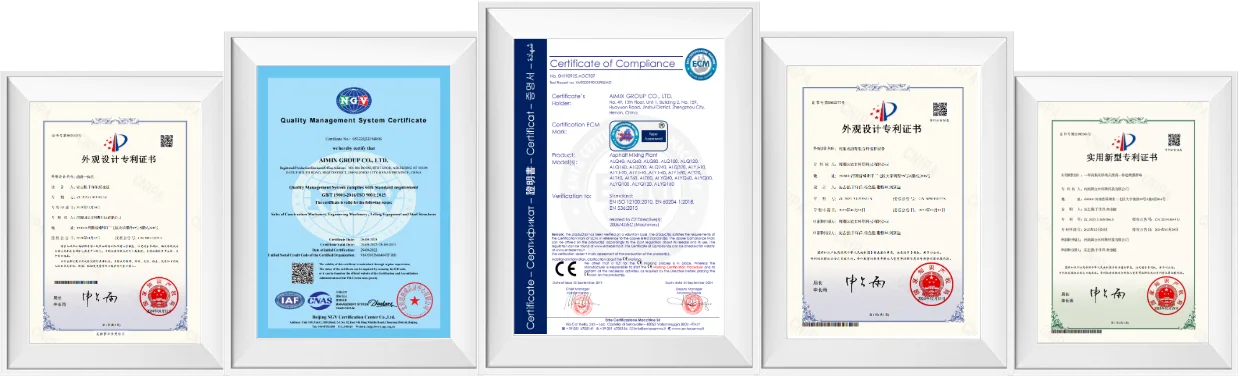
South African road construction projects are characterized by complex working conditions and significant regional variations, making standard solutions impossible. From equipment selection and return on investment to delivery and implementation, a truly reliable solution must be based on a thorough understanding of the South African construction environment, material conditions, and operational realities. Therefore, when entering the South African market, Macroad has always adhered to a project-centric approach, designing and planning around the actual needs of each project. If you are evaluating asphalt plants in South Africa, please contact us for a free quote and basic solution suggestions, ensuring your equipment contributes to project success from the outset.