


In the asphalt engineering field, asphalt mixing plants have long been considered typical equipment assets. Configuration levels, rated capacity, and technical parameters are often directly used to measure a project’s production capacity. However, in increasingly common construction projects, it has become clear that even with high equipment parameters, project progress can still be affected by downtime, unstable material supply, and quality fluctuations.
This reality is signaling a shift in the industry—the equipment itself is no longer sufficient to fully represent production capacity; the value of asphalt mixing plants is shifting from equipment assets to production capacity assets.
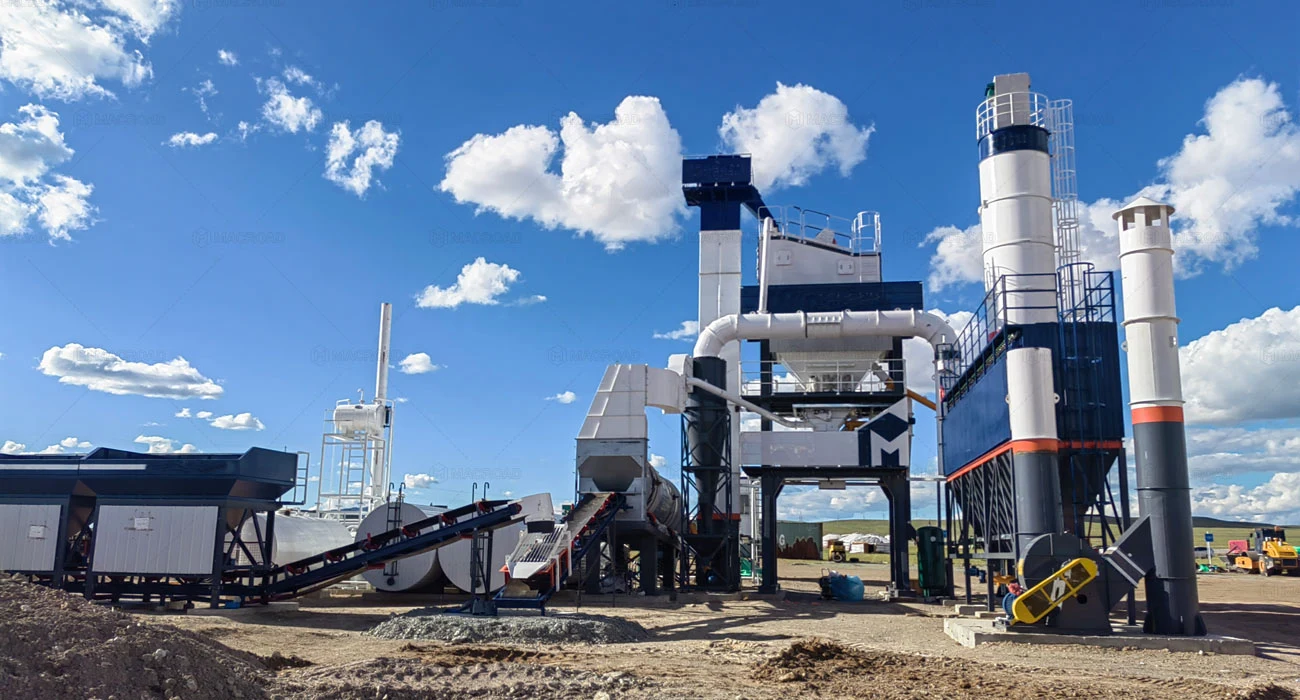
Why Asphalt Plants Were Long Viewed as Equipment Assets
In the early stages of the industry’s development, viewing asphalt mixing plants as equipment assets was not simply a matter of habit, but a rational choice formed under the combined influence of various practical conditions. From the inherent attributes of the equipment itself to the engineering environment, management methods, and industry evaluation systems, this understanding had a complete logical basis at the time.

From the perspective of equipment attributes: Asphalt mixing plants inherently possess asset characteristics
- High investment and heavy configuration: Asphalt mixing plants have high construction costs, with core systems concentrated in a single phase. The initial investment determines long-term production capacity, naturally fitting the definition of an asset.
- High capacity dependence on the equipment itself: In early production processes, output is highly correlated with equipment specifications, power, and structure; the equipment itself almost determines the production ceiling.
- Low substitutability and long service life: Once built, the equipment is difficult to replace quickly; its very existence is seen as a guarantee of stable production.
From the perspective of engineering background: The construction environment reinforces the perception that equipment equals production capacity
- Relatively moderate construction pace: Long project cycles limit reliance on continuous material supply and maximum capacity, minimizing the amplification of short-term fluctuations.
- Relatively simple process system: The type of mixture is relatively simple, and the requirements for system coordination, precise control, and stable output are not yet prominent.
- Downtime risks can be absorbed by the project: Occasional equipment downtime is largely absorbed through schedule adjustments, with limited impact on the overall project.
From a management and evaluation perspective: Equipment is the most direct proof of capability
- Highly visible and easy to judge: The number of equipment units, models, and rated capacity are clearly visible, becoming a universal language for quickly assessing production capacity.
- Adaptable to early project management methods: In the relatively rudimentary stage of management systems, equipment scale was one of the few assessment criteria that could reach a consensus.
- Widely used for bidding and comparison: Equipment parameters are naturally suitable for inclusion in documents and tables, and have long dominated industry judgment standards.
From the perspective of industry development stages: This thinking was truly effective at the time
- Production could be organized as soon as equipment was available: As long as the equipment had basic performance, it could meet most engineering needs at the time.
- Production results were directly linked to equipment: The success or failure of a project depended more on the availability of equipment than on its long-term operational stability.
- Practice continuously reinforces existing knowledge: Extensive project experience repeatedly verified the effectiveness of equipment in representing capacity, continuously consolidating this thinking.
It is the combination of these multiple factors that has made the equipment asset mindset valid in the industry for a long time. However, with changes in engineering conditions and industry requirements, this logic is beginning to face new practical challenges.
Industry Reality: Why Equipment No Longer Equals Production Capacity
Previously, having equipment in place meant sufficient production capacity—a long-held industry consensus. However, with upgrades in engineering environments, material systems, and management models, this understanding is gradually becoming ineffective. Modern engineering projects not only pursue high output but also emphasize stability, predictability, and continuous delivery, capabilities that extend beyond the scope of a single piece of equipment.
Downtime risks, material complexity, project timelines, and competitive pressures are increasingly amplified, making it impossible for asphalt hot mix plant alone to ensure smooth project progress. The industry is gradually realizing that true production capacity is the result of comprehensive collaboration between equipment, management, and systems.

Accelerated Project Pace amplifies Downtime Costs
- Compressed Construction Cycles: Modern engineering projects have stringent time constraints, significantly shortening construction windows. Any unplanned downtime directly impacts overall progress, amplifying losses from short-term equipment fluctuations.
- Continuous Material Supply Becomes the Norm: Continuous production during peak periods places higher demands on equipment stability. Downtime or output fluctuations will lead to passive adjustments throughout the entire construction chain.
- Capacity Release Linked to Delivery Risks: If equipment cannot operate stably, not only will output decrease, but it may also affect construction plans and project delivery. The traditional logic of equipment presence = guaranteed capacity no longer holds true.
Increasing Material Complexity Demands Higher Stability
- Widespread Use of Modified Asphalt: Modified materials are sensitive to temperature, mixing time, and proportions. Even slight equipment fluctuations can lead to quality instability.
- Increased Aggregate Size and Mixture Complexity: The use of large-diameter aggregates and high-performance mixtures places higher demands on the stability of equipment mixing, conveying, and control systems during the production process.
- Quality fluctuations directly impact construction outcomes: In the past, minor equipment fluctuations could be absorbed through manual or construction adjustments; now, high-performance materials demand greater stability, amplifying equipment fluctuations directly impact finished product quality and construction efficiency.
Upgraded management methods, emphasizing delivery capabilities
- Results-oriented management: Modern construction emphasizes overall project output and delivery goals; individual equipment indicators no longer reflect final capabilities.
- High requirements for plan executability: Output, quality, and construction cycles must be predictable; equipment downtime or performance fluctuations directly disrupt plan fulfillment.
- Increased risk awareness: Equipment failures are no longer just maintenance issues but directly represent project risks, prompting companies to focus on systemic production capacity rather than individual machine performance.
Intensified industry competition and significant equipment homogenization
- Reduced equipment differentiation: Technology popularization and market maturity have led to homogenization of equipment parameters; relying solely on configuration is insufficient to create a long-term competitive advantage.
- Short-term price advantage: High-configuration equipment was once an advantage, but in a homogenized market, price advantages are unsustainable; the focus of competition shifts to operational and delivery capabilities.
- Continuous operational capability becomes the new benchmark: The systematic ability to stably release production capacity, ensure quality, and control risks has become the new core of corporate competitiveness.
Multifaceted changes have prompted the industry to rethink its approach: production capacity is no longer solely determined by the equipment itself, but rather by the comprehensive capabilities of equipment, materials, management, and system synergy. This has laid the foundation for the concept of production capacity assets.
What Is Production Capacity Asset?
True production capacity cannot be measured solely by equipment parameters. With faster construction pace, more complex material systems, and upgraded management methods, equipment alone can no longer guarantee stable production capacity, controllable quality, and predictable projects. Against this backdrop, production capacity assets have emerged. They represent no longer a single piece of equipment, but a complete system of capabilities capable of consistently, stably, and predictably completing production tasks over the long term.
Production capacity assets focus not only on the asphalt hot mix plant itself, but on the stability, reliability, and continuity of the entire system under high-load conditions. This can be broken down into five perceptible dimensions: availability, consistency, predictability, resilience, and sustainability. The following will analyze each dimension in detail and explain how it manifests in actual production.
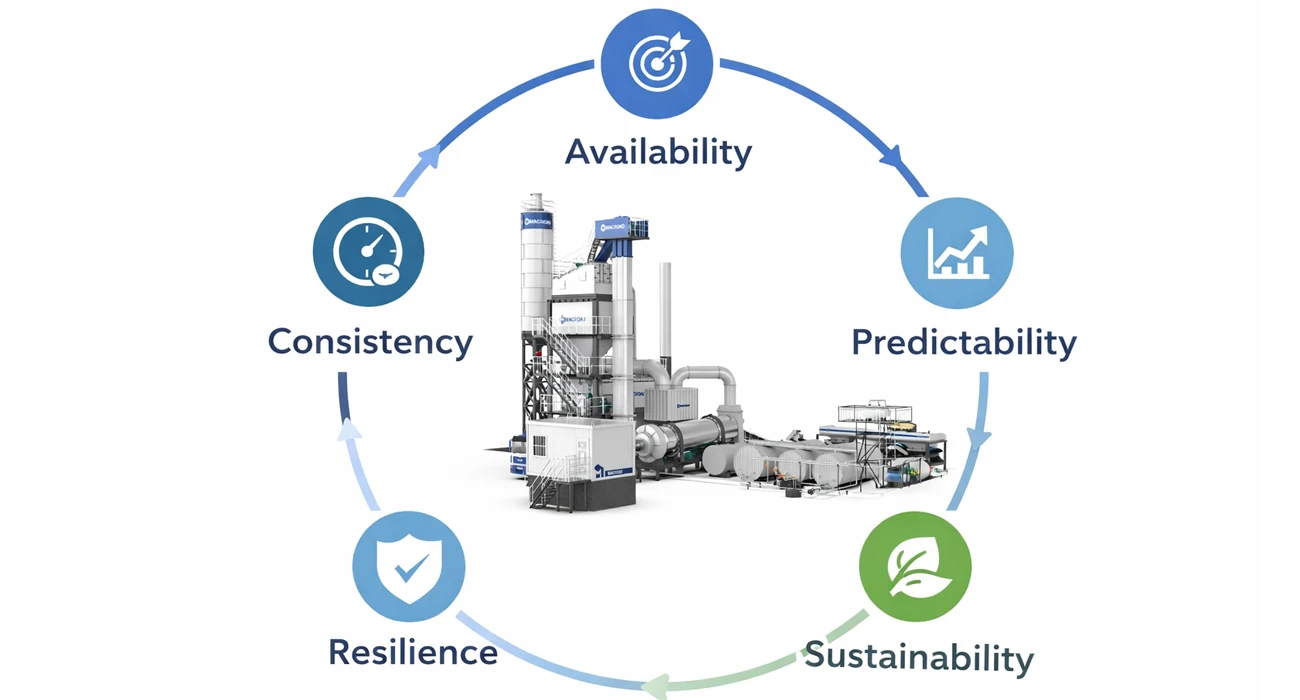
Availability: Stable Operation During Peak Periods
Availability measures the stable operational capability of equipment and systems during peak construction periods or continuous production environments. It reflects not only the reliability of the equipment itself but also the overall efficiency of operation and maintenance management, process coordination, and spare parts supply. High availability means that during critical construction periods, projects can continue to produce output without delays due to equipment failures or downtime, making it a fundamental indicator of production capacity assets.
Specific Performance and Evaluation Conditions:
- Continuous Production Capacity:
- Specific Performance: Equipment can complete planned output without interruption during 8–12 hours of continuous operation or a full-day construction cycle.
- Evaluation Conditions: Number of downtimes ≤ 1/30 days; Peak capacity operation ≥ 90%.
- Reliability of Key Components:
- Specific Performance: Key components such as mixing blades, transmission systems, and drying drums maintain normal operation under high loads.
- Evaluation Conditions: Key component operational stability rate ≥ 98%.
- Maintenance Response Efficiency:
- Specific Performance: In the event of a failure, the maintenance team can respond quickly and restore production.
- Evaluation Conditions: Fault response time ≤ 2 hours.
- High Load Stability:
- Specific Performance: The equipment maintains stable output without fluctuations or shutdowns even at full load.
- Evaluation Conditions: Smooth operation at peak capacity ≥ 90%.
- Historical Downtime Monitoring:
- Specific Performance: The number and duration of production downtime are within a controllable range.
- Evaluation Conditions: Average downtime over the past 30 days ≤ 2% of total production time.
Consistency: Whether the quality of each batch of aggregate is stable
Consistency measures the stability of the physical and chemical properties of each batch of aggregate mixture during the production process, including key indicators such as aggregate ratio, asphalt content, and temperature control. High consistency ensures controllable performance of construction materials, avoiding fluctuations in pavement quality due to batch differences, and is an important indicator of whether production capacity assets can truly be transformed into engineering value.
Specific Performance and Evaluation Conditions:
- Stable Aggregate Ratio:
- Specific Performance: The ratio of aggregate to asphalt remains consistent in each batch, ensuring stable pavement performance.
- Evaluation Conditions: Asphalt content error ±0.3%, aggregate ratio error ±0.5%.
- Temperature Control Accuracy:
- Specific Performance: Small fluctuations in heating and mixing temperatures, ensuring consistent performance of each batch of aggregate.
- Evaluation Conditions: Temperature deviation ≤±5°C.
- Material Adaptability:
- Specific Performance: The impact of differences in raw materials between different batches on the quality of the finished product is controllable.
- Evaluation Conditions: Consistency ≥95% after 10–20 consecutive batches of testing.
- Discharge Uniformity:
- Specific Performance: Stable batch weight to prevent insufficient or wasted construction materials.
- Testing Conditions: Discharge uniformity error ≤1%.
- Traceability:
- Specific Performance: Complete production data for each batch for quality analysis and improvement.
- Testing Conditions: Complete and traceable data for weighing, temperature, mixing time, etc.
Predictability: Is Production Capacity Plannable?
Predictability reflects the controllability of production capacity at the planning and management levels, ensuring that construction scheduling, material supply, and human resource allocation can be planned in advance. It relies on equipment performance, standardized processes, and data monitoring capabilities. High predictability means that companies can develop production plans in advance, ensuring that construction progress aligns with contract delivery targets.
Specific Performance and Evaluation Conditions:
- Stable Daily/Weekly Production:
- Specific Performance: Daily or weekly production matches the plan, and construction progresses as expected.
- Evaluation Conditions: Daily production deviation ≤5%, weekly cumulative deviation ≤3%.
- Construction Plan Alignment:
- Specific Performance: Production output matches the construction schedule on time, with no project delays due to production fluctuations.
- Evaluation Conditions: Construction plan delay rate ≤2%.
- Complete Production Data:
- Specific Performance: Information such as production volume, weighing, temperature, and mixing time is completely recorded.
- Evaluation Conditions: All batch data is traceable and complete.
- Peak Load Performance:
- Specific Performance: Production output can still be delivered as planned during peak construction periods.
- Evaluation Conditions: Peak load fluctuation ≤5%.
- Production Plan Adjustability:
- Specific Performance: Production rhythm can be adjusted according to construction needs and material supply.
- Evaluation Conditions: Production plan can be adjusted in a timely manner, and the output deviation after adjustment is ≤5%.
Risk Resistance: Fault Controllability
Risk resistance reflects a system’s ability to minimize the impact of equipment failures, raw material fluctuations, or construction anomalies. It reflects an enterprise’s responsiveness to uncertainties and is a core indicator for ensuring production continuity and project deliverability.
Specific Performance and Evaluation Criteria:
- Backup Equipment and Redundancy Design:
- Specific Performance: Backup plans and redundancy design: Key processes have backup equipment or process solutions.
- Evaluation Criteria: A single point of failure will not cause an overall capacity decrease of >5%.
- Process Flexibility:
- Specific Performance: Local anomalies can be addressed by adjusting processes or optimizing procedures to maintain capacity.
- Evaluation Criteria: After timely optimization of local anomalies, capacity standards are ≥95%.
- Historical Failure Rate Monitoring:
- Specific Performance: Low equipment failure frequency and strong production continuity.
- Evaluation Criteria: Average equipment failure rate over the past 3 months ≤5%.
- Preventative Maintenance:
- Specific Performance: Regular inspections and maintenance reduce unexpected downtime.
- Evaluation Criteria: Maintenance tasks are completed as planned each quarter.
- Risk Assessment Mechanism:
- Specific Manifestations: Risk scoring and improvement are conducted on key processes.
- Assessment Criteria: Key risk item scores ≤80% and corresponding modification plans are in place.
Sustainability: Controllable Long-Term Operating Costs
Sustainability focuses on the controllability of equipment and systems’ costs, lifespan, and maintenance over long-term operation. It not only relates to the long-term performance of production capacity assets but also determines the company’s return on investment and sustainable profitability.
Specific Performance and Evaluation Criteria:
- Equipment Durability:
- Specific Performance: Key components operate stably for a long time without frequent replacement.
- Evaluation Criteria: Lifespan of easily worn parts ≥ 5 years or ≥ one million tons of production.
- Energy Efficiency:
- Specific Performance: Low energy consumption per unit output, controllable long-term costs.
- Evaluation Criteria: Equipment energy efficiency ≤ 35% of industry benchmark level.
- Raw Material Utilization Rate:
- Specific Performance: Reduced waste, controllable material consumption.
- Evaluation Criteria: Rational utilizat