


Smart Control, Efficient Production
Strategic Partner of Fortune Global 500 Companies
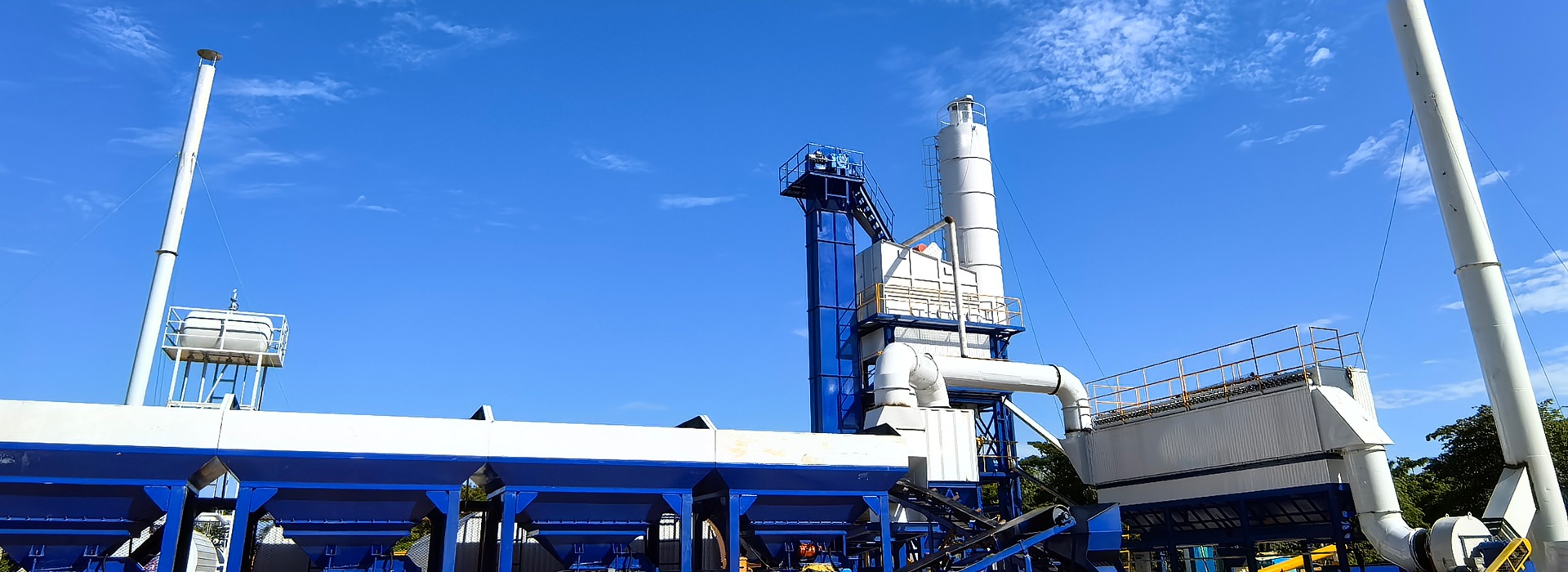
When constructing roads or investing in asphalt plants in South Africa, a crucial question is often overlooked: Is the equipment you choose truly designed for South Africa? Currently, many suppliers in the market still recommend general-purpose asphalt mixing plants to South African clients. While these asphalt plants can be used in different countries, their design did not fully consider the realities of South Africa’s high temperatures, dust levels, dispersed project locations, and complex operating conditions.
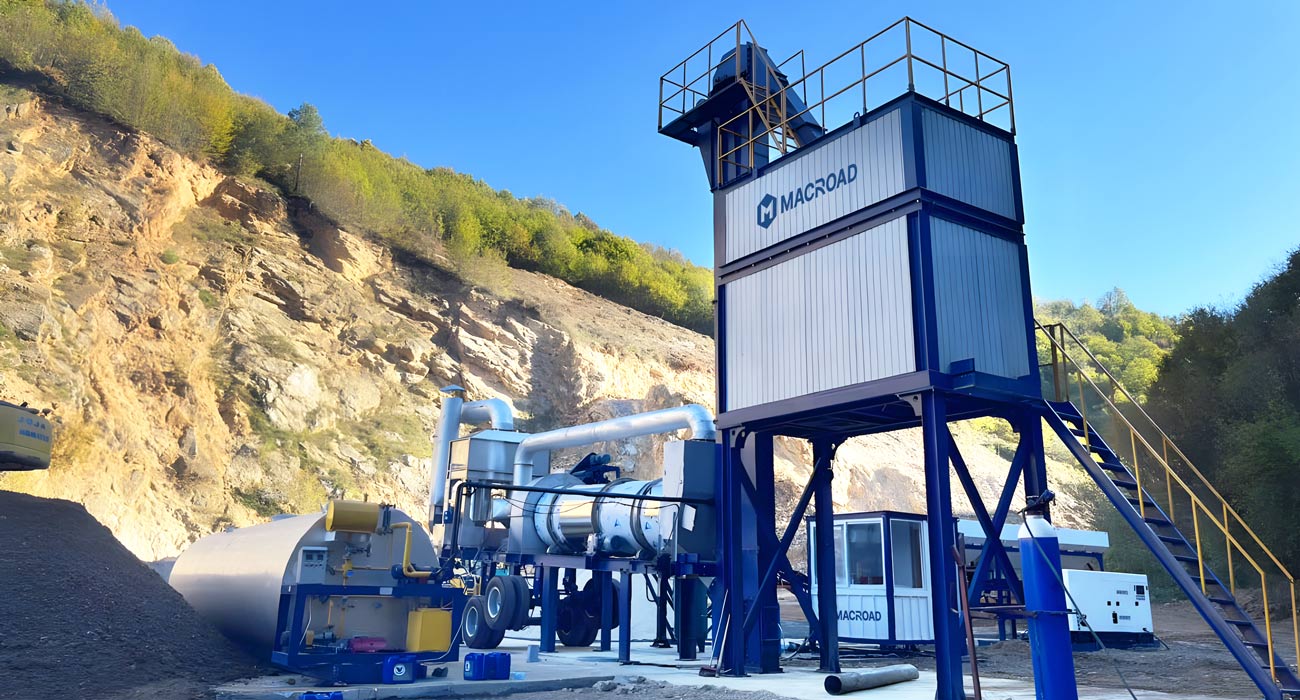
Macroad chose a different approach from the outset. We base our designs on the actual construction environment and project operational needs of South Africa, optimizing equipment structure, operational stability, and adaptability to provide asphalt mixing plant solutions truly suited to South African conditions, ensuring long-term, stable, and successful project operation.
No Two Roads Require the Same Asphalt Plant in South Africa
There is no single standard operating condition for road construction in South Africa. From mountain highways to heavy-duty roads in mining areas, from urban municipal roads to connecting roads in remote areas, different projects vary significantly in construction environment, material conditions, and operating methods. Ignoring these differences and simply applying a general-purpose asphalt plants in South Africa often leads to problems such as insufficient stability, limited construction efficiency, and uncontrolled operating costs later on.
From the perspective of equipment applicability, despite the diversity of road types in South Africa, its road construction projects typically exhibit the following common characteristics:
| Diverse Topography and Dispersed Project Locations: | South African road projects cover diverse terrains including plateaus, mountains, mining areas, and urban peripheries. The dispersed construction sites and long transportation distances place higher demands on the transportation methods, installation efficiency, and on-site adaptability of asphalt plant for sale in South Africa. Equipment needs a modular structure to enable rapid deployment and stable operation at different project locations. |
| High Proportion of Heavy Traffic: | Influenced by the mining and heavy logistics industries, many roads are subjected to long-term heavy vehicle traffic, requiring higher strength and consistency in asphalt mixtures. This means that asphalt plant for sale in South Africa must possess stable mixing performance and precise proportioning control to ensure the durability of the pavement structure. |
| Complex Climate Conditions with High Temperatures and Dust: | Some areas of South Africa experience high temperatures and dry environments year-round, resulting in significant dust levels at construction sites. This places stringent demands on the wear resistance, sealing, and dust control systems of equipment. Equipment not optimized for these conditions will significantly impact long-term operational stability. |
| Tight Project Schedules and High Efficiency Requirements: | Road construction projects typically have clear deadlines. Equipment downtime or frequent maintenance will directly affect the overall construction progress. Therefore, asphalt plant for sale South Africa need to possess a high level of automation and stable continuous production capacity to reduce operational risks. |
In actual projects, the aforementioned road construction characteristics often appear in different combinations in specific projects. Based on differences in terrain conditions, traffic load, and construction organization methods, road construction projects in South Africa can generally be summarized into the following typical scenarios. For different working conditions, Macroad has accumulated mature equipment application experience in similar projects and developed corresponding solutions.
ALQ80 for Mountain & Long-Distance Highway Project in Mongolia
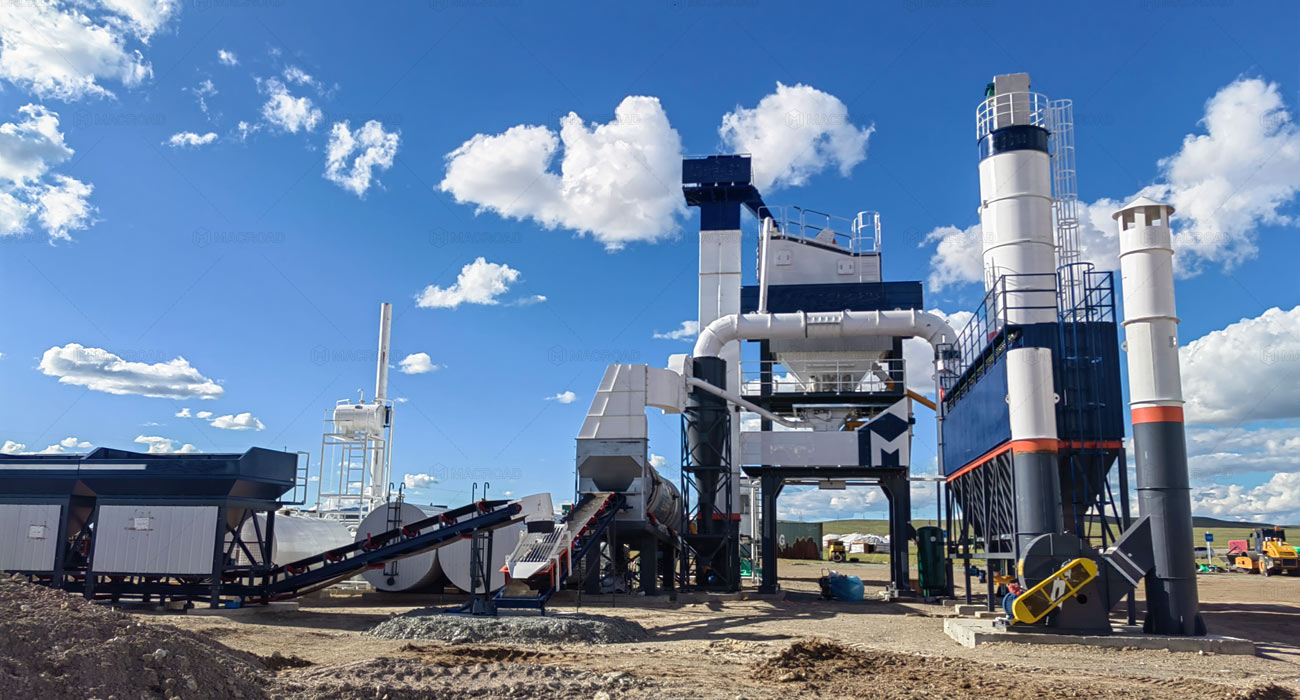
- Project Characteristics: Long highway stretches with dispersed construction sites
- Solution: Stable batch production ensured consistent asphalt quality across long-distance paving under harsh climatic conditions
ALQ80 in Kyrgyzstan for Mining & Heavy-Duty Road Project
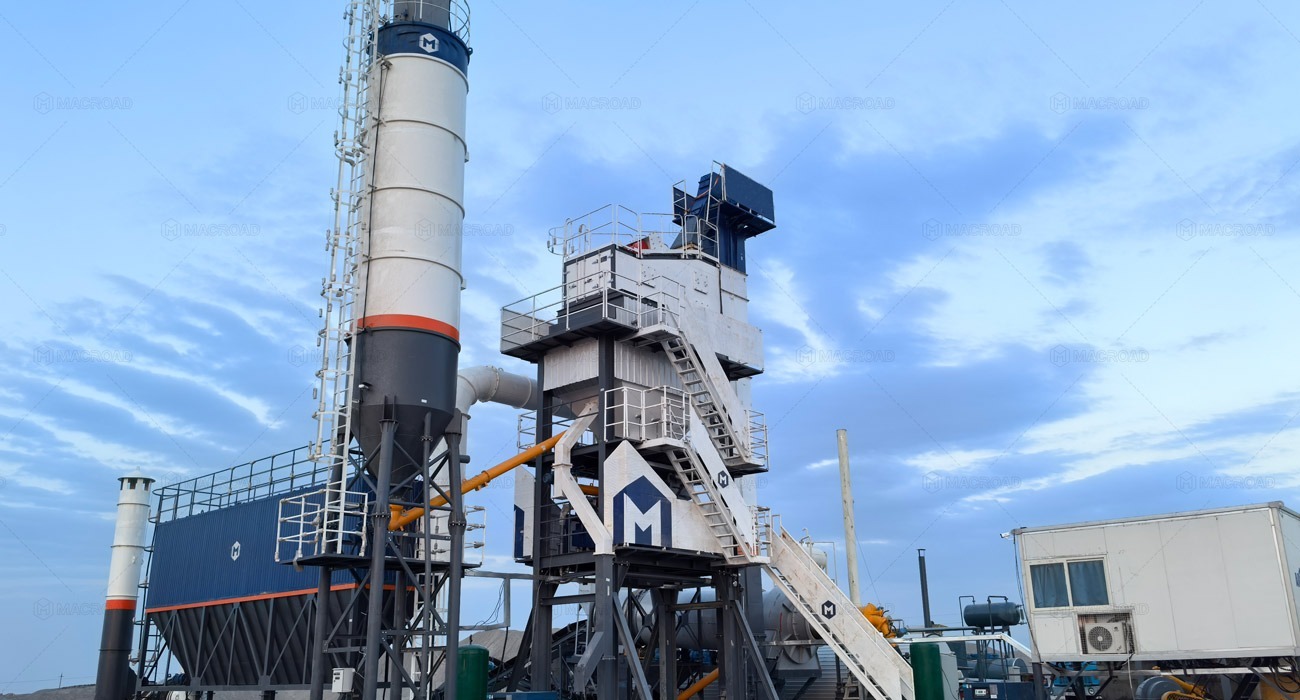
- Project Characteristics: High load-bearing road and intense construction requirements
- Solution: High-strength, wear-resistant components with precise batching ensured road durability under heavy loads
ALQ120 in Jamaica for Urban & Municipal Road Project
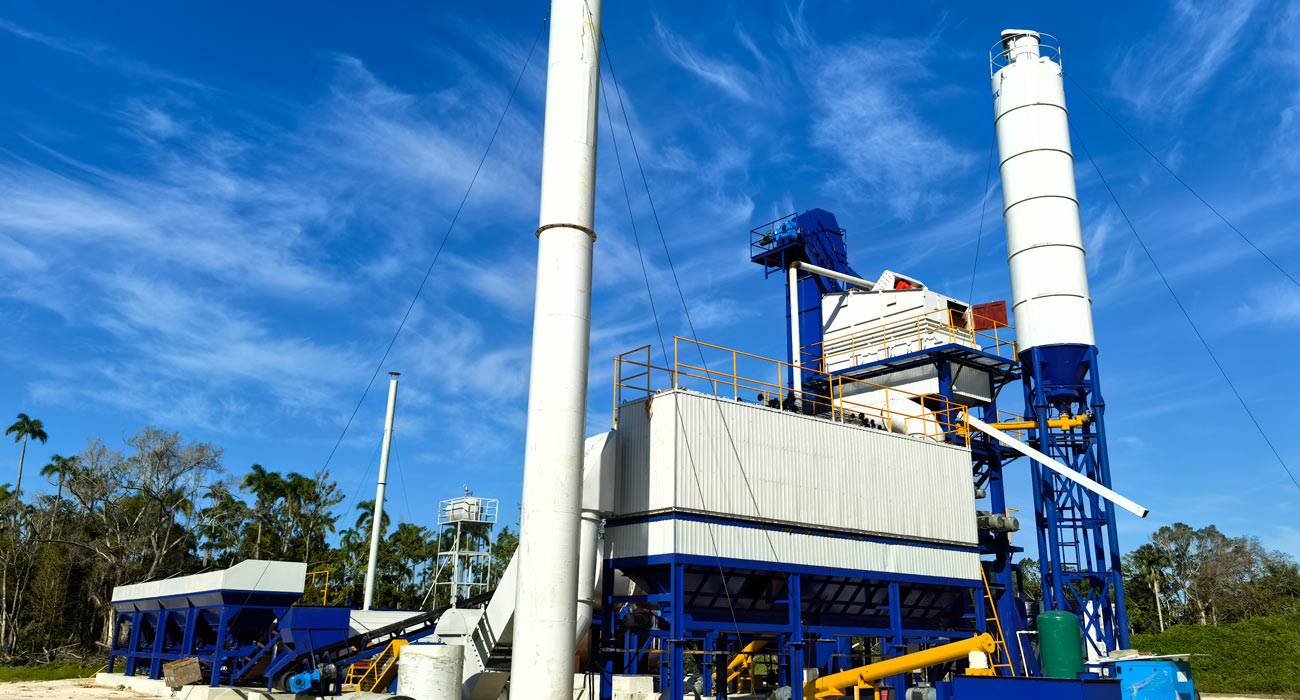
- Project Characteristics: High requirements for construction efficiency and environmental compliance
- Solution: Modular design and multi-stage dust removal enable efficient construction while meeting urban environmental standards.
ALT80 in Malaysia Kuching for Rural Road Project
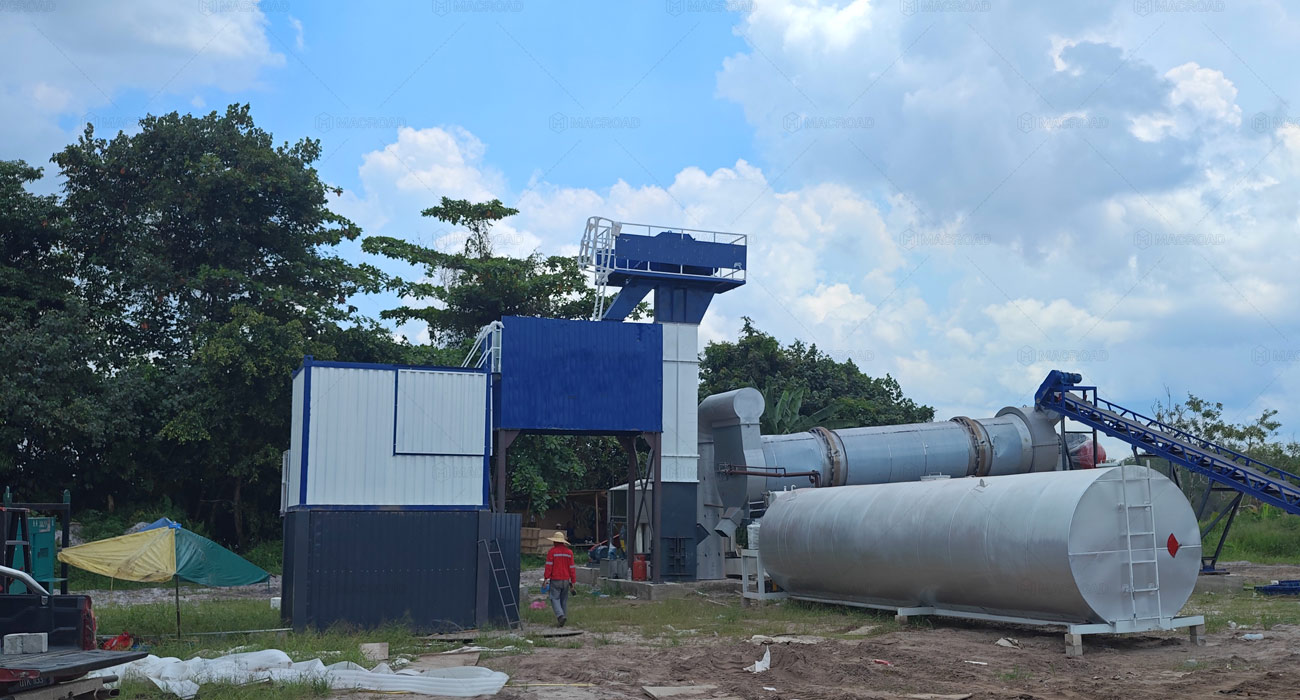
- Project Characteristics: Limited project budget with basic transport conditions
- Solution: Cost-effective drum mix plant and modular transport reduced costs and adapted to scattered sites
ALQ80 in Myanmar for Bridge & Special-Purpose Pavement Project
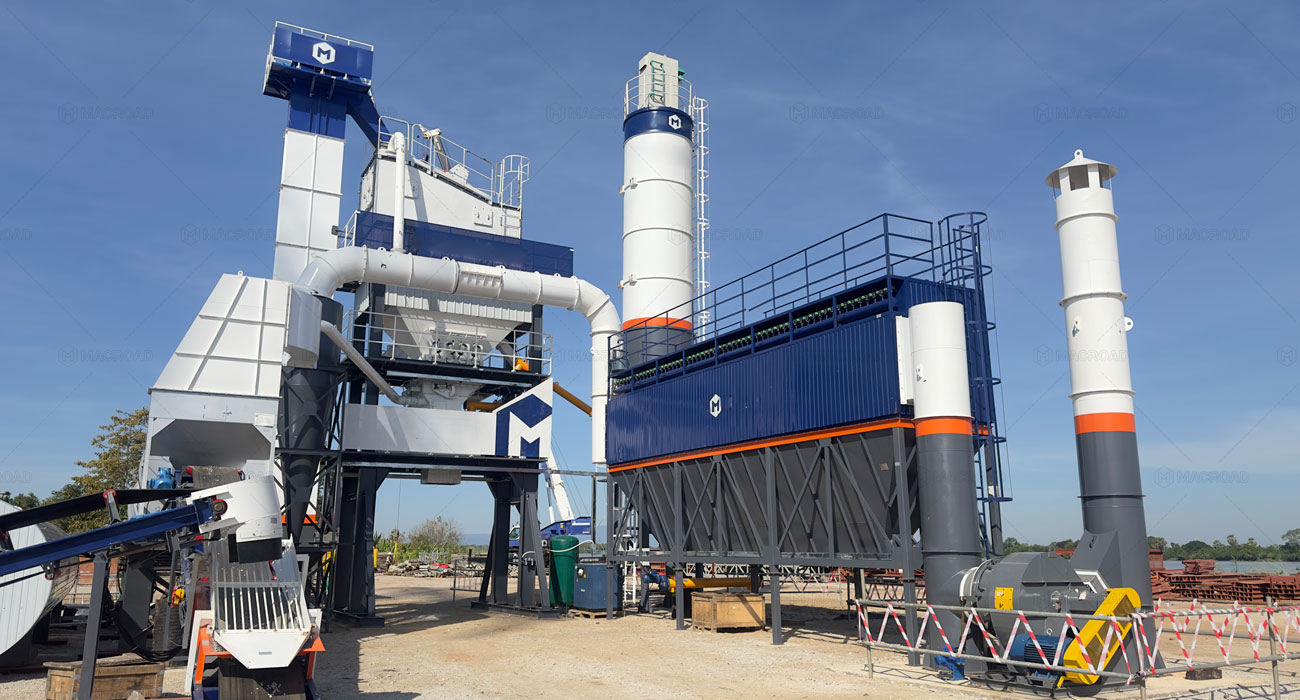
- Project Characteristics: Strict construction standards with low tolerance for error
- Solution: Precise batching with multiple quality checks ensured asphalt consistency for high-standard projects
Three Series of Asphalt Plants — Tailored for the South African Market
In South African road construction projects, different road types, construction environments, and operating conditions place varying demands on asphalt plants in South Africa. Whether it’s mountain highways, heavy-duty roads in mining areas, or urban municipal and rural connecting roads, the stability, efficiency, fuel adaptability, and environmental compatibility of the equipment directly impact project schedule and cost.
Macroad’s three types of asphalt plants cover major road construction scenarios in South Africa: batch mix asphalt plants are suitable for mining areas and heavy-duty roads; drum mix asphalt plant are suitable for small-scale rural and municipal projects; and mobile asphalt plants can handle mountainous, remote, and multi-project continuous construction. Each series is optimized for South African working conditions, ensuring high precision, high efficiency, low energy consumption, and sustainable operation, helping customers achieve project success in diverse road construction projects.
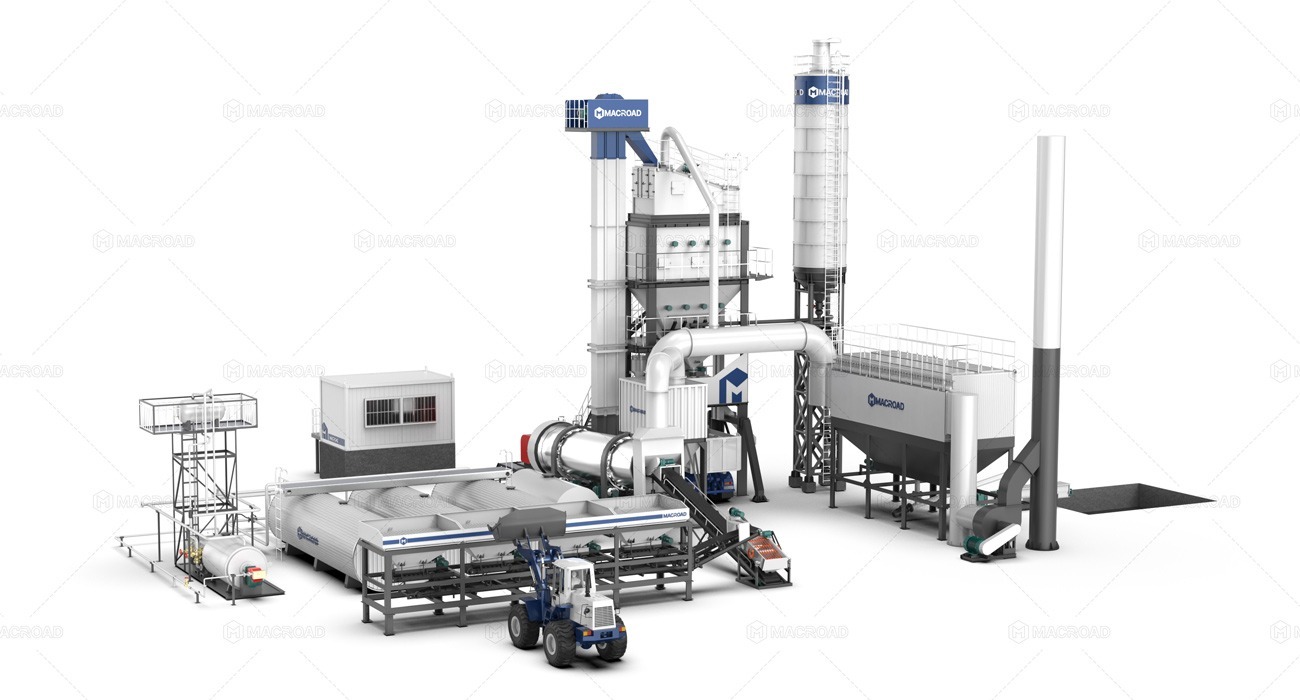
Asphalt Batching Plant
- High-Precision Production: The twin-shaft batch mixing unit achieves 98% mixture uniformity, with gradation deviation controlled within ±2%, far exceeding the South African SANS 1141 standard. Suitable for mining areas and heavy-duty roads, ensuring the long-term durability of high-strength pavements.
- Flexible Fuel Compatibility: Asphalt batching plant compatible with South African low-sulfur heavy oil and local coal resources. When using coal in the Mpumalanga mining project, energy consumption per ton of mixture is reduced by 40% compared to diesel, while meeting South Africa’s AQA environmental regulations for particulate matter emissions of ≤50mg/Nm³, making it both environmentally friendly and economical.
- Intelligent Operation and Maintenance: The IoT system monitors the vibration amplitude of the vibrating screen in real time, allowing for remote adjustment of the formula to cope with changes in aggregate gradation, fully adapting to the diverse aggregate sources in South Africa, reducing manual intervention and material waste.
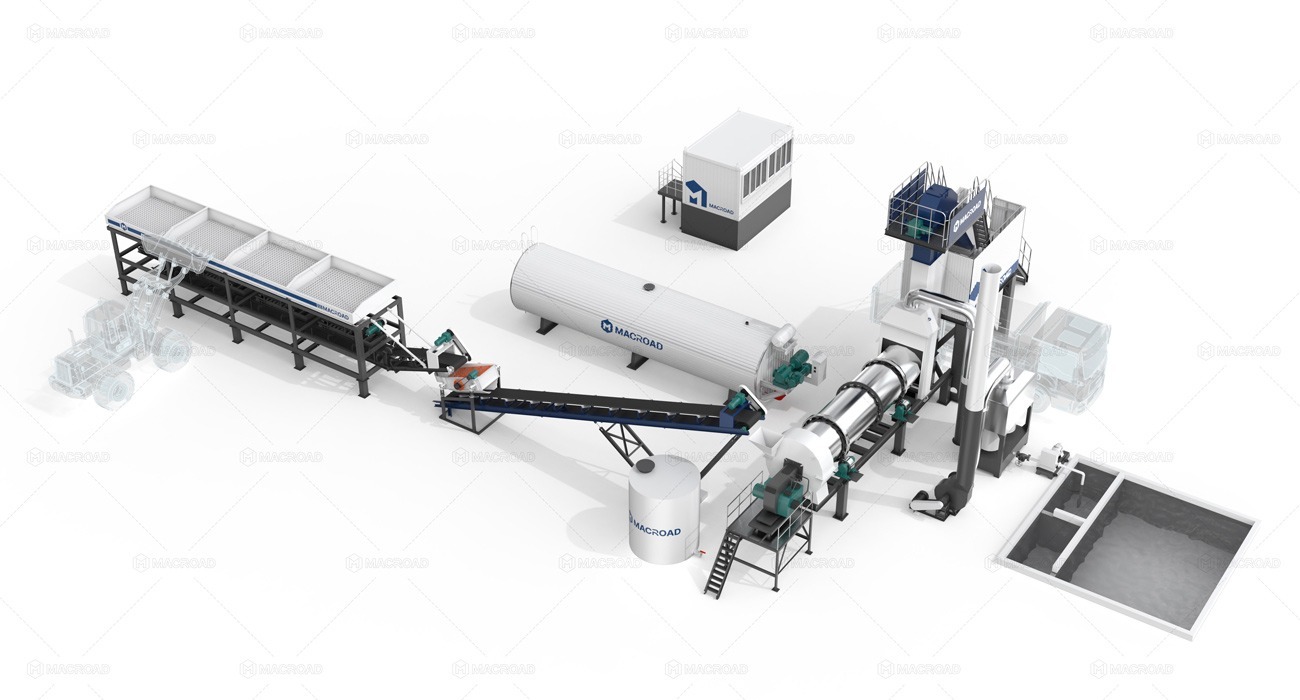
Asphalt Drum Mix Plant
- High Cost-Effectiveness: Asphalt drum mix plant priced between US$60,000 and US$300,000, it meets the budget requirements for rural and connecting road construction. Based on a daily capacity of 200 tons, the investment can be recovered in 3 years, making it suitable for low-grade roads and small-scale government infrastructure projects.
- Low-Skill Operation Adaptability: A simplified control system paired with an Afrikaans illustrated manual allows local technicians to be trained within 24 hours, reducing training costs by 30% and addressing the labor shortage problem in remote areas.
- Intelligent Weighing and Mixing System: Addressing the issue of large fluctuations in aggregate moisture content during South Africa’s rainy season, built-in sensors automatically detect the moisture content of sand and gravel and adjust the asphalt mix ratio in real time. This improves accuracy by 35% compared to manual adjustments, ensuring stable mix quality and avoiding quality fluctuations during rainy season construction.
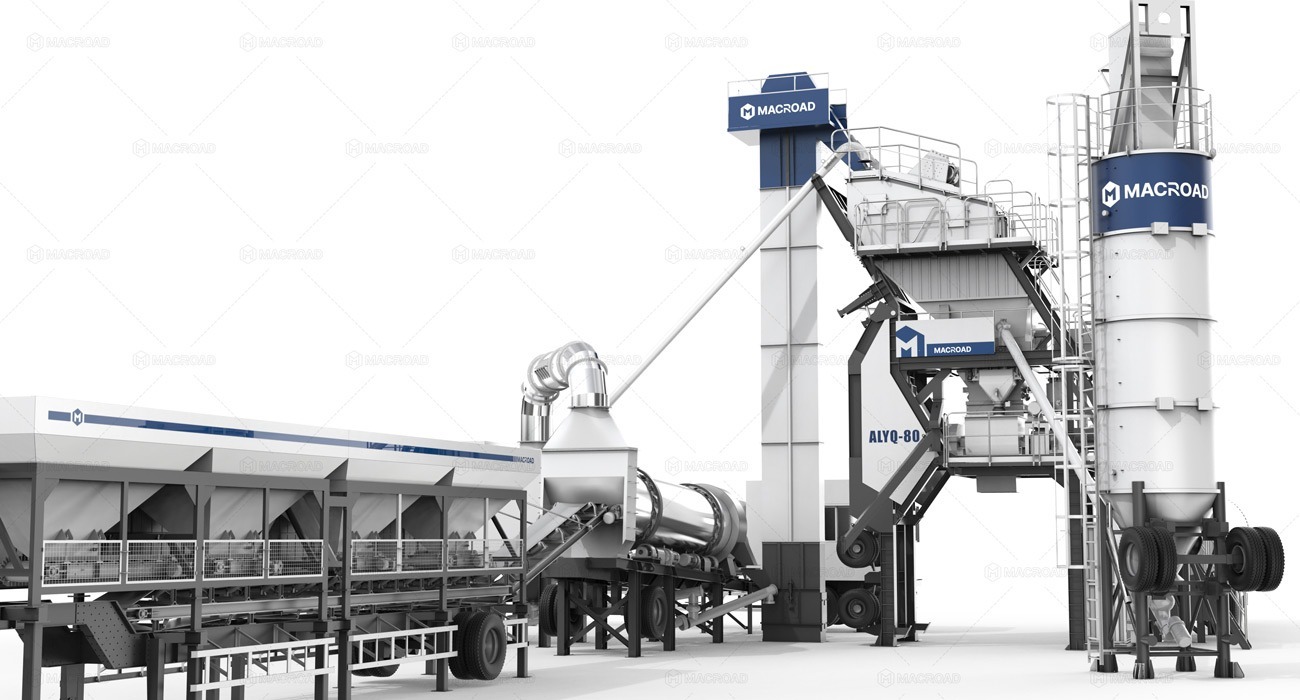
Mobile Asphalt Mixing Plant
- Rapid Deployment Throughout the Entire Process: Site survey, installation, and commissioning can be completed in 10-15 days, shortening the cycle by 20% compared to traditional equipment. It is particularly suitable for mountainous areas, mining areas, and continuous construction projects, avoiding delays caused by long deployment cycles.
- Quick-Connect Interfaces for Rapid Production: Water, electricity, and gas interfaces feature a quick-connect design, enabling mobile asphalt plant rapid site relocation and production within 24 hours, meeting the strict time control requirements of various operating scenarios in mining areas and municipal roads.
- Compact Design Overcomes Site Limitations: The integrated chassis design reduces the footprint by 20%, supporting urban road construction in cities such as Durban and Cape Town. Noise control is ≤70 decibels, allowing for zero-disruption nighttime construction and meeting South Africa’s SANS 10152 urban noise reduction standards.
Asphalt Plant in South Africa Parameter Comparison Table
| Model | ALQ40 | ALQ60 | ALQ80 | ALQ100 | ALQ120 | ALQ160 | ALQ200 | ALQ240 | ALQ320 |
|---|---|---|---|---|---|---|---|---|---|
| Output(t/h) | 40 | 60 | 80 | 100 | 120 | 160 | 200 | 240 | 320 |
| Cold Aggregate Feeding System | 4×4.5m³ | 4×6.5m³ | 4×8m³ | 4×8m³ | 5×9m³ | 5×12m³ | 5×12m³ | 5×12m³ | 6×15m³ |
| Hopper Capacity(m³) | 4*4.5 | 4*6.5 | 4*8 | 4*8 | 5*9 | 5*12 | 5*12 | 5*12 | 6*15 |
| Collect Belt Capacity(t/h) | 60 | 80 | 100 | 120 | 140 | 200 | 220 | 280 | 360 |
| Dryer Size(m) | φ1.2*5.2 | φ1.5*6 | φ1.5*6.7 | φ1.65*7 | φ1.8*8 | φ2.2*9 | φ2.6*9 | φ2.6*9.5 | φ2.8*10.2 |
| Dryer Capacity (t/h) | 60 | 80 | 100 | 120 | 140 | 180 | 240 | 260 | 360 |
| Fuel Max Consumption(kg/h) | 300 | 450 | 550 | 700 | 950 | 1200 | 1400 | 1700 | 2250 |