

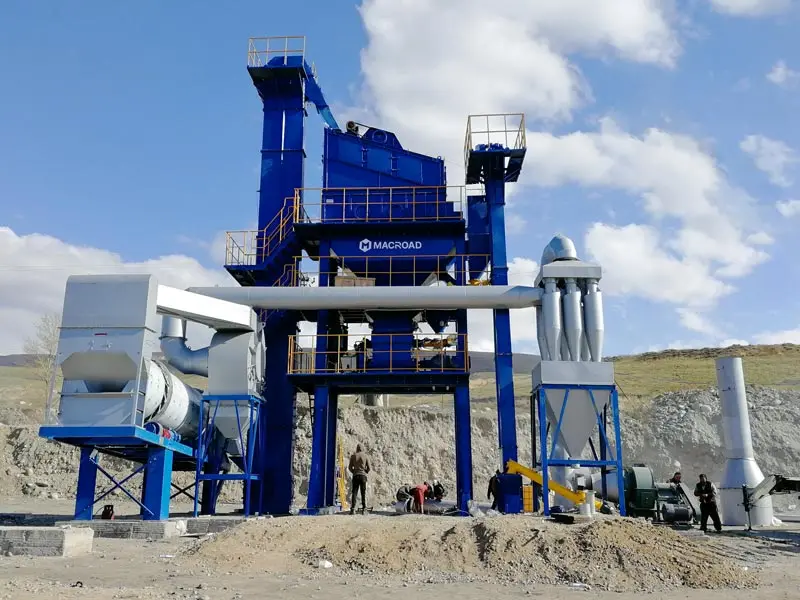
Plug and play, save worry and effort
Low-cost start-up, high-return output
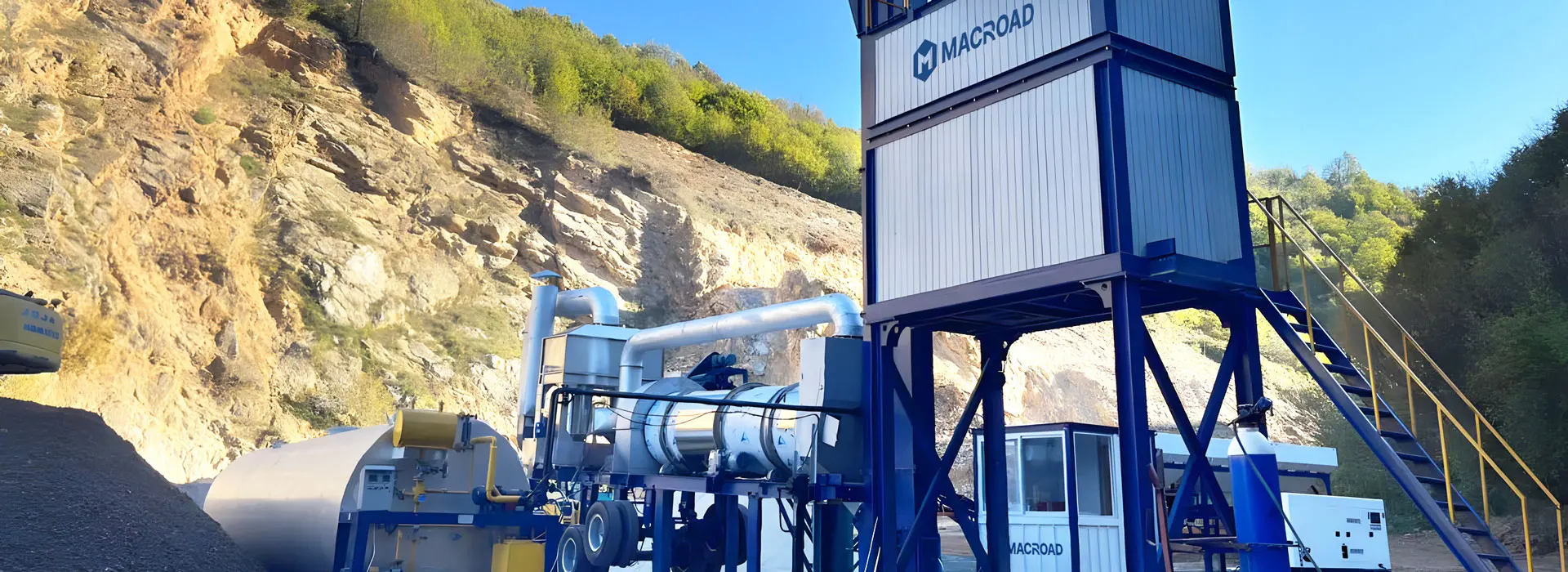
Is it true that buying a large one is worse than a mini asphalt plant?
For large infrastructure projects, this might not be a problem. However, when dealing with small-scale projects, scattered construction sites, or temporary projects with tight deadlines, the high cost and low flexibility of large equipment can become a burden.
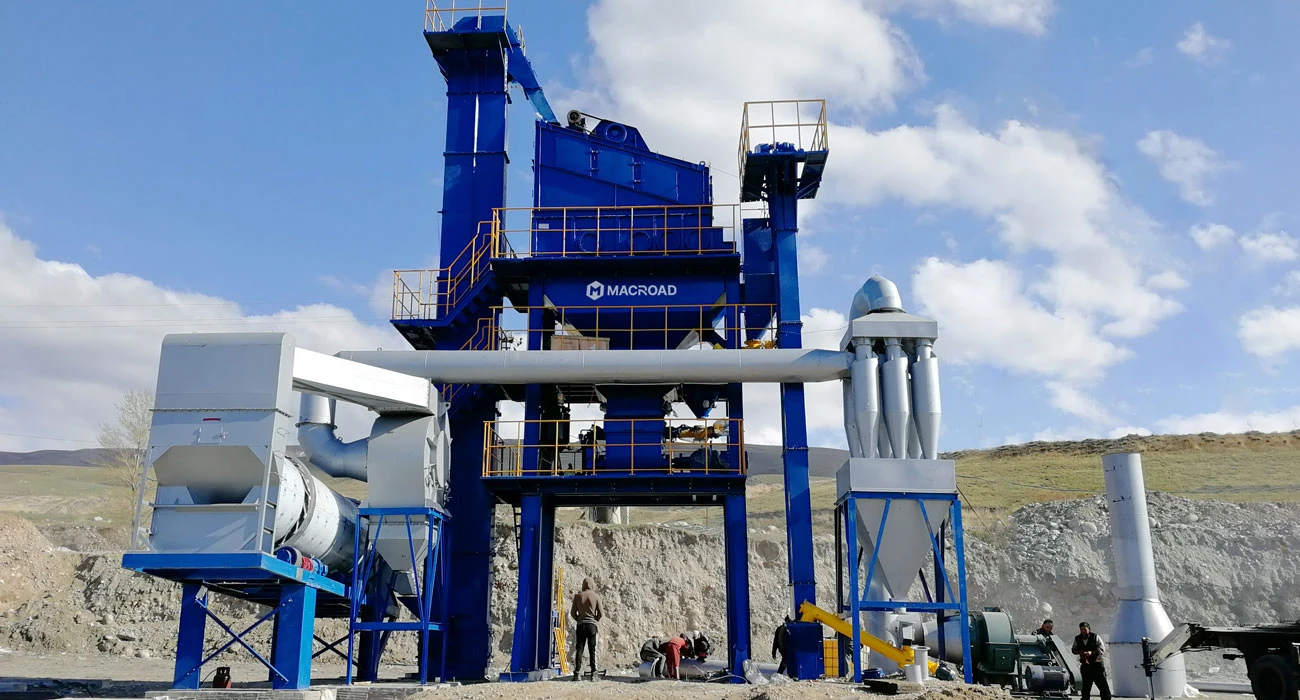
This is why more and more construction companies are re-evaluating the option of mini asphalt mixing plants. With lower investment, faster deployment, and more flexible application, they are becoming a more cost-effective solution.
Big Equipment, Not Always Worth It
Hesitation and repeated comparisons are perfectly normal when choosing an asphalt hot mix plant.
Because you’re not just facing a question of equipment size, but a balance between cost, efficiency, construction period, and construction conditions.
First, ask yourself—is your project in any of these situations?
- The project is not large-scale, but the equipment investment cannot be low, leading to budget pressure from the start.
- The construction sites are scattered, requiring frequent relocation of equipment; the relocation cost of a large asphalt mixing plant is too high.
- The construction period is tight; you want to start production as soon as possible, but the installation cycle slows down the progress.
- The construction site is remote, making transportation, installation, and maintenance inconvenient.
- The actual output demand is not high, but you have to bear the additional energy and labor costs of a large asphalt mixing plant.
If you see yourself in any of these situations, then the problem is actually quite clear—it’s not that you don’t know how to choose equipment, but that traditional large asphalt mixing plants are not entirely suitable for your project.
This is precisely the significance of aspal mixing plant mini. It’s not simply a matter of miniaturization, but a solution more tailored to actual construction needs. Compared to traditional equipment, the changes it brings are very direct:
- Lower upfront investment, making project startup easier
- Faster installation and deployment, preventing construction delays caused by equipment
- More flexible relocation capabilities, adapting to multiple projects and locations
- Better match actual production demands, avoiding resource waste
- Maintain stable mixing quality and reliable operation
In other words, mini asphalt plants for sale are not simply scaled-down options, but a solution more suited to actual construction conditions—in suitable projects, they are often more efficient and economical than large equipment.
Not Just for Emergencies — In These Scenarios, It Shines!
Many people’s first reaction is: mini portable asphalt plant can only be used for temporary repairs or emergency construction, with low output and limited functionality.
This is not the case. While large mixing plants can complete almost all construction tasks, in some special scenarios, mini mixing plants precisely demonstrate their advantages of flexibility, efficiency, and low cost. Below, we’ll look at which projects are best suited for mini asphalt equipment.
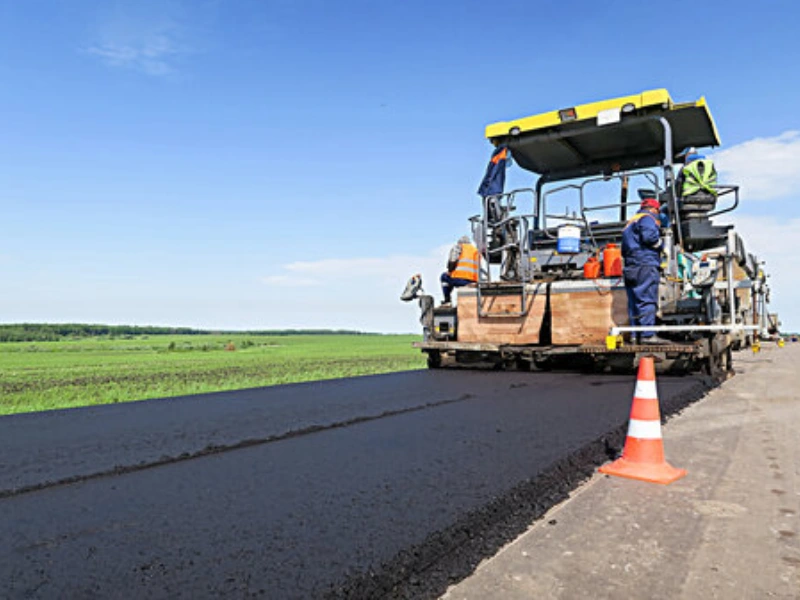

| Small Road and Rural Road Construction: | For projects with limited scale, large equipment investment is too high. Small equipment occupies less space, offers flexible construction, and can quickly complete paving tasks. |
| Urban Renovation or Temporary Construction Projects: | For projects with tight schedules requiring rapid deployment, and scattered construction sites, multiple deployment points are more convenient and reduce redundant transportation. |
| Remote Areas or Scattered Construction Sites: | For projects with limited transportation, transporting large equipment is difficult. Mini asphalt mixing plants for sale are easy to relocate, have low transportation costs, and high construction efficiency. |
| Industrial Park or Airport Road Repair: | For projects with high construction quality requirements but low output, mini asphalt plant can ensure mixing quality while saving space and resources. |
| Emergency Repair or Rapid Production Projects: | For projects with high temporary demand but where large equipment is undesirable, mini-mixing plants are an ideal choice for rapid installation and deployment. |
As you can see, these scenarios are where mini asphalt mixing plants excel—flexible, fast, low-cost, and while ensuring construction quality. Next, let’s look at some real-world examples to see the remarkable construction effects they can bring!
Mini Asphalt Plants in Action
Scenarios are merely advantages on paper; real-world projects are the true test. From small-scale road construction to remote site applications, mini asphalt plants demonstrate their unique value in every case, showcasing their flexibility, efficiency, and low cost.
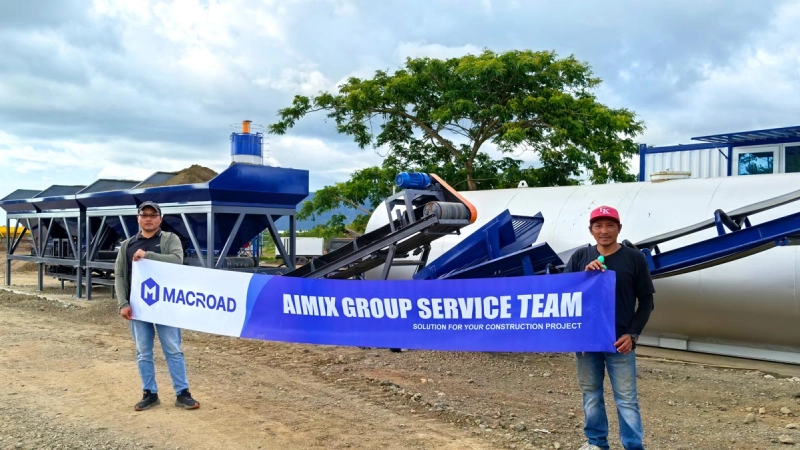
Flexible & Cost-Effective — ALT40 Project for Rural Roads in Fiji
- Project Challenge: The rural road sections in Fiji were scattered with narrow road widths and limited budget, requiring a cost-effective solution without compromising quality.
- Equipment Highlights: ALT40 stands out for its compact design, high-precision weighing system, and consistent mixing quality, enabling fast installation and operation even in limited space.
- Final Outcome: The project was completed smoothly, with stable road paving quality, reducing construction costs by approximately 20% and significantly enhancing cost efficiency.
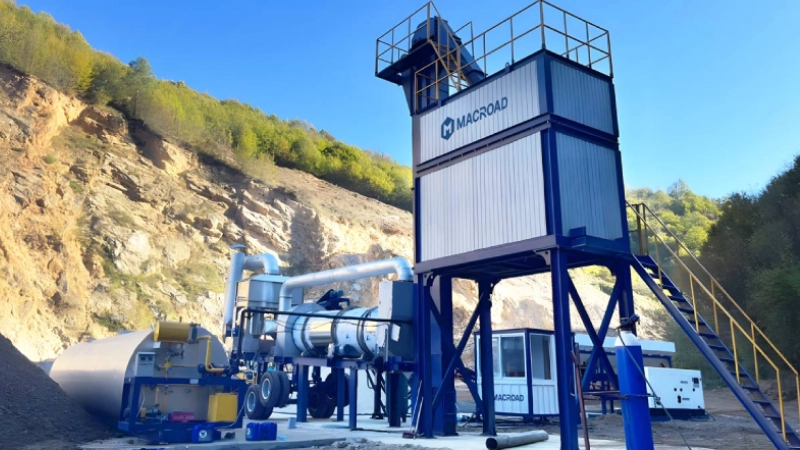
Effortless Multi-Site Operations — ALYT40 Temporary Project in Bosnia
- Project Challenge: Multiple construction sites with tight deadlines required equipment that could be quickly dismantled and transported.
- Equipment Highlights: ALYT40’s modular design and fast relocation system enabled seamless operations across multiple sites.
- Final Outcome: Construction efficiency increased by about 30%, with each site quickly operational to meet the tight project schedule.
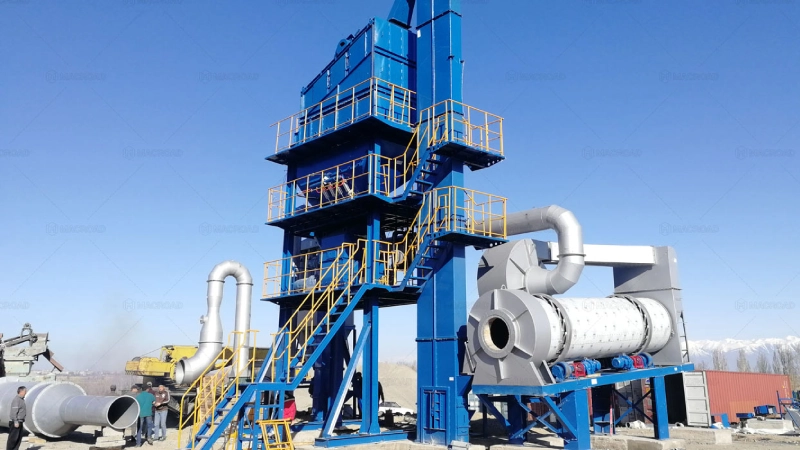
High-Standard Construction — ALQ60 Industrial Park Project in Kazakhstan
- Project Challenge: The industrial park required high road smoothness and durability, with limited space, demanding both quality and compact equipment.
- Equipment Highlights: ALQ60 provided precise weighing and efficient mixing systems, maintaining road construction standards even in limited space.
- Final Outcome: The park’s roads were paved successfully, meeting design standards, and the equipment’s flexibility ensured uninterrupted construction.
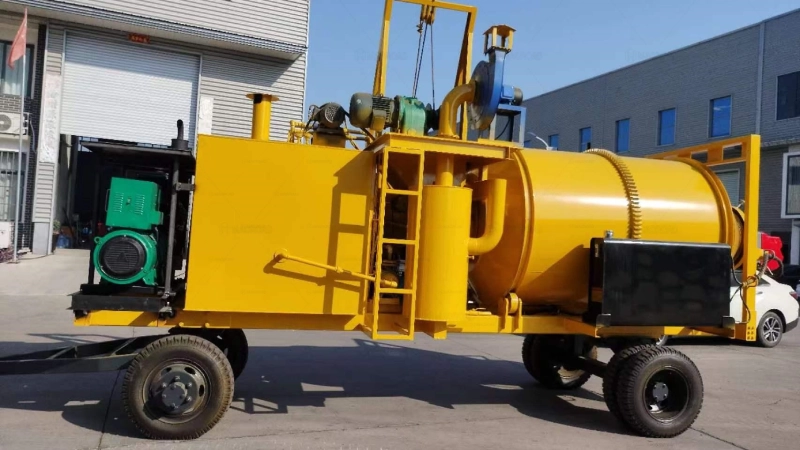
Speed is Key — Asphalt Mixer Machine for Emergency Repairs in the Philippines
- Project Challenge: Sudden road damage required rapid output and immediate construction; traditional large-scale equipment could not respond quickly.
- Equipment Highlights: The compact asphalt mixer machine offered rapid output and high mobility, completing temporary construction tasks in minimal time.
- Final Outcome: Emergency repairs were completed within the planned timeframe, restoring road access and significantly improving response speed.
Flexible Selection, Perfect Fit
After reviewing these real-world projects, you might have realized that a mini asphalt mixing plant isn’t just a single piece of equipment, but a complete solution that can flexibly adapt to different construction needs.
Whether you’re pursuing higher cost-effectiveness, frequent site relocation, or have higher requirements for construction quality, different types of asphalt plants have their own more suitable applications. Next, we’ll outline several common equipment types available at Macroad to help you more clearly find the one best suited for your project.
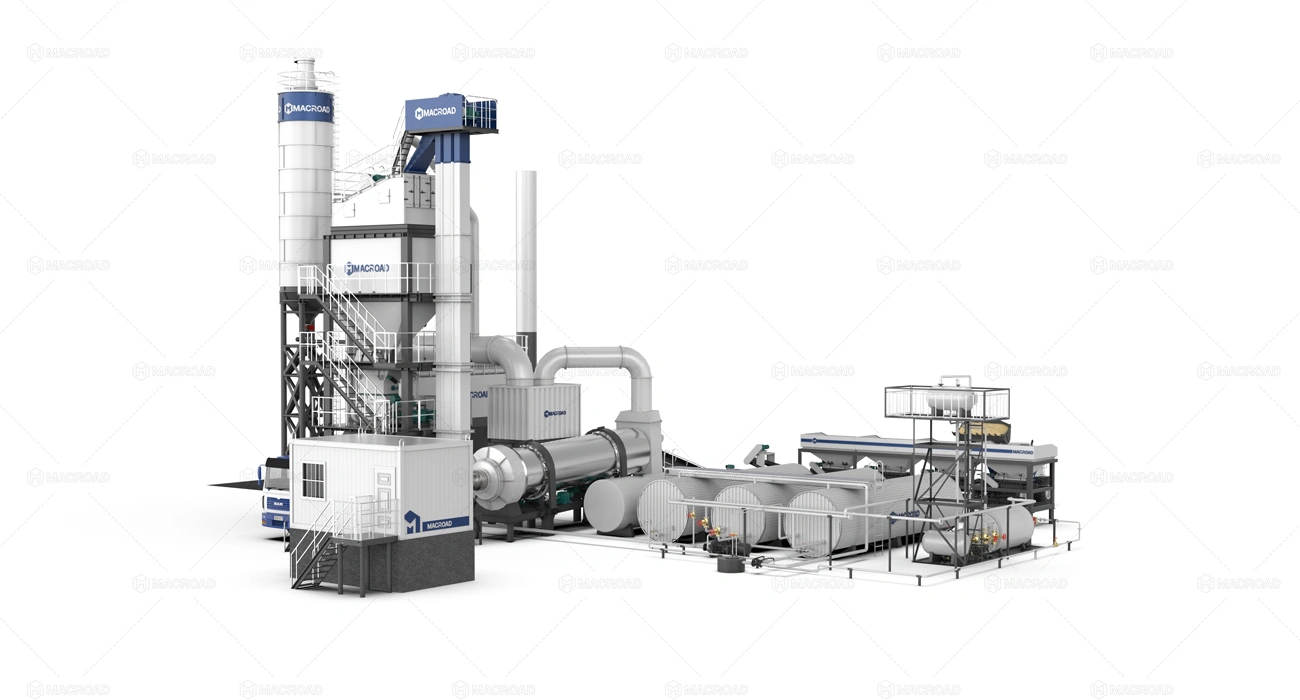
ALQ Series — Stable Output
- Efficient deployment in confined spaces, reducing pre-construction pressure: The compact design integrates the full production process within a limited footprint, enabling fast on-site setup without complex preparation.
- Batch production ensures stable quality control in small-scale projects: Even with lower output, each batch is independently controlled, maintaining consistent mix quality and meeting strict construction standards.
- Reliable operation for long-duration, small-scale projects: Designed for extended use without frequent relocation, the ALQ series asphalt batch mix plant provides stable, continuous production with minimal fluctuation.
| Model | ALQ40 | ALQ60 | ALQ80 | ALQ100 | ALQ120 | ALQ160 | ALQ200 | ALQ240 | ALQ320 |
|---|---|---|---|---|---|---|---|---|---|
| Output(t/h) | 40 | 60 | 80 | 100 | 120 | 160 | 200 | 240 | 320 |
| Cold Aggregate Feeding System | 4×4.5m³ | 4×6.5m³ | 4×8m³ | 4×8m³ | 5×9m³ | 5×12m³ | 5×12m³ | 5×12m³ | 6×15m³ |
| Hopper Capacity(m) | 4*4.5 | 4*6.5 | 4*8 | 4*8 | 5*9 | 5*12 | 5*12 | 5*12 | 6*15 |
| Collect Belt Capacity(t/h) | 60 | 80 | 100 | 120 | 140 | 200 | 220 | 280 | 360 |
| Dryer Size(m) | φ1.2*5.2 | φ1.5*6 | φ1.5*6.7 | φ1.65*7 | φ1.8*8 | φ2.2*9 | φ2.6*9 | φ2.6*9.5 | φ2.8*10.2 |
| Dryer Capacity (t/h) | 60 | 80 | 100 | 120 | 140 | 180 | 240 | 260 | 360 |
| Fuel Max Consumption(kg/h) | 300 | 450 | 550 | 700 | 950 | 1200 | 1400 | 1700 | 2250 |
| Vibrating Screen(Layer) | 4 | 4 | 4 | 4 | 4 | 5 | 5 | 5 | 6 |
| Aggregate Metering hopper(kg) | 500 | 800 | 1000 | 1250 | 1500 | 2000 | 2500 | 3000 | 4000 |
| Mineral Flour Metering hopper (kg) | 120 | 150 | 200 | 200 | 300 | 300 | 320 | 600 | 700 |
| Bitumen Metering hopper (kg) | 100 | 120 | 150 | 150 | 250 | 250 | 250 | 480 | 500 |
| Weighing accuracy | aggregate:±0.5% Mineral Flour:±0.25% Bitumen:±0.25% | aggregate:±0.5% Mineral Flour:±0.25% Bitumen:±0.25% | aggregate:±0.5% Mineral Flour:±0.25% Bitumen:±0.25% | aggregate:±0.5% Mineral Flour:±0.25% Bitumen:±0.25% | aggregate:±0.5% Mineral Flour:±0.25% Bitumen:±0.25% | aggregate:±0.5% Mineral Flour:±0.25% Bitumen:±0.25% | aggregate:±0.5% Mineral Flour:±0.25% Bitumen:±0.25% | aggregate:±0.5% Mineral Flour:±0.25% Bitumen:±0.25% | aggregate:±0.5% Mineral Flour:±0.25% Bitumen:±0.25% |
| Mixer Capacity(kg) | 500 | 800 | 1000 | 1250 | 1500 | 2000 | 2500 | 3000 | 4000 |
| Cycle Time(s) | 45 | 45 | 45 | 45 | 45 | 45 | 45 | 45 | 45 |
| Dust filter (Bag dust filter) | |||||||||
| Filter Area(m2) | 230 | 300 | 420 | 480 | 550 | 650 | 700 | 1050 | 1350 |
| Draught Fan(kw) | 22 | 30 | 45 | 55 | 90 | 110 | 2*75 | 2*90 | 2*110 |
| Asphalt Temperature (⊥) | 140-180 | 140-180 | 140-180 | 140-180 | 140-180 | 140-180 | 140-180 | 140-180 | 140-180 |
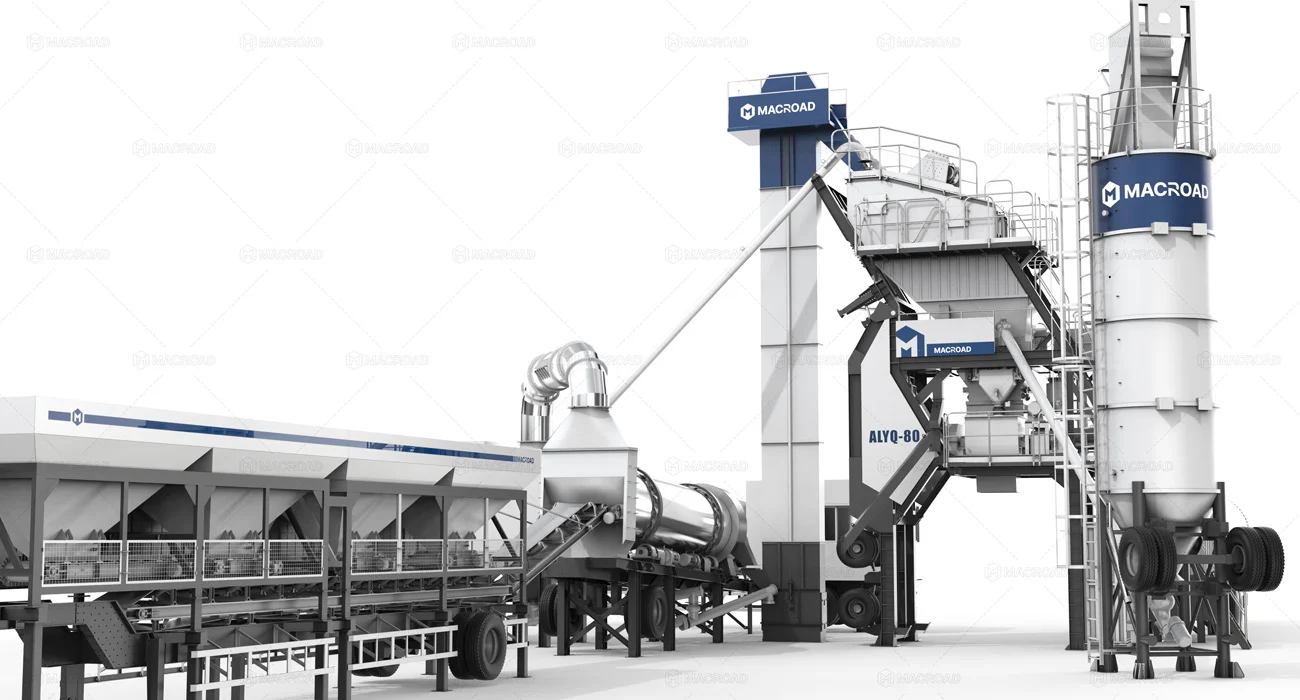
ALYQ Series — Convenient Relocation
- Flexible relocation across sites to maximize equipment utilization: The lightweight, modular design enables quick transfer between projects without heavy-lift cranes, keeping equipment aligned with project needs.
- Mobility without compromising production precision: Retaining a batch-type structure, the ALYQ ensures accurate mix ratios and consistent quality across different job sites.
- Lower setup costs and improved project efficiency: By eliminating complex civil foundations, the mobile asphalt batch mix plant reduces fixed investment, making it ideal for short-term, emergency, and maintenance projects.
| Model | ALYQ60 | ALYQ80 | ALYQ100 | ALYQ120 |
|---|---|---|---|---|
| Output (t/h) | 60 | 80 | 100 | 120 |
| Hopper Capacity(m) | 4*6.5 | 4*7.5 | 4*7.5 | 4*7.5 |
| Collect Belt Capacity (t/h) | 80 | 100 | 120 | 140 |
| Dryer Size(m) | φ1.5*6 | φ1.5*6.7 | φ1.65*7 | φ1.8*8 |
| Dryer Capacity(t/h) | 80 | 100 | 120 | 140 |
| Fuel Max Consumption(kg/h) | 450 | 550 | 700 | 950 |
| Mixing Tower(kW) | 54 | 63.5 | 104.5 | 125 |
| Vibrating Screen (Layer) | 4 | 4 | 4 | 4 |
| Aggregate Metering hopper(kg) | 800 | 1000 | 1300 | 1500 |
| Mineral Flour Metering hopper(kg) | 150 | 200 | 200 | 300 |
| Bitumen Metering hopper(kg) | 120 | 150 | 150 | 250 |
| Weighing accuracy | aggregate:±0.5% Mineral Flour:±0.25% Bitumen:±0.25% | aggregate:±0.5% Mineral Flour:±0.25% Bitumen:±0.25% | aggregate:±0.5% Mineral Flour:±0.25% Bitumen:±0.25% | aggregate:±0.5% Mineral Flour:±0.25% Bitumen:±0.25% |
| Mixer Capacity(kg) | 800 | 1200 | 1300 | 1700 |
| Cycle Time(s) | 45 | 45 | 45 | 45 |
| Filter Area(m2) | 370 | 420 | 480 | 510 |
| Draught Fan (kw) | 30 | 45 | 55 | 90 |
| Asphalt Temperature (⊥) | 140-180 | 140-180 | 140-180 | 140-180 |
| Total power(kw) | 200 | 300 | 350 | 380 |
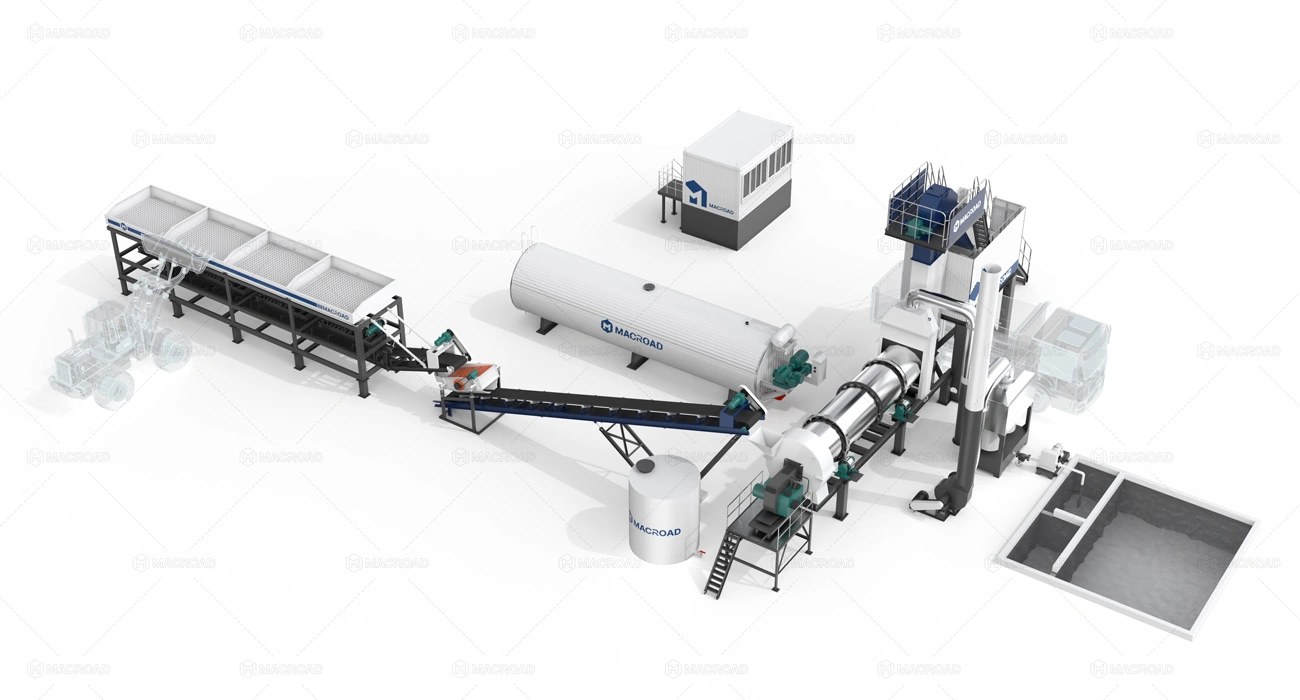
ALT Series — Continuous Efficiency
- Continuous material supply for smoother construction flow: The ALT series stationary asphalt plant ensures uninterrupted production, reducing downtime and keeping small-to-medium projects running efficiently.
- Simplified operation for small-to-medium teams: With a more straightforward structure, the ALT series is easy to operate and maintain, making it ideal for projects with limited personnel.
- Balanced cost and performance for better efficiency: By simplifying system complexity while maintaining stable output, the ALT series helps keep overall project costs under control.
| Model | ALT20 | ALT40 | ALT60 | ALT80 | ALT100 |
|---|---|---|---|---|---|
| Output (t/h) | 20 | 40 | 60 | 80 | 100 |
| Power Fuel Oil(kw) | 34 | 65 | 105 | 135 | 170 |
| Power Burning Coal (kw) | 40 | 75 | 120 | 165 | 200 |
| Cold Aggregate Feeding System | 3.5m3*1 | 4m3*4 | 4m3*4 | 6.5m3*4 | 6.5m3*4 |
| Finihnsed Asphalt Storage Bin (t) | 3 | 3 | 7 | 7 | 9 |
| Asphalt Temperature (℃) | 120-180 | 120-180 | 120-180 | 120-180 | 120-180 |
| Fuel Consumption Fuel Ol (kg/t) | 5-7.5 | 5-7.5 | 5-7.5 | 5-7.5 | 5-7.5 |
| Fuel Consumption Buning Coal(kg/t) | 13-15 | 13-15 | 13-15 | 13-15 | 13-15 |
| Asphalt Tank (t) | 10 | 20 | 30 | 30 | 35 |
| Control Room(m) | 2.2 | 2.2 | 3 | 3 | 3.5 |
| Option: Bag Dust Filter | Bag Dust Filter | Bag Dust Filter | Bag Dust Filter | Bag Dust Filter | Bag Dust Filter |
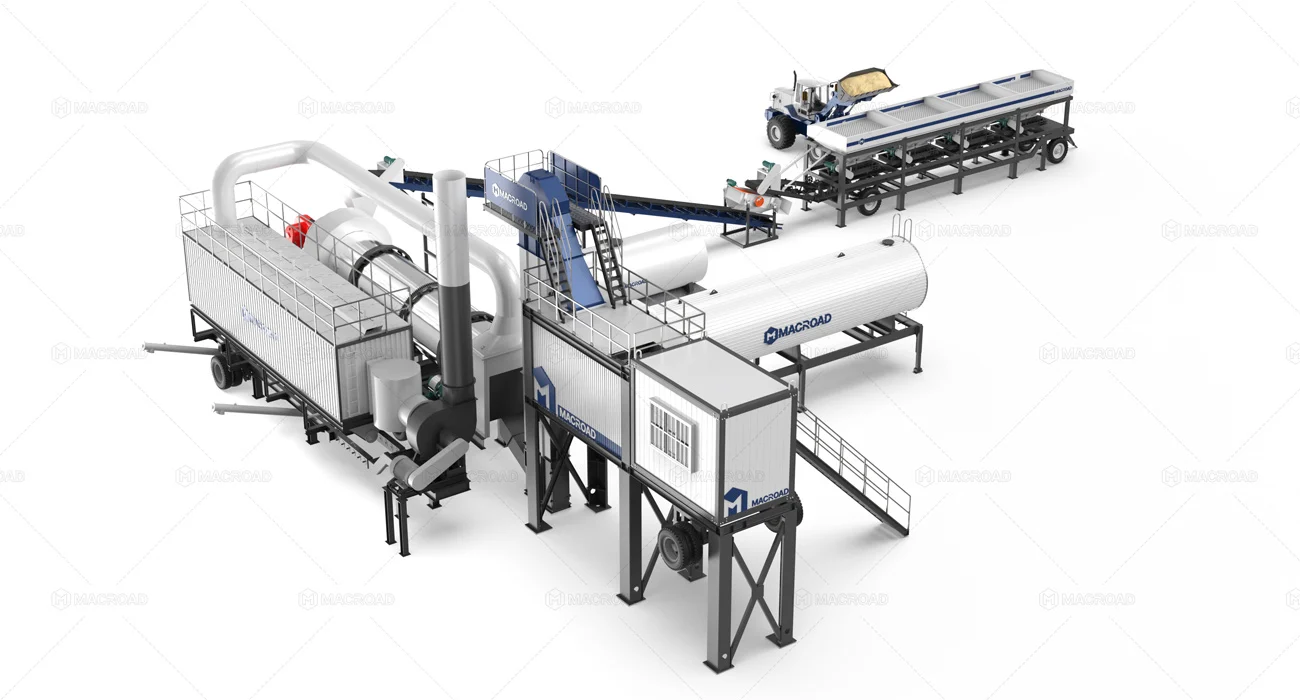
ALYT Series — Flexible Feeding Solutions
- Higher utilization across multiple job sites: The ALYT series mobile drum mix plant allows one unit to serve multiple locations, improving efficiency for decentralized small-to-medium projects.
- Faster relocation for tight project schedules: Rapid transfer between sites keeps the equipment in operation, helping maintain a steady and predictable construction pace.
- Simplified structure for easier operation and maintenance: With fewer components and a more intuitive design, the ALYT reduces maintenance effort and is well-suited for projects with limited manpower.
| Model | ALYT20 | ALYT40 | ALYT60 | ALYT80 | ALYT100 |
|---|---|---|---|---|---|
| Output (t/h) | 20 | 40 | 60 | 80 | 100 |
| Power Fuel Oil(kw) | 34 | 65 | 105 | 135 | 170 |
| Power Burning Coal (kw) | 40 | 75 | 120 | 165 | 200 |
| Cold Aggregate Feeding System | 3.5m3*1 | 4m3*4 | 4m3*4 | 6.5m3*4 | 6.5m3*4 |
| Finihnsed Asphalt Storage Bin (t) | 2 | 2.5 | 4.5 | 5 | 7 |
| Asphalt Temperature (℃) | 120-180 | 120-180 | 120-180 | 120-180 | 120-180 |
| Fuel Consumption Fuel Ol (kg/t) | 5-7.5 | 5-7.5 | 5-7.5 | 5-7.5 | 5-7.5 |
| Fuel Consumption Buning Coal(kg/t) | 13-15 | 13-15 | 13-15 | 13-15 | 13-15 |
| Asphalt Tank (t) | 10 | 20 | 30 | 30 | 35 |
| Control Room(m) | 2.2 | 2.2 | 3 | 3 | 3.5 |
| Option | bag dust collector / water dust collector | bag dust collector / water dust collector | bag dust collector / water dust collector | bag dust collector / water dust collector | bag dust collector / water dust collector |
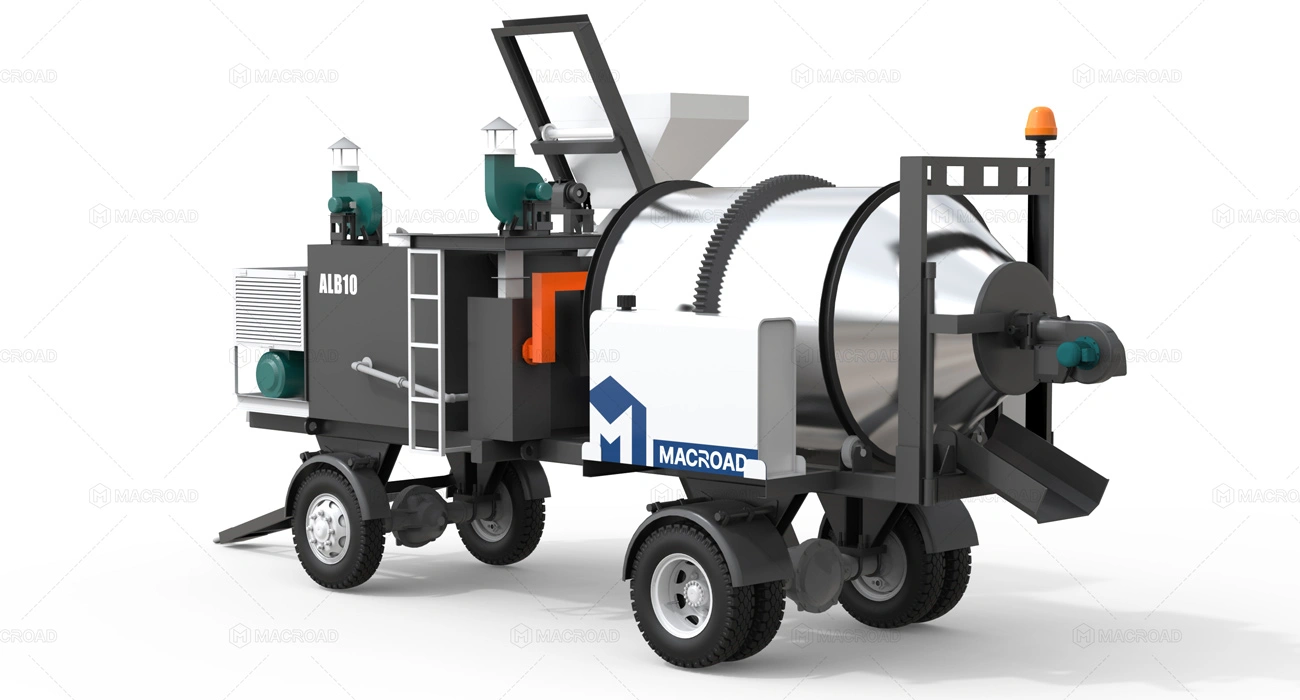
Asphalt Mixer Machine—Rapid Response
- Simplified mixing system to meet basic asphalt production needs: Employing a relatively simplified structural design, it reduces equipment complexity while ensuring basic mixing functions.
- Compact size for easy transport and rapid deployment: Suitable for space-constrained or temporary construction environments, asphalt mixer machine can be quickly put into use.
- Rapid discharge capacity to meet short-term construction needs: It can quickly provide the required mixture in emergency or localized construction situations.
| Item | Configuration | Specification | |
| Generator set | Model | 30kw/ALS-5 | |
| Diesel engine power | 30kw/ Weifang4100D | ||
| Mixer drum | Mixing capacity | T/batch | 1 |
| Mixing time | Min/batch | 10-15min/batch | |
| Output temperature | Kg/T | 3-4 | |
| Mixing drum | M3 | 3.88 | |
| Oil burner | RG5S | ||
| Feeding hopper | M3 | 350kg | |
| Other feature | Asphalt tank | L | 800L |
| Conduct oil tank | L | 200 | |
| Drum material | Double manganese plate | ||
| Rock wool thickness | mm | 50 | |
| Hot melt kettle | 4 layers, each layer is 5cm. from the inside to the outside it is asphalt oil layer, the conduct oil layer, the fire layer, the rock wool layer | ||
| Total weight | 4.5T | ||
| Outsize (mm) | 6*2.1*2.65 | ||
Mini vs. Conventional Asphalt Plants: Full-Cycle Cost Comparison
When choosing an asphalt mixing plant, many people’s first reaction is often to focus on the purchase price of the equipment itself. However, in actual projects, the real difference lies not only in asphalt mixing plant price, but also in the overall cost difference brought about by the equipment throughout the entire construction cycle.
From equipment investment and infrastructure construction to transportation, installation, and later operation and relocation, mini equipment demonstrate a lighter and more flexible mini asphalt plant cost in many key aspects.
The comparison table below can help you understand the differences between the two more intuitively.
| Mini Asphalt Plant | Cost Category | Conventional Asphalt Plant |
| Lower upfront cost, suitable for small to medium-sized projects | Equipment Investment | High initial investment, designed for large-scale, long-term projects |
| Minimal foundation requirements, reduced civil work | Foundation Cost | Requires full foundation construction, higher cost and longer preparation time |
| Compact size, easier and more economical to transport | Transportation Cost | Large equipment size, complex logistics and higher transport costs |
| Fast installation, quick commissioning, less downtime | Installation Time Cost | Longer installation period, extended time before production starts |
| Requires fewer operators due to simplified operation | Labor Cost | Needs more personnel for operation and maintenance |
| Simpler structure, lower maintenance burden | Maintenance Cost | More complex system, higher maintenance costs |
| Easy to dismantle and move, low relocation cost | Relocation Cost | Difficult to relocate, often not designed for mobility |
| Better matched to project scale, higher utilization | Utilization Rate | Risk of underutilization in small projects |
| Lower investment, faster payback period | Return on Investment | Higher investment, longer return cycle |
In suitable project scenarios, mini asphalt mixing plant not only reduce costs but also improve capital utilization efficiency, reduce waste, deploy quickly, and maximize utilization, making every investment more efficient.
Which Mini Asphalt Plant Is Faster and More Flexible?
Even among mini asphalt mixing plants, different models still exhibit significant differences in installation speed and relocation flexibility.
To help you compare them more intuitively, we analyze multiple dimensions, including installation cycle, relocation cycle, foundation requirements, operator needs, transportation convenience, and preparation workload, allowing you to easily choose the mini asphalt plant best suited for your project.
| Comparison Dimension | ALQ | ALYQ | ALT | ALYT | Asphalt Mixer Machine |
|---|---|---|---|---|---|
| Installation Time | Medium, requires foundation work | Fast, modular installation | Relatively fast, simple continuous structure | Fast, modular + drum design | Very fast, lightweight and portable |
| Relocation Time | Longer, not suitable for frequent moves | Short, quick assembly/disassembly | Long, not suitable for frequent moves | Short, modular + continuous production | Extremely short, very portable |
| Foundation Requirement | Medium | Low | Low | Low | Minimal |
| Operator Requirement | 3–5 persons | 2–3 persons | 2–3 persons | 2–3 persons | 1–2 persons |
| Transportation Convenience | Requires flatbed truck for transport | Modular transport | Drum transported as a whole, needs medium-sized vehicle | Modular + drum, easy transport | Small vehicle sufficient |
| Preparation Workload | Medium | Low | Low | Low | Minimal |
Although they are all mini asphalt mixing plants, different models are optimized for different project needs. By comparing the installation and relocation cycles, you can choose the most suitable mini model according to the characteristics of the project to maximize efficiency and make the most reasonable resource investment.
Selecting the Perfect Mini Asphalt Plant
You might be thinking: My project isn’t large, but I’m worried that buying equipment that’s too small won’t be enough; my project space is limited, but I’m worried that the equipment will be too large? Don’t worry, while mini asphalt mixing plants are small in size, each model has its own unique features.
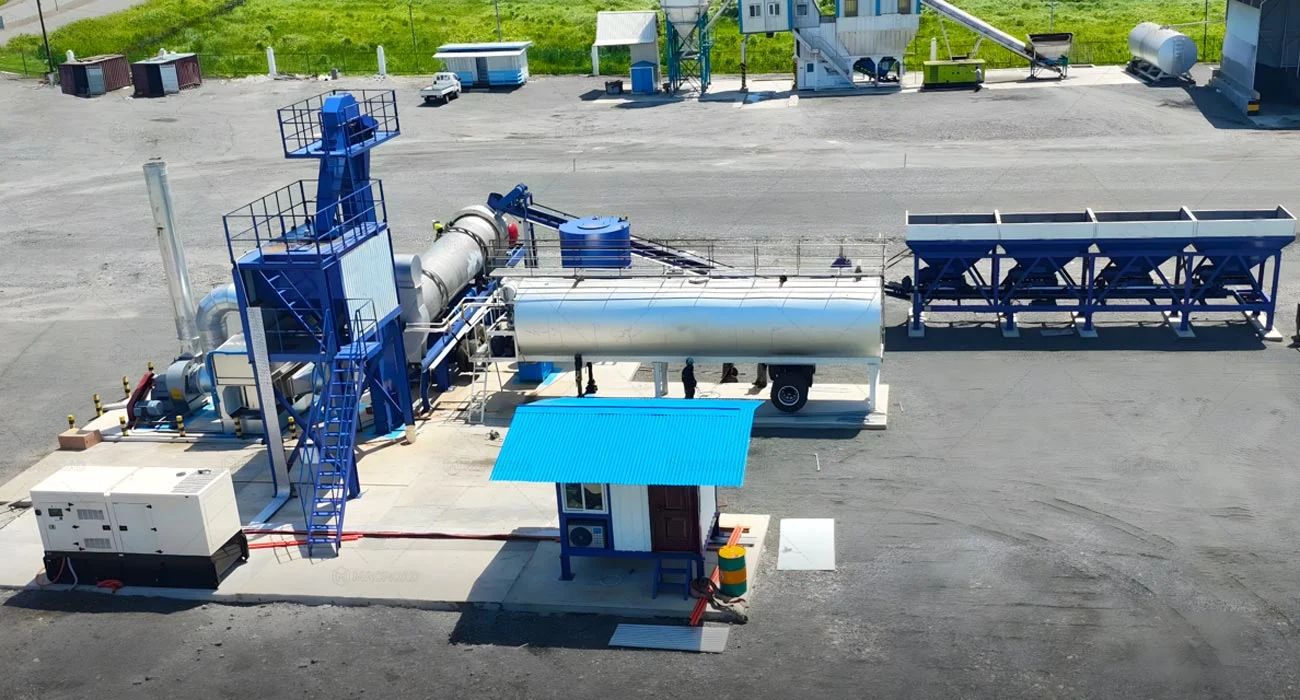
Choosing the right model will allow you to achieve the optimal balance between output, construction efficiency, relocation speed, and return on investment. Below, I’ll help you consider six key dimensions to tell you how to make the most suitable choice!
Select Production Capacity Based on Daily Project Volume
- Small/Emergency Construction: For daily construction volumes of 10–30 tons, lightweight and portable mini mixers can be quickly put into operation, suitable for temporary repairs or small-scale construction, while reducing waiting time and transportation costs.
- Medium-Sized Road or Short-Term Urban Projects: For daily construction volumes of 30–60 tons, mini asphalt batch plant can provide precise proportioning and high-quality output, while also offering quick installation, suitable for short construction cycles.
- Continuous Production or Medium-Sized Industrial Projects: For daily construction volumes of 60–100 tons, continuous drum mixers can ensure continuous material supply and stable output, reducing operational interruptions and improving overall construction efficiency.
Select Structure Based on Construction Location and Space Conditions
- Limited Space and Frequent Relocation: If the construction site is narrow or requires frequent relocation, modular mobile equipment is the most suitable choice, allowing for quick assembly and disassembly and reducing transportation difficulties.
- Fixed Construction Sites: If the construction site is fixed and requires long-term continuous production, fixed mini models are stable and reliable, ensuring consistent batch quality of the mixture.
- Special Environment Construction: In situations with limited site space or construction environment, small portable mixers are compact, low-noise, and adaptable to special site requirements.
Considering Relocation Frequency and Construction Cycle
- Multi-Site Construction: For projects requiring construction in different locations, mobile equipment allows for rapid relocation, saving time and labor costs and improving multi-point construction efficiency.
- Single-Point Long-Term Construction: For long-term fixed construction projects, stationary or continuous drum mixers can maintain stable output and construction quality, avoiding efficiency decline due to frequent relocation.
- Short-Cycle Projects: For short-term construction or emergency repairs, choosing equipment that is quick to install and easy to disassemble can reduce waiting and preparation time, shortening the overall construction period.
Matching Operation Team and Management Capabilities
- Small Teams or Limited Experience: Simple to operate and highly automated equipment reduces operational difficulty, allowing small teams to complete construction efficiently.
- Large Teams or High-Precision Requirements: High-precision intermittent or continuous drum mixers ensure consistent output quality, meeting the mixing precision requirements of large team construction projects.
- Training Cost Considerations: Modular and standardized operating equipment allows for quick learning, reducing training time and manpower investment, and improving overall construction efficiency.
Comprehensive Budget and Return on Investment
- Small Projects: Lightweight, portable equipment with low initial investment reduces one-time expenditures and allows for flexible adaptation to changes in project scale, avoiding idle funds.
- Medium-Sized Projects: Moderate output and continuous feeding equipment, although requiring slightly higher investment, improves construction efficiency and material utilization, resulting in more stable returns.
- Long-Term or Multi-Project Use: Appropriately increasing investment to choose mini equipment with high stability and long service life can ensure long-term construction benefits and achieve a higher return on investment.
Consideration of Construction Materials and Mixing Requirements
- Small Batch Diverse Materials: Portable equipment allows for flexible mixing of various material proportions to adapt to different construction needs and improve on-site adaptability.
- Large Batch Standardized Mixing: Continuous drum or intermittent mini equipment can maintain uniform mixing and stable quality, meeting large-scale construction standards.
- Special Mixing Requirements: For example, high-precision weighing or special blade mixing requirements, models equipped with precision weighing systems or adjustable blades should be selected to ensure consistent mixture quality.
Choosing a mini asphalt plant isn’t about choosing the smallest possible one, but rather selecting the one that best suits your needs. Consider your construction scale, site conditions, and relocation requirements to maximize equipment efficiency and ensure a more rational investment. Still hesitating? Contact our professional team to help you select the perfect mini asphalt mixing plant for your project!
Mini Asphalt Plants Are Trending — Don’t Miss Out!
Are you wondering: Is there really a market for mini asphalt mixing plants? Or are they just emergency equipment?
Actually, with the increasing demand for small roads, rural renovations, scenic area construction, and rapid emergency projects, mini asphalt mixing plants are becoming a flexible, efficient, and economical construction tool. Next, we’ll analyze the market prospects of mini asphalt plants from several key dimensions to help you understand the opportunities in this category.
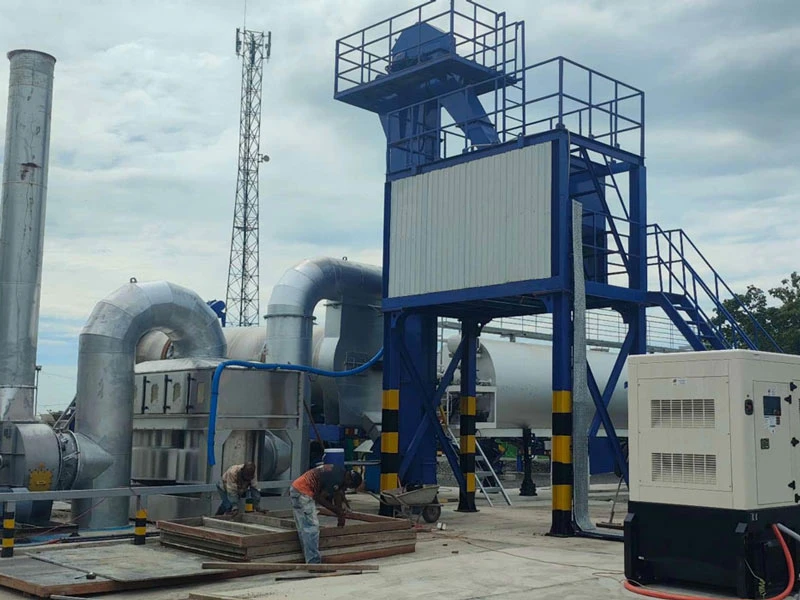
Increased Demand for Infrastructure Construction
- Rural Road Renovation: The extension, repair, and maintenance of rural roads are continuously increasing in various countries, creating a high demand for small, flexible equipment.
- Municipal Road Construction: Short-cycle, rapid construction projects are becoming increasingly common, making small and medium-sized asphalt mixing plants more suitable for these scenarios.
- Bridge and Scenic Road Construction: Limited space necessitates portable, flexible mini-equipment, perfectly matching the needs of small projects.
Flexible Construction and Rapid Response Become Trends
- Increased Demand for Emergency Repairs: Temporary road repairs and sudden construction scenarios require equipment for rapid material discharge, which small mini-mixing plants perfectly meet.
- Multi-Site Dispersed Construction: Dispersed projects and frequent short-term construction require mobile mini-equipment for rapid relocation, improving construction efficiency.
- Shorter Construction Cycles: More and more projects require rapid delivery, making mini-mixing plants the preferred choice due to their quick installation and commissioning.
Cost Control and Return on Investment are Emphasized
- Cost Sensitiveness in Small Projects: Small-volume equipment requires low initial investment, avoiding idle funds, and has low operating costs.
- Flexible Response to Projects of Different Sizes: Mini-mixing plants can be flexibly deployed according to project needs, improving return on investment.
- Reduced transportation and installation costs: Lightweight and modular equipment reduces relocation and construction preparation costs, improving overall economic efficiency.
Technological upgrades and intelligentization drive market expansion
- Intelligent operating system: Remote monitoring, automatic batching, and precise weighing enable even small equipment to achieve high-efficiency and high-quality construction.
- Modularity and scalability: Customers can combine different models according to project needs to meet diverse construction scenarios.
- Enhanced durability: Long lifespan of key components and convenient maintenance reduce long-term operating costs and enhance market competitiveness.
The market opportunity for mini asphalt mixing plants is clear—flexible construction, efficient output, and low-cost investment are becoming the trend.
If your project truly needs a mini asphalt mixing plant, don’t wait any longer! Take action now and get the perfect mini equipment for your project, making construction more efficient and investment more reasonable!
Mini Equipment, Maximum Service
When choosing a mini asphalt mixing plant, while the equipment itself is important, the asphalt plant manufacturers’ service is equally crucial to the success of the project.
By purchasing mini asphalt plant from Macroad, you not only get a compact and efficient mixing plant, but also enjoy comprehensive services specifically designed for mini equipment. From installation to daily operation, every step is guaranteed, making construction smoother and your investment more secure.

Installation and Commissioning Support
- Quick Start Installation: Detailed installation instructions and site layout plans are provided for mini-equipment, minimizing space occupation and construction preparation time.
- On-site Commissioning Optimization: Ensures accurate batch output and uniform mixing for each small batch, while adjusting operating parameters to adapt to different road surfaces and construction materials, guaranteeing that the mixture quality meets standards.
- Remote Guidance and Monitoring: Even without an experienced on-site team, installation and commissioning can be completed through remote video guidance and IoT monitoring, quickly resolving issues and avoiding construction delays.

Operation and Technical Support
- Operation Training: Simplified training courses designed for mini asphalt mixing plants cover equipment operation, daily maintenance, and troubleshooting, enabling construction teams to quickly get started and operate efficiently.
- Maintenance Guidance: Provides a list of key consumable components, maintenance cycles, and operating procedures for mini-equipment, ensuring long-term stable operation and extending service life.
- Intelligent Monitoring Support: For mini-equipment with automation functions, IoT monitoring and data analysis are provided to help you monitor equipment operating status at any time and improve production efficiency.
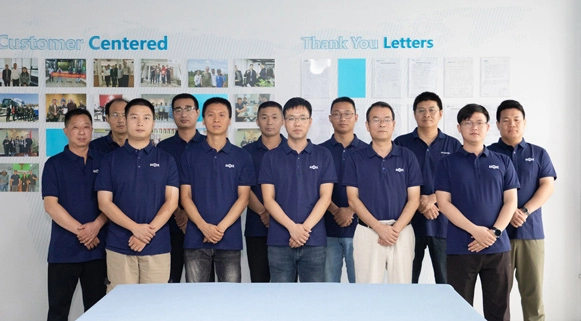
Construction and Project Support
- Construction Plan Optimization: Based on the characteristics of the mini asphalt mixing plant and the actual site conditions, we provide optimal construction layout and process planning to maximize the efficiency of this small device.
- Rapid On-Site Response: Whether it’s an operational issue or a sudden malfunction, the Macroad team can quickly arrive on-site or provide remote guidance to ensure uninterrupted construction.
- Project Management Assistance: We provide support for construction progress monitoring, production statistics, and material management, enabling the mini-equipment to operate efficiently and allocate resources effectively within the project.
At Macroad, mini equipment doesn’t equal mini service. From installation and commissioning to operation training and construction project support, every step is optimized for mini asphalt mixing plants, making your construction more efficient and your investment more secure.
Mini Asphalt Plants: Efficiency Starts Here
Mini asphalt mixing plants are not only compact in size, but also offer significant advantages in output, flexibility, and cost control. Whether for rural roads, short-term urban projects, or emergency repairs, they make construction easier and your investment more cost-effective.

Don’t let hesitation slow down your project. Contact the Macroad professional team today to choose the mini asphalt plant suppliers that best suited for your project and maximize the value of every investment!