

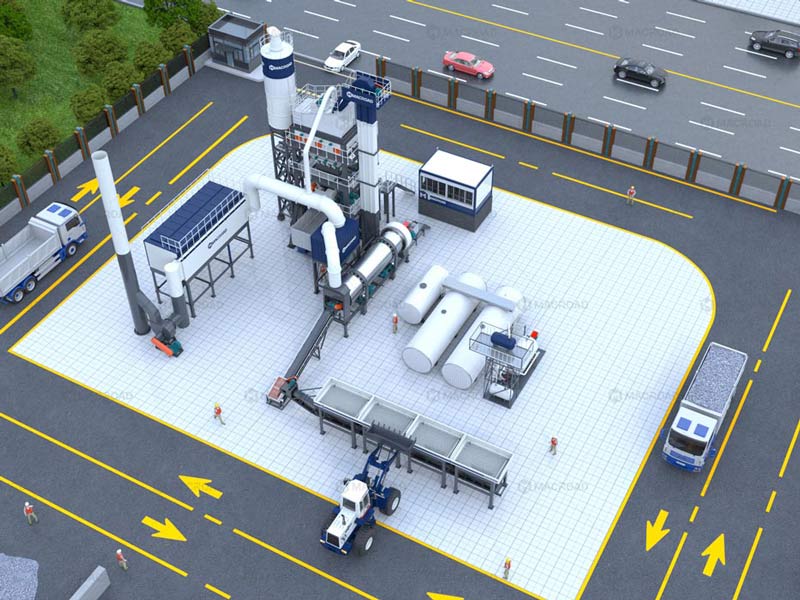
In road construction projects, the layout of the asphalt mixing plant often determines the efficiency of construction organization and the convenience of subsequent operations. Engineers must consider a combination of factors, including equipment arrangement, material flow, and operating space, within the constraints of limited site conditions.
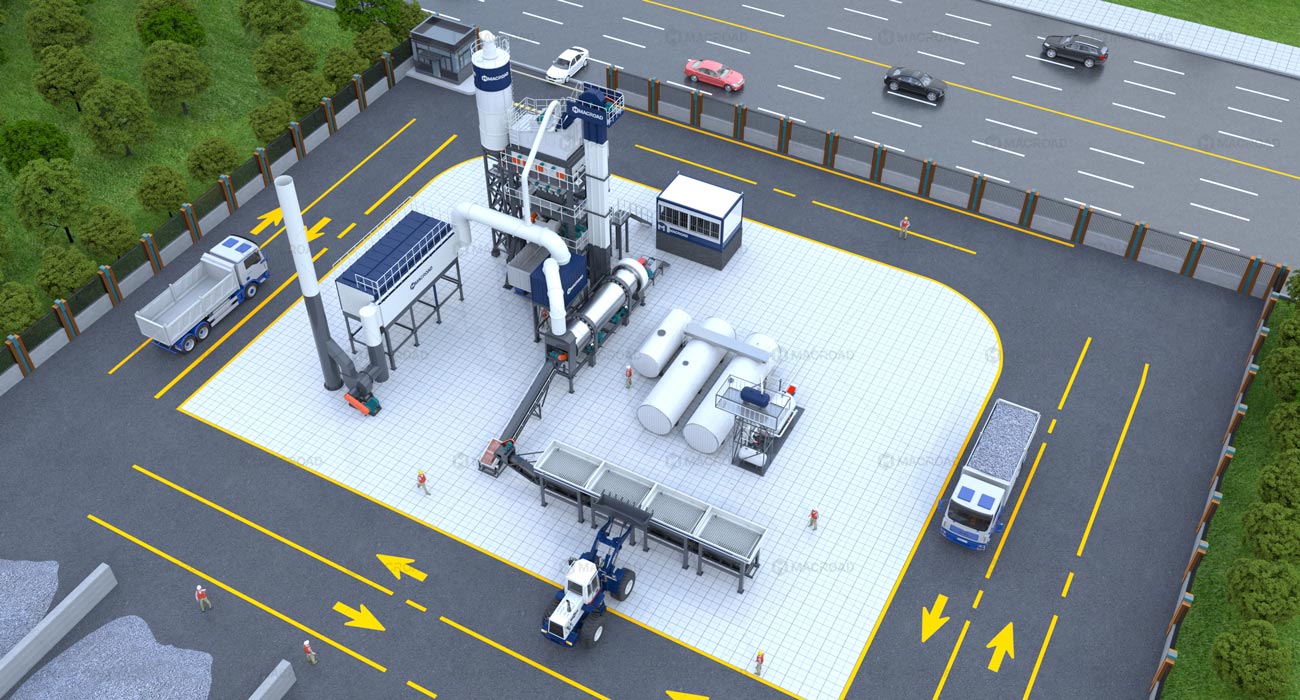
Horizontal and vertical layouts are common options, each exhibiting different characteristics in terms of land requirements, construction sequence, operational accessibility, and maintenance convenience. Whether in flat, hilly, or mountainous construction sites, and whether for temporary construction points or long-term operating plants, these differences influence the decision-making logic of construction organization and operational management, ultimately determining the overall construction efficiency and operating costs of the entire project.
Horizontal vs. Vertical Layouts: What to Know Before Choosing
When planning the layout of an asphalt mixing plant, a fundamental question often arises: how do site conditions, construction requirements, and material flow affect the choice of layout? In practice, this question usually boils down to two types of layout approaches – horizontal and vertical. Each layout method has its own engineering logic and characteristics, and understanding these essential differences is the crucial first step before making decisions regarding site adaptation, construction organization, and operational management.
Engineering Implications of Horizontal Layout
Horizontal layout typically refers to a site organization method where equipment and functional modules are arranged on a plane at similar elevations. Its main characteristics include:
- Planar arrangement of equipment: Functional modules such as aggregate bins, mixing plants, and asphalt tanks are arranged horizontally, resulting in a larger footprint.
- Convenient operation: The planar layout makes equipment maintenance, material transportation, and personnel operation more intuitive and easier to manage.
- Horizontal material handling: Aggregates, powders, and asphalt are mainly transported horizontally via belts or pumps, resulting in a planar material flow.
This layout is common in construction sites with ample space and flat terrain, and is also suitable for rapid setup at temporary construction sites.
Engineering Implications of Vertical Layout
Vertical layout refers to a station organization method that fully utilizes elevation differences in the vertical direction, layering functional modules on top of each other. Its main characteristics include:
- Three-dimensional space utilization: By constructing elevated platforms or multi-story structures, modules are stacked vertically, saving horizontal land area.
- Gravity-dependent material flow: Aggregates and powders can naturally fall to the weighing or mixing positions using gravity, reducing the need for horizontal conveying equipment.
- High demands on structure and foundation: Due to the stacking of modules, high demands are placed on foundation bearing capacity and structural stability, making construction organization more complex.
Vertical layout is suitable for projects with limited space or those requiring maximized space utilization, and is particularly common in mountainous areas, areas with significant elevation differences, or urban fringe construction sites.
Horizontal layout vs. Vertical layout
| Horizontal layout | Dimension | Vertical layout |
| The equipment is arranged horizontally, requiring a large footprint. | Spatial organization | The functional modules are stacked vertically, resulting in a small footprint and efficient use of space. |
| Materials are primarily transported horizontally, relying on conveyor belts/pumps. | Material flow | The materials fall by gravity, reducing the need for horizontal conveying equipment. |
| Generally, the construction is relatively simple. | Basic load-bearing requirements | High, requiring high demands on foundation bearing capacity and structural stability. |
| The installation sequence is simple, and there is high coordination between lifting and construction. | Installation organization | The installation process is complex, and a high proportion of the work involves working at heights. |
| The equipment is arranged in a planar layout, providing ample space for maintenance and inspection. | Operation and maintenance | The proportion of work performed at high altitudes is large, making maintenance and safety management particularly challenging. |
| The main risks are related to ground operations. | Safety Management | Working at heights and platform structures increase safety risks. |
| The functional modules are distributed horizontally, and the weighing system is decentralized. | Material storage and weighing | Each module is vertically integrated, and the weighing system is highly compact. |
| Plains, wide construction sites, temporary construction stations | Applicable scenarios | Significant elevation differences, restricted sites, long-term operating equipment, and construction in urban or mountainous areas. |
Site Conditions: The First Step in Layout Selection
After understanding the definitions and differences between horizontal and vertical layouts, the first thing engineers often ask themselves when making layout decisions is: can this layout plan actually be implemented under the existing site conditions?
Site conditions are the first screening criterion for asphalt mixing plant layouts; they determine which plans are ruled out from the start and which can proceed to further analysis. A wide, flat plot of land may allow for a smooth horizontal layout, while a narrow or uneven terrain makes a vertical layout a necessary consideration.
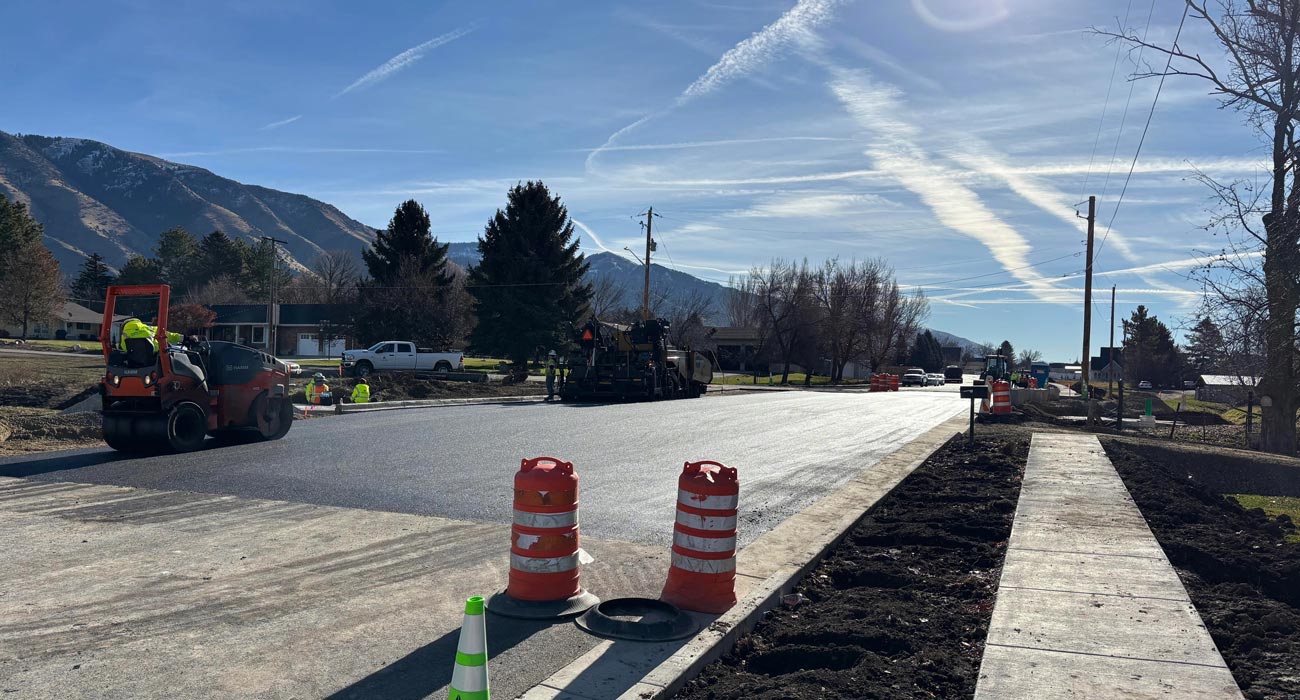
In engineering practice, site conditions can be analyzed from the following three aspects:
Available Area and Shape
- Plan Dimensions: Horizontal layouts typically require a larger footprint, as modules such as aggregate bins, mixing plants, and asphalt tanks need to be arranged horizontally. If the site length or width is insufficient, a horizontal layout may not meet the requirements for equipment spacing and operating space.
- Shape Limitations: Irregular or narrow sites may lead to wasted space or even make horizontal layouts impossible; vertical layouts can maximize site area utilization through module stacking.
- Reserved Space: The space reserved for construction vehicles, transportation routes, and maintenance access will also occupy planar space, further affecting the feasibility of the layout plan.
Topography and Elevation Differences
- Flat Terrain: Horizontal layouts are most suitable for flat sites like municipal roads construction, with relatively simple construction and installation, direct material transport paths, and convenient maintenance.
- Natural Elevation Differences: If the site has significant elevation differences, a vertical layout can fully utilize gravity flow, achieving natural material transport from top to bottom, reducing conveyor belt length and energy consumption.
- Terrain Remediation Costs: Leveling a site may require additional earthworks, increasing project costs and duration; proper utilization of elevation differences can reduce civil engineering investment, but requires more demanding foundation structures and construction organization.
Temporary/Permanent Construction Site Attributes
- Site Nature: Temporary construction sites usually require quick setup and easy dismantling, so the layout plan needs to simplify the installation process as much as possible; long-term operating stations require consideration of site stability and long-term production efficiency.
- Land Use and Space Utilization: Temporary construction sites have relatively flexible land use, allowing for larger horizontal layouts; long-term operating stations, due to land constraints or location on the outskirts of cities, can benefit from vertical layouts to save planar space and improve production capacity.
- Construction Convenience and Adjustment Flexibility: Temporary construction sites have short construction periods and frequent changes, making horizontal layouts easier to adjust and maintain; long-term construction sites have longer construction periods and larger investments, requiring more meticulous construction organization and foundation support once a vertical layout is determined.
Site conditions are the first screening criterion in the layout decision-making process for asphalt mixing plants, directly impacting the feasibility of the proposed solutions. By analyzing three dimensions—available area and shape, terrain undulation and elevation differences, and temporary/permanent site attributes—engineers can quickly determine which layout options are practically feasible in the early stages of a project. Correctly identifying site conditions not only helps eliminate unfeasible options but also provides a solid foundation for subsequent foundation design, construction organization, and material flow optimization.
Geology and Foundations: Safety Check for Layout Design
After confirming the feasibility of the site conditions, the engineers’ next step is to consider the impact of geological conditions and foundation engineering on the layout plan. Even if a site appears flat and spacious, if the foundation bearing capacity is insufficient or the soil properties are complex, the layout plan may still face safety hazards and construction risks.
Geological conditions not only affect the foundation design and construction plan but also directly relate to the long-term stability of the station. Horizontal and vertical layouts have different requirements in terms of foundation bearing capacity, structural stability, and safety management. Therefore, geological conditions become the second safety checkpoint in engineering decision-making regarding the layout plan.
Foundation Bearing Capacity
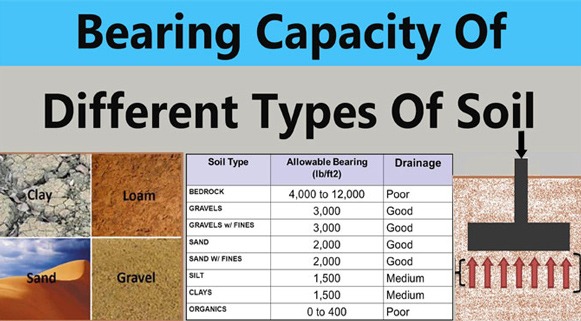
Foundation bearing capacity determines the distribution capacity of equipment loads on the foundation, thus affecting the feasibility and safety of horizontal and vertical layouts.
- Load Distribution Differences: Horizontal layouts have more dispersed loads, while vertical layouts have concentrated loads. Insufficient bearing capacity may rule out vertical layout options.
- Foundation Depth and Form: Low bearing capacity foundations may require deeper foundations or pile foundations, limiting the height of vertical layouts or the method of module stacking.
- Settlement Tolerance: Insufficient bearing capacity leads to uneven settlement, affecting the stability of vertical layout modules, while horizontal layouts are less affected.
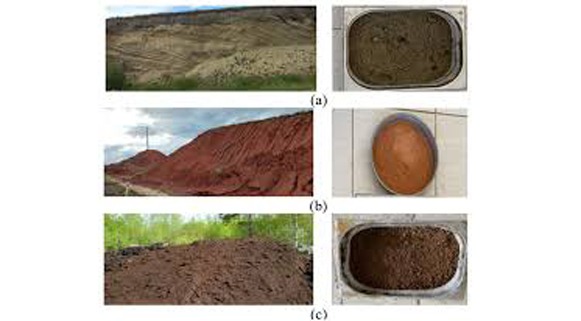
Soil Properties
Soil type, water content, and compressibility affect foundation stability, thus constraining the choice of layout methods.
- Soil Layer Bearing Differences: Soft soil, silt, and other soil layers may limit the height of vertical layouts or the number of stacked modules.
- Settlement Uniformity: Uneven settlement has a significant impact on high-rise stacking layouts, while horizontal layouts are relatively more tolerant.
- Long-term Stability: Changes in water content or soil softening may affect long-term operation, and vertical layouts are more sensitive.
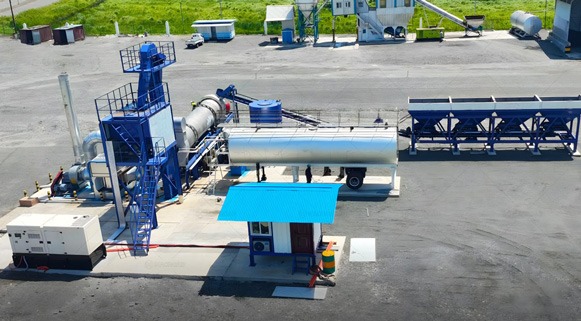
Equipment Module Support Foundation
The type of support foundation for asphalt hot mix plant modules directly determines the installability and stability of horizontal and vertical layouts. Different modules have different requirements for foundation bearing capacity and structural form, which in turn affects the choice of layout scheme.
- Foundation Bearing Capacity: Insufficient bearing capacity will limit the height and weight of vertical layout modules, while horizontal layouts are less affected due to dispersed loads.
- Foundation Type and Layout Method:
- Independent Foundation: Suitable for horizontal layouts, each module is supported independently, and construction is simple;
- Raft/Pile Foundation: Suitable for vertical layouts, requiring concentrated load bearing and reinforcement to ensure the stability of stacked modules.
- Module Adaptability: The foundation form determines the equipment arrangement and module connection method, directly affecting the feasibility of horizontal or vertical layout schemes.
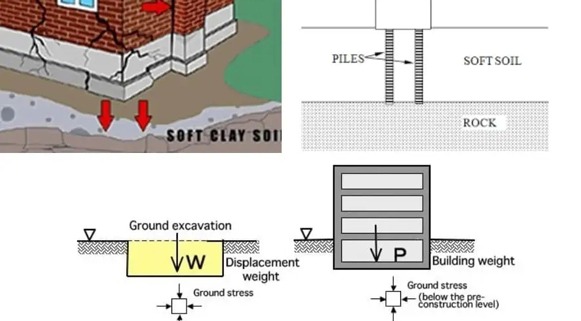
Potential Risks and Safety Constraints
The type of risk determines the feasibility and safety assessment focus of the layout scheme under geological conditions.
- Settlement Risk: Horizontal layouts are mainly affected by local settlement, while vertical layouts are more sensitive to overall module settlement.
- Structural Stability Risk: Module stacking increases the requirements for the stability of the foundation and connecting structures in vertical layouts.
- Operational Safety Risk: Vertical layouts involve high-altitude module operations, which places higher demands on layout scheme design and safety assessment.
Understanding the influence of geological conditions and foundation engineering on the layout plan helps engineers avoid unfeasible designs in the early stages, reduce construction risks, and ensure the long-term stability of the asphalt mixing plant. Both horizontal and vertical layouts have their advantages and disadvantages; the key is to match the layout with the geological conditions.
Material Flow and Production Organization: From Equipment Layout to System Running
After clarifying site conditions and geological foundations, the layout decision for an asphalt mixing plant must also consider material flow and production organization efficiency. Different layout configurations not only affect material transportation routes and mixing processes but also directly impact production efficiency, labor input, and system operational stability.
Material Flow and Equipment Combination Comparison Table
| Horizontal layout | Production process | Vertical layout |
| The storage silos are arranged in parallel, and the material is transported by horizontal conveyor belts over a relatively long distance. | Aggregate conveying | Multiple storage silos are stacked on top of each other, and the materials fall by gravity, reducing the need for horizontal conveyor belts. |
| Independent dosing equipment requires manual or mechanical control at multiple points. | Addition of powder materials and asphalt | The dosing is centralized, the control is centralized, and the operation is more continuous. |
| The modules are arranged in a planar layout, and the mixing and circulation process requires coordinated multi-stage conveying. | Mixing unit | The modular design is vertically integrated, resulting in high mixing and discharge efficiency and smooth continuous production. |
| Flatbed unloading and limited loading space require multi-point scheduling. | Finished product output | Discharging from a high position allows for quick and concentrated loading onto trucks, requiring fewer operators. |
| Multiple operating locations, personnel are geographically dispersed. | Human resources input | Centralized operation points require relatively fewer personnel. |
| Medium, influenced by belt length and module spacing. | Material turnover efficiency | Due to the height, the material falls under gravity, reducing transportation time. |
Scenario simulation
Next, I will use a specific scenario to help you better understand the impact of material flow and production organization efficiency on the layout of an asphalt mixing plant.
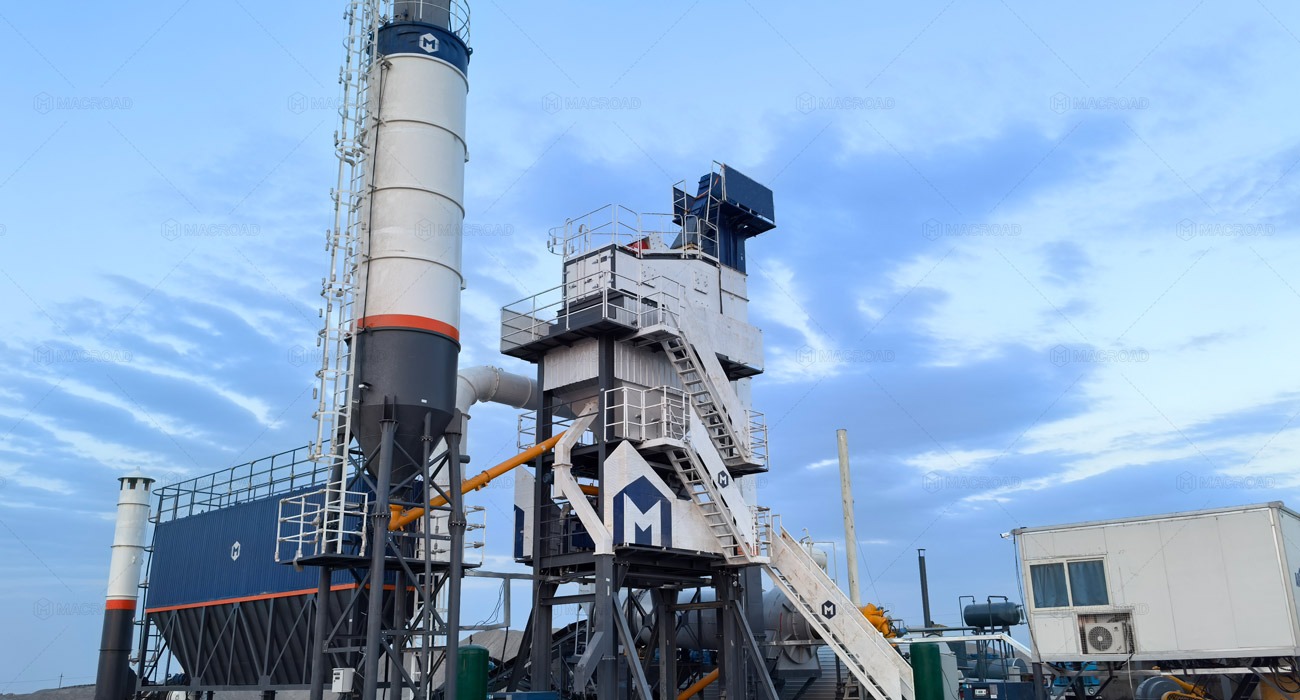
- Engineering Scenario: At a highway construction site in a mountainous area, the site is long and narrow with significant elevation differences, and the average daily asphalt production requirement is approximately 450 tons.
- Horizontal Layout Effect: Due to the long and narrow site, aggregates and fillers require multi-stage belt conveyors for horizontal transportation. Operators need to be distributed across various modules to monitor production, resulting in longer material turnover times and complex scheduling.
- Vertical Layout Effect: The modules are stacked vertically, allowing aggregates and fillers to flow naturally into the mixer using gravity, and the finished product is unloaded at a high point for concentrated truck loading. The entire process is continuous, personnel are concentrated, and material turnover efficiency is significantly improved. This reduces labor input by approximately 20% per shift and shortens material transportation time by approximately 15%.
From the perspective of material flow and production organization efficiency, horizontal and vertical layouts essentially reflect two different system operating logics. The former is characterized by dispersed modules and clear pathways, emphasizing the intuitiveness and flexibility of operations; the latter, through centralized equipment and gravity-based conveying, shortens material paths and improves the continuity of the production rhythm.
In specific engineering practices, there is no absolute answer as to which layout is more efficient; it depends on the overall requirements of the project regarding capacity, personnel allocation, site conditions, and construction schedule. Only by examining the material flow within the overall production system can the advantages and disadvantages of a layout scheme truly become apparent.
Construction and Installation Complexity: Assessing Plan Controllability
After evaluating site conditions, geological foundations, and system operating logic, the layout plan still needs to undergo a more realistic test—whether it is controllable during the construction phase.
In actual engineering projects, many layout plans are not rejected during the design phase, but are forced to change during the installation process due to excessive organizational difficulties and insufficient room for adjustment. The differences in construction organization methods between horizontal and vertical layouts often directly affect the construction period, cost, and project stability.
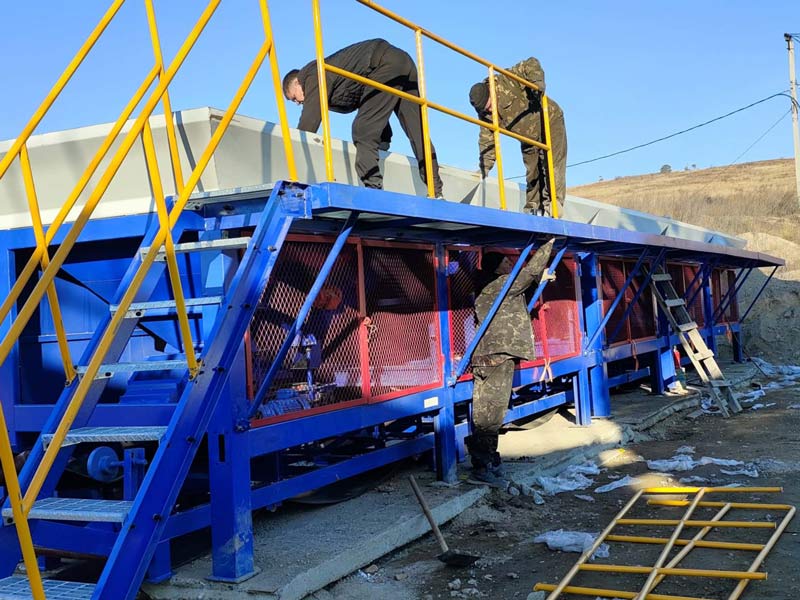
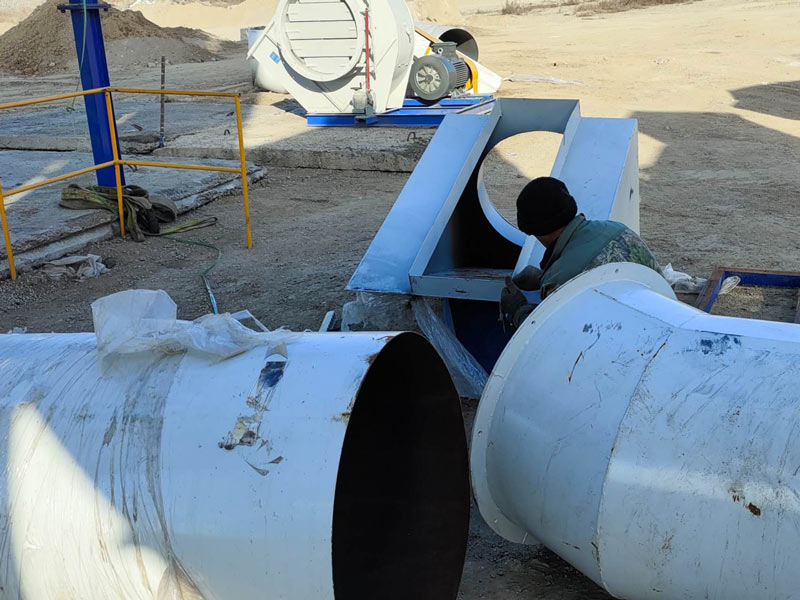
Phase One: Equipment Arrival and Site Organization
The core of this phase is not whether the equipment can arrive on site, but whether the construction organization has sufficient flexibility.
In a real construction site environment, transportation delays, adjustments to on-site roads, and changes in lifting conditions are common. Whether the layout plan allows for rearranging the sequence and reorganizing directly determines whether construction will be forced to a standstill.
Adjustability of Arrival Sequence
- Horizontal Layout: Equipment in a horizontal layout is usually delivered independently in functional modules, and there is no strict dependency on the installation sequence between modules. Even if some equipment is delayed, the positioning and pre-installation of other modules can be completed first, providing a certain buffer for the construction pace.
- Vertical Layout: Vertical layouts require a stricter arrival sequence. Key load-bearing or core modules often must be in place first before subsequent equipment can be installed. If critical equipment fails to arrive as planned, it is difficult for the site to mitigate the impact by adjusting the sequence, and the flexibility of the construction organization is significantly limited.
Site Organization and Dependence on Temporary Conditions
- Horizontal Layout: Because the equipment is distributed on the ground, the dependence of each module on lifting height and concentrated work areas is low. The site can flexibly arrange stacking areas and construction passages according to actual conditions, and has strong adaptability to temporary roads and on-site adjustments.
- Vertical Layout: Vertical layouts require stable lifting areas and clear construction passages to be reserved during the arrival phase. Once site conditions change, the adjustment costs are high, placing higher demands on early organization and site management.
Phase Two: Main Equipment Installation and Structure Formation
After entering the installation phase, the layout method begins to have a greater impact on the construction pace. The focus of this phase is: when local problems occur, will they affect the overall progress, and can construction risks be effectively controlled?
Degree of Dependence on Installation Sequence
- Horizontal Layout: Equipment in a horizontal layout is usually arranged side by side, and each module can be installed relatively independently. The construction team can flexibly adjust the sequence according to resource availability. A delay in the installation progress of one module usually will not interrupt the construction of other modules.
- Vertical Layout: Vertical layouts have a clear hierarchical relationship. If the lower structure is not completed or accepted, the upper equipment cannot be installed. The installation sequence is highly fixed, and if a problem occurs at a certain node, the overall construction pace is easily affected by a chain reaction.
Parallel Construction and Rework Impact Scope
- Horizontal Layout: Multiple modules can be constructed simultaneously, and rework is often limited to a single piece of equipment or area, with limited impact on other construction areas, which helps control overall project schedule risks.
- Vertical Layout: Due to the concentrated structure, rework often involves load-bearing structures or connection points, resulting in a larger adjustment scope and wider impact, leading to higher rework costs and time costs.
Phase Three: System Debugging and Integrated Operation
After the equipment is installed, construction enters the debugging phase, which is often the most underestimated in terms of complexity. The key issue in this phase is not whether the system is advanced, but whether problems are easy to locate and whether there is room for adjustment.
Clarity of Debugging Path
- Horizontal Layout: Each system is relatively independent in space, and debugging can usually be carried out module by module. When problems occur, the location path is clear, the adjustment range is well-defined, and the debugging process is more controllable.
- Vertical Layout: The system is highly integrated, and material flow is closely interconnected, so debugging often requires multi-system linkage. An adjustment to a parameter or structure in one area may affect multiple links, significantly increasing the difficulty of debugging.
Adjustment Flexibility during the Debugging Phase
- Horizontal Layout: A certain degree of structural and process adjustment space is retained during the debugging process. Even if deviations occur, they can be corrected through local optimization.
- Vertical Layout: Debugging highly depends on the accuracy of the initial installation. Once the integrated operation phase begins, the adjustment space is limited, and the reliance on the accuracy of the initial construction is stronger.
From the perspective of construction organization and installation complexity, horizontal and vertical layouts represent two different engineering control logics: the former reduces uncertainty risks during the construction phase through modular independence and sequential flexibility; the latter achieves space and operational efficiency through high integration, but requires stronger organizational capabilities and precision during the construction process. During the construction phase, controllability often takes precedence over efficiency in determining whether a plan can be successfully implemented.
Operation, Maintenance & Safety: Key Considerations for Long-Term Use
Once the asphalt mixing plant is constructed and put into operation, the impact of the layout design does not disappear with the completion of construction. On the contrary, during long-term operation, the ease of equipment maintenance, on-site safety, and system stability will continue to be constrained by the layout.

At this stage, the difference between horizontal and vertical layouts is no longer reflected in space utilization or construction efficiency, but rather in practical issues such as long-term operational stability, controllable maintenance costs, and sustainable safety management.
Equipment Maintenance and Accessibility
- Maintenance Paths: In a horizontal layout, equipment is typically arranged along the ground or at low levels, and maintenance channels are relatively straightforward. Inspection and troubleshooting can proceed module by module. In a vertical layout, some equipment is located at high levels or within internal structures, requiring consideration of vertical access and platform layouts for inspection and maintenance.
- Accessibility of Critical Components: In a horizontal layout, most critical equipment is located in easily accessible positions, allowing for quick maintenance and independent operation. A vertical layout involves components in vertical or enclosed spaces, requiring operational planning that considers access sequence, lifting equipment, and safety facilities.
- Maintenance Organization and Coordination: A horizontal layout allows for simultaneous maintenance operations in multiple areas; in a vertical layout, height and structural concentration may require maintenance to be performed sequentially, with different coordination methods and work arrangements.
Operational Safety and Personnel Work Risks
- Working Height and Risk Distribution: In a horizontal layout, most work is concentrated at low levels, and personnel movement paths are relatively flat; a vertical layout increases the proportion of vertical work, with work distributed at different heights, requiring attention to risk exposure in different areas.
- Personnel Paths and Equipment Intersection: In a horizontal layout, personnel access paths are usually relatively separate from equipment operating areas; in a vertical layout, there are more passages and work platforms, and there may be more points of contact between personnel paths and equipment, requiring the development of appropriate operating procedures.
- Space for Handling Abnormal Conditions: A horizontal layout provides ample operating space, allowing for adjustments when local system abnormalities occur; the vertical structure and spatial layout of a vertical layout will affect the operating methods and processing sequence, requiring full consideration of emergency access channels in the design plan.
Long-Term Operational Stability and Maintenance Costs
- Structural Stress Distribution: In a horizontal layout, structural stress is relatively dispersed, and the impact of equipment vibration and material impact on the local foundation is relatively balanced; in a vertical layout, equipment is concentrated in the vertical direction, the stress path is complex, and different types of stress distribution may occur on the foundation and connecting structures.
- Maintenance Operation Planning: In a horizontal layout, maintenance operation procedures can be carried out independently module by module, and the management strategy is relatively straightforward; in a vertical layout, maintenance operations may involve multi-level coordination, requiring more planning in terms of work sequence and tool usage.
- Chain Reaction of Operational Problems: In a horizontal layout, local problems often affect only local systems, and adjustments can be made locally; in a vertical layout, structures and systems are interdependent, and local adjustments may affect upper or lower layers or adjacent systems, requiring consideration of potential chain reactions in the operational plan.
The operation, maintenance, and safety management phase primarily focuses on the impact of the layout on operating procedures, personnel safety, and long-term stability. Horizontal and vertical layouts each have their own characteristics, reflected in equipment accessibility, working space, structural stress, and operational chain reactions. Engineers can develop corresponding maintenance strategies and risk management plans based on these differences to ensure controllable and efficient long-term operation.
Frequently Asked Questions about Common Layout Options
Is horizontal layout always superior to vertical layout in all scenarios?
Is vertical layout no longer used?
Is the layout method only relevant during the construction phase?
Is production capacity determined by the layout method?
Can operational efficiency be improved by arbitrarily adjusting the layout?
Can the environmental impact of horizontal or vertical layouts be ignored?
Is vertical layout unsuitable for long-term operation due to its maintenance complexity?
In asphalt mixing plant engineering practice, both horizontal and vertical layouts have their own characteristics, applicable scenarios, and constraints. From site conditions, geological foundations, material flow, and construction organization, to operation, maintenance, and safety management, every aspect influences the feasibility and efficiency of the layout plan.

A truly mature engineering decision is not about favoring one form over another, but rather about developing a scientifically sound and reasonable layout plan based on the actual project conditions, comprehensively considering the controllability, stability, and safety throughout the entire lifecycle.