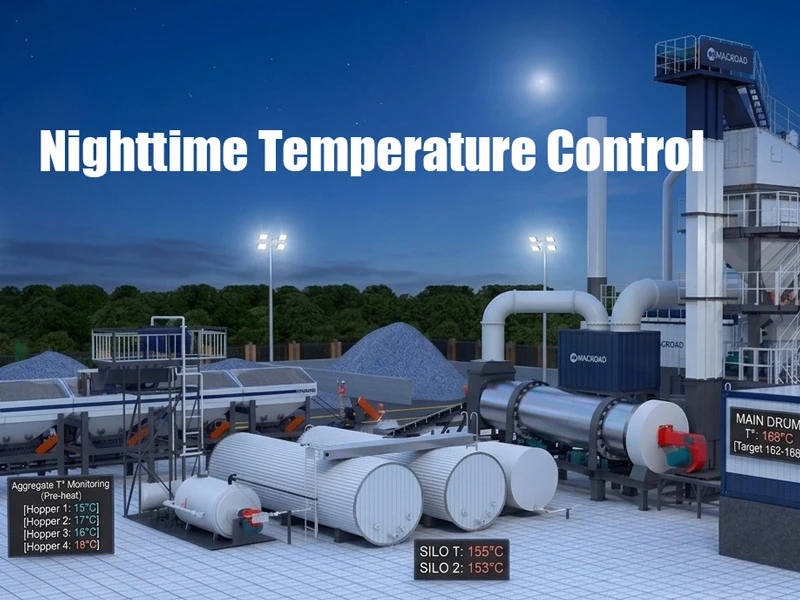
Many teams that have undertaken nighttime construction projects share a common, immediate observation: while production remains relatively stable during the day, temperatures begin to fluctuate once night falls. Sometimes these fluctuations are minor; at other times, no matter how much the settings are adjusted, achieving stability proves extremely difficult.
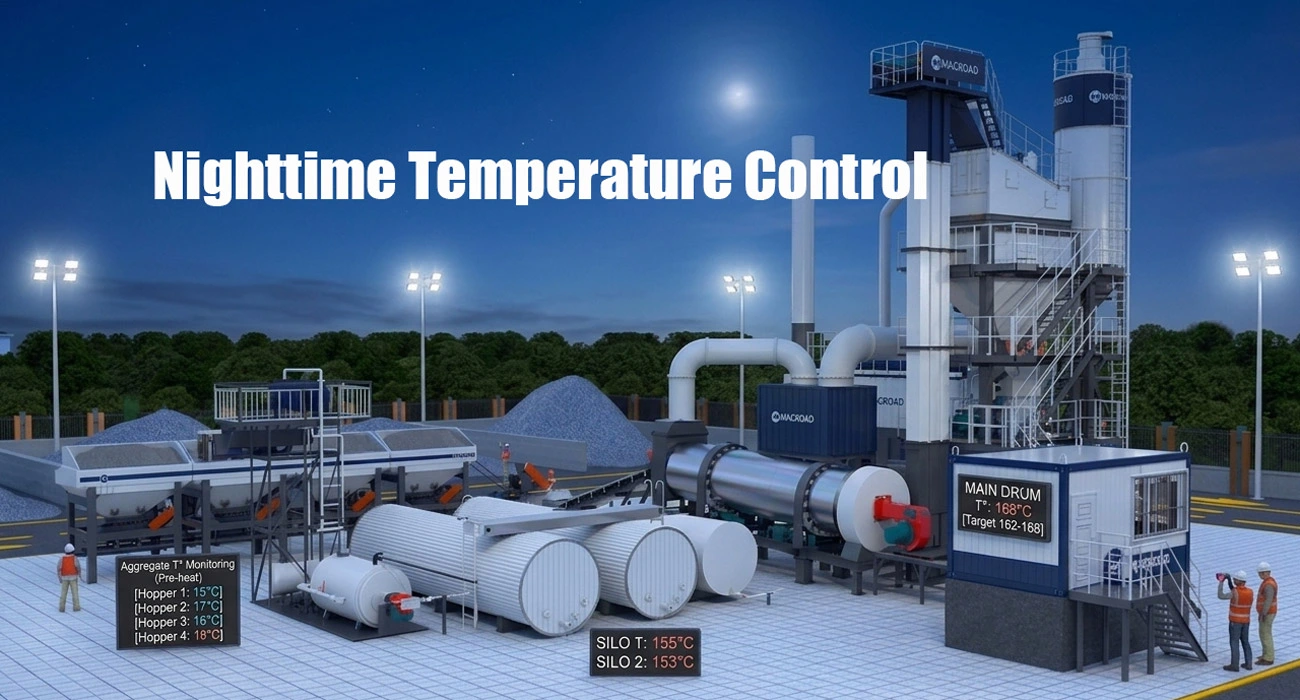
The equipment remains unchanged, and the formulation stays the same—yet the results differ nonetheless. This raises a critical question: what exactly has changed? Attributing the issue solely to the fact that it is colder at night is, in reality, far from sufficient. What has truly changed are the operating conditions of the entire system.
Day vs. Night: A Fundamental Change in Operating Conditions
As construction operations transition from day to night, an asphalt mixing plant faces not merely a simple shift in temperature, but rather a complete reconfiguration of its operating conditions. These changes stem from various sources—some from the ambient environment, others from the raw materials themselves, and still others from operational procedures and production rhythms. Viewed in isolation, each factor may appear to have a limited impact; however, when combined, they gradually transform what was originally a relatively stable production process into a system far more susceptible to fluctuation.
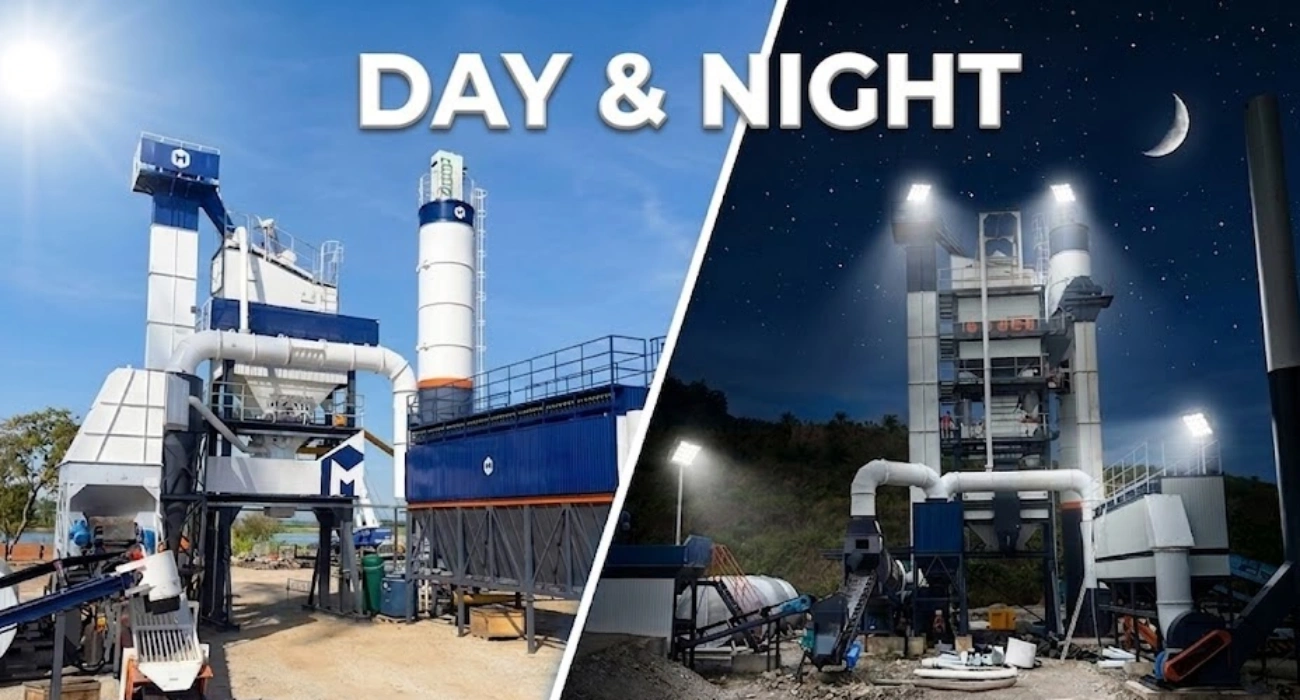
To gain a more intuitive understanding of this distinction, one can compare the typical operating states characteristic of daytime versus nighttime:
| Daytime Operation | Key Factor | Nighttime Operation |
| Relatively stable with minor fluctuations | Ambient Temperature | Gradually decreases with more noticeable variation |
| Changes slowly and remains predictable | Air Humidity | Generally increases, especially in late-night hours |
| Higher temperature, relatively stable moisture content | Aggregate Condition | Lower temperature, more prone to surface moisture |
| Relatively controllable | Heat Loss | Faster heat dissipation with increased heat loss paths |
| Stable inputs, easier system adjustment | Control Environment | Continuously changing inputs, higher control difficulty |
| Consistent flow, stable system coordination | Production Rhythm | More interruptions and rhythm fluctuations |
| Operators are alert with quick response | Operational State | Possible decline in attention and response speed |
This comparison reveals that the changes resulting from nighttime construction do not merely entail the deviation of a single parameter; rather, they signify that multiple key variables simultaneously shift into a more unstable range. It is precisely against this backdrop that temperature fluctuations become both more frequent and more difficult to control. To truly comprehend the nature of these fluctuations, however, a further breakdown is required: specifically, identifying which particular stages within this process are responsible for disrupting the previously established state of stability.
Material Variability: The Hidden Input Fluctuation at Night
Of all the factors influencing temperature stability, the raw materials are often the most easily underestimated. We are frequently inclined to focus our attention on the combustion or control systems, yet we overlook a fundamental premise: the adjustments made to these systems are predicated on the assumption of stable inputs.
However, during the night, this very assumption begins to falter. Compared to the daytime, the aggregates and mineral fillers undergo a subtle series of changes before they even enter the system. These changes do not manifest instantaneously; rather, they impact the entire asphalt production process in a manner that is continuous, gradual, and steadily cumulative.
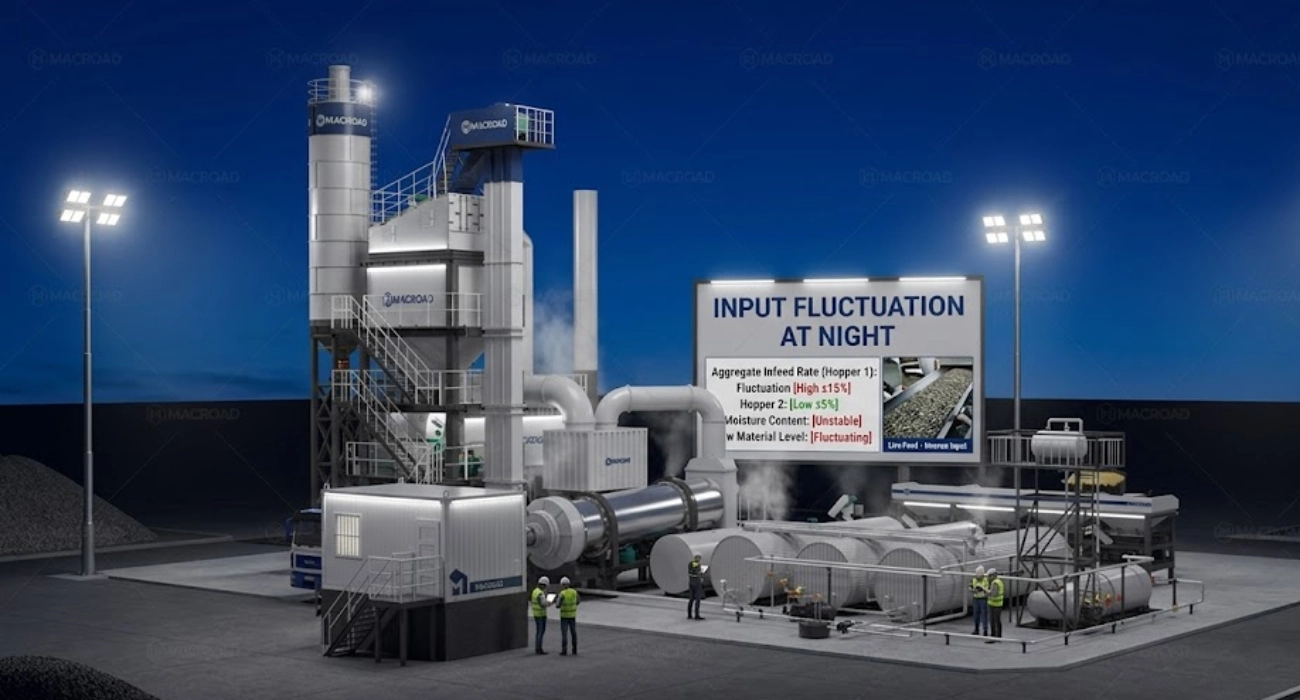
Aggregate Temperature Decline: Constantly Shifting Heat Demand
- Specific Manifestation: As the ambient temperature gradually drops during the night, the temperature of aggregates stored in open-air stockpiles decreases accordingly. This effect is particularly pronounced in the latter half of the night, when the overall aggregate temperature falls significantly below daytime levels.
- Attribution Analysis: Aggregates possess a high thermal capacity and respond relatively slowly to environmental changes; however, once they enter a low-temperature range, their rate of temperature recovery is also sluggish. This implies that the initial state of the aggregates entering the drying drum is in a constant state of flux, rather than remaining at a stable, fixed value.
- Impact on Nighttime Production: The system requires continuous adjustment of combustion intensity to compensate for the additional heat demand. If the pace of these adjustments fails to keep up with these changes, it can easily lead to underheating or overcompensation, subsequently triggering fluctuations in the discharge temperature.
Rising Moisture Content: The Hidden Increase in Energy Consumption
- Specific Manifestation: Air humidity typically rises at night, making it easier for aggregate surfaces to absorb moisture—a phenomenon that becomes particularly pronounced in environments with high humidity or the presence of dew.
- Attribution Analysis: Compared to temperature fluctuations, the impact of moisture content is more subtle, as the water itself is not directly visible; however, during the heating process, additional energy must be expended to facilitate evaporation. This specific component of energy consumption is often subject to dynamic variation.
- Impact on Nighttime Production: If the system fails to promptly account for changes in moisture content when calculating heat requirements, it results in a deviation in heat allocation. This leads to instability in the heating process, ultimately manifesting as intensified temperature fluctuations.
Changes in Internal Silo Conditions: Amplified Non-Uniformity
- Specific Manifestation: During the night, aggregates located at different positions within the storage silo may exhibit more pronounced disparities in temperature and moisture levels—for instance, inconsistencies between the surface layer and the bottom layer, or between the edges and the center.
- Attribution Analysis: The combination of declining ambient temperatures and shifting humidity levels renders heat exchange and moisture migration within the silo more complex. Furthermore, given that nighttime production rhythms may be discontinuous, these inherent non-uniformities are more likely to persist.
- Impact on Nighttime Production: The condition of the materials entering the system is no longer consistent; even if the aggregate mix ratio remains identical, the actual heat demand for each individual batch will vary, thereby increasing the uncertainty associated with temperature control.
Declining Input Stability: From Steady Supply to Dynamic Variation
- Specific Manifestation: During daytime production, material conditions remain relatively stable, allowing the system to operate within a comparatively narrow parameter range; conversely, during nighttime production, both the temperature and moisture content of the materials are in a constant state of flux.
- Attribution Analysis: The simultaneous fluctuation of multiple variables transforms the raw material itself from a predictable input into a dynamic one.
- Impact on Nighttime Production: The control system requires frequent adjustments; however, due to the continuous and unpredictable nature of these variations, the system often remains in a reactive mode, making it difficult to maintain a stable output.
As the material itself shifts from a state of stability to one of flux, the operational foundation of the entire asphalt mixing plant undergoes a corresponding change. This implies that all subsequent temperature adjustments are, in reality, an ongoing response to a constantly shifting baseline. It is precisely under these conditions that temperature control ceases to be merely a matter of adjusting parameters, evolving instead into a more complex process of dynamic equilibrium.
Thermal Systems: The Core Challenge in Nighttime Temperature Control
As we observed in the previous section, changes such as a drop in aggregate temperature and an increase in moisture content during the night signify that the inputs to the asphalt mixing plant are no longer stable. The task of the heating system is to adjust these inputs to the ideal temperature, thereby providing uniform thermal energy for the mixing process. However, when input conditions are in constant flux, the challenges confronting the heating system become far more complex than during the daytime; consequently, temperature fluctuations occur frequently.
Overall Function of the Heating System
The core functions of the heating system include:
- Heating aggregates and mineral fillers to the temperature required for mixing;
- Maintaining a uniform temperature within the drying drum to ensure a consistent heating process;
- Compensating for heat loss incurred by materials during transport and storage due to environmental conditions or variations in moisture content;
- Providing a controllable heat output to ensure a stable discharge temperature.
During the day, as ambient temperatures and material conditions remain relatively stable, the heating system of asphalt hot mix plant primarily serves to maintain equilibrium. At night, however, fluctuations in environmental conditions, material properties, and production cycles present the heating system with a multitude of challenges.
Challenges to Thermal Systems in Nighttime Environments and Operating Conditions
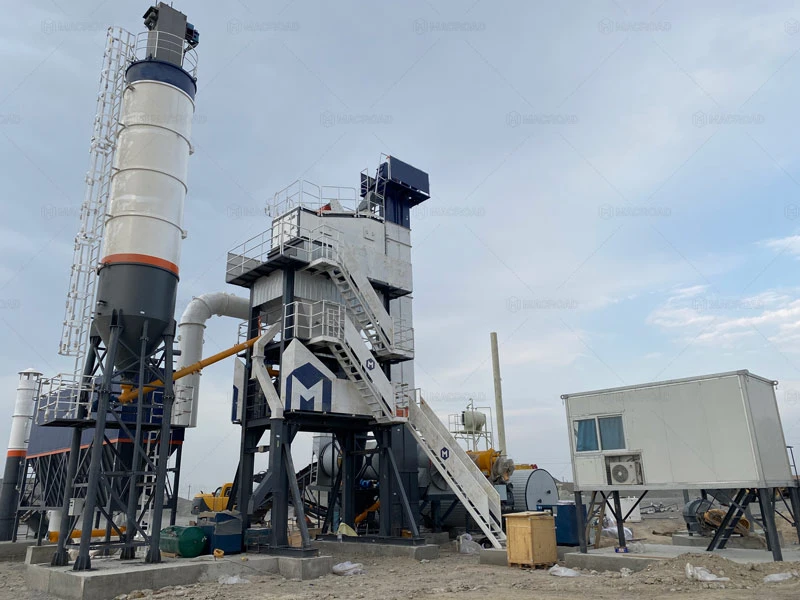
Reduced Initial Aggregate Temperature
Increased Air Humidity
Increased Material Inhomogeneity in Storage Bins
Amplified Response Delays in the Combustion System
Accelerated Heat Loss
Conflict Between Energy Compensation and Fuel Consumption
During nighttime operations, the thermal system no longer effortlessly maintains equilibrium; instead, it is constantly striving to keep pace with ever-changing material and environmental conditions. Any fluctuations in input or delays in response are directly reflected in the drying drum and discharge temperatures, rendering temperature fluctuations an inevitable outcome.
Control System Challenges: Amplified Lag and Fluctuations
During nighttime construction, the heating system faces a confluence of changing conditions—specifically, declining aggregate temperatures, rising humidity, and discontinuous production cycles. The control system is required to maintain continuous regulation under these dynamic circumstances; however, the nocturnal environment amplifies system response lag, compromises stability, and directly exacerbates temperature fluctuations. The following section provides a detailed analysis of the primary challenges encountered by the control system during nighttime construction operations.
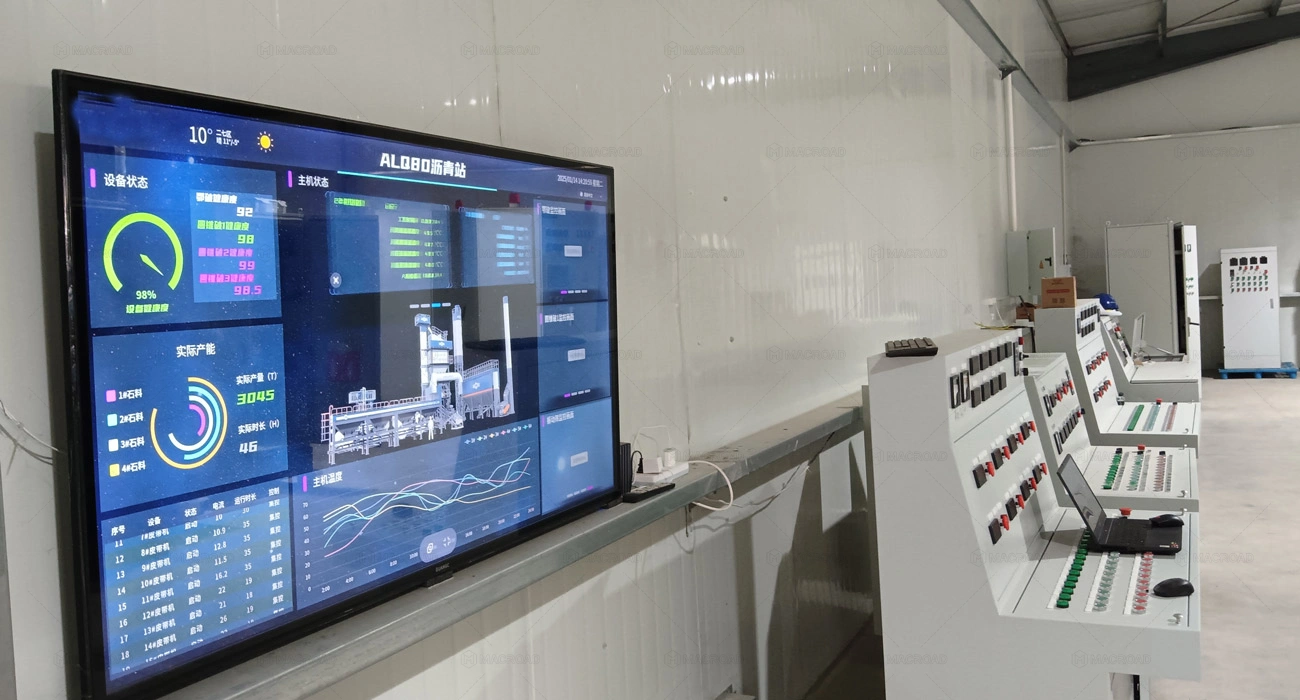
Amplified Control Response Latency
- Phenomenon: At night, aggregate temperatures are 10–15°C lower than during the day; consequently, the combustion intensity within the drying drum requires frequent adjustment, resulting in a 3–5 minute lag in the discharge temperature response.
- Analysis: The control system inherently possesses a response delay; at night, the magnitude of input variations increases significantly, thereby amplifying this delay effect.
- Result: The discharge temperature fails to reach its target in a timely manner, leading to periodic fluctuations where temperatures run either too low or too high.
Dynamic Inputs Induce Feedback Oscillation
- Phenomenon: Moisture content varies significantly between different batches of aggregate; the substantial disparity in moisture levels across batches necessitates rapid adjustments to the system’s combustion output to accommodate the changing aggregate conditions.
- Analysis: Continuous dynamic inputs compel the control system to engage in constant incremental adjustments (add/subtract), creating a cyclical pattern of overshoot followed by correction.
- Result: The temperature curve exhibits pronounced fluctuations, resulting in a decline in overall system stability.
Limited Accuracy of Predictive Models
- Phenomenon: At night, rising air humidity—coupled with shifts in wind speed and ambient temperature—causes aggregate temperatures to deviate significantly from historical data patterns.
- Analysis: Control systems typically rely on historical empirical data or predictive models to estimate heat requirements; however, the deviation from standard model conditions that occurs at night leads to increased prediction errors.
- Result: The system struggles to accurately compensate for heat requirements, resulting in instances of temperatures running either too high or too low, and leading to the accumulation of deviations over time.
Increased Difficulty in Multi-System Coordination
- Phenomenon: At night, the coordination required among the heating, mixing, and material supply systems becomes more challenging—for instance, due to significant temperature disparities between material batches or frequent interruptions in material conveyance.
- Analysis: The control system is required to simultaneously process multiple variables and monitor the status of various subsystems; however, the operational states of these individual systems are subject to constant flux during the night.
- Result: The overall difficulty of system coordination increases; temperature control becomes less steady, and the magnitude of temperature fluctuations widens.
Reduced Control Fault Tolerance
- Phenomenon: Frequent input fluctuations at night occasionally cause the combustion system to experience brief periods of overshoot (excessive heating) or underheating, resulting in significant, albeit short-lived, temperature deviations.
- Analysis: The existing fault-tolerance strategies and buffering mechanisms are insufficient to effectively cope with the continuous and unpredictable nature of these dynamic changes.
- Result: Minor deviations become amplified; temperature regulation mechanisms may either fail to respond effectively or overcompensate, leading to a further decline in overall system stability.
During nighttime operations, the lag effect of the control system is amplified, and its stability declines significantly. The system must not only accommodate variations in the thermal system and material states but also continuously regulate under heightened dynamic loads; its output directly influences the amplitude and frequency of fluctuations in the discharge temperature.
Nighttime Workflow: Human Factors and System Coordination
At this juncture, we have analyzed the challenges that thermal and control systems face during nighttime operations—factors that are primarily related to equipment and the environment. However, during night construction, the condition of the workforce and the pace of operations can exert an equally significant impact on production. Fatigue, diminished alertness, or an inconsistent operational rhythm can disrupt system synergy, leading to more frequent temperature fluctuations.
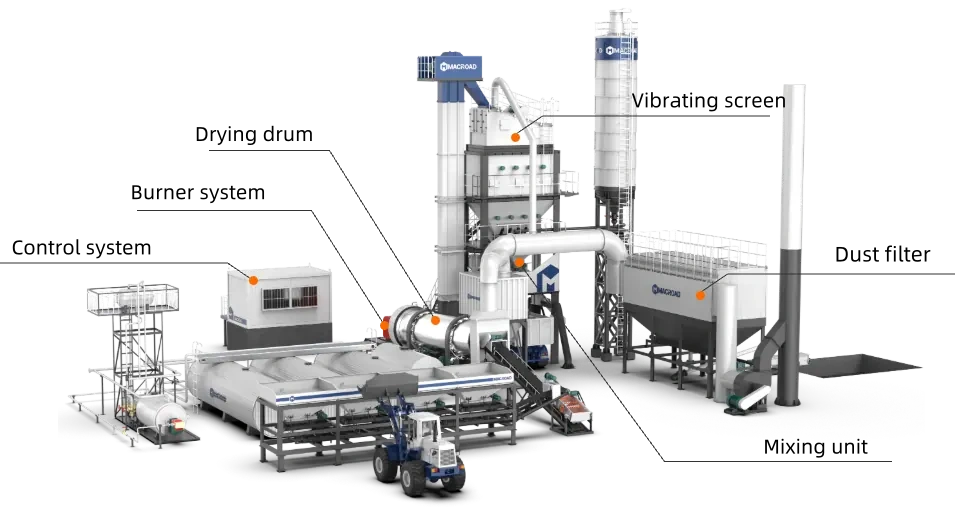
Nighttime Work Rhythm and Operational State
- Increased Operational Intermittency: Due to fatigue or diminished alertness, night-shift workers may experience longer intervals between tasks. This leads to intermittent pauses in material supply and equipment operation, disrupting the continuous flow of the heating and mixing systems. Consequently, temperature regulation settings are frequently reset, resulting in increased temperature fluctuation amplitudes.
- Extended Response Times: Night-shift workers typically react more slowly than their daytime counterparts to anomalies in temperature or equipment performance. These delayed operational adjustments amplify the inherent lag effects within the control system, leading to the persistence of short-term temperature deviations.
- Operational Inconsistency: Variations exist in operational methods across different shifts or among individual workers. Such inconsistencies occur more frequently at night, resulting in irregular rhythms for equipment startup/shutdown and material feeding. This increases the difficulty of system coordination and elevates the risk of temperature fluctuations.
- Errors Triggered by Diminished Attention: Night-shift workers tend to have shorter spans of concentrated attention, making them more prone to omissions or procedural errors. These lapses can lead to deviations in material proportioning or temperature regulation, further exacerbating system instability.
- Frequent Short-Term Emergency Interventions: When anomalies arise during the night, workers may be required to perform multiple manual adjustments. Such frequent interventions disrupt the equipment’s established regulatory rhythm, compromising system continuity and intensifying temperature fluctuations.
Direct Impacts of Nighttime Production Rhythms on the System
- Exacerbated Fluctuations in Heating System Load: An irregular operational rhythm causes frequent variations in the heating system’s combustion rate. This makes it difficult to maintain a stable temperature within the drying drum, resulting in significant upward and downward fluctuations in the discharge temperature.
- Uneven Material Processing: An unstable operational rhythm leads to inconsistencies in the batch supply of aggregates and fine powders. Consequently, the mixer and drying drum are unable to establish a stable, continuous workflow, leading to increased amplitudes in temperature fluctuations.
- Reduced Production Efficiency: The chaotic operational rhythm at night makes it difficult to sustain continuous production. Simultaneously, the increased difficulty of temperature control leads to a rise in both the amplitude and frequency of overall system fluctuations.
- Occurrence of Localized Temperature Peaks or Troughs: Due to operational inconsistencies or delays, the drying drum and material discharge outlet may experience brief periods of overheating or excessively low temperatures. This compromises the uniformity of the mixture and hinders effective quality control.
- Increased Safety and Maintenance Risks: A chaotic operational pace may result in equipment failing to run according to its intended rhythm—leading to overloading or intermittent shutdowns—thereby increasing equipment wear and maintenance requirements, while also potentially giving rise to safety hazards.
Taken together, the operational pace of night-shift workers directly impacts the continuity and coordination of the system. Operational pauses, response delays, and inconsistencies not only trigger frequent adjustments in the thermal and control systems but also exacerbate uneven material handling and temperature fluctuations. Understanding the role of these human factors is crucial for optimizing temperature control and overall production efficiency during night-time operations.
Why Nighttime Construction Is Still Necessary
Given the numerous challenges associated with nighttime construction outlined above, one might be tempted to ask: “Why not simply restrict all work to the daytime?” In reality, however, nighttime construction remains indispensable in many projects. For highways, airport, and urban roadways—where daytime work is often constrained by traffic, noise regulations, and strict deadlines—completely halting nighttime operations is simply not a realistic option. Consequently, we must squarely address the issues surrounding nighttime construction while simultaneously recognizing the necessity of its existence.
Schedule Pressure and Project Urgency
Traffic Flow and Access Management
Safety and Management Considerations
Equipment and Workforce Coordination
Climate and Working Conditions
Optimizing Temperature Control in Nighttime Construction
Since nighttime construction is unavoidable, controlling temperature fluctuations—while simultaneously safeguarding construction quality and efficiency—has become a challenge that every construction team must address. In the following sections, we will explore feasible control strategies from multiple perspectives and, drawing upon practical case studies from Macroad, demonstrate how to effectively manage temperature fluctuations during nighttime construction.

Thermal System Optimization
- Precise Temperature Control: Automatically adjusts combustion intensity and drying drum heating methods to ensure stable aggregate temperatures.
- Dual-Stage Heat Compensation: Anticipates heat requirements based on nighttime ambient temperatures and material moisture levels, providing staged compensation in advance.
- Balanced Drying Drum Heating: Optimizes the design of the drying drum’s heating zones to ensure uniform temperatures across all sections, thereby minimizing localized hot or cold spots.
- Heat Loss Monitoring: Incorporates additional heat loss sensors to promptly detect temperature anomalies during the night and adjust heating strategies accordingly.
The Macroad Intelligent Thermal System integrates real-time aggregate temperature monitoring to achieve temperature stability within ±3°C inside the drying drum. By utilizing AI to predict nighttime heat requirements, the system reduces average nighttime temperature deviations by approximately 25% and lowers fuel consumption by about 10%.
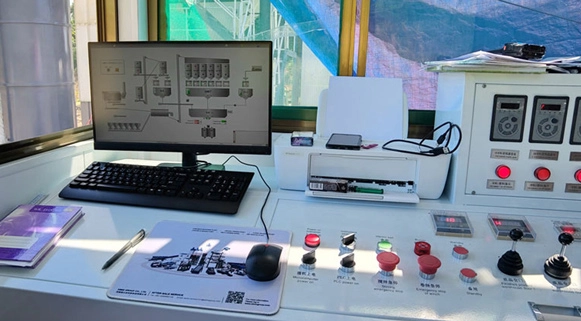
Control System Enhancement
- Response Lag Optimization: Optimizes PID loop parameters and control strategies to enhance the speed and precision of temperature regulation.
- Real-time Data Monitoring: Installs sensors and data acquisition points at critical temperature nodes to provide real-time monitoring and alerts for temperatures within the drying drum, mixing drum, and discharge outlet.
- Automated Adjustment Strategies: Automatically selects between heating and cooling modes based on fluctuations in nighttime ambient temperatures and material moisture levels.
- Historical Data Analysis and Prediction: Collects historical data from nighttime operations to forecast temperature fluctuation trends, allowing for the proactive adjustment of control parameters.
The Macroad Intelligent Control System achieves temperature stability within ±2°C at critical nodes. Through the combined application of AI-driven adjustments and historical data forecasting, the system reduces nighttime temperature deviations by approximately 20% and decreases the frequency of manual interventions by about 30%.
Material and Production Synergy
- Material Preheating and Homogenization: Aggregates and mineral fillers are preheated to target temperatures prior to feeding and homogenized via vibrating screens to ensure a temperature differential of ≤3°C.
- Optimized Continuous Feeding: Utilizes an automated feeding system to ensure a steady material flow, thereby minimizing temperature fluctuations caused by operational interruptions during the night.
- Mixing Uniformity Control: Adjusts blade angles and rotation speeds, while increasing the number of mixing cycles, to guarantee thorough and uniform blending.
- Enhanced Batching Accuracy: Employs high-precision weighing systems for aggregates, mineral fillers, and asphalt, maintaining nighttime batching error margins within ±0.5%, ±0.3%, and ±0.3%, respectively.
Macroad asphalt mixing plants are equipped with a continuous screening system, ensuring uniformity in both material temperature and aggregate gradation during nighttime operations. The high-precision weighing system—featuring an aggregate tolerance of ±0.5% and a tolerance of ±0.3% for mineral fillers and asphalt—significantly enhances mixing stability at night, reducing temperature fluctuations by approximately 15%.

Personnel Operations and Management
- Nighttime Operation Protocols: Clearly defined operational procedures and temperature control sequences minimize operational inconsistencies.
- Shift and Rest Optimization: Night shifts are structured in 2–3 hour intervals to ensure operators maintain full alertness.
- Real-time Operational Guidance: Temperature data is displayed in real-time via monitoring systems or a dedicated mobile app, facilitating rapid operational adjustments.
- Emergency Response Procedures: Heating or cooling commands are automatically triggered—and the shift supervisor notified—whenever temperature deviations exceed ±5°C.
Macroad provides comprehensive operational guidelines service for nighttime construction, along with remote technical support for troubleshooting. These measures result in a 15% improvement in operational consistency at night, a 20% reduction in the time required to resolve anomalies, and overall more stable temperature control during nighttime operations.
By implementing the preheating and homogenization of aggregates and fines, continuous feeding, precise control over mixing uniformity, and high-precision weighing, material-inherent fluctuations can be significantly reduced. Concurrently, establishing clear operational protocols for night shifts, optimizing shift scheduling, providing real-time operational guidance, and instituting emergency response procedures for anomalies serve to mitigate temperature deviations caused by human factors. Through the comprehensive application of these measures, temperature control during night construction becomes more stable, thereby ensuring overall construction quality.
Nighttime Construction, Fully Under Control
Nighttime construction inevitably entails temperature fluctuations and operational challenges; however, through systematic control strategies, thermal system optimization, meticulous material management, and rational operational scheduling, these fluctuations can be effectively managed. Understanding the unique environment and inherent risks of nighttime construction—and implementing targeted countermeasures—not only safeguards the quality of the mix but also enhances construction efficiency and safety. Provided that adequate technical and managerial preparations are in place, nighttime construction can be executed with the same level of control and proficiency as work performed during the day.