


In the actual operation of asphalt mixing plants, substandard production capacity is almost a universal phenomenon.
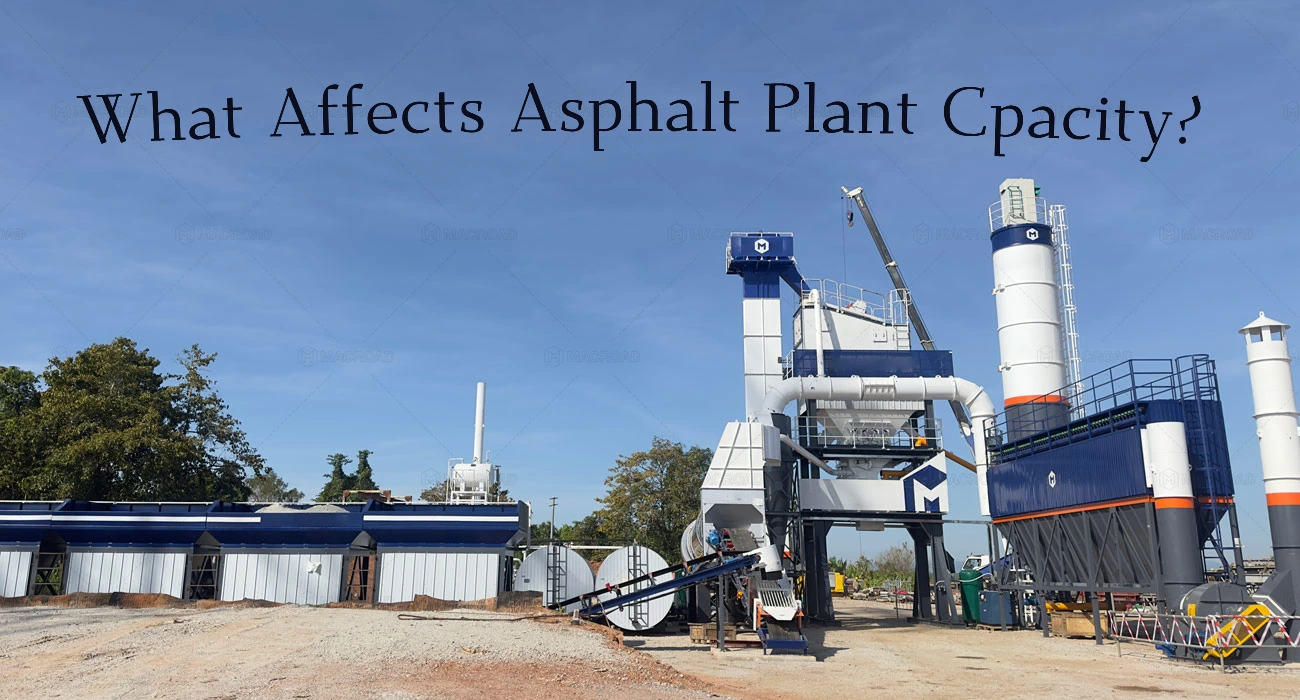
Even with equipment rated at 400t/h, some projects can output stably, while others consistently hover around 320t/h; some initially approach their design capacity, but their output gradually declines with increasing operating time. This disparity is not an isolated case, but a recurring problem in the industry. Often, people tend to attribute the cause to equipment, raw materials, or operational factors. However, in actual production, changes in production capacity are rarely caused by a single problem, but are the result of continuous consumption across multiple stages.
Production capacity may seem like a number, but it is essentially a reflection of the overall operational status of a complete system.
Understanding What Production Capacity Really Means
To truly understand capacity loss, we must first answer a more fundamental question: What exactly is capacity in asphalt plant?
Many people are accustomed to defining capacity with a fixed value, such as 400 t/h. However, in actual operation, this number represents more the designed capacity of the equipment than the final, stable output level that can be achieved.
In other words, designed capacity is merely a theoretical value, while actual capacity is the result of continuous adjustments under complex operating conditions.
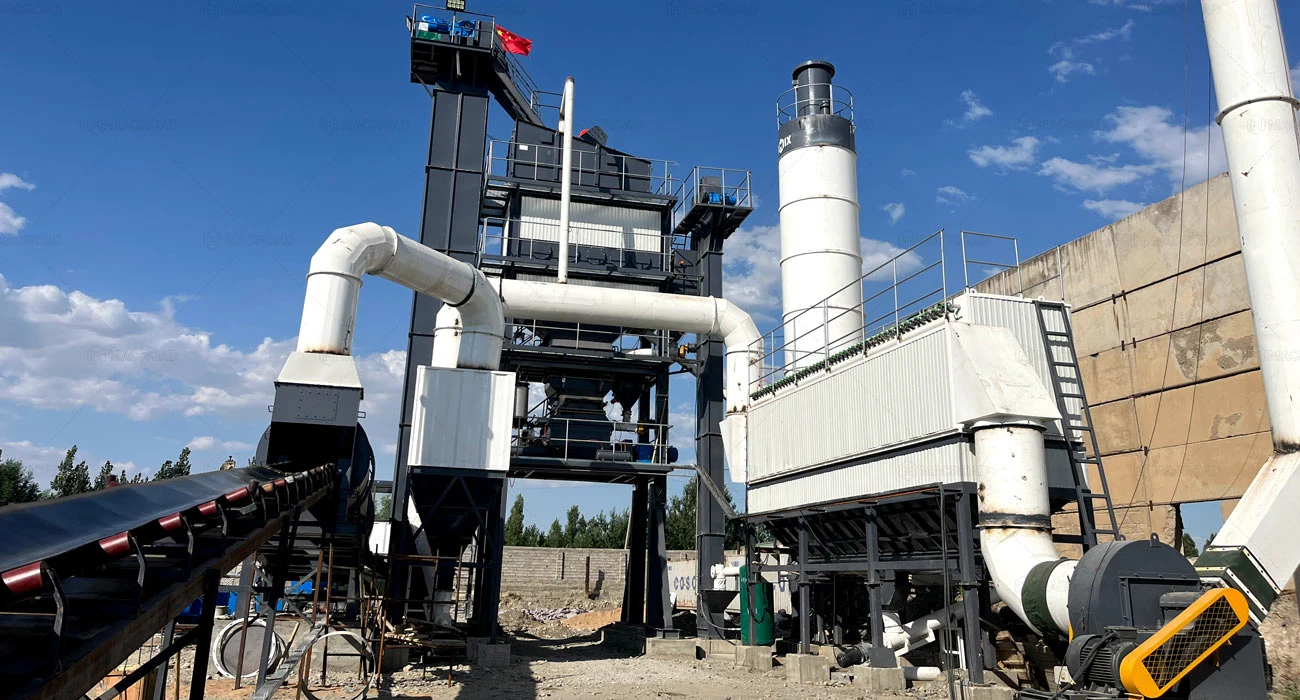
Production capacity is a dynamic result, not a fixed value
Production capacity is not a static indicator, but an operational outcome formed under constantly changing conditions.
In actual production, factors affecting production capacity are constantly changing, such as:
- Fluctuations in raw material moisture content
- Changes in aggregate gradation
- Fluctuations in equipment thermal efficiency
- Differences in operating methods
These factors do not change production capacity instantaneously, but rather gradually lower or increase actual output by affecting the production cycle. Therefore, production capacity is not a target that can be achieved once set, but rather a result that is continuously adjusted during operation.
Production capacity is system capability, not the capability of a single piece of equipment
Achieving production capacity depends on the synergy of the entire system, not the design capability of a single system.
A complete asphalt mixing plant includes several key systems:
- Feeding and conveying system
- Drying and heating system
- Screening and storage system
- Mixing and discharging system
- Control and scheduling system
If any link in this chain experiences a bottleneck, it will affect the overall output. Therefore, it can be understood that the upper limit of production capacity depends on the weakest link in the entire system.
Capacity depends on the consistency of production rhythm, not the speed of a single point
What affects capacity output is not the efficiency of a single link, but whether the operating rhythm of the entire production line is consistent.
Ideally, each link should form a continuous and coordinated rhythm, for example: the previous link completes → the next link immediately follows without waiting, backlog, or interruption.
However, in actual operation, common situations include:
- Waiting for screening after drying
- Waiting for storage after screening
- Waiting for discharge after mixing
These non-productive times, although short at a time, accumulate continuously in the cycle, eventually resulting in significant capacity loss.
The core manifestation of capacity is stability, not peak values
Truly valuable capacity is not short-term peaks, but the ability to consistently approach design values over a long period
Many pieces of equipment can achieve high output at certain times, but this state is often unsustainable. Reasons may include:
- Fluctuations caused by operational adjustments
- Instability due to changes in raw materials
- Gradual changes in equipment status during operation
Large fluctuations in production capacity mean: unstable production capacity and decreased actual delivery capability. Therefore, in engineering practice, a more meaningful indicator is the average production capacity under long-term stable operation, rather than the instantaneous peak value.
Once we transform production capacity from a fixed value into the result of system operation, we can see more clearly that production capacity does not suddenly decrease at a single point, but is gradually consumed in multiple stages.
Next, we will break down how production capacity loss occurs, starting from specific production stages.
The Raw Material Stage: Where Capacity Loss Begins
From the perspective of the entire asphalt hot mix plant operation process, capacity loss often doesn’t begin with the equipment, but rather starts the moment the raw materials enter the system.
The state of the raw materials determines the operating rhythm of all subsequent stages. Once this stage experiences fluctuations, subsequent steps such as drying, screening, and mixing can only be passively adjusted, thus affecting overall capacity.

Analysis of Production Capacity Losses in the Raw Material Stage
Unstable raw material moisture content directly prolongs drying time
- Increased drying time disrupts the established cycle time: Higher moisture content increases the heat and time required for drying, lengthening the original production cycle and disrupting the overall production line rhythm.
- Forced conservative operating strategies reduce feeding intensity: To ensure output temperature and quality, operators will proactively reduce feeding speed, further compressing output per unit time.
- Fluctuations in thermal system load affect overall operational stability: Frequent changes in moisture content lead to unstable loads on the combustion and drying systems, making it difficult for equipment to maintain optimal operating conditions, thus affecting production capacity.
Unstable raw material gradation → Affects screening and flow efficiency
- Reduced screening efficiency and decreased processing capacity: Abnormal gradation increases the burden on screens or reduces throughput, making the screening system a production bottleneck.
- Obstructed material flow leads to discontinuous hot material supply: Obstructed screening prevents hot material from smoothly entering subsequent stages, causing material waiting and interrupting continuous production.
- Disruption of the entire production line’s rhythm, triggering a chain reaction: Unstable screening will propagate downstream, affecting mixing and discharge rhythms, amplifying capacity losses caused by raw material fluctuations.
Discontinuous raw material supply → Directly disrupts production rhythm
- Frequent equipment start-ups and shutdowns, reducing effective operating time: Discontinuous material supply leads to repeated equipment start-ups and shutdowns, each consuming valuable production time.
- Interrupted operation, unable to establish a stable rhythm: Once production is interrupted, it is difficult to maintain a continuous rhythm, requiring a return to a stable state, reducing operational efficiency.
- Increased operational complexity, increasing human intervention: Fluctuations in material supply force operators to frequently adjust parameters, increasing the operational burden and raising the risk of human error.
Improvement Directions in the Raw Material Stage
Establish a Stable Raw Material Control and Pre-treatment Mechanism
- Separate Warehousing Management for Independent Control of Different Raw Materials: Separate warehousing allows for the categorization and management of materials with different moisture contents and gradations, reducing fluctuations caused by mixing.
- Moisture Content Pre-treatment to Reduce Drying System Burden: By controlling the moisture content of raw materials in advance, uncertainty can be reduced before they enter the drying system, minimizing fluctuations at the source.
- Stable Feeding Rhythm to Avoid Production Interruptions: Combined with an automated conveyor system, continuous and stable feeding can be achieved, reducing downtime caused by unstable supply.
In this stage, Macroad’s automated batching and intelligent control system helps achieve precise control of the raw material input rhythm, ensuring stable production from the outset.
Improve Batching Accuracy and Reduce Error Accumulation
- Control Raw Material Ratio Fluctuations to Ensure Process Stability: High-precision weighing ensures consistent ratios for each batch of raw materials, reducing the impact of ratio fluctuations.
- Reduce System Adjustment Frequency and Minimize Human Intervention: Improved batching accuracy leads to more stable system operation, eliminating the need for frequent parameter adjustments by operators, thus reducing human error.
- Improve overall production consistency and optimize long-term performance: Stable ingredient proportions mean stable production results, helping to maintain high capacity levels over the long term.
Macroad’s high-precision weighing system (aggregates and powders) effectively reduces systematic errors caused by raw material fluctuations.
Introduce intelligent monitoring for dynamic adjustment
- Real-time raw material status acquisition for improved response speed: The monitoring system allows for real-time monitoring of raw material changes, providing data for adjustments.
- Automatic adjustment of production parameters to reduce human delays: The intelligent system automatically adjusts operating parameters based on raw material changes, avoiding capacity losses due to delayed human judgment.
- Remote management for improved overall operational efficiency: The IoT system enables remote monitoring and management of equipment, improving the overall system’s operational efficiency.
Macroad‘s IoT remote monitoring system provides real-time control of the production process, allowing for faster responses to the impact of raw material changes.
From the moment raw materials enter the system, any minute fluctuations are amplified during production—moisture content affects drying cycle time, gradation determines screening efficiency, and the feeding status directly relates to production continuity. These seemingly disparate issues ultimately converge on the same result: production capacity is continuously consumed but difficult to release stably. Therefore, stabilizing the raw materials themselves is the first crucial prerequisite for ensuring the efficient operation of the entire production line.
Thermal System and Drying Capacity: A Critical Link in Production Efficiency
In the entire production process, the thermal system and drying capacity play a crucial role, acting as a bridge between the initial stages of production. They not only handle the initial state of the raw materials but also lay the foundation for subsequent mixing and discharge. If this stage doesn’t operate smoothly, it can subtly disrupt the overall rhythm. Below, we’ll break down the key points based on several common operational logics.
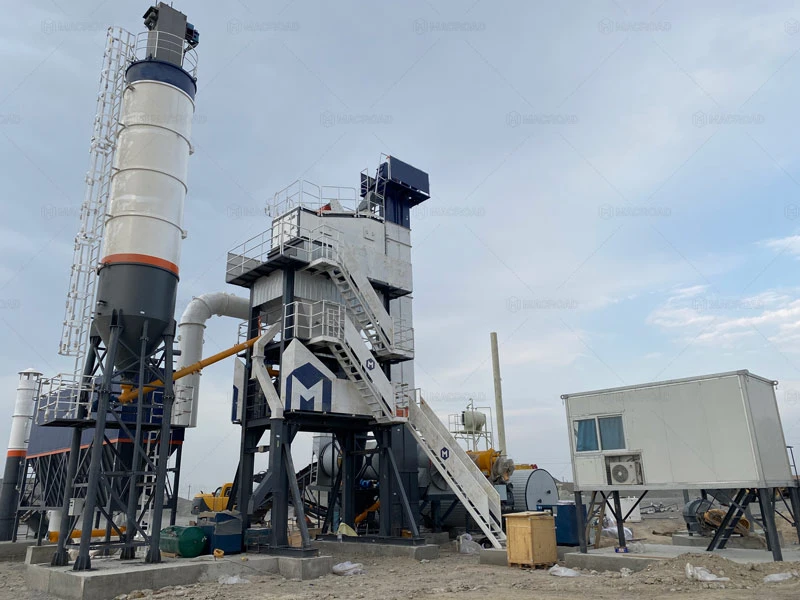
Uneven Material Tumbling and Heating in Drying Drum
- When the material tumbling structure or operating speed is mismatched with the material characteristics, the material does not tumble sufficiently within the drum, resulting in uneven heat distribution and localized incomplete drying, thus affecting overall drying efficiency.
- Solution: Optimize Material Tumbling Structure and Operation Control
- By optimizing the structure and arrangement of the material tumbling plates, the tumbling frequency of the material within the drum is increased. Combined with stable speed control, this ensures more uniform heating of the material. Macroad, through enhanced material tumbling design and an intelligent control system, can dynamically adjust operating parameters based on the material’s condition, thereby improving drying efficiency and shortening the drying cycle.
Unstable Burner Output Leading to Heat Fluctuations
- Unstable burner heat output directly affects the temperature environment of the drying system. Insufficient heat prolongs drying time, while excessive heat may affect the quality of the output material, disrupting the production rhythm.
- Solution: Achieve Intelligent and Stable Control of the Combustion System
- Through a stable and adjustable combustion control system, the combustion intensity is dynamically adjusted, ensuring a continuous and stable heat supply, reducing the impact of temperature fluctuations on production capacity, and matching heat output with production needs.
Low heat utilization efficiency and severe energy loss
- If heat exchange efficiency is low, a large amount of heat is lost during the transfer process, leading to increased fuel consumption without improved drying efficiency, resulting in a high-energy-consumption, low-output operating state.
- Solution: Improve heat exchange and system insulation capabilities
- By optimizing the heat exchange path and airflow organization structure, heat loss is reduced, while the system’s insulation performance is improved, increasing thermal energy utilization. Macroad optimizes duct design and system airtightness, allowing heat to be more concentrated on the material, improving the utilization efficiency of unit thermal energy, thereby increasing overall production capacity.
Temperature detection lag leading to control failure
- If temperature monitoring is inaccurate or feedback is delayed, the system cannot adjust combustion and feeding states in time, easily causing temperature fluctuations, affecting output quality and overall operational stability.
- Solution: Build a high-precision real-time temperature control system
- Through multi-point temperature monitoring and a rapid feedback mechanism, real-time control of key temperatures is achieved. Macroad’s intelligent temperature control system provides real-time temperature data feedback and automatically adjusts operating parameters, keeping the drying process within a stable range, thus ensuring continuous production capacity output.
The thermal system and drying process is not merely a heating and processing procedure; it’s more like a system that reshapes the state of materials. Its smooth operation directly impacts the rhythm and stability of subsequent stages. When this stage can maintain stable and efficient operation, the entire production line can more easily enter a continuous and controllable state.
Mixing and Discharge: The Trade-off Between Efficiency and Quality
After raw material processing and drying, the material enters the mixing and discharging stage. This stage directly determines the uniformity and efficiency of the final product. Unlike the front-end, which focuses on processing capacity, this stage tests the system’s ability to balance time and precision.
In actual operation, mixing time, discharging rhythm, and mixing quality often need to be coordinated: time prioritizes quality, while rhythm prioritizes efficiency. Finding a balance between these two factors becomes crucial to the production capacity performance at this stage.
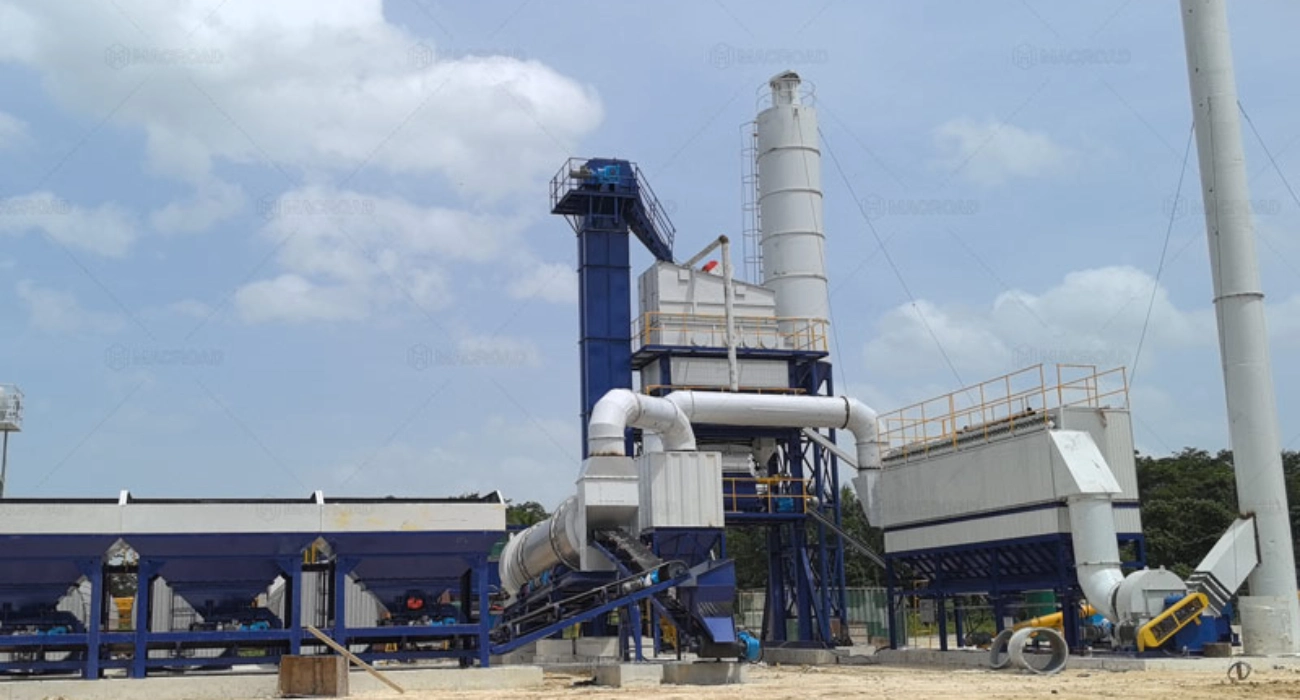
Key Issues Concerning Capacity Limitations
Under this operational logic, the performance of the mixing and discharging stages directly impacts the final capacity. Any deviation in the rhythm or control of any stage creates a tension between time and precision, gradually affecting the overall operational status. The following sections will analyze the impact on capacity by examining several common key issues encountered in actual operation.
Excessive Mixing Time → Directly Reduced Unit Output
When mixing time is passively extended, the production cycle for each batch is lengthened, reducing the number of batches that can be completed per unit time, thus decreasing capacity. Furthermore, to ensure uniform mixing, operators often tend to increase mixing time. While this quality-first approach is reasonable, it directly sacrifices production efficiency.
Uneven Mixing → Rework and Repeated Consumption
If the material distribution is uneven during mixing, the quality of the mixture will be unstable, and some batches may require rework or reprocessing. This repeated operation not only increases additional time consumption but also disrupts the original production rhythm, reducing overall output efficiency and increasing resource waste.
Discontinuous Discharge → Disruption of Production Cycle
When the discharge system malfunctions, material output becomes unstable, leading to material buildup in the system. This waiting-to-discharge state negatively impacts the mixing system, forcing it to adjust its rhythm and ultimately disrupting the continuous operation of the entire production line, affecting overall production capacity.
Conflict Between Discharge Speed and Quality → Reduced Operating Space
In actual operation, faster discharge speeds demand greater system stability. Improper control can easily affect the quality of the discharged material. Therefore, a trade-off between speed and stability is often necessary, limiting the system’s optimization potential and hindering further capacity increases.
Insufficient System Coordination → Amplifying Local Problems
When there is a lack of effective coordination between the mixing and discharge systems, fluctuations in one stage are amplified and transmitted throughout the entire process. For example, a mismatch between the mixing rhythm and discharge speed can easily cause short-term accumulation or flow interruptions, leading to overall instability and impacting continuous production capacity.
Synergistic Optimization Path for Capacity and Quality
As seen in the preceding analysis, there is indeed a certain coordination between the mixing and discharging stages. However, this does not mean that efficiency and quality are mutually exclusive. Through more refined system design and operational control, this seemingly contradictory relationship can be effectively mitigated. Next, we will break down how to achieve better synergistic performance in actual operation by focusing on several key optimization directions.