

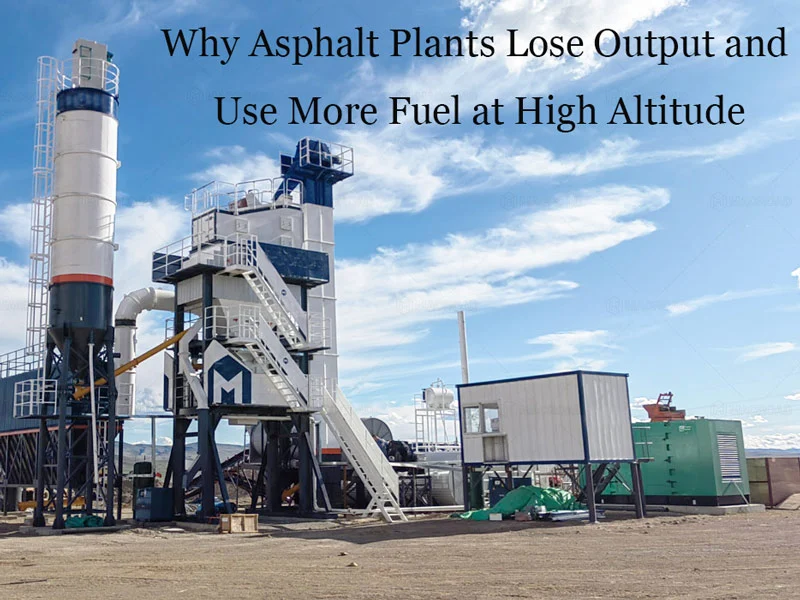
What do you think would happen if an asphalt mixing plant were relocated from the plains to a high-altitude region for operation? Many people’s initial reaction is simply that, due to lower temperatures and thinner air, the equipment might require some minor adjustments. However, in actual projects, the reality is often far more complex than imagined—production capacity drops, fuel consumption rises, and even the operational rhythm itself undergoes a shift.
The critical question is not whether the system is affected, but rather: How exactly do these changes manifest? And at which specific stage of the process do these effects begin to be amplified? Unless these underlying issues are truly understood, the equipment’s performance will often fall short of expectations.
Invisible Variables: The Real Changes in High-Altitude Environments
In actual operation, the impact of high altitude on an asphalt mixing plant does not manifest as sudden equipment malfunctions; rather, it emerges gradually—as environmental conditions undergo subtle shifts—and is subsequently amplified in the final production results. These changes in environmental conditions are often not immediately apparent, yet they continuously influence combustion, heat exchange, and overall production efficiency.
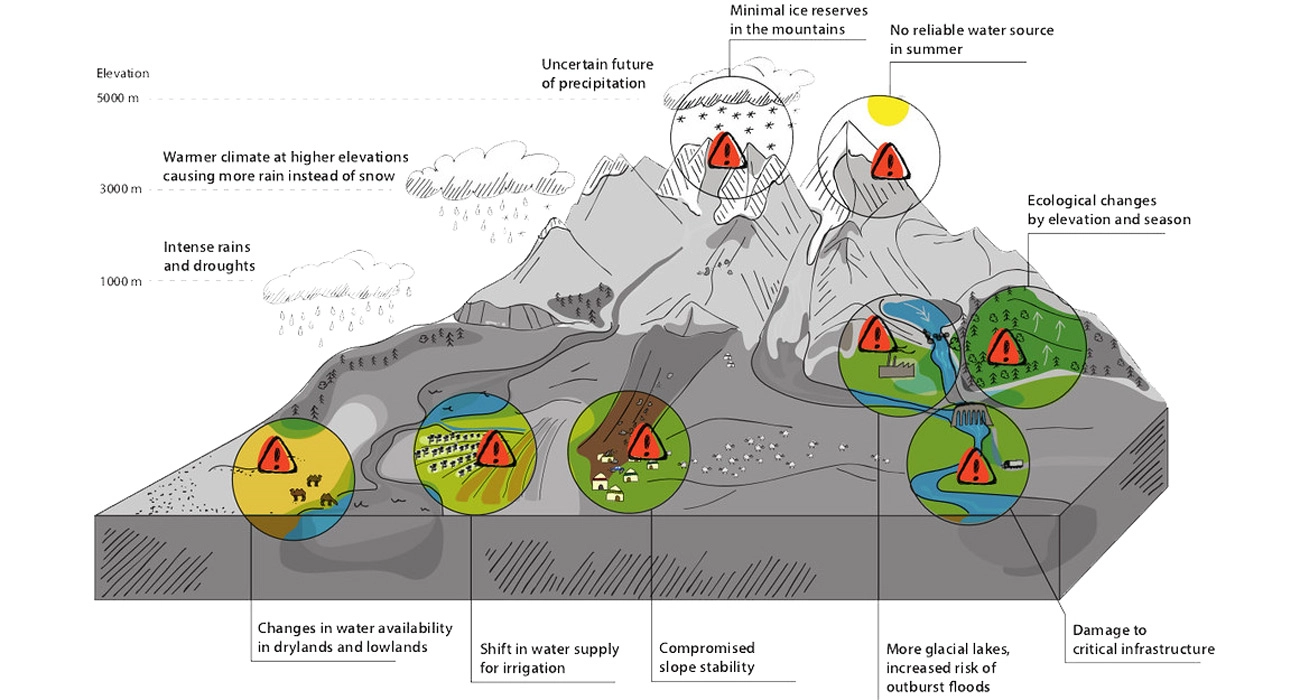
To understand the root causes behind declining production capacity and rising fuel consumption, one must first clearly identify precisely which key environmental variables are altered by high-altitude conditions.
| Flatland / Standard Conditions | Environmental Factor | High-Altitude Conditions |
| Dense air with stable volume-based oxygen content | Air Density | Thin air with significantly reduced oxygen per unit volume |
| Stable oxygen ratio with sufficient combustion conditions | Oxygen Content | Lower oxygen availability, weakened combustion support |
| Stable and standard atmospheric pressure | Atmospheric Pressure | Significantly reduced atmospheric pressure |
| Relatively stable with small fluctuations | Ambient Temperature | Large day-night temperature variations |
| Stable wind conditions and uniform airflow | Wind & Airflow | Highly variable wind speed and disturbed airflow |
| Slow heat dissipation, stable thermal environment | Heat Retention Ability | Faster heat loss, weaker thermal retention |
| Dense and stable air movement | Airflow Characteristics | Thin, unstable, and more dispersed airflow conditions |
Viewed holistically, the most significant distinction between high-altitude and lowland environments lies not in the alteration of a single isolated factor, but rather in the simultaneous adjustment of multiple critical environmental variables.
The combined effects of thinning air, reduced oxygen levels, decreased atmospheric pressure, and amplified temperature fluctuations collectively render the high-altitude operating environment both more rarefied and more volatile. This specific environmental divergence serves as the fundamental premise underlying the subsequent series of changes observed in operational efficiency.
System Mismatch Under High-Altitude Conditions
Once we have clearly deconstructed the differences between high-altitude and lowland environments, a more critical question emerges: These changes—which appear, on the surface, to be purely environmental—do not remain confined to the environment itself; rather, they propagate step-by-step into every single aspect of equipment operation.
So, how exactly do these changes impact an asphalt hot mix plant? Next, we will examine this process in detail by analyzing several key operational stages.
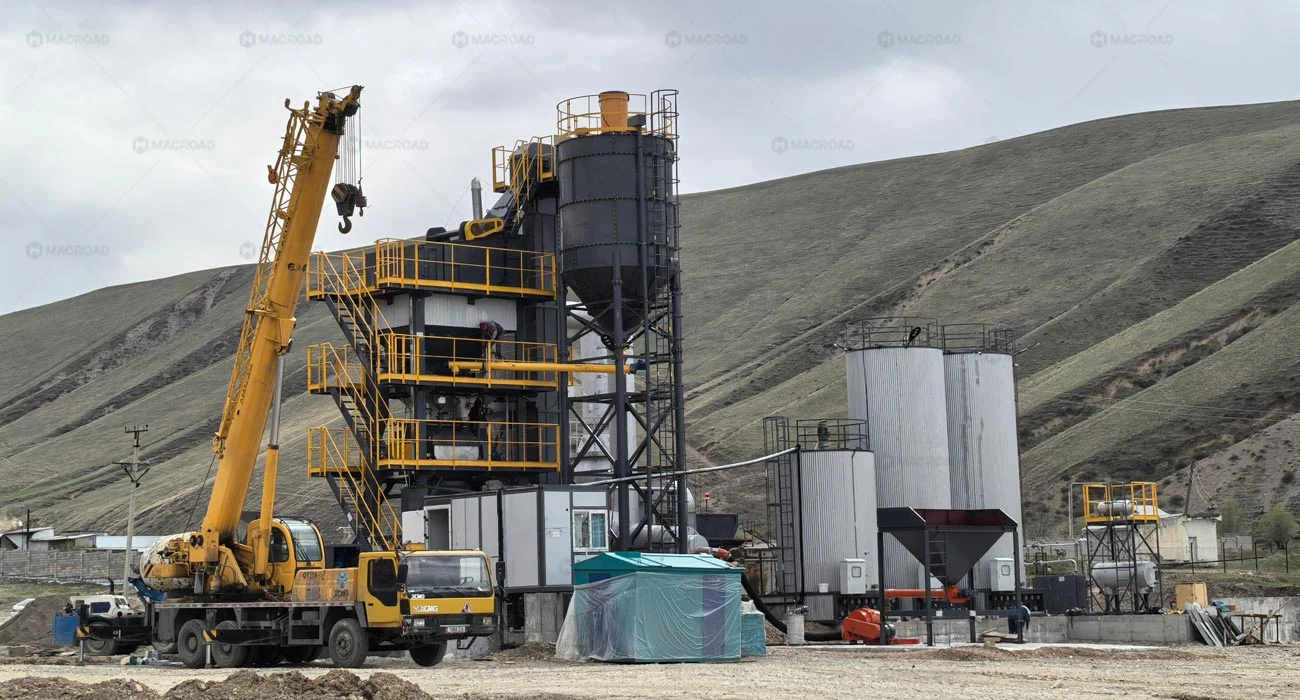
Insufficient Oxygen Supply: Combustion Becomes Incomplete
As oxygen levels in the air decrease at high altitudes, the combustion process first shifts into a non-ideal state. This manifests not as a cessation of combustion, but rather as:
- Reduced flame stability
- Incomplete combustion
- Decreased energy release efficiency
Unstable Air Intake Conditions
As air density declines, the characteristics of the airflow entering the combustion system undergo changes. This manifests as:
- Increased fluctuations in air intake volume
- Greater difficulty in stabilizing the air-fuel ratio
- Increased frequency of system adjustments
Impeded Energy Transfer
Thermal exchange processes—which remain stable under standard environmental conditions—begin to suffer from reduced efficiency at high altitudes. This manifests as:
- A slower rate of heat transfer
- Uneven heating processes
- Reduced thermal energy utilization
Increased Unit Cycle Time
As the effects of these various factors accumulate, the overall rhythm of the system begins to shift. This manifests as:
- Prolonged individual production cycles
- Slower transitions between operational stages
- A less compact and fluid operational rhythm
The changes occurring during this phase do not manifest directly as a decline in output or an increase in fuel consumption; rather, they first appear as a gradual deviation of equipment operating conditions from standard parameters. These changes are diffuse and latent, distributed across multiple nodes throughout the entire operational chain.
Extended Production Cycles: How Output Changes Occur
As observed during the preceding operational phase, changes occurring within the various components of the equipment do not exist in isolation; rather, they unfold progressively along the production workflow. When these changes accumulate continuously within a single integrated system, their impact is not confined merely to the operational status itself; instead, they gradually manifest in a more tangible outcome: a shift in the production rhythm.
Within the operational framework of an asphalt mixing plant, should the production rhythm become elongated, the most immediate manifestation is an alteration in output capacity per unit of time. We will now examine several critical links within the production chain to illustrate how this shift takes shape, step by step.
Extended Heating Phase: Single-Batch Processing Time Prolonged
- Performance at High Altitudes: Under high-altitude conditions, the heating process no longer reaches a steady state as rapidly as it does in lowland environments; the overall temperature-rise process becomes more gradual, and the time required to reach the target temperature is significantly extended.
- Impact on Production Capacity: Since the duration of the heating phase is prolonged, the total time required for a single production cycle increases accordingly. This results in a reduction in the number of production batches that can be completed within a given timeframe, thereby negatively affecting overall output capacity.
Reduced Drying Efficiency: Upstream Processing Pace Slows Down
- Performance at High Altitudes: During the drying process, aggregates exhibit a slower thermal response rate, and moisture removal efficiency declines. Consequently, the transition time between the drying stage and the subsequent heating stage is prolonged.
- Impact on Production Capacity: As the time required for upstream processing increases, the initial phase of the production workflow is delayed. This leads to an involuntary slowdown of the overall production pace, further reducing the available effective production time.
Loosened Production Rhythm: Inter-Stage Transitions Become Less Cohesive
- Performance at High Altitudes: The transitions between various production stages are no longer as tightly integrated as they are under standard operating conditions; the operational rhythm of the equipment appears slightly drawn out.
- Impact on Production Capacity: When the transition times between all stages increase concurrently, the overall production cycle is prolonged. This diminishes the system’s continuous production capability, resulting in actual output falling below the theoretical design level.
Reduced Output Per Cycle: Cumulative Effects Begin to Manifest
- Performance at High Altitudes: Throughout the complete production workflow, the total time required for each cycle increases, resulting in a reduction in the number of production cycles that can be completed within a specific timeframe.
- Impact on Production Capacity: Due to the reduction in the number of completed cycles—even if the equipment remains in continuous operation—the final total output remains lower than the standard levels typically achieved in lowland regions.
From the perspective of the asphalt production, shifts in production capacity are not determined by a single stage; rather, they represent the cumulative outcome of extended operating times across multiple critical stages simultaneously. While these changes may appear inconspicuous within any individual stage, they continuously compound throughout the overall production workflow, ultimately impacting the system’s capacity to complete production cycles within a given timeframe.
Consequently, a decline in production capacity resembles a process of gradual accumulation rather than an abrupt change occurring at a single specific point.
Energy Consumption Increase at High Altitude: Combustion and Heat Loss Factors
As observed in the preceding analysis, fluctuations in production capacity stem primarily from a gradual lengthening of the production cycle. As this process continues to extend, another, more tangible consequence begins to emerge: a marked shift in energy consumption levels.
Unlike the changes in production capacity—which are largely a passive outcome—variations in fuel consumption are not merely a passive result; rather, they represent the cumulative effect of energy consumption dynamics occurring throughout the entire operational process. To fully grasp this distinction, it is necessary to examine how high-altitude environments influence energy consumption performance from three distinct perspectives: the combustion process, thermal energy transfer, and system compensation mechanisms.
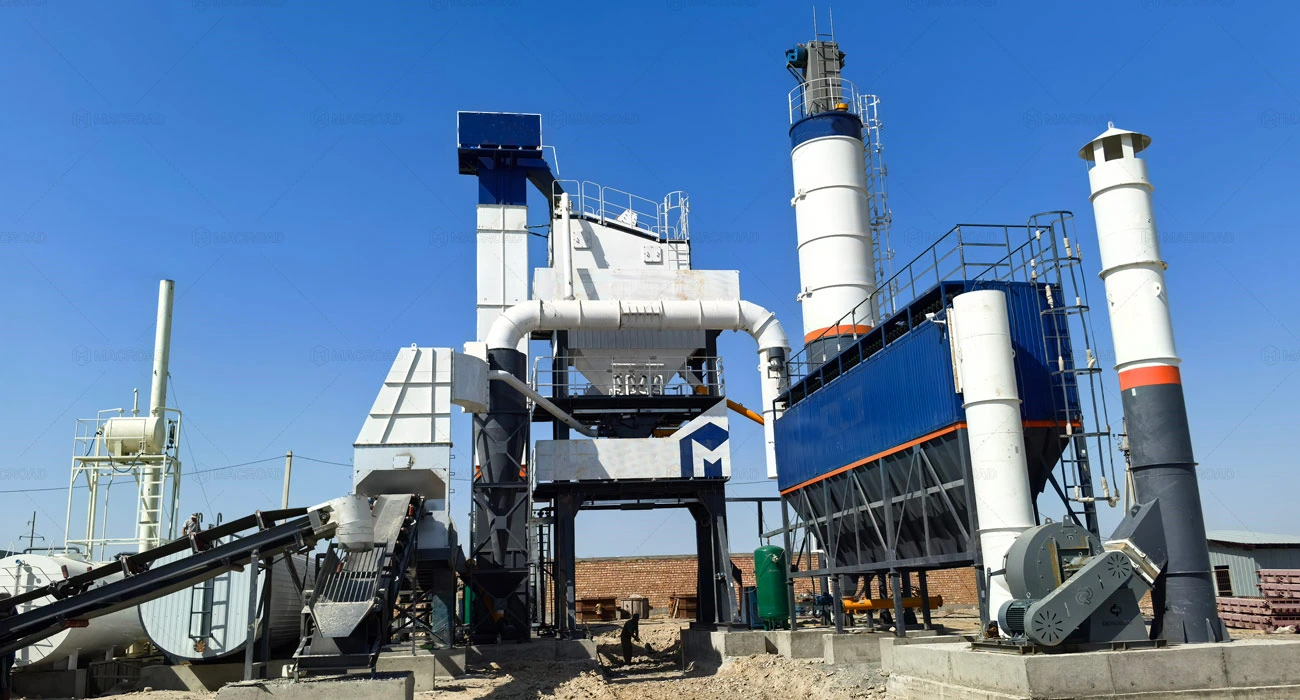
Variations in Combustion Efficiency: The Starting Point of Energy Consumption Changes
The combustion process serves as the primary source of energy input for the entire asphalt mixing plant; its efficiency directly determines the amount of effective heat released per unit of fuel, making it the most fundamental factor influencing fuel consumption.
- Insufficient Oxygen—Compromised Basic Combustion Conditions: At high altitudes, the reduced oxygen content in the air means that combustion reactions no longer occur under ideal oxygen-supply conditions. The direct result is a decrease in the effective heat released per unit of fuel.
- Incomplete Combustion—Reduced Energy Release Efficiency: Under conditions of insufficient oxygen, fuel cannot burn completely, leading to incomplete energy utilization; consequently, for the same volume of fuel consumed, the actual available heat output decreases.
- Decreased Flame Stability—Increased Energy Output Fluctuations: The combustion process becomes more susceptible to environmental influences, causing flame stability to deteriorate. This leads to fluctuations in thermal output efficiency, necessitating additional compensatory measures from the system.
Thermal Energy Transfer Losses: A Factor Amplifying Energy Consumption
Even if heat is successfully generated through combustion, increased losses during the transfer process will compel the system to consume more fuel in order to maintain the target temperature.
- Enhanced Environmental Heat Dissipation—Increased Heat Loss: High-altitude environments are characterized by significant temperature differentials and pronounced wind speed variations, causing heat to dissipate outward more rapidly. Consequently, the system must continuously replenish energy to maintain the required temperature.
- Reduced Thermal Insulation Efficiency—Increased Heat Retention Costs: The system’s ability to retain heat—both within the equipment and the aggregate materials—is diminished, requiring longer durations during the heating phase to maintain the desired temperature.
- Shifted Heat Exchange Efficiency—Reduced Energy Utilization Rate: The efficiency with which heat is utilized during the transfer process declines, leading to a higher proportion of energy loss; as a result, achieving the same production output requires the support of a larger volume of fuel.
Operational Compensation Mechanisms: Factors Amplifying Fuel Consumption
In actual operational scenarios, when system efficiency declines, adjustments are frequently implemented at the operational and control levels; these adjustments, in turn, further influence overall fuel consumption levels.
- Increased Fuel Compensation—Artificially Elevated Energy Input: To maintain the target discharge temperature of the asphalt mix, the system increases its fuel supply, resulting in a higher rate of fuel consumption per unit of time.
- Extended Operating Duration—Accumulated Energy Consumption: When the production cycle is prolonged, the equipment’s continuous operating time increases; this leads to a cumulative rise in overall fuel consumption over time.
- Increased Adjustment Frequency—System Instability: To maintain a stable operational state, the system is compelled to adjust combustion parameters more frequently; this indirectly exacerbates fluctuations in energy consumption and leads to additional energy losses.
Overall, the increase in fuel consumption under high-altitude conditions is not attributable to a single factor; rather, these three stages interact cumulatively, resulting in a decline in the effective utilization rate of fuel per unit. Simultaneously, the system continuously increases its input to maintain operational stability, ultimately manifesting as a rise in overall energy consumption levels.
From Low to High: Gradual Changes in Altitude Effects
As demonstrated in the preceding analysis, the impact of high-altitude environments on asphalt mixing plants is not the result of a single isolated factor, but rather the cumulative effect stemming from the simultaneous variation of multiple environmental variables. However, it is crucial to further clarify that this impact does not remain constant as altitude increases; instead, it manifests with distinct differences across various altitude ranges.
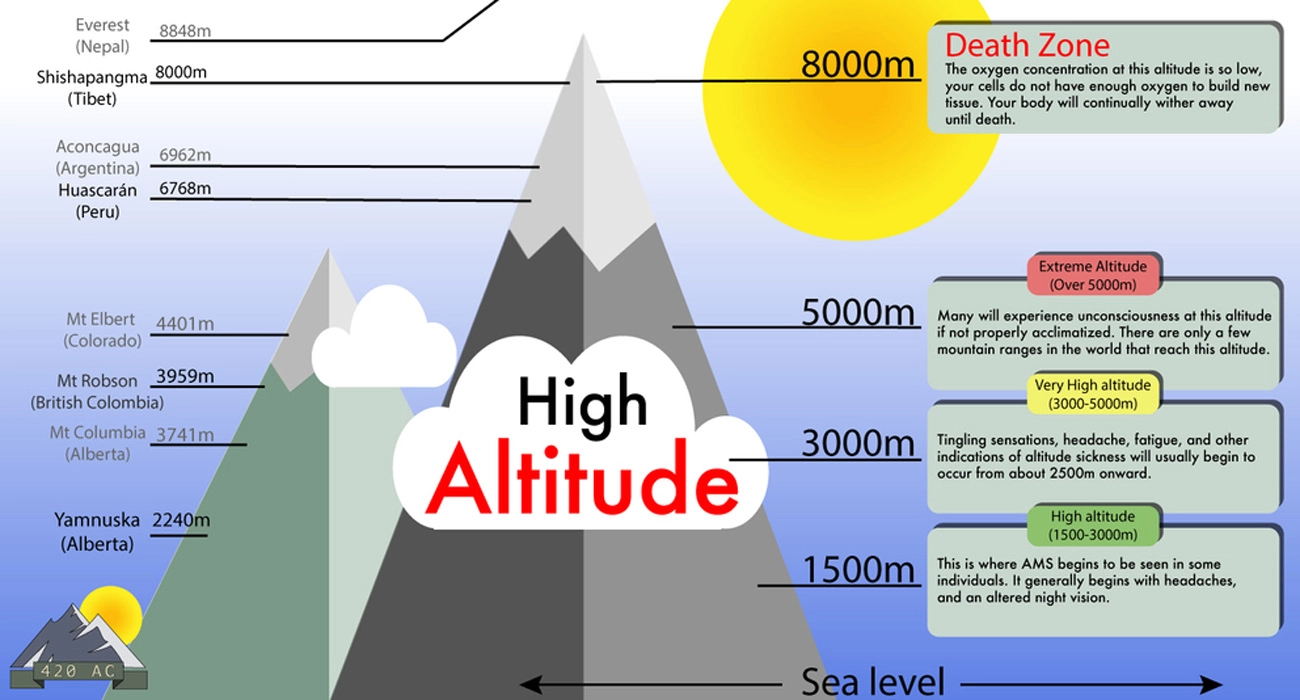
In other words, variations in altitude do not merely determine whether an impact occurs; more critically, the very intensity and manifestation of that impact undergo changes as well.
| Impact Dimension | Below 1000m (Low Altitude) | 1000–2000m (Mid Altitude) | 2000–3000m (High Altitude) | Above 3000m (Ultra High Altitude) |
|---|---|---|---|---|
| Air Density & Oxygen Supply | Standard atmospheric conditions with sufficient oxygen | Slight decrease in oxygen availability | Noticeable oxygen reduction affecting combustion | Severely thin air with insufficient oxygen supply |
| Combustion Stability | Stable and complete combustion | Slight fluctuations, still controllable | Reduced stability and lower combustion efficiency | Significant instability and inefficient combustion |
| Heating Efficiency | Stable heating performance | Slightly longer heating time | Clearly slower temperature rise | Significantly extended heating process |
| Drying Efficiency | Normal moisture removal performance | Slight decline in drying efficiency | Noticeable increase in drying time | Significant reduction in drying efficiency |
| Heat Loss Conditions | Minimal heat loss | Slight increase in heat dissipation | Noticeable heat loss increase | Severe heat dissipation and energy loss |
| Operational Rhythm | Smooth and stable operation | Slightly slowed operational rhythm | Clearly slowed production cycle | Significantly extended and unstable cycle |
| Overall Performance | Meets design expectations | Slight deviation from design performance | Noticeable reduction in efficiency | Significant deviation from design operating conditions |
A comparison across different elevation ranges reveals that the impact is not concentrated in a single aspect; rather, as elevation increases, it gradually accumulates and manifests across multiple dimensions. These changes ultimately translate into differences in overall operational performance, rather than merely localized fluctuations in specific parameters.
From Equipment to Site: Real Impact of High Altitude on Projects
In the preceding analy